
Silicon Carbide 5R Raymond Mill Price and Advantages for Grinding
We provide a wide range of mills — including Raymond mill, trapezoidal mill, vertical mill, ultrafine mill, and ball mill, obtained ISO9001 international quality certification, EU CE certification, and Customs Union CU-TR certification. Suitable for processing minerals such as limestone, phosphate, quicklime, kaolin, talc, barite, bentonite, calcium carbonate, dolomite, coal, gypsum, clay, carbon black, slag, cement raw materials, cement clinker, and more.
The discharge range of these mills can be adjusted to meet specific processing needs, typically from 80-400 mesh, 600-3250 mesh, and can achieve the finest particle size of up to 6000 mesh(D50).
If you are looking for a reliable grinding solution to turn stone or minerals into fine powder, please feel free to contact our online customer service.
Introduction to Silicon Carbide Grinding with 5R Raymond Mill
When it comes to grinding silicon carbide, a material known for its extreme hardness and thermal stability, the choice of milling equipment is critical. Silicon carbide, or SiC, is a synthetic ceramic material used extensively in abrasives, refractories, and semiconductor applications. The challenge for many processors is achieving a fine, consistent powder without excessive wear on the machinery or prohibitive energy costs. The 5R Raymond Mill has emerged as a workhorse solution for this task, offering a balance of performance, cost-efficiency, and reliability. In this article, we will break down the price considerations, the distinct advantages of using a 5R Raymond Mill for silicon carbide, and why this combination makes sense for medium-scale producers.
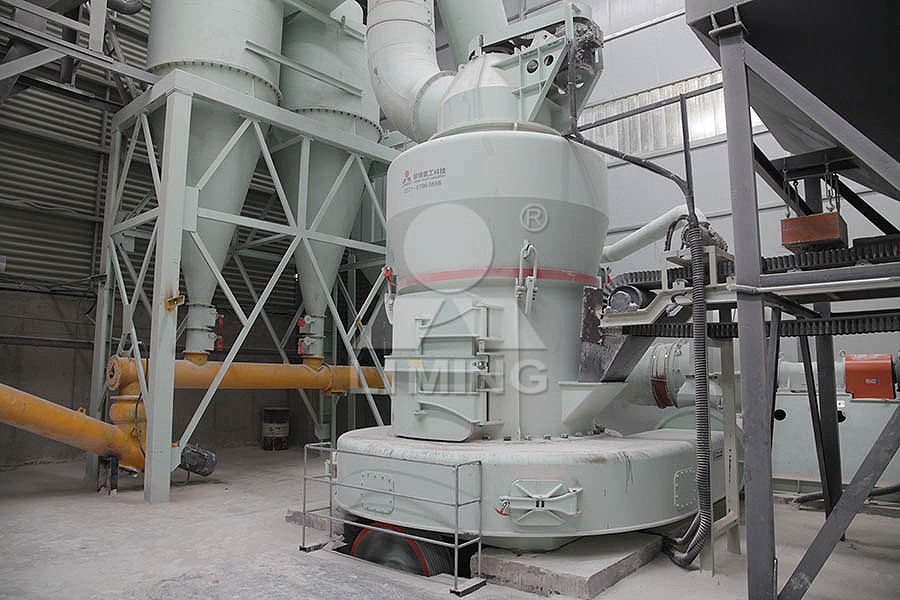
Understanding the 5R Raymond Mill
The term “5R” refers to a specific configuration of the classic Raymond mill, which typically features five grinding rollers suspended from a central spider arm. This design is an evolution of the earlier 3R and 4R models, providing a larger grinding area and higher throughput. The 5R Raymond Mill is especially suited for non-metallic minerals with a Mohs hardness of less than 7, which fits silicon carbide at around 9-9.5 on the Mohs scale only if the material is pre-crushed and the mill is properly configured with wear-resistant components. It is a pendulum-style roller mill that grinds material between the rotating roller and a stationary grinding ring.
Price Factors for a Silicon Carbide 5R Raymond Mill
Pricing for a 5R Raymond Mill tailored for silicon carbide is not a fixed number. Several variables come into play. The base price for a standard 5R machine, such as those produced by established manufacturers, generally falls in a competitive range depending on capacity and included automation. However, when grinding silicon carbide, the price climbs due to the need for upgraded wear parts. Standard manganese steel rollers and rings will wear out rapidly against SiC, so buyers must budget for high-chrome or ceramic-reinforced components. Additional costs include the pulse dust collector system for environmental compliance, variable frequency drives for controlling roller speed, and possibly a classifier upgrade to achieve the fine mesh sizes required for technical ceramics. A fully equipped 5R Raymond Mill for SiC, including installation and basic spare parts, can range from approximately $50,000 to $120,000 USD for units with a capacity between 1 and 8 tons per hour, depending on the integrator and brand. For customers looking for a higher-capacity solution with extreme fine grinding capability, you might consider our LUM Ultrafine Vertical Grinding Mill, which handles input sizes up to 10 mm and offers capacities from 5 to 18 tph, perfect for scaling up SiC production while maintaining superior whiteness and cleanliness.
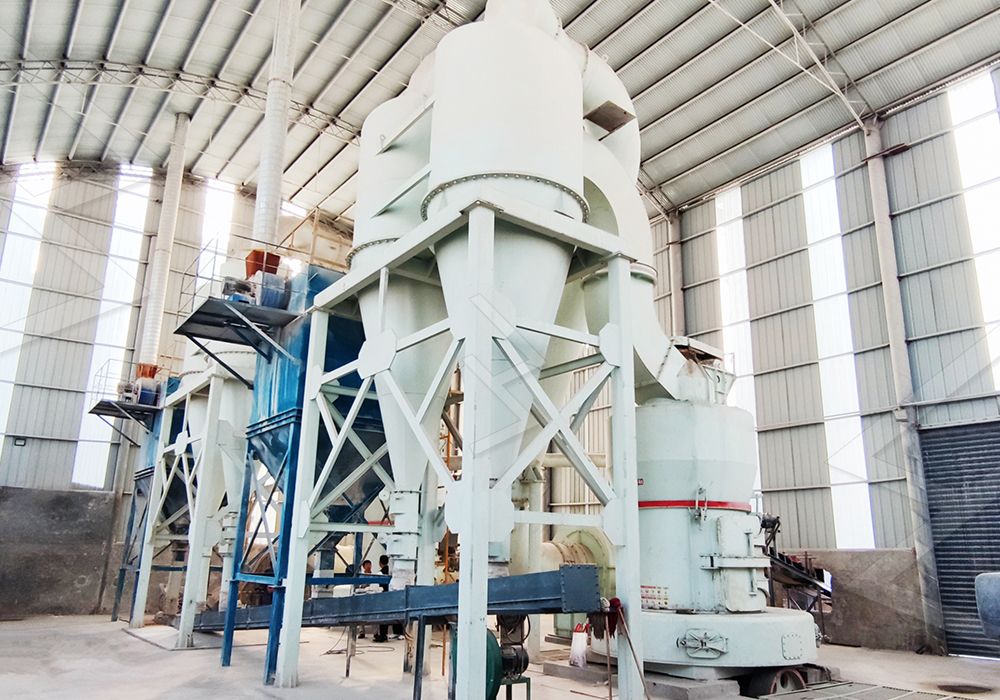
Key Advantages of 5R Raymond Mill for SiC
1. Robust and Simple Mechanical Design: The 5R Raymond Mill has a straightforward mechanical structure. There are no complex hydraulic systems or high-speed rotating classifiers inside the main grinding chamber. This simplicity translates into higher reliability and easier maintenance for plant operators. Since silicon carbide is abrasive, less complexity means fewer points of failure. The machine’s heavy-duty cast iron base and volute casing provide the necessary rigidity to handle the vibration from grinding such a hard material.
2. Efficient Grinding with Controlled Fineness: Operating on the principle of centrifugal force, the grinding roller swings outward to press against the stationary ring. The material is scooped up by a shovel blade and fed between the roller and ring. For silicon carbide, this creates a shearing and crushing action that efficiently reduces particle size. The 5R mill can typically produce powders with a fineness ranging from 100 mesh to 325 mesh, which covers the standard requirements for abrasive grains and refractory mixes. The built-in analyzer (classifier) can be adjusted to control the particle size distribution, ensuring a consistent final product.
3. Lower Initial Investment Compared to Vertical Mills: For a medium-scale operation producing perhaps 2 to 5 tons per hour of silicon carbide powder, the 5R Raymond Mill represents a significantly lower capital expenditure compared to a vertical roller mill or a ball mill system of equivalent capacity. The plant layout is simpler, the foundation requirements are less stringent, and the overall installation time is shorter. This makes the 5R mill an ideal entry-level machine for processors diversifying into hard material grinding.
4. Optimized for Dry Grinding with Environmental Controls: Modern 5R Raymond mills are almost always paired with a bag-type pulse dust collector. The entire grinding system operates under negative pressure, which prevents dust from escaping into the workshop. This is critical when grinding silicon carbide, as the fine dust is both a health hazard and a valuable product that should be captured. The integrated system includes a muffler to reduce noise, making the operation compliant with environmental regulations. For eco-conscious and health-oriented production, this particular advantage cannot be overstated.
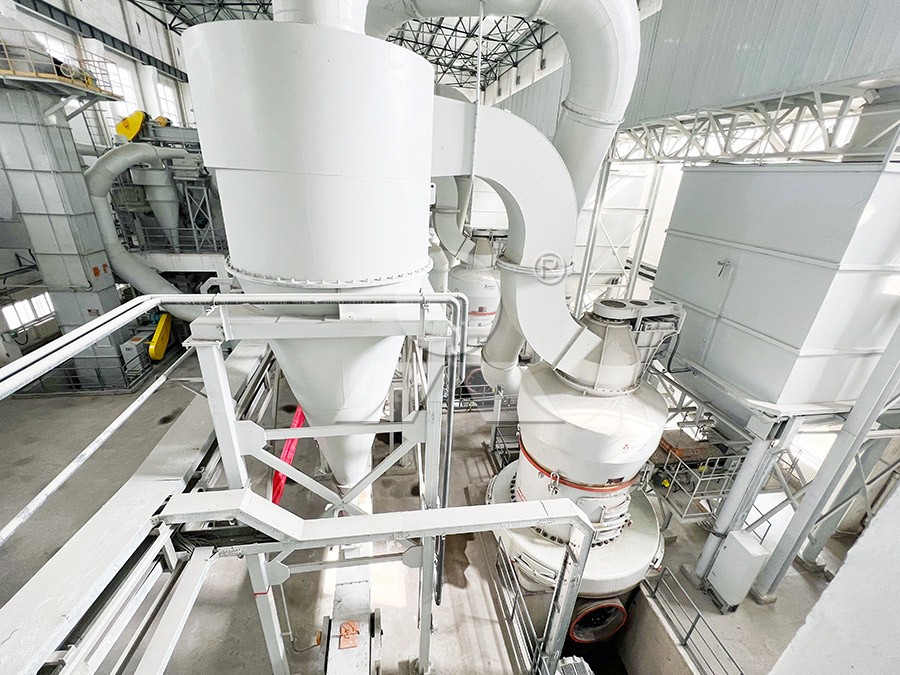
Operational Considerations for SiC Grinding
Successfully grinding silicon carbide with a 5R Raymond Mill requires careful attention to feed stock preparation. The raw SiC lumps should be pre-crushed to under 25 mm, ideally to around 10-15 mm, to prevent overloading the mill. The feed must be consistent and free of tramp metal, which can damage the rollers. Additionally, because SiC is very hard, the mill’s grinding rollers and rings should be made of high-chromium alloy or specialized wear-resistant steel, and operators should expect to replace these parts more frequently than when grinding limestone or gypsum. The shovel blade also suffers from high wear and should be sourced from a reputable supplier. However, many operators find that the lower cost of wear parts and the ease of replacement justifies the trade-off. For extremely high-purity requirements in the final product, our MW Ultrafine Grinding Mill is recommended. It features a grinding chamber with no rolling bearings or screws, and its cage-type powder selector can achieve a mesh range of 325-2500 mesh, ensuring a screening rate of d97≤5μm, which is vital for high-end ceramic applications.
Maintenance and Longevity
One of the often-overlooked advantages of the 5R Raymond Mill is the ease of maintenance. The grinding roller assembly can be lifted out of the machine as a unit, allowing for quick replacement of the roller skin. The grinding ring is segmented and can be replaced without dismantling the entire mill. For a silicon carbide operation, having a set of spare rollers and rings on site is a standard practice, allowing for a changeover in a single shift. The oil-lubricated spindle system, often utilizing a thin oil station, ensures that the main bearings last for several years under normal operating conditions.
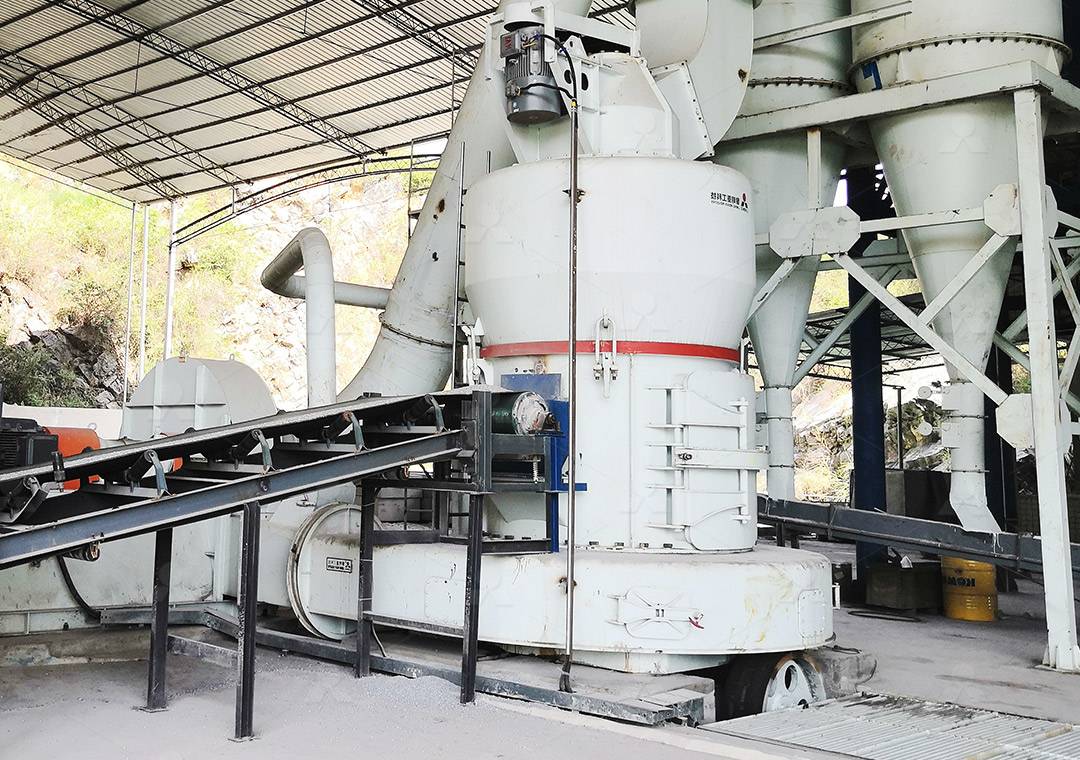
Final Verdict
The 5R Raymond Mill remains a highly relevant and practical solution for silicon carbide grinding, particularly for producers who prioritize upfront cost savings, operational simplicity, and reliable output. While it may not match the energy efficiency of a modern vertical mill for extremely fine powders, its ability to handle abrasive materials with minimal sophisticated electronics makes it a favorite in many workshops. By investing in quality wear parts and a well-designed dust collection system, operators can achieve excellent economic returns. If your production targets require a step up in volume and fineness, exploring our other heavy-duty milling options is a wise next step.
Frequently Asked Questions (FAQ)
- Can a standard 5R Raymond Mill grind silicon carbide without modifications?
It is not advisable. The standard manganese steel components will wear out extremely quickly. You must specify high-chrome or ceramic-reinforced grinding rollers and rings specifically for grinding silicon carbide. - What is the typical capacity of a 5R Raymond Mill when processing SiC?
Depending on the model and the required fineness (e.g., 100 mesh vs. 325 mesh), a 5R mill can typically process 1 to 6 tons of silicon carbide per hour. Feed size and moisture content also affect this rate. - What is the price range for a high-quality 5R Raymond Mill for SiC?
For a fully equipped unit with a pulse dust collector, upgraded wear parts, and control panel, you can expect to pay between $55,000 and $110,000 USD. This depends heavily on the manufacturer and shipping costs. - How often do the grinding rollers need to be replaced?
When grinding SiC, roller replacement frequency can be every 200 to 600 hours of operation, depending on the hardness of the specific batch of SiC and the roller material. High-chrome rollers last longer than standard steel. - Is the 5R Raymond Mill suitable for producing fine mesh SiC powder for ceramics?
It is suitable for standard abrasives (up to 325 mesh). For ultra-fine powder in the micron range (e.g., d97 less than 10μm), a special ultra-fine grinding mill like the MW or LUM series from our company is more appropriate. - Does the mill generate excessive dust?
No. A modern 5R mill integrated with a pulse bag dust collector and operated under negative pressure is almost dust-free. It meets strict environmental standards. - What is the power consumption of a 5R Raymond Mill for SiC?
The main motor for a 5R mill is typically between 75 kW and 132 kW. The total system power, including the blower and classifier, might be around 150-250 kWh. This is higher than for soft minerals due to the energy required to fracture SiC. - Can the 5R mill handle wet materials?
No, Raymond mills are designed for dry grinding only. The feed material must have a moisture content of less than 6% to avoid clogging the mill and reducing efficiency. - Do you offer a warranty on the grinding mill?
Yes, typical warranties cover the main frame and gearbox for 12-18 months. Wear parts are considered consumables and are not covered under standard warranty, though they are supplied with a guarantee of quality. - Is it better to use a ball mill or a Raymond mill for SiC?
For a medium-fine product (80-325 mesh), a Raymond mill is generally more energy-efficient and has a smaller footprint. A ball mill is better for producing a very fine, uniform product but consumes more energy and produces more noise. The 5R mill is often the more economical choice for SiC processing.