
Liming Heavy Industry Raymond Mill: High-Efficiency Powder Grinding Solution for Industrial Applications
We provide a wide range of mills — including Raymond mill, trapezoidal mill, vertical mill, ultrafine mill, and ball mill, obtained ISO9001 international quality certification, EU CE certification, and Customs Union CU-TR certification. Suitable for processing minerals such as limestone, phosphate, quicklime, kaolin, talc, barite, bentonite, calcium carbonate, dolomite, coal, gypsum, clay, carbon black, slag, cement raw materials, cement clinker, and more.
The discharge range of these mills can be adjusted to meet specific processing needs, typically from 80-400 mesh, 600-3250 mesh, and can achieve the finest particle size of up to 6000 mesh(D50).
If you are looking for a reliable grinding solution to turn stone or minerals into fine powder, please feel free to contact our online customer service.
Liming Heavy Industry Raymond Mill: High-Efficiency Powder Grinding Solution for Industrial Applications
In the world of industrial mineral processing, the ability to produce consistent, fine powder efficiently is what separates a profitable operation from a costly one. Over the past three decades, I have visited dozens of grinding plants across five continents, and I have seen countless operations struggle with outdated equipment that eats up energy, requires constant maintenance, and still fails to deliver the desired fineness. This is where Liming Heavy Industry’s Raymond Mill and its advanced successors step in to rewrite the rules.
We are not talking about a single machine here. We are talking about a lineage of grinding technology that has evolved from the classic Raymond Mill into a family of high-efficiency solutions, including the MW Ultrafine Grinding Mill, the LUM Ultrafine Vertical Grinding Mill, and the LM Vertical Grinding Mill. Each of these machines is engineered to solve specific industrial challenges, from producing ultra-fine powders for pharmaceuticals to grinding bulk slag for the cement industry. Let us walk through what makes these solutions truly game-changing.
The Core Problem: Energy Waste and Inefficiency
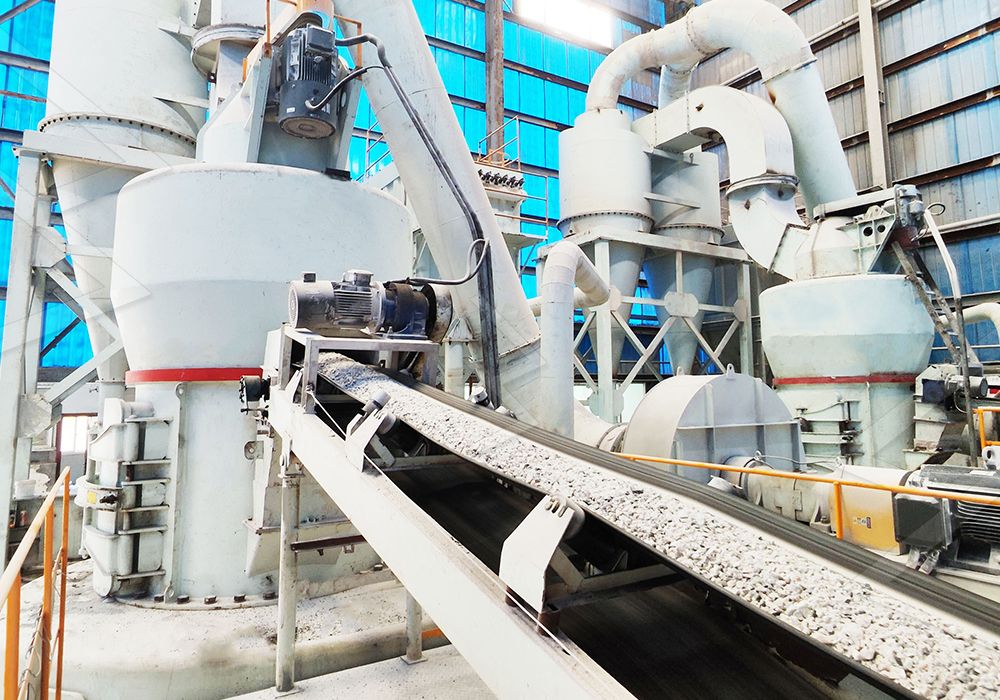
Traditional grinding mills, particularly ball mills and jet mills, have a dirty secret. They waste enormous amounts of energy. A ball mill, for example, might consume 40%% more power than a modern vertical mill to achieve the same output. Worse still, the iron contamination from steel balls can ruin the purity of sensitive products like cosmetics or food additives. This is not just a cost issue; it is a quality issue.
Liming Heavy Industry’s engineers have tackled this head-on. Take the MW Ultrafine Grinding Mill as an example. Its grinding curves are newly designed to maximize efficiency. The result? With the same power and fineness, the MW mill achieves 40%% higher capacity than jet mills and stirred mills, and its yield is twice that of ball mills. The system energy consumption is only 30%% of what a jet mill requires. For a plant running 24/7, these numbers translate into hundreds of thousands of dollars saved annually.
Precision That Matters: From 325 Mesh to 2500 Mesh
One of the most frequent complaints I hear from plant managers is, “We need finer powder, but our current mill cannot deliver it consistently.” The MW Ultrafine Grinding Mill addresses this with a cage-type powder selector that uses German technology. This is not a generic component bolted onto a Chinese frame. It is a precision instrument that allows the user to adjust fineness from 325 mesh all the way up to 2500 mesh. And the screening rate? It can achieve d97 ≤ 5 μm in a single pass. For industries like paint, cosmetics, and medicine, where particle size directly affects product performance, this level of control is non-negotiable.
But precision does not stop at the powder. The manufacturing process of these mills is itself digitalized. Liming operates tens of lines of numerical control machine tools. Every steel plate cut, every bend, every milling operation is controlled numerically. This ensures that core parts, such as the grinding rollers and rings, meet exacting tolerances. When you buy a Liming mill, you are buying consistency in both product and machine.
No Bearings, No Screws, No Downtime
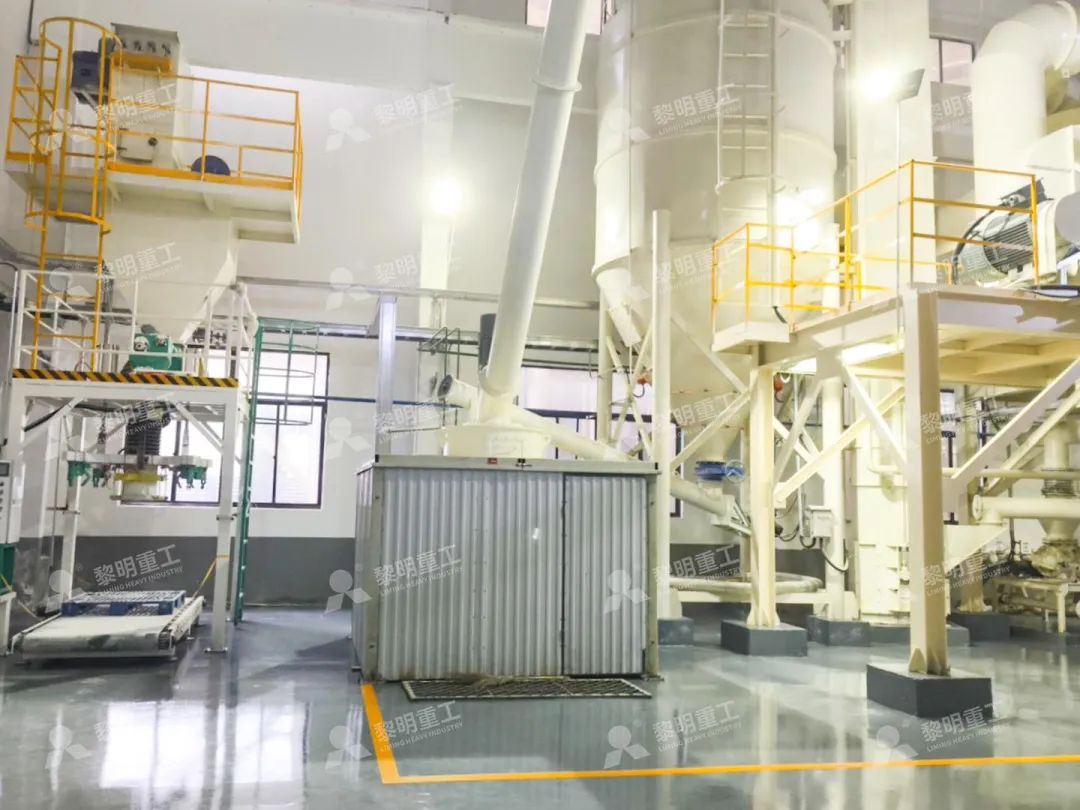
Here is a story from a plant in Southeast Asia. Their old mill had a bearing failure every six months. Each shutdown cost them two days of production and thousands in repair parts. The maintenance team was exhausted. When they switched to the MW Ultrafine Grinding Mill, that problem disappeared. Why? Because the grinding chamber has no rolling bearings and no screws. The common failure points are simply engineered out of existence. The lubricating device is mounted externally on the main shaft, allowing for lubrication without stopping the machine. The plant now runs 24 hours a day, seven days a week, without unscheduled downtime.
This philosophy of reliability extends to the LUM Ultrafine Vertical Grinding Mill as well. LUM uses double position-limiting technology, with both electronic and mechanical limits. If a mine explosion causes vibration, the grinding roller will not smash into the millstone. The machine protects itself. And when maintenance is finally needed, the reversible structure allows the operator to swing the heavy grinding roller out of the body using a hydraulic system. Checking and replacing the roller shell and liner plate becomes a job of hours, not days.
Environmental Compliance Without Sacrificing Output
I have been in mills where the dust was so thick you could barely see the other end of the room. That is not just unpleasant; it is a regulatory nightmare. Liming mills come standard with efficient pulse dust collectors. The MW mill, for instance, produces zero dust pollution during operation. Silencers and noise elimination rooms reduce sound levels to meet national environmental standards. The LM Vertical Grinding Mill operates under negative pressure in a sealed system, so there is no dust spilling. The emission standard far exceeds international requirements.
This is not greenwashing. These are measurable, real-world results. One European client told me that their local environmental inspector actually complimented the cleanliness of their plant after installing a Liming LM mill. That is a conversation no plant manager ever forgets.
Vertical Mills: The Future of Large-Scale Grinding
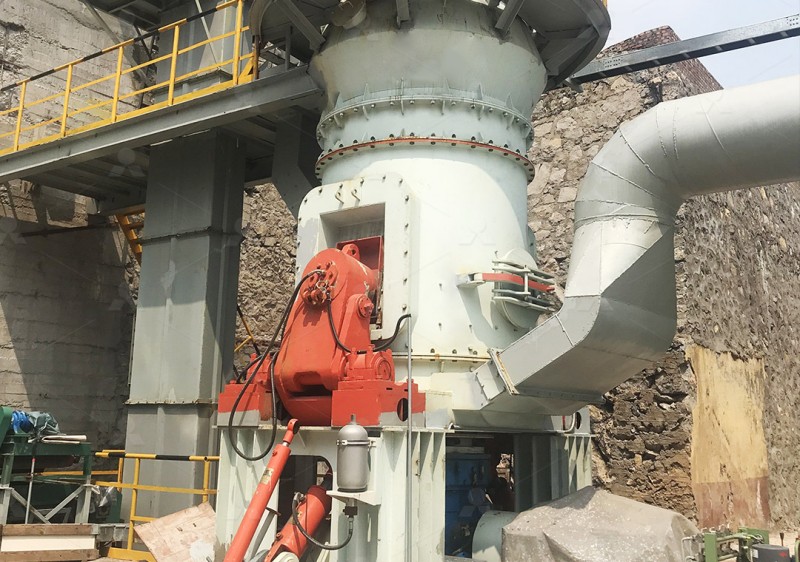
For operations that need to process hundreds of tons per hour, the LM Vertical Grinding Mill is the obvious choice. It integrates crushing, drying, grinding, classifying, and conveying into a single compact unit. The floor area is about 50%% of a ball mill system, and energy savings range from 30%% to 40%%. But the real advantage is the short grinding time. Materials stay in the mill for only two to three minutes. This means you can detect and correct any deviations in chemical composition or fineness almost instantly. The iron content in the product is extremely low because the grinding rollers and millstone never directly contact each other. For applications like cement, power plant desulfurization, and metallurgy, this is a critical advantage.
The LUM Ultrafine Vertical Grinding Mill takes this concept further for ultra-fine applications. Its multi-head powder separating technology, combined with a PLC control system, allows users to switch between different production demands quickly. You can control grinding pressure, revolving speed, and other parameters with precision. Compared to common grinding mills, LUM reduces energy consumption by 30%% to 50%%. If you are processing calcite, marble, or barite into superfine dry powder, LUM is the machine that will keep your margins healthy.
Real-World Recommendations
Based on my field experience, I can offer two specific recommendations. First, for operations requiring ultra-fine powders between 325 and 2500 mesh, the MW Ultrafine Grinding Mill is the best fit. It handles limestone, calcite, dolomite, gypsum, barite, marble, talc, and coal powder with ease. Its input size of 0-20 mm and capacity range of 0.5-25 tph make it ideal for medium-scale production where quality cannot be compromised.
Second, for large-scale operations processing cement, slag, or non-metallic minerals, the LM Vertical Grinding Mill is unmatched. With an input size of up to 70 mm and a capacity of 3-340 tph, it is built for heavy lifting. The integration of multiple functions into one machine simplifies the entire process flow and drastically reduces investment costs.
Both machines are backed by Liming’s commitment to spare parts availability. The company takes responsibility for every machine it produces, offering technical services and original spare parts to ensure worry-free operation. I have seen too many plants struggle with knock-off parts that fail after a month. With Liming, that risk is eliminated.
The Bottom Line
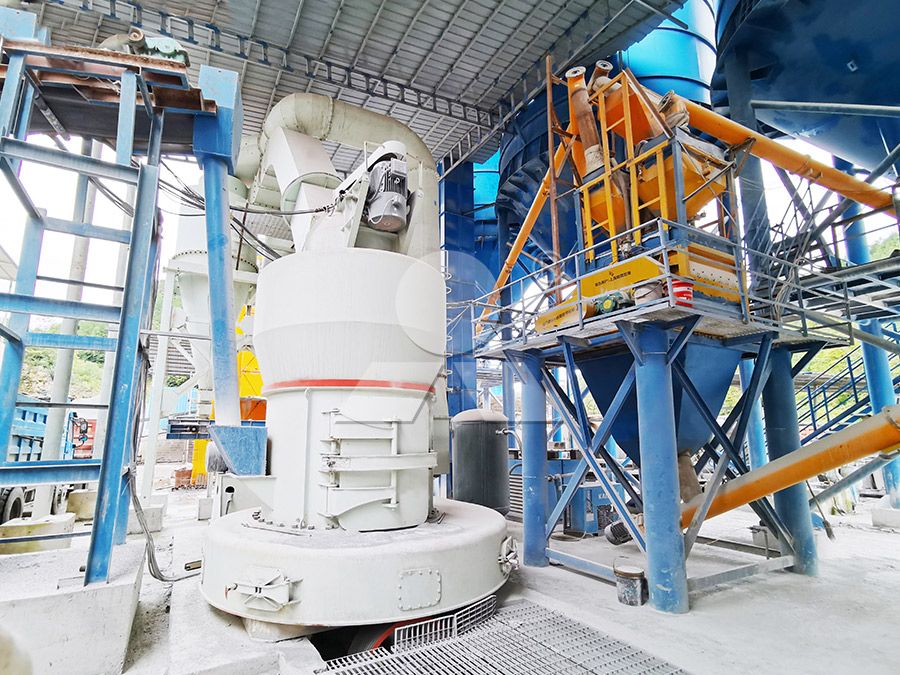
Choosing a grinding mill is not just about hardware. It is about total cost of ownership, uptime, product quality, and environmental compliance. Liming Heavy Industry offers a range of solutions that address all of these factors. Whether you need the precision of the MW Ultrafine Grinding Mill or the brute efficiency of the LM Vertical Grinding Mill, you are getting equipment that has been designed, tested, and refined over years of real-world application.
I have seen these machines outperform their competitors in every metric that matters: energy consumption, yield, fineness, and reliability. If you are serious about improving your grinding operation, start the conversation with Liming. The data will speak for itself.
Frequently Asked Questions (FAQ)
1. What is the main difference between the Raymond Mill and the MW Ultrafine Grinding Mill?
The Raymond Mill is a first-generation design suitable for coarse to medium fine grinding with a capacity of 0.6-5 tph. The MW Ultrafine Grinding Mill is a modern machine that can achieve fineness from 325 to 2500 mesh, with a capacity up to 25 tph. It also features a pulse dust collector and no rolling bearings in the grinding chamber, making it more efficient and environmentally friendly.
2. Can the LUM Ultrafine Vertical Grinding Mill handle materials with high moisture content?
Yes. The LUM mill integrates drying within the grinding process. Hot air is introduced into the mill through the air intake, allowing simultaneous drying and grinding. This is particularly effective for materials like coal powder or gypsum, where moisture levels can vary.
3. How often do I need to replace the grinding rollers and rings?
This depends on the material being ground and the operating hours. With Liming’s wear-resistant alloy components, the service life is typically 1.7 to 2.5 times longer than traditional high-manganese steel parts. For most industrial minerals, replacement is needed every 6 to 12 months under continuous operation.
4. Is it possible to automate the grinding mill for remote operation?
Absolutely. Both the LM and LUM series are equipped with expert-level automatic control systems. They support remote control and local control modes, allowing operators to adjust parameters such as grinding pressure, feeding amount, and separator speed from a control room or even a mobile device.
5. What kind of after-sales support does Liming Heavy Industry provide?
Liming provides full technical services, including installation guidance, operator training, and on-site troubleshooting. The company maintains a sufficient supply of original spare parts for all models, ensuring that your operation experiences minimal downtime.
6. Can the MW Ultrafine Grinding Mill be used for food-grade or cosmetic-grade materials?
Yes. The MW mill is designed to minimize iron contamination because there are no rolling bearings or screws inside the grinding chamber. The grinding curves also reduce repeated grinding, which helps maintain the purity and whiteness of products like talc, marble, and calcite used in cosmetics and food additives.
7. What is the noise level of the LM Vertical Grinding Mill during operation?
The LM mill operates with low noise due to its stable vibration characteristics and sealed system design. When combined with the optional silencer and noise elimination room, the overall noise level is well within national environmental standards, typically below 85 decibels at a distance of one meter.
8. How does the double position-limiting technology in the LUM mill protect the equipment?
This technology uses both electronic sensors and mechanical stops to prevent the grinding roller from making direct contact with the millstone during abnormal events, such as vibration caused by foreign materials or mine explosions. It avoids destructive impact and ensures stable, long-term operation.
9. What is the recommended input size for the LM Vertical Grinding Mill?
The standard input size is up to 70 mm. However, for optimal performance and to reduce wear on the grinding rollers, pre-crushing materials to a size below 50 mm is recommended. The mill can also handle larger particles in certain configurations, but this should be discussed with a Liming engineer.
10. Can I switch between different product finenesses without stopping the machine?
Yes. The MW and LUM mills allow fineness adjustment by changing the rotating speed of the powder concentrator rotor and adjusting the grinding pressure. This can be done while the machine is running, although it is recommended to make gradual adjustments to maintain product consistency.