
Kaolin Grinding and Classification System Configuration: Key Equipment and Process Optimization
We provide a wide range of mills — including Raymond mill, trapezoidal mill, vertical mill, ultrafine mill, and ball mill, obtained ISO9001 international quality certification, EU CE certification, and Customs Union CU-TR certification. Suitable for processing minerals such as limestone, phosphate, quicklime, kaolin, talc, barite, bentonite, calcium carbonate, dolomite, coal, gypsum, clay, carbon black, slag, cement raw materials, cement clinker, and more.
The discharge range of these mills can be adjusted to meet specific processing needs, typically from 80-400 mesh, 600-3250 mesh, and can achieve the finest particle size of up to 6000 mesh(D50).
If you are looking for a reliable grinding solution to turn stone or minerals into fine powder, please feel free to contact our online customer service.
Introduction
Kaolin processing demands precision, efficiency, and adaptability. Whether you are producing filler-grade clay for paper or high-purity material for ceramics, the grinding and classification system sits at the heart of your operation. Over the years, I have seen many plants struggle with inconsistent particle size, high energy bills, and frequent downtime. The truth is, selecting the right equipment and fine-tuning the process flow can make or break your profitability. This article walks through the key equipment choices and optimization strategies for kaolin grinding circuits, drawing on real-world configurations that deliver results.
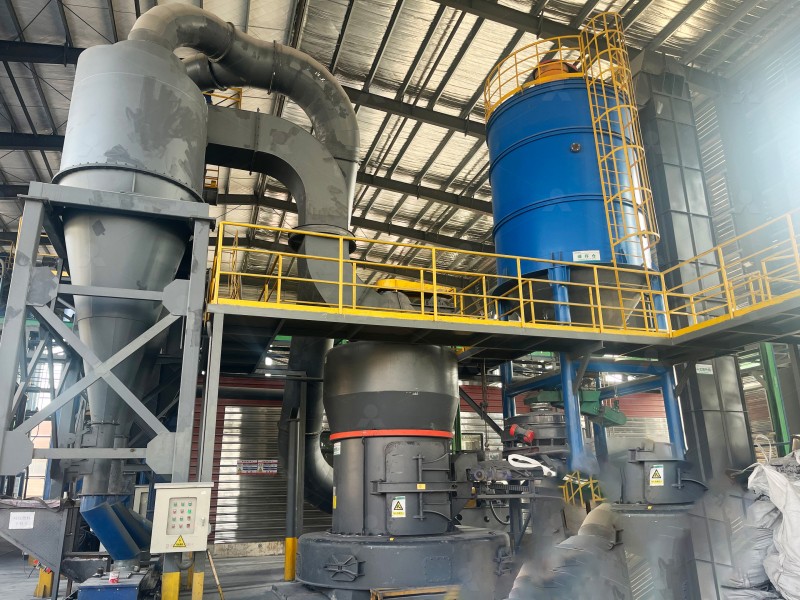
Core Equipment in a Kaolin Grinding System
A typical kaolin grinding and classification line includes a crusher for primary size reduction, a feeder for controlled material flow, a grinding mill, a classifier (often integrated or standalone), a dust collector, and a fan system. The grinding mill is the heart of the operation. For kaolin, which is soft but abrasive due to quartz impurities, the mill must balance low iron contamination with high throughput.
Our MW Ultrafine Grinding Mill stands out here. With an input size up to 20 mm and capacity ranging from 0.5 to 25 tph, it handles kaolin efficiently. The newly designed grinding curves on the roller and ring boost output by 40% compared to jet mills, while energy consumption stays at only 30% of a jet mill system. The cage-type powder selector, based on German technology, allows fineness adjustment between 325 and 2500 mesh. For kaolin, this means you can produce both coarse filler grades and ultra-fine coating grades with one machine. The absence of rolling bearings and screws inside the grinding chamber eliminates common failure points, and the external lubrication system supports 24-hour continuous operation.
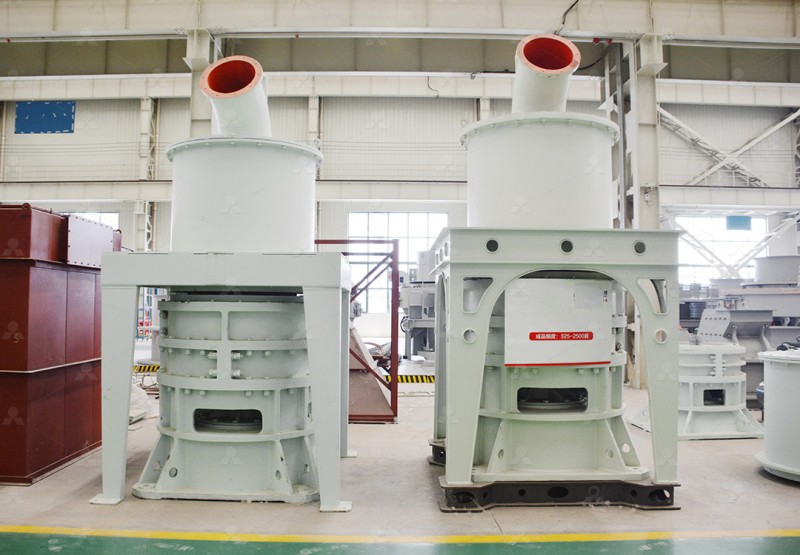
Classification: The Key to Consistent Product Quality
Classification is where many kaolin lines fall short. A mill can produce fine powder, but without precise separation, you end up with a wide particle size distribution. This hurts product value. For kaolin, the target is often d97 below 10 μm or even 5 μm for high-end applications like paint or cosmetics.
The MW Ultrafine Grinding Mill integrates a multi-head cage-type classifier that achieves d97 ≤ 5 μm in a single pass. This eliminates the need for secondary classification in many cases. However, for extremely tight specifications, you might pair the mill with an external dynamic classifier. The key is to match the classifier’s cut point with the mill’s output. Our experience shows that adjusting the rotor speed and guide vane angle gives you fine control over the final product.
For higher capacity requirements, the LUM Ultrafine Vertical Grinding Mill is an excellent alternative. With an input size up to 10 mm and capacity from 5 to 18 tph, it uses a material bed grinding principle. The roller and liner plate curves are designed to generate a stable material layer, which improves grinding efficiency and reduces iron contamination. The PLC-controlled multi-head powder separator allows precise cut point adjustment. Energy savings reach 30-50% compared to common mills, and the double position-limiting technology prevents destructive vibration.

Process Optimization Strategies
Optimizing a kaolin grinding system goes beyond selecting the right mill. You must consider the entire circuit. Here are five practical strategies I have implemented in various plants:
1. Feed Moisture Control. Kaolin often contains residual moisture from mining. High moisture causes material to stick in the mill and classifier, reducing throughput. Install a drying system upstream or use a mill with hot air sweep. Both the MW and LUM mills accept hot air for simultaneous drying and grinding. Keep feed moisture below 5% for best results.
2. Airflow Balance. The fan system must deliver consistent airflow to carry fine particles to the classifier. Too little airflow causes coarse material to escape; too much wastes energy. Monitor the pressure drop across the mill and classifier. Adjust the fan speed or damper position to maintain optimal velocity. For MW mills, the efficient pulse dust collector and muffler help maintain stable negative pressure without dust leakage.
3. Roller and Ring Wear Management. Kaolin’s quartz content accelerates wear. Check roller shells and rings every 200-300 operating hours. The reversible structure in LUM mills allows quick roller replacement by swinging the roller out of the body, minimizing downtime. For MW mills, the wear-resistant alloy components extend service life by 1.7-2.5 times compared to traditional materials.
4. Classifier Speed Tuning. The fineness of kaolin powder directly affects its market price. Run fineness tests every shift and adjust the classifier rotor speed accordingly. For example, increasing rotor speed from 800 to 1200 rpm typically shifts d97 from 15 μm down to 8 μm. Document these settings for each product grade to ensure repeatability.
5. Closed-Loop Recirculation. Many kaolin lines operate with open grinding, where coarse rejects are discarded. This wastes material. Install a bucket elevator or pneumatic conveyor to return oversize particles to the mill feed. Our LM Vertical Grinding Mill, with integrated crushing, drying, grinding, and classifying in one unit, simplifies this loop. Its capacity ranges from 3 to 340 tph, making it suitable for large-scale operations.

Environmental and Operational Considerations
Kaolin grinding generates fine dust that must be contained. Our MW mill comes with an efficient pulse dust collector that captures 99.9% of particles, ensuring compliance with environmental standards. The silencer reduces noise to acceptable levels. Digital control systems on all our mills allow remote monitoring and adjustment, reducing manual intervention.
Spare parts availability is another critical factor. We maintain a comprehensive inventory of original parts for every machine we produce. This eliminates long shutdowns waiting for replacements.
Conclusion
Kaolin grinding and classification system configuration is not a one-size-fits-all exercise. It requires matching equipment capabilities to product specifications, raw material characteristics, and production targets. The MW Ultrafine Grinding Mill offers flexibility for small to medium capacities with ultra-fine output. The LUM Ultrafine Vertical Grinding Mill provides higher throughput with energy savings and low iron content. For large-scale operations, the LM Vertical Grinding Mill integrates multiple functions into one compact system.
By focusing on feed preparation, airflow control, wear management, and classifier tuning, you can achieve consistent product quality, reduce operating costs, and extend equipment life. If you are planning a new kaolin line or upgrading an existing one, evaluate these factors carefully. The right configuration pays for itself quickly.
Frequently Asked Questions (FAQs)
Q1: What is the typical fineness range for kaolin grinding using MW Ultrafine Grinding Mill?
A: The MW mill allows adjustment from 325 mesh (44 μm) up to 2500 mesh (5 μm). For kaolin, common targets are 800 mesh (15 μm) for filler grade and 1250 mesh (10 μm) for coating grade. Screening rate can reach d97 ≤ 5 μm in a single pass.
Q2: How does the LUM Ultrafine Vertical Grinding Mill reduce iron contamination in kaolin?
A: The grinding roller and liner plate do not make direct contact during operation, which minimizes metal-to-metal wear. Additionally, the unique grinding curve design promotes material bed formation, reducing the chance of iron particles being ground into the product.
Q3: Can the same mill handle both kaolin and harder materials like barite or calcite?
A: Yes. Both the MW and LUM mills process materials with Mohs hardness up to 6-7. For kaolin (hardness 2-2.5), you can use lower grinding pressure, which saves energy. Switching between materials requires adjusting classifier speed and feed rate but no mechanical changes.
Q4: What maintenance is required for the pulse dust collector on the MW mill?
A: The pulse jet system uses compressed air to clean filter bags. Check the air pressure (typically 5-7 bar), inspect bags for wear every 500 hours, and replace them if damaged. The solenoid valves also need periodic cleaning. This maintains collection efficiency above 99.9%.
Q5: How long does it take to change the grinding roller on an LUM mill?
A: With the reversible structure and hydraulic system, a trained operator can move the roller out of the body in under 30 minutes. Replacing the roller shell and liner plate takes another 1-2 hours, depending on accessibility. This reduces downtime significantly compared to traditional mills.
Q6: What is the recommended feed size for the MW mill when grinding kaolin?
A: The MW mill accepts feed up to 20 mm. However, for optimal performance and lower energy consumption, we recommend feeding material crushed to 10-15 mm. A hammer crusher or jaw crusher can achieve this before feeding.
Q7: Does the grinding system require a separate drying unit for moist kaolin?
A: Not necessarily. The MW and LUM mills both accept hot air intake for simultaneous drying and grinding. If feed moisture exceeds 8-10%, you may need an upstream rotary dryer. For typical kaolin with 3-5% moisture, hot air from the system is sufficient.
Q8: Can the classifier be adjusted while the mill is running?
A: Yes. The classifier rotor speed is controlled by a variable frequency drive. You can adjust it remotely from the control panel without stopping the mill. This allows fine-tuning of product fineness based on real-time quality tests.
Q9: What is the power consumption difference between MW mill and ball mill for kaolin?
A: The MW mill consumes about 30% less energy than a ball mill for the same fineness. For example, grinding kaolin to d97 = 10 μm, the MW mill uses roughly 55-65 kWh per ton, while a ball mill uses 85-100 kWh per ton.
Q10: How do I select between MW and LUM mills for my kaolin project?
A: Consider capacity and fineness. MW is suitable for 0.5-25 tph and ultra-fine products down to 5 μm. LUM handles 5-18 tph with fineness adjustable in the same range but offers lower energy consumption per ton. For projects above 20 tph, consider our LM Vertical Grinding Mill, which can reach 340 tph.