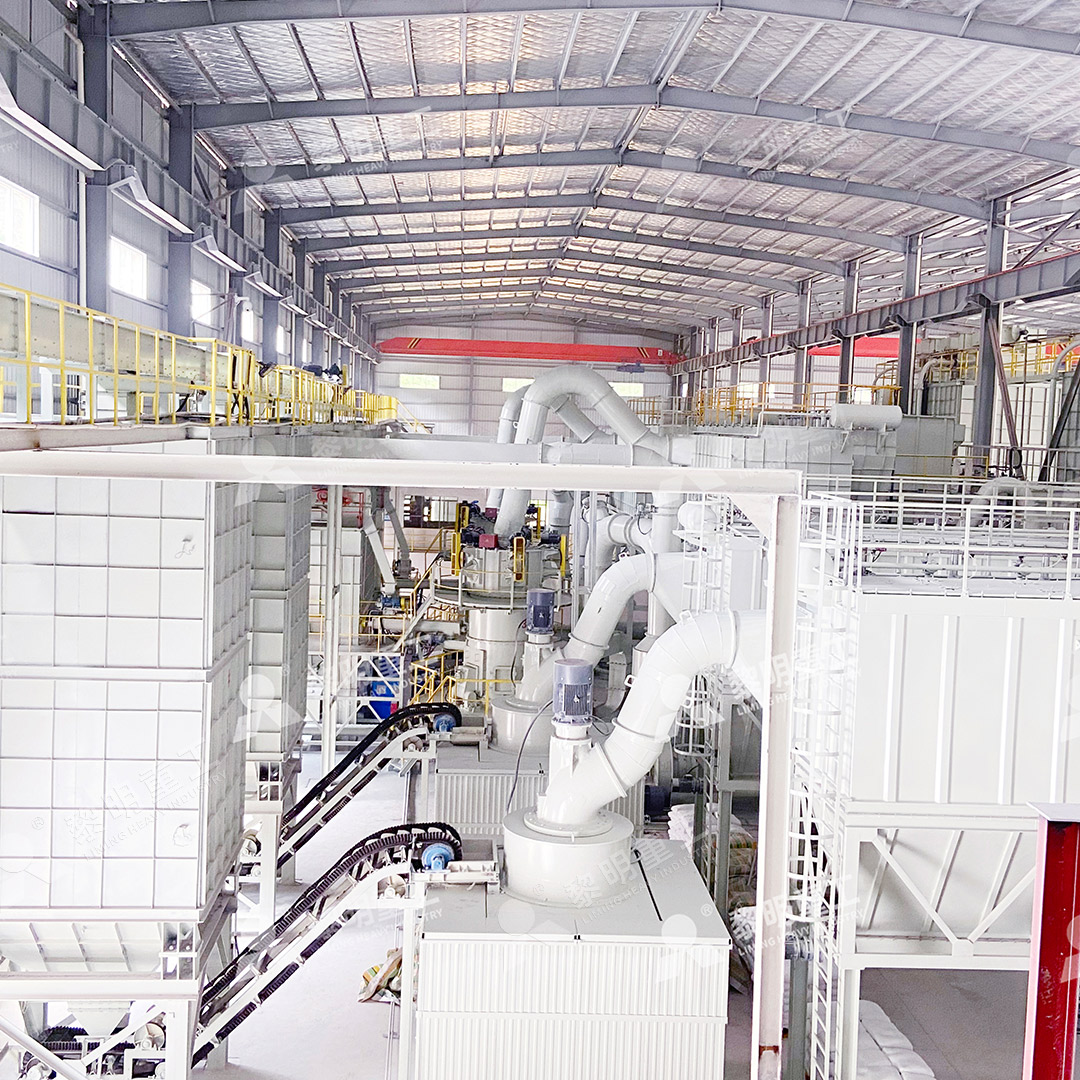
High-Efficiency 3500 Mesh Fluorite Powder Grinding Mill for Ultra-Fine Processing
We provide a wide range of mills — including Raymond mill, trapezoidal mill, vertical mill, ultrafine mill, and ball mill, obtained ISO9001 international quality certification, EU CE certification, and Customs Union CU-TR certification. Suitable for processing minerals such as limestone, phosphate, quicklime, kaolin, talc, barite, bentonite, calcium carbonate, dolomite, coal, gypsum, clay, carbon black, slag, cement raw materials, cement clinker, and more.
The discharge range of these mills can be adjusted to meet specific processing needs, typically from 80-400 mesh, 600-3250 mesh, and can achieve the finest particle size of up to 6000 mesh(D50).
If you are looking for a reliable grinding solution to turn stone or minerals into fine powder, please feel free to contact our online customer service.
Revolutionizing Ultra-Fine Fluorite Processing with Advanced Grinding Technology
Fluorite, also known as fluorspar, is a critical mineral used across industries such as metallurgy, ceramics, chemical manufacturing, and optics. For applications requiring exceptional purity and particle size distribution, achieving 3500 mesh (approximately 3-4 microns) ultra-fine powder is non-negotiable. Traditional grinding methods often fall short due to high energy consumption, equipment wear, and inconsistent product quality. Our latest innovation—the MW Ultrafine Grinding Mill—addresses these challenges head-on, delivering unparalleled efficiency, precision, and environmental compliance.

Why 3500 Mesh Matters for Fluorite
Ultra-fine fluorite powder with a fineness of 3500 mesh is essential for high-value applications. In the paint and coating industry, it enhances opacity and durability. In pharmaceuticals and food additives, it ensures consistent dissolution and bioavailability. For optics and electronics, the purity and uniformity of sub-micron particles directly impact performance. Traditional ball mills and jet mills struggle to achieve this fineness without excessive energy consumption or contamination. Our MW Ultrafine Grinding Mill, however, is engineered specifically for such demanding tasks.
The MW Ultrafine Grinding Mill: A Game-Changer for Ultra-Fine Processing
Based on years of field experience and continuous R&D, the MW Ultrafine Grinding Mill is our flagship solution for ultra-fine fluorite grinding. Let’s break down why it stands out:
1. Superior Yielding and Energy Efficiency
The newly designed grinding curves of the roller and ring enhance grinding efficiency dramatically. Compared to jet mills and stirred mills, the MW series achieves 40% higher capacity at the same fineness and power. When benchmarked against ball mills, the yield is doubled. Yet, the system energy consumption is only 30% of a jet mill. For a fluorite processing plant producing 5-10 tons per hour of 3500 mesh powder, this translates into substantial annual savings.
2. Adjustable Fineness from 325 to 2500 Mesh (and Beyond)
The MW Ultrafine Grinding Mill incorporates a cage-type powder selector based on German technology. This enables precise adjustment of product fineness between 325 and 2500 mesh, with screening rates achieving d97 ≤ 5μm in a single pass. For customers targeting 3500 mesh, the mill can be fine-tuned to exceed typical specifications, ensuring that particles below 4 microns constitute the majority of the output.
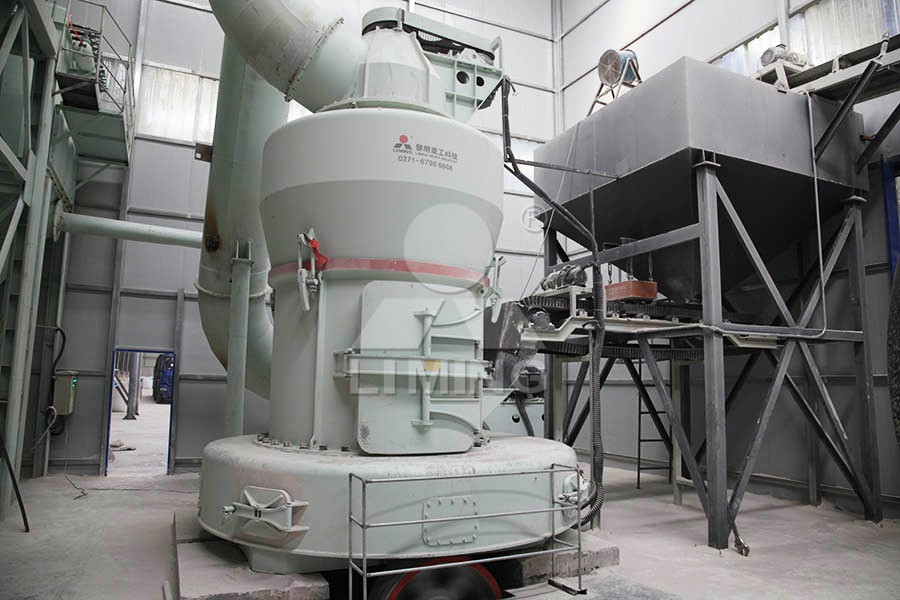
3. Zero Rolling Bearings or Screws in the Grinding Chamber
One of the most common maintenance headaches in grinding mills is bearing failure or screw loosening. The MW Ultrafine Grinding Mill eliminates this issue entirely. There are no rolling bearings or screws inside the chamber. The lubricating device is mounted externally on the main shaft, allowing for 24-hour continuous operation without shutdown for lubrication. This design drastically reduces downtime and maintenance costs.
4. Eco-Friendly Operation with Pulse Dust Collection
Fluorite processing can generate fine dust that poses health and environmental risks. The MW mill is equipped with an efficient pulse dust collector and silencer. The entire milling system operates under negative pressure, ensuring zero dust emission. Noise levels are minimized through the use of mufflers and noise-elimination rooms. This makes the MW mill fully compliant with strict environmental regulations, a crucial factor for plants aiming for green certification.
5. Digitalized Manufacturing for Precision
Every MW Ultrafine Grinding Mill is produced using tens of lines of numerical control machine tools. Operations like steel plate cutting, bending, planing, milling, and paint spraying are all computer-controlled. This ensures that core components—such as the grinding ring and roller—are manufactured with micron-level precision. The result is a machine that operates smoothly, reliably, and consistently over its lifespan.
How the MW Ultrafine Grinding Mill Works for Fluorite
The working principle is elegantly simple yet highly effective. Fluorite feed material (0-20 mm) is first crushed by a hammer crusher. The crushed material is then elevated to a hopper and fed evenly onto the center of the upper turnplate by a vibrating feeder. Centrifugal force pushes the material toward the raceway of the ring, where it is ground by dozens of rollers rotating against the ring. After the first stage, the material moves to second and third turnplates for further grinding. Air from the blower carries the powder to the cage-type separator. Coarse particles drop back for regrinding, while fine powder enters the cyclone collector and is discharged as the final product. The air, now containing only trace dust, passes through the pulse filter and muffler before being released.

Real-World Performance: What Users Are Saying
One of our clients in the non-metallic mineral processing sector switched from a jet mill to the MW Ultrafine Grinding Mill for fluorite grinding. They reported a 50% increase in throughput while reducing energy costs by two-thirds. The product consistency improved significantly, with 95% of particles passing 3500 mesh. Maintenance intervals extended from monthly to quarterly. The client’s environmental audit also showed a 90% reduction in airborne particulate matter.
Another Option: LUM Ultrafine Vertical Grinding Mill for High-Capacity Needs
For operations requiring even larger capacities (5-18 tph) and vertical integration, the LUM Ultrafine Vertical Grinding Mill is an excellent alternative. It combines Taiwan grinding roller technology with German powder separation. The roller shell and lining plate are designed to form a stable material layer, minimizing repeated grinding and iron contamination. The reversible structure allows for rapid roller replacement, reducing shutdown time. The LUM mill also features a multi-head powder separator with PLC control, enabling precise adjustment of grinding pressure and speed. Energy savings of 30-50% compared to conventional mills are typical.
Frequently Asked Questions (FAQ)
Q1: What is the maximum feed size for the MW Ultrafine Grinding Mill?
A: The MW mill accepts feed material up to 20 mm. For larger lumps, a primary crusher is recommended before feeding.
Q2: Can the MW mill achieve 3500 mesh for fluorite consistently?
A: Yes, with proper adjustment of the cage-type powder selector and grinding parameters, the MW mill can produce powder with fineness exceeding 2500 mesh, including 3500 mesh (approximately 3-4 microns) at high throughput.
Q3: How does the MW mill compare to jet mills in energy consumption?
A: The MW mill consumes only about 30% of the energy required by a jet mill for the same fineness and capacity, making it far more cost-effective for ultra-fine grinding.
Q4: What maintenance is required for the MW Ultrafine Grinding Mill?
A: Since there are no bearings or screws inside the grinding chamber, maintenance is minimal. The external lubrication system allows for continuous operation. Regular checks of the roller and ring wear are recommended every 2-3 months.
Q5: Is the MW mill environmentally friendly?
A: Absolutely. The integrated pulse dust collector and silencer ensure that dust emission and noise levels are well within international environmental standards. The system operates under negative pressure to prevent any dust leakage.
Q6: Can the MW mill handle materials other than fluorite?
A: Yes, it is suitable for grinding a wide range of non-metallic minerals, including calcite, dolomite, talc, barite, gypsum, marble, and more, with similar fineness requirements.
Q7: What is the typical capacity for fluorite at 2500 mesh?
A: Capacity depends on feed size and required fineness, but typical throughput ranges from 0.5 to 25 tph for the MW series. For 3500 mesh, expect yields in the lower end of that range, around 2-8 tph.
Q8: How does the LUM Ultrafine Vertical Grinding Mill differ from the MW?
A: The LUM mill uses a vertical design with a rotating millstone and stationary rollers, offering higher capacity (5-18 tph) and better suitability for abrasive materials. It also includes reversible roller structure for easier maintenance.
Q9: Do you provide spare parts and technical support?
A: Yes, LIMING takes full responsibility for all machines produced. We offer original spare parts, technical services, and remote troubleshooting to ensure worry-free operation.
Q10: What is the warranty period for the MW Ultrafine Grinding Mill?
A: Standard warranty is 12 months from commissioning or 18 months from shipment, whichever comes first. Extended warranty options are available upon request.