
Complete Green Zoisite Grinding Mill Plant Equipment for Sale
We provide a wide range of mills — including Raymond mill, trapezoidal mill, vertical mill, ultrafine mill, and ball mill, obtained ISO9001 international quality certification, EU CE certification, and Customs Union CU-TR certification. Suitable for processing minerals such as limestone, phosphate, quicklime, kaolin, talc, barite, bentonite, calcium carbonate, dolomite, coal, gypsum, clay, carbon black, slag, cement raw materials, cement clinker, and more.
The discharge range of these mills can be adjusted to meet specific processing needs, typically from 80-400 mesh, 600-3250 mesh, and can achieve the finest particle size of up to 6000 mesh(D50).
If you are looking for a reliable grinding solution to turn stone or minerals into fine powder, please feel free to contact our online customer service.
Complete Green Zoisite Grinding Mill Plant Equipment for Sale
For mining and industrial operations seeking to process zoisite and similar non-metallic minerals into high-value, ultra-fine powders, selecting the right grinding technology is paramount. A complete plant must not only deliver exceptional product quality and throughput but also adhere to stringent environmental and operational efficiency standards. This article outlines the key considerations for a state-of-the-art zoisite processing line and highlights core equipment engineered for performance and sustainability.
The Zoisite Processing Challenge: From Ore to Premium Powder
Zoisite, valued in various industrial applications, requires precise grinding to achieve the desired fineness and purity. The ideal processing plant must handle material from initial crushing through to final, classified powder collection. Key challenges include controlling particle size distribution (often targeting the 325-2500 mesh range), minimizing iron contamination to preserve material whiteness, managing energy consumption, and ensuring the entire process is dust-free and low-noise. A successful plant integrates several stages: primary crushing, controlled feeding, efficient grinding, accurate powder separation, and environmentally sound product collection.
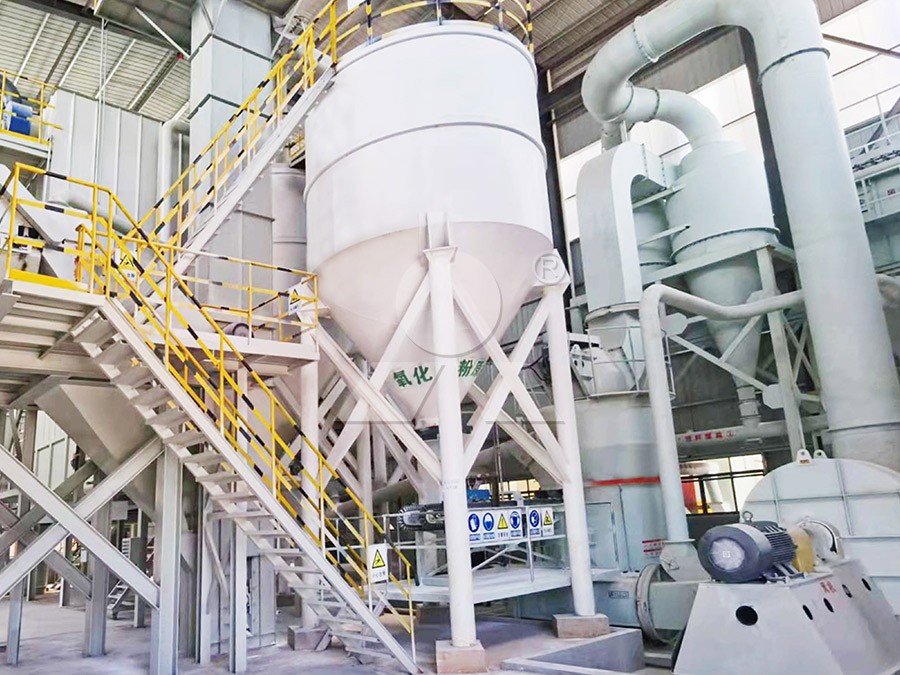
Core of the Plant: Advanced Grinding Mill Technology
The heart of any fine powder production line is the grinding mill. For zoisite, which demands ultra-fine outputs with high purity, traditional ball mills often fall short on efficiency and can introduce contamination. Modern vertical roller mills and advanced trapezium mills offer superior solutions. They integrate grinding, drying (if needed), and classifying principles to achieve higher yields with significantly lower energy footprints. Crucially, their designs minimize metal-to-metal contact in the grinding chamber, dramatically reducing iron pollution—a critical factor for preserving the quality of minerals like zoisite.
Spotlight on Key Equipment: The MW Ultrafine Grinding Mill
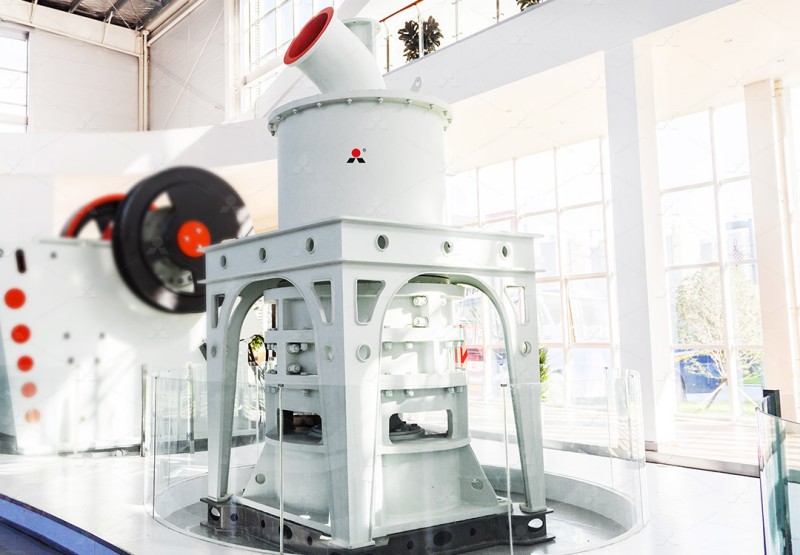
For operations prioritizing ultra-fine powder production in the range of 325 to 2500 meshes, the MW Ultrafine Grinding Mill represents a pinnacle of design. Engineered for customers who need to make ultra-fine powder, this system is a standout choice for processing zoisite. Its innovative design eliminates rolling bearings and screws inside the grinding chamber, removing common failure points and concerns about seal damage or loose components. This leads to remarkable operational reliability.
The mill’s efficiency is boosted by a newly designed grinding curve for the roller and ring, achieving a production capacity that can be 40% higher than jet mills and double that of ball mills for the same power input. Energy consumption is drastically cut to about 30% of a jet mill’s. A German-technology, cage-type powder selector allows precise fineness adjustment, ensuring a superb screening rate where 97% of particles (d97) can be ≤5μm in a single pass. Furthermore, the system is inherently green, equipped with an efficient pulse dust collector and muffler to ensure dust-free operation and reduced noise, aligning production with national environmental protection standards.
Building a Cohesive and Green Production Line
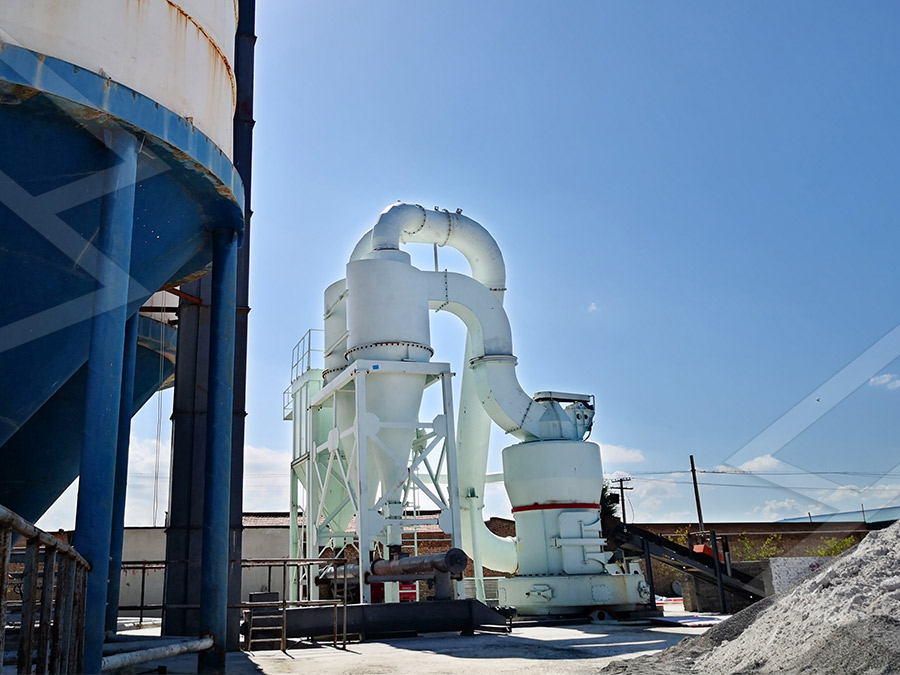
A complete plant involves more than just the mill. It is a synchronized system. A jaw crusher provides primary size reduction to a feed size suitable for the mill (e.g., 0-20mm for the MW Mill). Vibrating feeders ensure a consistent and controllable material flow. The ground material is then pneumatically transported to a high-efficiency powder separator. Here, the LUM Ultrafine Vertical Grinding Mill also shows its strengths for such integrated systems. With its latest grinding roller and German powder separating technology, it offers exceptional energy savings of 30%-50% and features a unique reversible roller structure for easier, faster maintenance, minimizing downtime.
The final, critical component is the dust collection and product handling system. Modern pulse-jet baghouse collectors, often included with mills like the MW series, capture over 99.9% of particulates, ensuring no dust pollution. The collected ultra-fine zoisite powder is then conveyed to silo storage, ready for packaging or further processing. This closed-loop system operates under negative pressure, guaranteeing a clean workshop environment.
Conclusion: Investing in Performance and Responsibility
Investing in a complete zoisite grinding plant is a strategic decision that balances productivity with planetary responsibility. By selecting equipment built on principles of high precision, energy conservation, and robust environmental controls—such as the MW Ultrafine Grinding Mill or the LUM Ultrafine Vertical Grinding Mill—operators secure a competitive edge. They achieve superior product quality for markets in ceramics, advanced materials, and cosmetics, while simultaneously fulfilling the highest standards of sustainable industrial practice. The result is a future-proof operation that delivers value both on the balance sheet and to the environment.
Frequently Asked Questions (FAQ)
1. What is the typical feed size for your ultra-fine grinding mills in a zoisite plant?
For optimal ultra-fine grinding, the feed material should first be crushed to a smaller size. Our MW Ultrafine Grinding Mill, for instance, accepts an input size of 0-20 mm. A primary jaw crusher in the plant circuit is used to achieve this from raw ore.
2. How do you control iron contamination during the grinding of sensitive minerals like zoisite?
Our advanced mill designs, such as the MW and LUM series, specifically address this. They feature grinding chambers with no rolling bearings or screws inside, and utilize wear-resistant alloys for grinding parts. This design minimizes mechanical wear and the introduction of metallic iron, crucial for maintaining high product whiteness and purity.
3. What fineness range can your plant achieve for zoisite powder?
Our plants are engineered for broad fineness control. With mills like the MW series equipped with advanced cage-type powder selectors, the final product fineness can be precisely adjusted between 325 mesh and 2500 mesh (approximately 5-45 microns), with the ability to achieve d97 ≤ 5μm.
4. Is the grinding plant environmentally friendly regarding dust and noise?
Absolutely. A complete plant from our portfolio is designed as a closed, negative-pressure system. It integrates high-efficiency pulse dust collectors (standard on mills like the MW) that prevent dust emission. Additionally, mufflers and sound insulation measures are implemented to significantly reduce operational noise, ensuring compliance with environmental regulations.
5. What kind of after-sales support and spare parts availability can we expect?
We take full responsibility for our equipment. We provide comprehensive technical services and guarantee the supply of original, high-quality spare parts. Our digitalized manufacturing ensures part precision and interchangeability, supporting worry-free, long-term operation of your grinding plant.