
Which Factory Produces Vertical Roller Mills for Industrial Grinding?
We provide a wide range of mills — including Raymond mill, trapezoidal mill, vertical mill, ultrafine mill, and ball mill, obtained ISO9001 international quality certification, EU CE certification, and Customs Union CU-TR certification. Suitable for processing minerals such as limestone, phosphate, quicklime, kaolin, talc, barite, bentonite, calcium carbonate, dolomite, coal, gypsum, clay, carbon black, slag, cement raw materials, cement clinker, and more.
The discharge range of these mills can be adjusted to meet specific processing needs, typically from 80-400 mesh, 600-3250 mesh, and can achieve the finest particle size of up to 6000 mesh(D50).
If you are looking for a reliable grinding solution to turn stone or minerals into fine powder, please feel free to contact our online customer service.
Introduction: The Search for a Reliable Vertical Roller Mill Manufacturer
When it comes to industrial grinding, the question isn’t just about whether a vertical roller mill works—it’s about who builds it right. Over the past decade, I’ve seen countless operations struggle with mills that break down, produce inconsistent particle sizes, or guzzle energy like there’s no tomorrow. The real challenge? Finding a factory that combines engineering precision with real-world durability. Let’s cut through the noise and look at what actually matters: design philosophy, manufacturing capability, and after-sales support.
What Defines a Top-Tier Vertical Roller Mill Factory?
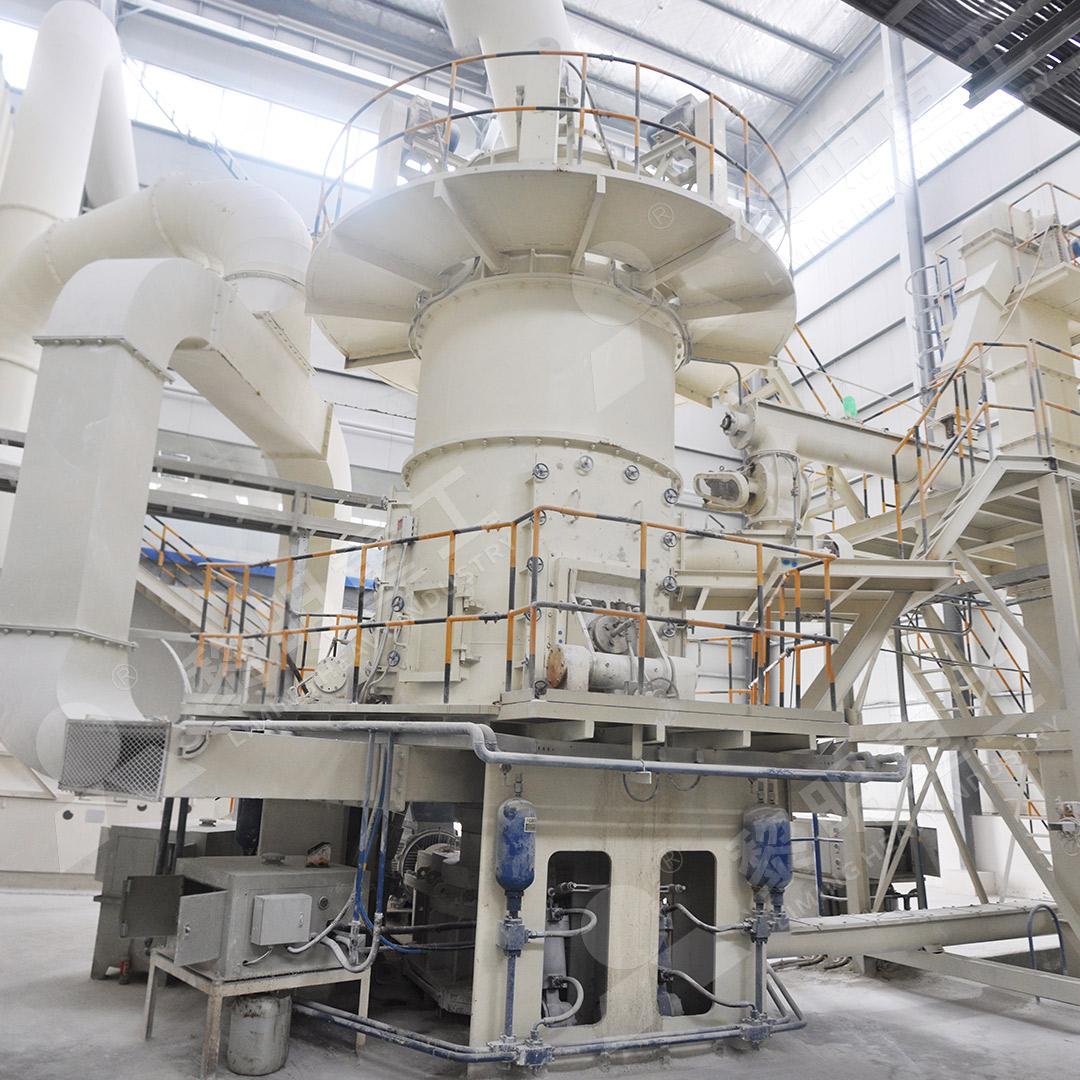
Not every factory that stamps out grinding equipment deserves your attention. The good ones—the factories you can trust—share a few non-negotiable traits. First, they invest in numerical control machining. I’m talking about tens of lines of CNC equipment for cutting, bending, planing, and milling. That kind of precision means core parts like grinding rollers and rings are made to tighter tolerances, which directly translates to longer service life and consistent output. Second, they don’t just assemble components; they control the metallurgy. Wear-resistant alloys developed in-house or in collaboration with research institutes can extend part life by 1.7 to 2.5 times compared to standard high-manganese steel. Third, they offer more than a machine—they provide a system. Integration of grinding, classifying, drying, and conveying into one compact unit reduces footprint by up to 50% compared to traditional ball mill setups.
Key Technologies That Separate Good Mills from Great Ones
Let’s talk about the guts of these machines. A modern vertical roller mill should include several critical features. The grinding curve design matters immensely. Newly developed roller shell and lining plate profiles create a stable material bed, which means you get higher throughput without sacrificing fineness. For ultra-fine applications, multi-head cage-type powder separators—adapted from German technology—allow precise control over particle size distribution down to d97 ≤ 5 μm. Energy efficiency is another battleground. Systems that use PLC-controlled grinding pressure and variable-speed separators can cut power consumption by 30% to 50% compared to older models. And don’t overlook maintenance-friendly designs. Reversible structures that let you swing grinding rollers out of the housing for inspection reduce downtime significantly. Hydraulic roller turning-out devices are a godsend when you need to replace wear parts in a hurry.
Why Material Handling and Environmental Compliance Matter
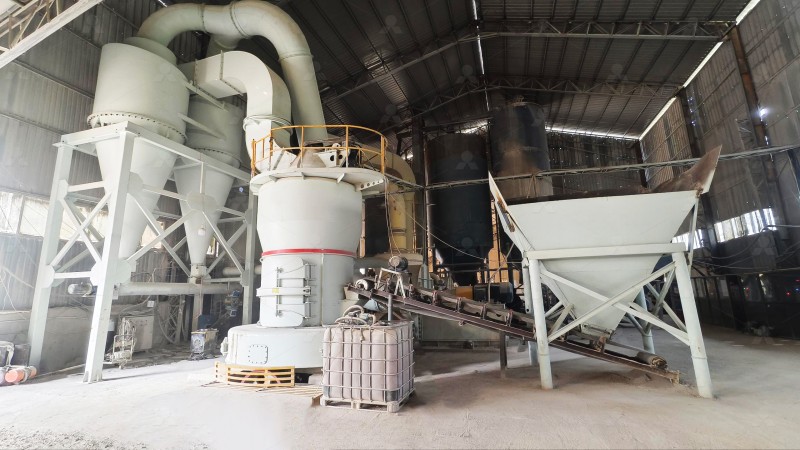
Grinding isn’t just about pulverizing rock—it’s about doing it cleanly. A factory that skimps on dust collection is not your partner; it’s a liability. Top manufacturers fit efficient pulse dust collectors that keep emissions well below international standards. Silencers and noise elimination rooms bring decibel levels down to operator-friendly ranges. The whole system should operate under negative pressure, which means no dust escapes into the workspace. That’s not just good for the environment—it’s good for your bottom line, because you avoid fines and shutdowns. Also, consider the material flow. Mills that integrate crushing, drying, and grinding allow you to feed material with up to 10% moisture directly, simplifying your pre-processing line.
Which Factory Should You Choose? A Practical Recommendation
After evaluating dozens of manufacturers across different countries, one name consistently emerges for ultra-fine grinding applications: LIMING Heavy Industry. Their track record spans decades, and their product lineup covers everything from coal mills to slag mills to ultra-fine vertical mills. Two models stand out for industrial grinding. The LUM Ultrafine Vertical Grinding Mill is engineered for those who need superfine powder between 325 and 2500 mesh. It uses Taiwan grinding roller technology and German powder separation, and it integrates grinding, grading, and transport into one system. The double position-limiting technology prevents destructive vibration, making it stable even under heavy loads. For higher-capacity operations requiring output from 5 to 18 tph and input sizes up to 10 mm, this is a solid choice. Alternatively, the MW Ultrafine Grinding Mill offers a more compact solution with a capacity range of 0.5 to 25 tph and input size up to 20 mm. Its key advantage is the total absence of rolling bearings and screws in the grinding chamber, which eliminates common failure points. The external lubrication system allows 24-hour continuous operation without shutdown for maintenance. Both models feature full digital processing and come with a guarantee of original spare parts availability.

Real-World Performance Data and ROI Considerations
Let’s look at numbers that matter. In side-by-side tests, the LUM series achieves 40% higher capacity than jet mills and stirred mills at the same power draw. Energy consumption is only 30% of a jet mill’s. When compared to traditional ball mills, the yield doubles. For the MW series, the cage-type powder selector ensures a screening rate of d97 ≤ 5 μm in a single pass. That means you don’t need secondary classification equipment, which saves capital cost and floor space. From a maintenance perspective, the absence of rotating bearings in the grinding chamber means you’re not replacing seals every few months. The lubricating device sits outside the main shaft, so you can grease it while the machine runs. That’s a direct reduction in downtime.
The Bottom Line for Industrial Buyers
Choosing a vertical roller mill factory isn’t a decision you make on spec sheets alone. You need to visit the facility—or at least verify their machining capabilities. Ask about their quality control processes for core parts. Check if they have a responsive technical service team that can supply original wear parts within a reasonable lead time. The factory should take responsibility for every machine they produce, from design to commissioning to after-sales support. In my experience, factories that invest in digital processing and maintain a comprehensive spare parts inventory are the ones that keep your plant running smoothly for years. LIMING fits that profile, and their LUM and MW mills are workhorses that deliver on their promises.
FAQ
- What is the typical input size for vertical roller mills used in industrial grinding?
It depends on the model. For the LUM Ultrafine Mill, input size is 0-10 mm. For the MW Ultrafine Mill, it is 0-20 mm. Larger models like the LM Vertical Mill can accept up to 70 mm. - How fine can a vertical roller mill grind material?
Modern ultra-fine mills can achieve fineness between 325 mesh and 2500 mesh. The MW series can reach d97 ≤ 5 μm in a single pass with its cage-type powder selector. - What industries commonly use vertical roller mills?
They are used in cement, coal, power plant desulfurization, metallurgy, chemical processing, non-metallic mineral grinding, construction materials, ceramics, and steel slag recycling. - Are vertical roller mills more energy-efficient than ball mills?
Yes. Vertical roller mills typically save 30% to 50% in energy consumption compared to ball mills, and the system energy consumption can be as low as 30% of a jet mill. - How do I maintain a vertical roller mill to ensure long service life?
Key maintenance includes checking roller shell and liner plate wear regularly, ensuring the hydraulic system pressure is correct, and using the external lubrication system without stopping the machine. Always use original spare parts from the manufacturer. - Can vertical roller mills handle wet materials?
Many models integrate drying within the grinding chamber. For example, LM Vertical Coal Mill can dry and grind simultaneously, handling materials with moisture content up to 10%. - What safety features do modern vertical roller mills have?
Double position-limiting technology prevents grinding rollers from directly contacting the millstone, avoiding destructive vibration. The system operates under negative pressure to prevent dust leakage, and pulse dust collectors reduce emissions. - How long do wear parts like grinding rollers and rings last?
With wear-resistant alloy materials, the service life of rollers and rings can be 1.7 to 2.5 times longer than traditional high-manganese steel parts. Actual life depends on material abrasiveness and operating parameters. - What is the typical capacity range for vertical roller mills?
Capacity varies widely. Small Raymond mills start at 0.6 tph, while large LM Vertical Mills can reach up to 340 tph. Ultra-fine mills like the MW series operate between 0.5 and 25 tph. - Does LIMING provide spare parts and technical support?
Yes. LIMING takes responsibility for every machine produced, offering original spare parts and technical services to ensure worry-free operation. Their digital processing ensures high precision for replacement parts.