
Nickel Ore Vertical Grinding Mill Machinery for Efficient Mineral Processing
We provide a wide range of mills — including Raymond mill, trapezoidal mill, vertical mill, ultrafine mill, and ball mill, obtained ISO9001 international quality certification, EU CE certification, and Customs Union CU-TR certification. Suitable for processing minerals such as limestone, phosphate, quicklime, kaolin, talc, barite, bentonite, calcium carbonate, dolomite, coal, gypsum, clay, carbon black, slag, cement raw materials, cement clinker, and more.
The discharge range of these mills can be adjusted to meet specific processing needs, typically from 80-400 mesh, 600-3250 mesh, and can achieve the finest particle size of up to 6000 mesh(D50).
If you are looking for a reliable grinding solution to turn stone or minerals into fine powder, please feel free to contact our online customer service.
Introduction to Nickel Ore Grinding Challenges
Nickel ore processing presents unique demands on grinding equipment. The material’s hardness, moisture content, and abrasive nature require machinery that can deliver consistent output while minimizing wear and energy consumption. Traditional ball mills often fall short in these areas, leading to higher operational costs and lower throughput. Vertical grinding mill technology, however, offers a solution that combines efficiency, durability, and precision.
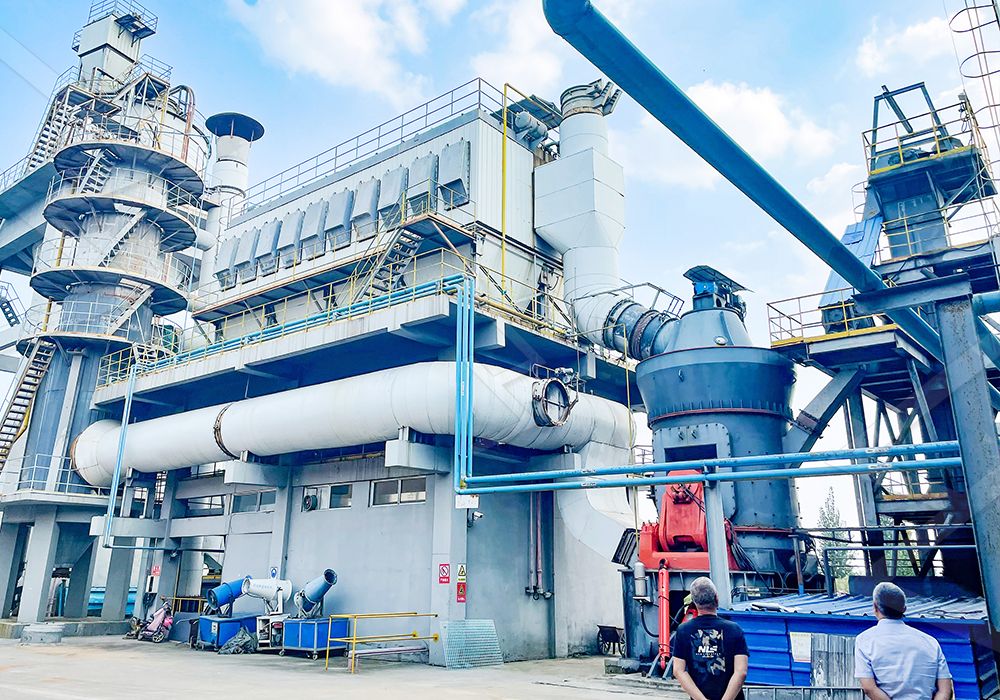
Why Vertical Grinding Mills Dominate Nickel Ore Processing
Vertical grinding mills have become the preferred choice for nickel ore beneficiation plants worldwide. Their design integrates multiple functions—crushing, grinding, classifying, and conveying—into a single unit. This reduces the footprint by up to 50% compared to traditional ball mill systems and cuts energy consumption by 30–40%. For operations handling nickel ore with varying feed sizes, the adaptability of these mills is a significant advantage.
Our LUM Ultrafine Vertical Grinding Mill is specifically engineered for such demanding tasks. With an input size of 0–10 mm and a capacity range of 5–18 tph, it excels in producing ultra-fine powders from nickel ore. The mill incorporates advanced roller shell and lining plate curves that promote material layer formation, ensuring high single-pass yields and improved product whiteness—a critical factor for nickel concentrates.
Key Features for Efficient Nickel Ore Grinding
Modern vertical mills like our MW Ultrafine Grinding Mill are designed with features that directly address nickel ore processing pain points. The MW mill handles feed sizes up to 20 mm and delivers capacities from 0.5 to 25 tph, making it suitable for both small-scale and medium-scale operations.
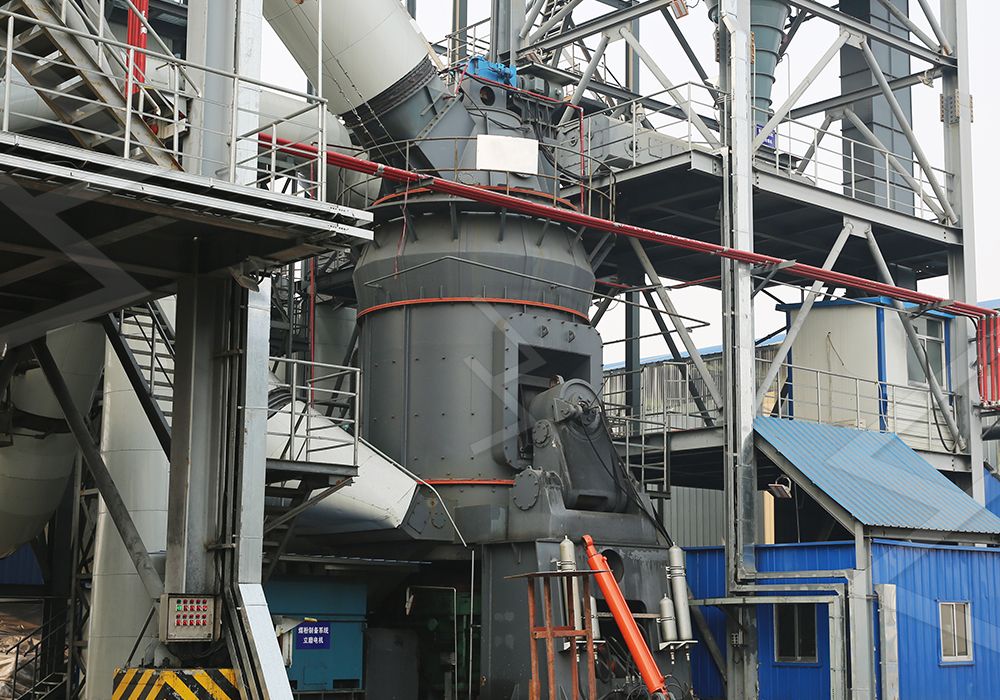
One standout feature is the elimination of rolling bearings and screws inside the grinding chamber. This design choice removes common failure points—no bearing seal damage, no loose screws. The external lubricating system allows for maintenance without halting production, enabling 24-hour continuous operation.
The MW mill also uses a cage-type powder selector based on German technology, which achieves fineness adjustments from 325 to 2500 mesh (down to d97≤5μm). For nickel ore, this means precise control over particle size distribution, which directly impacts downstream leaching or smelting efficiency.
Environmental and Operational Benefits
Nickel processing plants face increasing scrutiny regarding dust and noise pollution. Our vertical grinding mills are equipped with efficient pulse dust collectors and silencers. The entire system operates under negative pressure, preventing dust spillage. The MW mill, for instance, meets national environmental standards while maintaining high productivity.
Digital machining ensures precision in every component. From steel plate cutting to paint spraying, numerical control machines maintain tolerances that prolong equipment life. This level of manufacturing quality reduces unplanned downtime—a critical factor for mines where every hour of lost production impacts profitability.
Comparing Vertical Mill Technologies
Different nickel ore characteristics may call for different mill configurations. The LUM Ultrafine Vertical Grinding Mill employs a multi-head powder separator with PLC control, allowing operators to precisely adjust grinding pressure and rotor speed. This reduces energy consumption by 30–50% compared to conventional mills while maintaining product quality.
For operations requiring higher throughput, our LM Vertical Grinding Mill offers capacities up to 340 tph with an input size up to 70 mm. Its integrated design makes it ideal for large-scale nickel processing where drying, grinding, and classifying happen in one unit. The short material residence time (2–3 minutes) minimizes iron contamination, which is crucial for nickel ore destined for stainless steel production.
Maintenance and Spare Parts Support
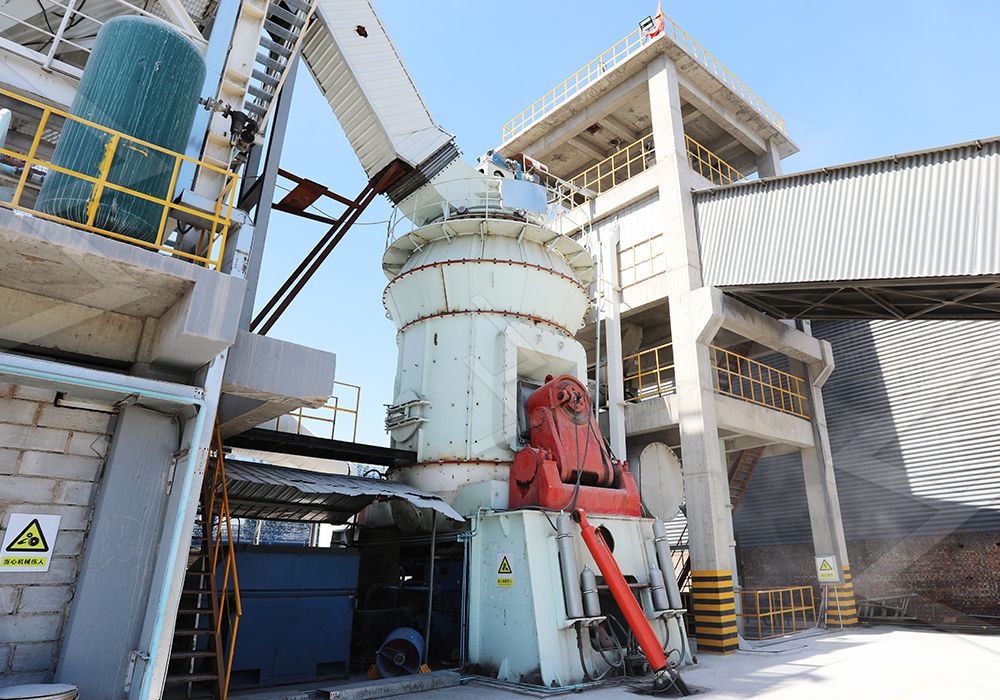
One concern for remote mining operations is the availability of spare parts. Both the LUM and MW mills feature reversible structures that simplify roller shell and liner plate replacement. The hydraulic adjustment system allows maintenance crews to swing the grinding roller out of the body without heavy lifting equipment, reducing shutdown time.
We maintain a comprehensive inventory of original spare parts. Our service team provides technical support throughout the equipment’s lifecycle, from installation to optimization. This ensures that your nickel ore grinding operation remains productive and worry-free.
Conclusion: Choosing the Right Mill for Your Nickel Operation
Selecting the appropriate vertical grinding mill depends on your specific nickel ore characteristics, desired throughput, and product fineness requirements. The MW Ultrafine Grinding Mill suits operations needing ultra-fine powders with minimal environmental impact, while the LUM Ultrafine Vertical Grinding Mill offers enhanced energy savings and maintenance convenience. For large-scale operations, the LM Vertical Grinding Mill provides the highest capacity with integrated functionality.
Regardless of your choice, investing in modern vertical mill technology pays dividends through lower energy costs, reduced maintenance, and consistent product quality. Contact our engineering team to discuss how our grinding solutions can optimize your nickel ore processing.
Frequently Asked Questions
- What is the typical reduction ratio for vertical grinding mills processing nickel ore?
Vertical mills can achieve reduction ratios of 20:1 to 100:1 in a single pass, depending on the model and operating parameters. For example, the LUM mill can reduce 10 mm feed to powder as fine as d97≤5μm. - How does moisture content in nickel ore affect grinding performance?
High moisture content (above 10%) can cause material buildup on grinding surfaces and reduce classifier efficiency. Our vertical mills incorporate hot air drying systems that handle moisture levels up to 15% without compromising throughput. - What is the expected wear life of grinding rollers in nickel ore applications?
With our wear-resistant alloy rollers and liners, service life typically ranges from 6,000 to 12,000 operating hours for nickel ore, depending on abrasiveness. The reversible structure allows extending life by flipping worn components. - Can the same mill process different types of nickel ore (saprolite vs. limonite)?
Yes. The PLC-controlled system allows operators to adjust grinding pressure, separator speed, and feed rate to accommodate varying ore hardness and moisture. We recommend pilot testing to optimize settings for specific feedstocks. - What safety features are included in these vertical mills?
All models include electronic and mechanical position-limiting technology to prevent roller-to-table contact, automatic shutdown on vibration detection, and sealed systems for dust containment. Emergency stop buttons are standard. - How does the initial investment compare to a ball mill system?
While the capital cost of a vertical mill is 20–30% higher than a comparable ball mill system, the reduced installation costs (50% less footprint), lower energy consumption (30–40% reduction), and decreased maintenance often result in payback within 18–24 months. - What particle size distribution can I expect for nickel ore ground in the MW mill?
The MW mill produces powders with a narrow size distribution. For example, at 1250 mesh (10μm), the screening rate can achieve d97≤5μm. This uniformity is beneficial for downstream processes like hydrometallurgical leaching. - Is training provided for plant operators?
Yes. We offer on-site commissioning support and operator training covering startup, shutdown, troubleshooting, and routine maintenance. Our technical team remains available via phone or video for ongoing support.