
LUM Ultrafine Vertical Mill for Magnesium Ore Processing
We provide a wide range of mills — including Raymond mill, trapezoidal mill, vertical mill, ultrafine mill, and ball mill, obtained ISO9001 international quality certification, EU CE certification, and Customs Union CU-TR certification. Suitable for processing minerals such as limestone, phosphate, quicklime, kaolin, talc, barite, bentonite, calcium carbonate, dolomite, coal, gypsum, clay, carbon black, slag, cement raw materials, cement clinker, and more.
The discharge range of these mills can be adjusted to meet specific processing needs, typically from 80-400 mesh, 600-3250 mesh, and can achieve the finest particle size of up to 6000 mesh(D50).
If you are looking for a reliable grinding solution to turn stone or minerals into fine powder, please feel free to contact our online customer service.
LUM Ultrafine Vertical Mill for Magnesium Ore Processing
In the competitive landscape of mineral processing, achieving ultra-fine particle sizes with high efficiency and minimal environmental impact is paramount. For magnesium ore—a material prized for its lightweight properties and widespread use in alloys, refractories, and chemical industries—the grinding process demands precision, reliability, and energy consciousness. The LUM Ultrafine Vertical Grinding Mill emerges as a sophisticated solution engineered specifically to meet these rigorous demands, transforming raw magnesium ore into high-value, consistently fine powders.
The Challenge of Magnesium Ore Comminution
Magnesium-bearing minerals, such as magnesite or dolomite, often require fine to ultra-fine grinding to liberate the valuable component or to meet specific product specifications for downstream applications. Traditional grinding methods, including ball mills or older Raymond mill designs, can be plagued by issues like high energy consumption, excessive iron contamination from mechanical wear, inconsistent particle size distribution, and significant thermal generation that may affect material properties. Furthermore, operational stability and maintenance downtime are critical cost factors that modern operations must minimize.
Engineering Excellence: The LUM Ultrafine Vertical Mill Advantage
The LUM Ultrafine Vertical Grinding Mill is not merely an iteration of previous designs; it represents a holistic re-engineering based on decades of grinding technology expertise. Its core philosophy integrates advanced grinding mechanics with intelligent control systems to address the specific pain points of processing minerals like magnesium ore.
A cornerstone of its design is the unique roller shell and lining plate grinding curve. This proprietary geometry facilitates the rapid and stable formation of a material bed on the grinding table. For magnesium ore, this means more efficient inter-particle comminution with less direct metal-to-mineral contact, significantly reducing the risk of iron contamination—a crucial factor for maintaining product purity. The result is a higher yield of qualified product in a single pass, enhancing both throughput and product whiteness.
Precision, Control, and Operational Resilience
At the heart of the LUM mill’s precision is its multi-head powder separating technology, incorporating advanced German classification principles. Coupled with a PLC control system, it solves the twin challenges of achieving precise cut-points for ultra-fine powders (adjustable within a wide range) and allowing quick adaptation to different product fineness requirements. Operators gain exact command over grinding pressure, rotational speed, and classifier parameters, ensuring the target fineness for magnesium oxide or hydroxide powders is consistently met, often with energy savings of 30-50% compared to conventional mills.
Operational stability is engineered into the machine. The innovative double position-limiting technology employs both electronic and mechanical safeguards. This system prevents destructive impacts between the grinding roller and millstone—a vital feature that protects the mill from sudden shocks or vibrations, ensuring uninterrupted, stable operation crucial for continuous processing lines.
Designed for the Real World: Maintenance and Support
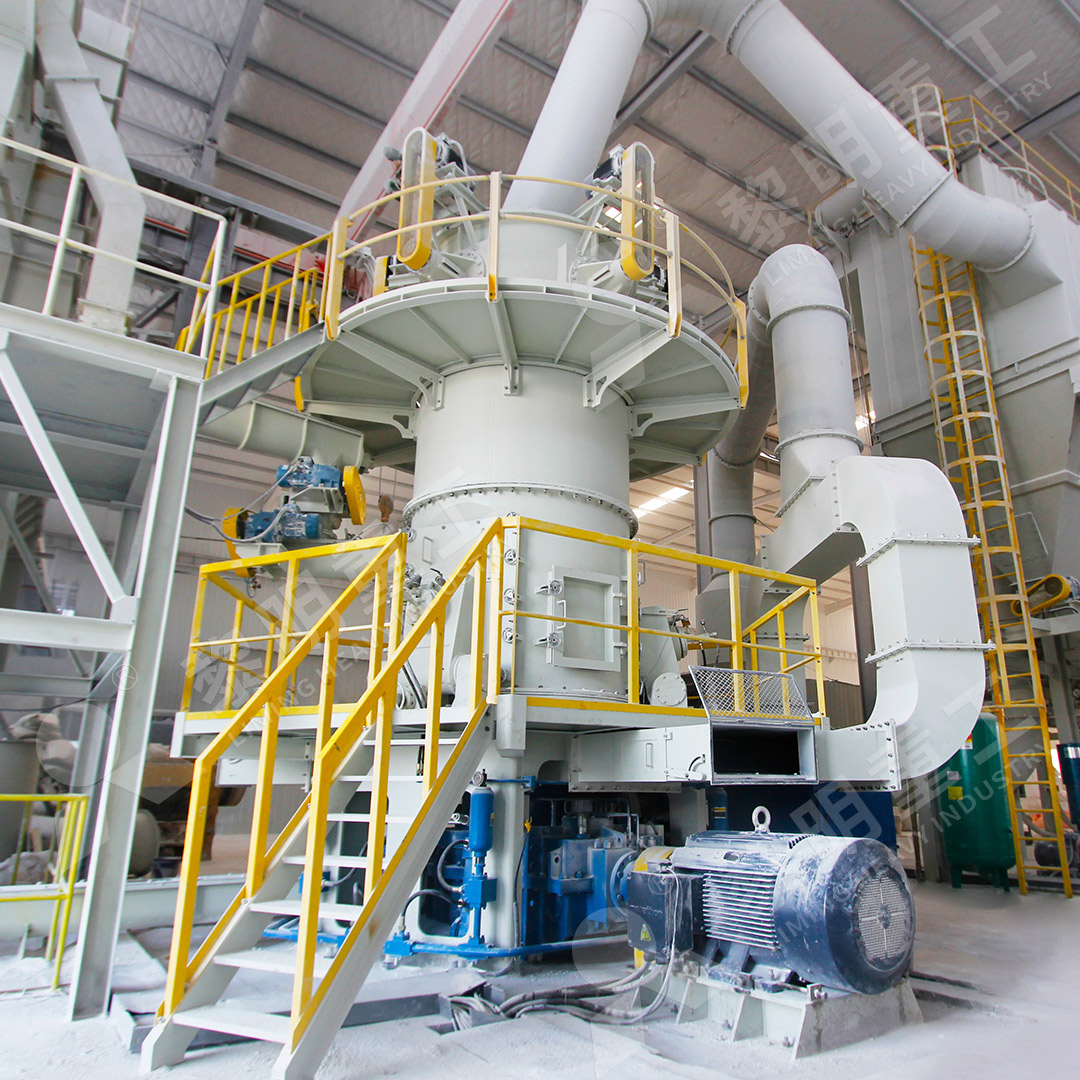
Understanding that maintenance accessibility defines practical uptime, the LUM mill features a reversible structure. Combined with its hydraulic adjustment system, this allows the heavy grinding rollers to be easily and safely swung out of the mill body. Maintenance personnel can then efficiently inspect, service, or replace wear parts like roller shells and liner plates, dramatically reducing shutdown periods and associated losses.
For operations requiring a different throughput or feed size profile, or for processing associated non-metallic minerals, our grinding portfolio offers complementary solutions. A notable example is the MW Ultrafine Grinding Mill. With an input size of 0-20 mm and a capacity range of 0.5-25 tph, the MW series is an excellent choice for producing ultra-fine powder from a variety of materials. It features a cage-type powder selector for precise separation (325-2500 meshes) and a unique chamber design with no rolling bearings or screws internally, eliminating common failure points and enabling worry-free, eco-friendly operation with its integrated pulse dust collector.
A Sustainable and Intelligent Processing Partner
The LUM Ultrafine Vertical Mill is built with a full lifecycle perspective. From its digitally processed, high-precision components ensuring long-term reliability, to its efficient pulse dust collector and noise reduction systems that keep emissions and sound levels well within environmental standards, it is a model of sustainable industrial design. Backed by LIMING’s commitment to providing original spare parts and comprehensive technical support, it ensures worry-free operation from commissioning through years of service.
For processors of magnesium ore aiming to enhance product quality, reduce operational costs, and minimize their environmental footprint, the LUM Ultrafine Vertical Grinding Mill presents a compelling, technologically advanced pathway. It is more than equipment; it is a strategic asset for achieving superiority in the fine powder market.
Frequently Asked Questions (FAQ)
1. What is the typical fineness range achievable for magnesium ore with the LUM Ultrafine Vertical Mill?
The LUM mill, with its advanced multi-head powder separator, can typically achieve a product fineness ranging from 325 mesh (45μm) up to 2500 mesh (5μm or finer), allowing precise tailoring to various application requirements for magnesium-based powders.
2. How does the LUM mill minimize iron contamination in the final magnesium product?
It employs several strategies: the unique grinding curve promotes material-bed grinding over direct impact, the grinding rollers and table do not make direct metal-to-metal contact during operation, and any incidental iron from wear is easily removed due to the mill’s design, ensuring high product purity and whiteness.
3. What are the key advantages of the LUM mill over a traditional ball mill for ultra-fine grinding?
Key advantages include significantly lower energy consumption (30-50% savings), a much smaller footprint, superior product purity with lower iron content, faster particle size adjustment, integrated drying capability (with hot air), and reduced noise and dust emissions.
4. How is maintenance handled on the large grinding rollers?
The mill is designed with a reversible structure and a hydraulic system. This allows operators to easily swing the entire grinding roller assembly out of the mill housing externally, providing safe and ample space for inspection, maintenance, or replacement of wear parts without complex internal dismantling.
5. Can the LUM mill handle moist feed materials?
Yes. The LUM vertical mill system can integrate a hot air source. As grinding occurs, the upward air flow simultaneously dries the material, making it suitable for processing feeds with a certain moisture content, a common feature in mineral processing.
6. What kind of automation and control does the mill offer?
It features a comprehensive PLC-based control system. This allows for precise digital control and monitoring of critical parameters like grinding pressure, classifier speed, feed rate, and temperature, enabling fully automated, stable operation and easy replication of product settings.
7. Is the LUM mill suitable only for magnesium ore?
No. While excellent for magnesium ore, its technology is versatile. It is highly effective for grinding a wide range of non-metallic minerals requiring ultra-fine powders, including calcite, marble, limestone, talc, barite, dolomite, and petroleum coke, among others.