
Large Raymond Mill in Non-Metallic Minerals Processing
We provide a wide range of mills — including Raymond mill, trapezoidal mill, vertical mill, ultrafine mill, and ball mill, obtained ISO9001 international quality certification, EU CE certification, and Customs Union CU-TR certification. Suitable for processing minerals such as limestone, phosphate, quicklime, kaolin, talc, barite, bentonite, calcium carbonate, dolomite, coal, gypsum, clay, carbon black, slag, cement raw materials, cement clinker, and more.
The discharge range of these mills can be adjusted to meet specific processing needs, typically from 80-400 mesh, 600-3250 mesh, and can achieve the finest particle size of up to 6000 mesh(D50).
If you are looking for a reliable grinding solution to turn stone or minerals into fine powder, please feel free to contact our online customer service.
Introduction to Large Raymond Mill in Non-Metallic Minerals Processing
In the ever-evolving world of industrial mineral processing, the large Raymond mill stands as a venerable workhorse, particularly within the non-metallic minerals sector. While modern innovations have introduced a suite of advanced grinding technologies, the fundamental principles of the Raymond mill, scaled up for higher throughput, remain profoundly relevant. These machines process materials like limestone, gypsum, barite, marble, and talc, transforming them into powders essential for construction, paint, plastics, and agriculture. However, today’s operations demand more than just size; they require precision, energy efficiency, and environmental compliance. This article delves into the nuances of operating large Raymond mills for non-metallic minerals, drawing on decades of field experience to highlight practical strategies for optimization, common pitfalls to avoid, and the role of ancillary equipment in achieving top-tier performance.
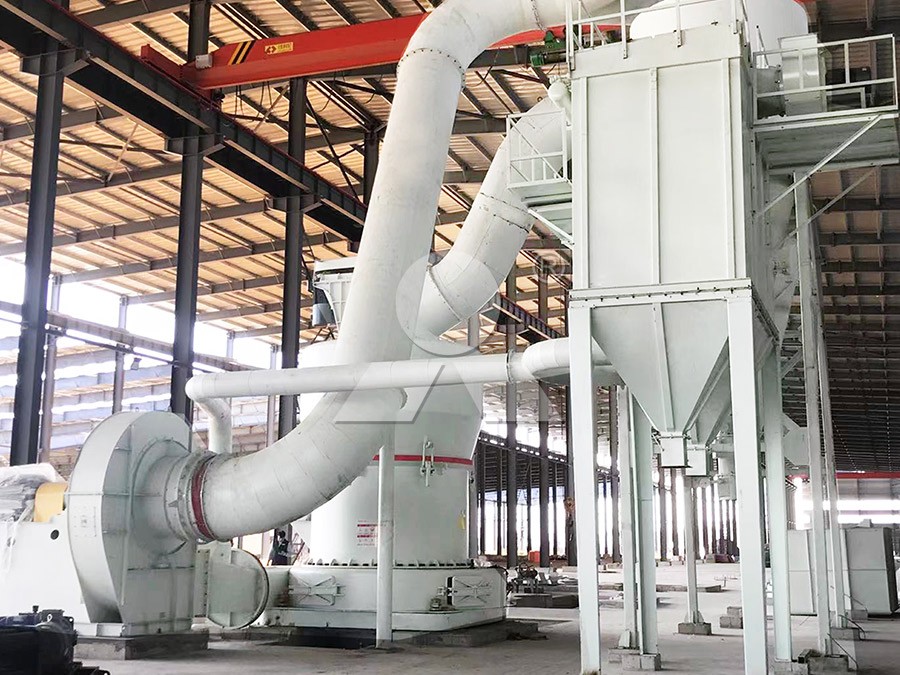
Key Operational Considerations for Large Raymond Mills
Operating a large Raymond mill, typically handling input sizes under 25 mm and capacities up to 5 tph, involves managing a delicate balance of mechanical and material variables. One of the most critical aspects is the feed control system. In my experience working with these mills across various sites, the most common cause of downtime is inconsistent feeding. A surge of material can overload the grinding chamber, causing the main motor to trip or, worse, damaging the grinding roller and ring assemblies. For non-metallic minerals, which often have varying moisture contents, this can lead to packing inside the mill. Therefore, integrating a reliable vibrating feeder with an adjustable speed controller is non-negotiable. It ensures that material enters the chamber evenly, allowing the centrifugal force acting on the rollers to oscillate them uniformly against the grinding ring. This not only stabilizes production rates but also extends the life of wear parts by preventing localized over-stressing.
Another factor that is often underestimated is the air flow dynamics within the closed-loop system. The blower must be correctly sized to convey the ground powder from the grinding chamber up to the separator. For coarse materials like calcite or barite, the air velocity must be high enough to lift the fines but not so high that it pulls oversized particles into the product stream. I have seen plants struggle with product fineness issues simply because the air duct dampers were incorrectly set. Regular monitoring of the differential pressure across the mill and cyclone collector is essential. A drop in pressure usually indicates a blockage or wear in the air path, while a sudden spike often signals that the powder separator is overloaded. Keeping a log of these parameters and correlating them with product samplings is a pragmatic approach that pays off in consistent quality.
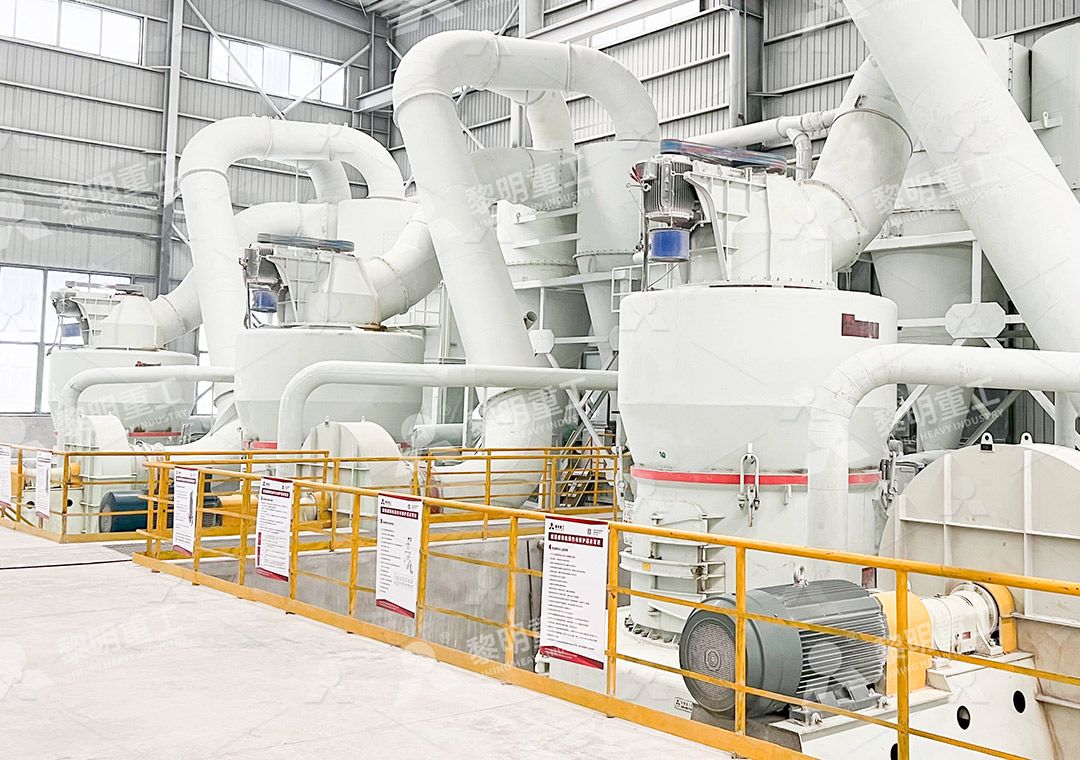
Advancing Beyond Basic Raymond Mills: The Role of Modern Ultrafine Solutions
While the classic large Raymond mill is effective for standard fineness ranges (typically 80 to 400 mesh), many modern applications in non-metallic mineral processing demand ultra-fine powders below 325 mesh. This is where the limitations of traditional Raymond mills become apparent. Their mechanical classification systems, often utilizing blade-type separators, struggle to maintain high yields at extremely fine sizes. The result is longer grinding times, higher energy consumption, and increased wear. For businesses looking to produce higher-value products like surface-coated calcium carbonate or specialized fillers for cosmetics and pharmaceuticals, a different approach is necessary. This is where we recommend integrating LIMING’s MW Ultrafine Grinding Mill into the production line. Unlike a standard Raymond mill, the MW mill employs a German-designed cage-type powder selector that can achieve a screening rate of d97≤5 μm in a single pass. Its output fineness is adjustable between 325 and 2500 mesh, opening up markets that a conventional mill cannot serve efficiently.
The structural philosophy also differs significantly. In a standard large Raymond mill, the grinding chamber contains rolling bearings and screws that are prone to damage from fine dust ingress. The MW Ultrafine Grinding Mill eliminates this by having no rolling bearings or screws inside the chamber, with the lubrication system installed externally on the main shaft. This design allows for continuous 24-hour operation without shutdown lubrication, a feature that directly enhances annual production capacity. For a company processing high-grade talc or marble, the reduction in downtime for bearing replacements alone can justify the investment. Furthermore, the system is equipped with an efficient pulse dust collector and silencer, ensuring that the operation meets stringent environmental standards. This is increasingly important as regulations on airborne particulate matter become stricter globally. Transitioning from a basic Raymond mill to a system like the MW mill is not just about upgrading equipment; it is about upgrading your market position.
Maintenance and Spare Parts Strategy for Extended Lifespan
Maintaining a large Raymond mill is a continuous process that extends beyond simple lubrication. The most wear-intensive components are the grinding rollers and rings. In many facilities, I have observed that operators wait until the output drops significantly before replacing these parts. This is a reactive strategy that often leads to secondary damage. For example, a worn roller profile reduces grinding efficiency, which forces the mill to run longer for the same output, straining the main shaft bearings and the reducer. A better practice is to schedule roller and ring inspections every 500 to 700 operating hours. Measuring the remaining thickness using a caliper provides data-driven insight. When the wear reaches a predetermined limit, replacement should be planned during a scheduled shutdown, minimizing unplanned downtime.
The shovel blade is another component that deserves attention. In a Raymond mill, the shovel scoops up material from the grinding chamber floor and throws it between the roller and ring. If the blade is worn, it cannot effectively feed the grinding zone, leading to a ‘starved’ mill condition. This results in metal-to-metal contact between the roller and ring, accelerating wear and generating heat. Stocking a set of spare shovels and rollers from a reliable source is a wise investment. As stated in our company policy, LIMING takes responsibility for every machine produced, and we ensure sufficient supply of original spare parts. Using non-original parts might save money upfront but often leads to fitment issues, imbalances, and shorter service life. The slight variance in metallurgy can cause a high-manganese steel ring to wear out twice as fast as a properly engineered alloy part. In the long run, the cost of lost production far exceeds the savings on parts.
Optimizing Product Quality through Classification and Airflow
The quality of the final powder from a large Raymond mill is heavily dependent on the performance of its air classifier. Traditional Raymond mills use a mechanical separator with adjustable blades. While effective for standard products, achieving high precision at finer mesh sizes requires meticulous adjustment. The key is to balance the feed rate and the fan speed. If the fan speed is too high, coarse particles get pulled into the cyclone collector, contaminating the product. If too low, production rates drop. A practical tip I have shared with many plant managers is to use a simple sieve test every hour during production. This real-time feedback loop allows for immediate tweaks to the separator speed or the air damper settings. For instance, when processing barite for the oil drilling industry, the API specification requires a specific specific gravity and particle size distribution. By monitoring the residue on a 325-mesh sieve, an operator can maintain tight control without needing expensive online analyzers.
For applications requiring ultra-high precision, we recommend the LUM Ultrafine Vertical Grinding Mill. This machine takes the concept of classification to the next level with its multi-head powder separating technology. It completely solves the challenges of high-precision cutting of powder diameter and fast switching between different production demands. With a PLC control system, operators can precisely control grinding pressure and rotational speed. Compared to a standard Raymond mill, the LUM mill reduces energy consumption by 30% to 50% while delivering a product with better whiteness and lower iron content. This is because the roller shell and lining plate are designed with unique curves that promote intergranular grinding rather than direct impact. The result is a finished product that is more spherical and has a narrower particle size distribution, which is highly sought after in the paint and coating industry. Deciding between a Raymond mill and a vertical mill ultimately depends on the target market; but for those pushing the boundaries of fineness, the LUM is a proven upgrade.
Conclusion: Matching the Tool to the Task
The large Raymond mill continues to be a fundamental asset in the non-metallic minerals processing industry. Its reliability, relatively low initial investment, and simplicity of operation make it an ideal choice for standard milling tasks up to 400 mesh. However, as market demands shift towards finer powders, higher purity, and greater energy efficiency, operators must evaluate their long-term strategy. Upgrading critical system components like the feeder, classifier, and dust collection can extend the life and performance of an existing Raymond mill. Yet, for those entering the ultra-fine market, investing in specialized equipment like the MW Ultrafine Grinding Mill or the LUM Ultrafine Vertical Grinding Mill is a strategic move. These machines are designed from the ground up to address the specific challenges of ultra-fine grinding, offering higher throughput, lower energy consumption, and superior product quality. By understanding the strengths and limitations of each technology, mineral processors can make informed decisions that boost profitability and sustain operations for years to come.
Frequently Asked Questions (FAQs)
- What is the typical lifespan of grinding rollers in a large Raymond mill processing limestone?
The lifespan varies based on material hardness and operating conditions, but with proper maintenance, rollers typically last between 800 to 1,500 operating hours. Using high-quality alloy rollers can extend this by up to 50%. - Can a Raymond mill handle materials with moisture content above 10%?
It is not recommended. High moisture causes the material to cake inside the grinding chamber and clog the air duct. Pre-drying the feed to below 5% moisture is standard practice for efficient operation. - How does the MW Ultrafine Grinding Mill differ from a standard Raymond mill in terms of dust control?
The MW mill is equipped with an efficient pulse dust collector and muffler as standard. The entire system operates under negative pressure, ensuring no dust leakage, whereas older Raymond mills often require retrofitting with external baghouses to meet modern environmental standards. - What is the maximum input size for a typical Raymond mill?
Most Raymond mills, including those from LIMING, accept input sizes up to 25 mm. Larger feed sizes require a primary crusher, such as a jaw crusher, to reduce the material before entering the mill. - Is it possible to switch between different mineral types without extensive cleaning of the mill?
Yes, but it requires a thorough purge. The mill should be run empty for 5-10 minutes to clear residual material. For products where cross-contamination is critical, such as food-grade additives, a full manual cleaning of the grinding chamber and the collector is essential. - What is the advantage of the LUM Ultrafine Vertical Grinding Mill’s double position-limiting technology?
This technology prevents the grinding roller from smashing directly into the millstone during sudden vibrations (e.g., from mine explosions or large foreign objects). It uses electronic and mechanical limits to ensure stable operation and reduces the risk of catastrophic failure. - How often should the lubricating oil be changed in the main reducer of a Raymond mill?
For the first 200 hours of operation, the oil should be changed to remove metal particles from initial wear. Thereafter, based on oil analysis, standard intervals are every 1,000 to 2,000 hours, but this depends on the operating load and ambient temperature. - Can a Raymond mill produce a particle size of d97 < 10 μm?
Traditional Raymond mills are not efficient at this fineness. For d97 < 10 μm, the MW Ultrafine Grinding Mill or a vertical roller mill is recommended, as they are designed with advanced classifiers that handle ultra-fine separation without significant loss of capacity.