
3000 Mesh Barite Grinding Mill: Achieving Ultra-Fine Powder in Industrial Milling
We provide a wide range of mills — including Raymond mill, trapezoidal mill, vertical mill, ultrafine mill, and ball mill, obtained ISO9001 international quality certification, EU CE certification, and Customs Union CU-TR certification. Suitable for processing minerals such as limestone, phosphate, quicklime, kaolin, talc, barite, bentonite, calcium carbonate, dolomite, coal, gypsum, clay, carbon black, slag, cement raw materials, cement clinker, and more.
The discharge range of these mills can be adjusted to meet specific processing needs, typically from 80-400 mesh, 600-3250 mesh, and can achieve the finest particle size of up to 6000 mesh(D50).
If you are looking for a reliable grinding solution to turn stone or minerals into fine powder, please feel free to contact our online customer service.
1. The Challenge of Ultra-Fine Barite Processing
Barite, a mineral known for its high specific gravity, is a cornerstone in industries ranging from oil drilling to paint manufacturing. But achieving a fineness of 3000 mesh — particles smaller than 5 microns — is no simple task. Traditional milling equipment often falls short, plagued by high energy consumption, excessive wear, and inconsistent particle distribution. For operators aiming to produce ultra-fine barite powder at scale, the choice of grinding mill becomes the single most critical factor determining profitability and product quality.
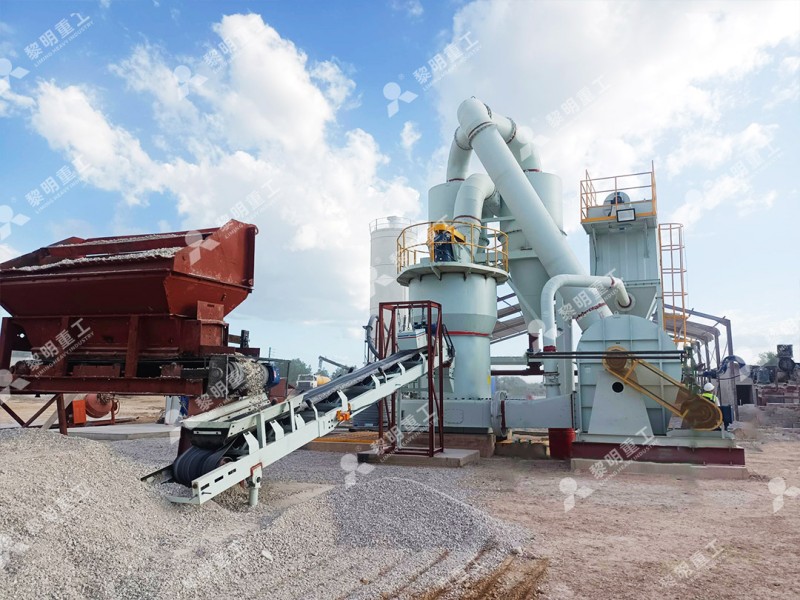
In recent years, the demand for 3000 mesh barite has surged, driven by applications in high-density drilling fluids, radiation shielding, and as a filler in premium paints and plastics. Meeting this demand requires a mill that can deliver consistent d97 ≤ 5 μm output without compromising throughput or operational stability. This is where modern ultrafine grinding technology, such as the MW Ultrafine Grinding Mill, steps in to redefine what is possible.
2. Engineering for 3000 Mesh Precision
The journey to 3000 mesh begins with the grinding chamber design. Unlike conventional mills that rely on impact or tumbling action, the MW Ultrafine Grinding Mill employs a multi-stage grinding principle. Material enters the chamber and passes through successive layers of rotating rollers and grinding rings. Each stage refines the particle size further, with the cage-type powder selector — adapted from German technology — ensuring that only particles meeting the 3000 mesh specification exit the system.
One of the standout features of this mill is the elimination of rolling bearings and screws inside the grinding chamber. This design choice directly addresses a common pain point in ultra-fine milling: bearing failure due to fine dust ingress. With no rolling elements to contaminate, the mill can operate continuously for 24 hours without unscheduled downtime. The lubricating device is mounted externally, allowing operators to perform maintenance without stopping production. For barite, which is mildly abrasive, this translates into significantly longer intervals between overhauls.
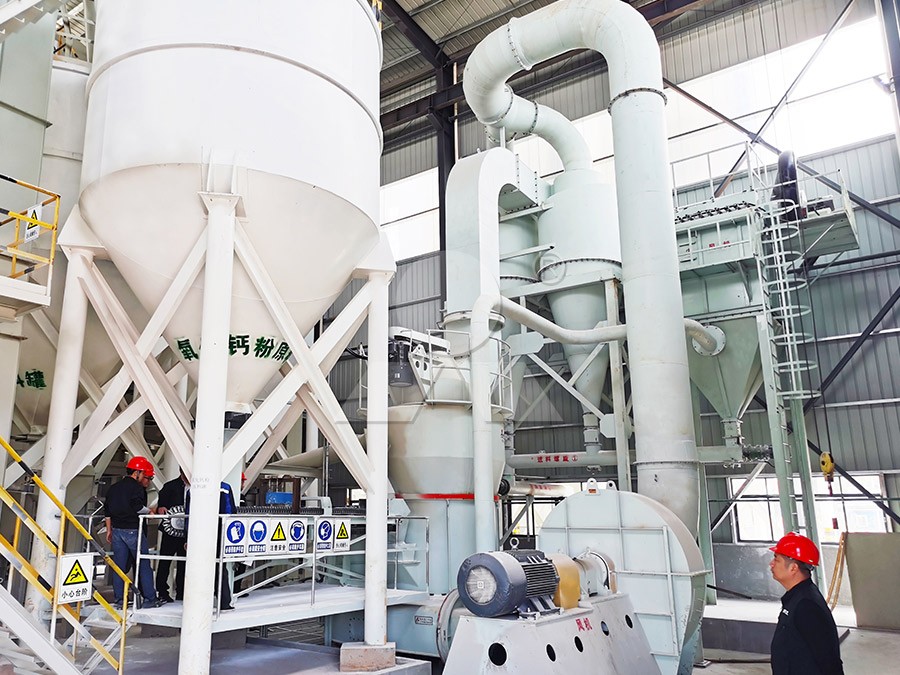
When targeting 3000 mesh, the efficiency of the classifier becomes paramount. The multi-head cage-type powder selector in the MW mill can be fine-tuned to balance yield and fineness. For a typical barite feed with a hardness of 3-3.5 Mohs and input size up to 20 mm, the mill achieves a screening rate of d97 ≤ 5 μm in a single pass. This eliminates the need for secondary classification circuits, simplifying the plant layout and reducing capital expenditure.
3. Performance Metrics That Matter
Operators evaluating a mill for 3000 mesh barite need to look beyond just the fineness specification. Energy consumption, yield, and product purity are equally important. The MW Ultrafine Grinding Mill delivers a 40% higher capacity compared to jet mills and stirred mills when operating at the same fineness and power input. Against ball mills, the yield is twice as high. But the real headline is energy efficiency: the system consumes only 30% of the power required by a jet mill to achieve the same d97 value.
For barite, this means that a plant processing 10 tons per hour at 3000 mesh can expect power savings that quickly offset the initial investment. Additionally, the pulse dust collector and muffler ensure that the operation meets stringent environmental standards — no dust escapes, and noise levels are kept within acceptable limits. This is particularly important for barite grinding facilities located near residential areas or operating under tight regulatory oversight.
4. A Closer Look at the LUM Ultrafine Vertical Grinding Mill
For operations that prioritize even lower energy consumption and a smaller footprint, the LUM Ultrafine Vertical Grinding Mill presents a compelling alternative. This mill integrates grinding, classification, and drying into a single vertical structure, reducing the occupied area by nearly 50% compared to traditional systems. The Taiwan-developed grinding roller technology and German powder separator work in concert to produce ultrafine powders with exceptional consistency.
In barite grinding applications, the LUM mill’s double position-limiting technology prevents destructive contact between the roller and millstone, even under conditions of mechanical vibration. This is a common issue when processing minerals with variable hardness. The reversible structure of the roller assembly allows for rapid inspection and replacement of wear parts, minimizing shutdown losses. For a barite processor targeting 3000 mesh, the ability to switch between different product specifications quickly — without changing hardware — adds operational flexibility that is hard to overstate.
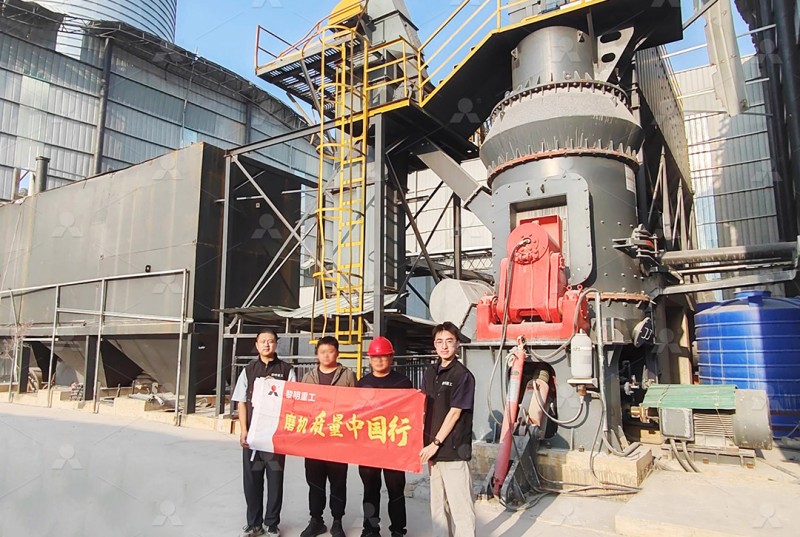
Both the MW and LUM mills are backed by LIMING’s commitment to digitalized manufacturing. Every core component is produced on numerically controlled machine tools, ensuring tolerances that translate directly into consistent product quality. Spare parts are stocked and supplied globally, guaranteeing worry-free operation even in remote locations.
5. Practical Considerations for Mill Selection
Choosing between the MW and LUM models for 3000 mesh barite hinges on several factors. If the incoming material has a higher moisture content or if the plant requires a broader capacity range (0.5-25 tph), the MW Ultrafine Grinding Mill offers greater flexibility. Its ability to handle input sizes up to 20 mm reduces the need for pre-crushing. On the other hand, if floor space is at a premium and energy costs are the primary concern, the LUM Ultrafine Vertical Grinding Mill delivers best-in-class efficiency with a capacity of 5-18 tph.
In both cases, the absence of rolling bearings in the grinding zone and the use of pulse jet dust collection ensure that the operation remains clean and reliable. Operators should also consider the total cost of ownership, including maintenance labor and spare part consumption. The lubricating system on the MW mill, which allows external oiling without shutdown, reduces routine maintenance time by an estimated 30% compared to conventional designs.
6. Conclusion: The Future of Ultra-Fine Barite Milling
As industrial demand pushes the boundaries of particle size reduction, the ability to reliably produce 3000 mesh barite powder will separate the leaders from the laggards. The MW Ultrafine Grinding Mill and LUM Ultrafine Vertical Grinding Mill represent the current state of the art, combining high throughput, low energy consumption, and robust construction. Whether you are expanding an existing plant or building a greenfield site, these mills offer a proven path to achieving ultra-fine powder with consistent quality and minimal environmental impact.
Investing in the right grinding technology today ensures that your operation remains competitive tomorrow. With LIMING’s comprehensive support — from digitalized processing to global spare parts supply — the journey to 3000 mesh is not just achievable, but sustainable.
7. Frequently Asked Questions (FAQ)
- What is the maximum input size for the MW Ultrafine Grinding Mill when processing barite? The mill accepts feed sizes up to 20 mm, which covers most crushed barite products without requiring additional secondary crushing.
- Can the LUM Ultrafine Vertical Grinding Mill achieve 3000 mesh consistently? Yes, with its multi-head powder separator and precise PLC control, the LUM mill can consistently produce d97 ≤ 5 μm powder, equivalent to 3000 mesh.
- How does the energy consumption compare between the MW mill and a jet mill? The MW Ultrafine Grinding Mill consumes only about 30% of the energy required by a jet mill for the same fineness and throughput, resulting in substantial operating cost savings.
- What kind of maintenance is required for the grinding rollers? The grinding rollers have no rolling bearings inside the chamber, so wear is limited to the roller shell and ring. These can be inspected and replaced using the reversible structure on the LUM mill or through the external lubrication system on the MW mill.
- Is dust emission a concern during operation? No. Both mills are equipped with high-efficiency pulse dust collectors that capture all fine particles, ensuring zero dust pollution and compliance with environmental standards.
- Can the same mill be used for different minerals besides barite? Yes, the MW and LUM mills are versatile and can process limestone, calcite, dolomite, talc, marble, and other non-metallic minerals with Mohs hardness below 7.
- What is the typical service life of wear parts for barite grinding? Wear part life depends on the abrasiveness of the barite feed. However, the use of wear-resistant alloys and German-engineered grinding curves extends the service life by 1.7 to 2.5 times compared to traditional high-manganese steel parts.
- Does LIMING provide on-site technical support for installation? Yes, LIMING offers comprehensive technical services, including installation supervision, commissioning, and operator training, along with a reliable supply of original spare parts.