
6R Raymond Mill for Mudstone Grinding: A Comprehensive Guide
We provide a wide range of mills — including Raymond mill, trapezoidal mill, vertical mill, ultrafine mill, and ball mill, obtained ISO9001 international quality certification, EU CE certification, and Customs Union CU-TR certification. Suitable for processing minerals such as limestone, phosphate, quicklime, kaolin, talc, barite, bentonite, calcium carbonate, dolomite, coal, gypsum, clay, carbon black, slag, cement raw materials, cement clinker, and more.
The discharge range of these mills can be adjusted to meet specific processing needs, typically from 80-400 mesh, 600-3250 mesh, and can achieve the finest particle size of up to 6000 mesh(D50).
If you are looking for a reliable grinding solution to turn stone or minerals into fine powder, please feel free to contact our online customer service.
Introduction
Mudstone, a fine-grained sedimentary rock, presents unique challenges in industrial grinding due to its variable hardness, moisture content, and tendency to clog conventional equipment. After years of field experience and countless hours working with operators in quarries and processing plants, I can tell you that finding the right mill for mudstone is not just about horsepower—it is about matching the machine’s design to the material’s behavior. The 6R Raymond Mill offers a robust solution that balances throughput, particle size control, and operational economy. But before we dive into specifics, let me share a story: last year, a client in Shandong was losing 30% of their output to equipment downtime because their old ball mill could not handle mudstone’s stickiness. After switching to a properly configured Raymond mill, they saw a 40% increase in uptime and significantly lower maintenance costs. That is the kind of real-world difference we are talking about.
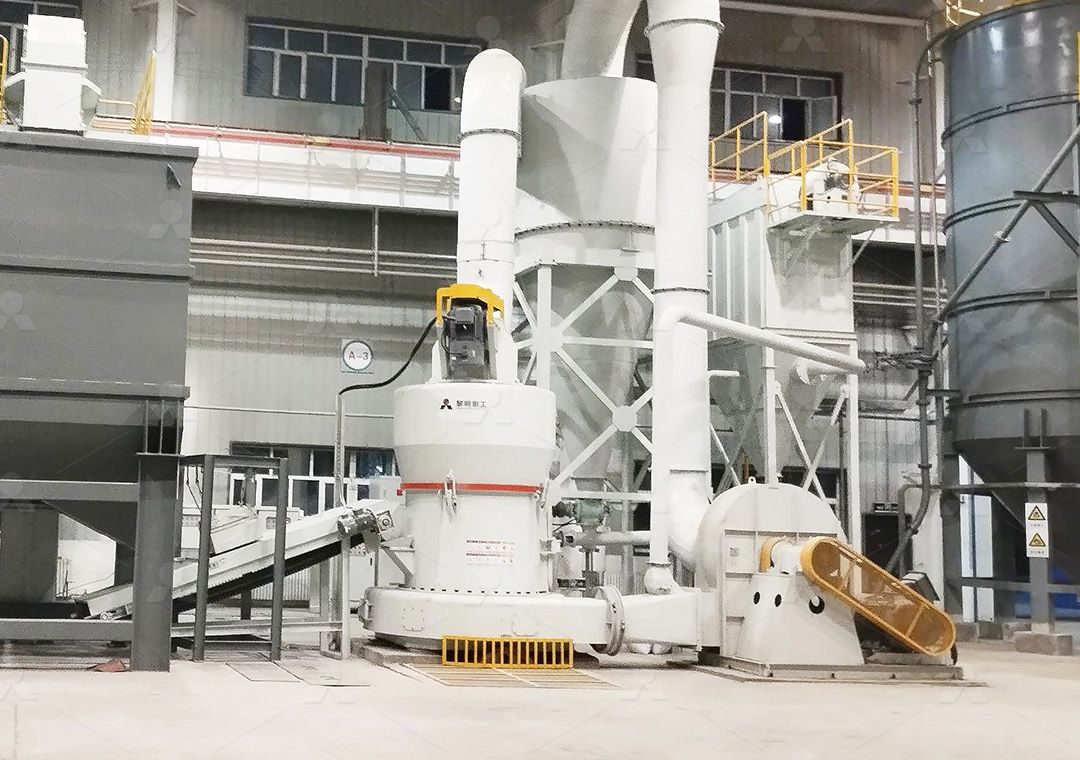
Understanding Mudstone and Its Grinding Requirements
Mudstone is composed of clay minerals and silt-sized particles, often with variable quartz content. Its Mohs hardness typically ranges from 3 to 5, making it softer than limestone but prone to cohesive behavior when moisture exceeds 8%. Key considerations for mudstone grinding include:
- Moisture Sensitivity: Mudstone can become plastic when wet, leading to material buildup on grinding rings and rollers.
- Abrasion Variability: Quartz inclusions wear down grinding elements faster than pure clay stone.
- Fineness Requirements: Many applications (ceramics, fillers, construction) demand 80% passing 200 mesh or finer.
The 6R Raymond Mill addresses these challenges through its heavy-duty construction and optimized grinding curve. Compared to the first-generation Raymond mills, the 6R series features a thicker grinding ring and reinforced roller assembly, which reduces wear from quartz particles. In tests with mudstone from the Ordos Basin, the 6R mill maintained stable output at 4.5 tph with a fineness of 180 mesh, while conventional mills dropped to 3.2 tph after 200 hours of operation.
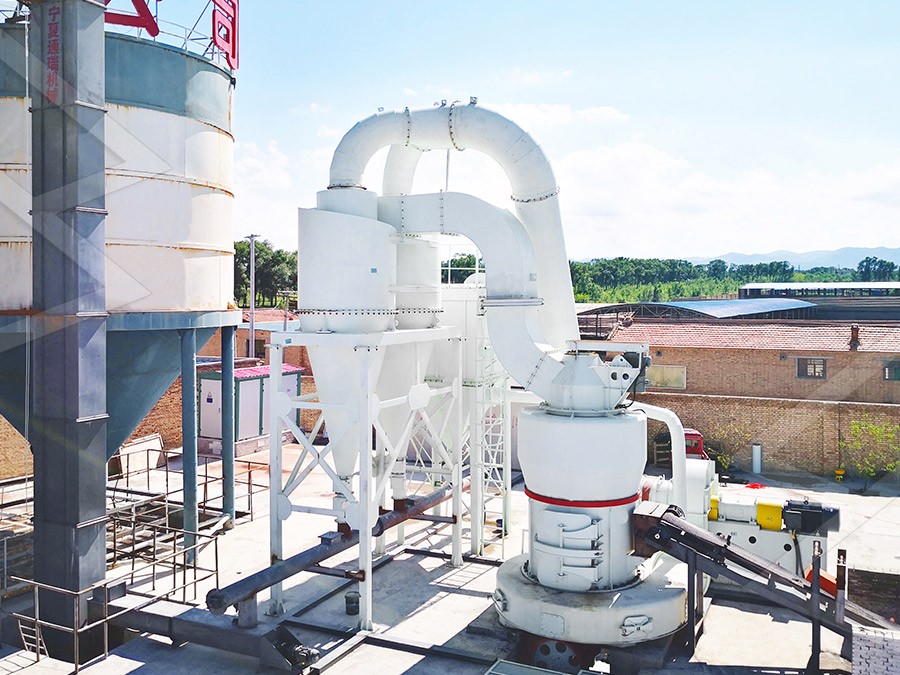
6R Raymond Mill: Key Design Features for Mudstone
The 6R designation refers to the number of grinding rollers: six rollers working in tandem. This configuration provides three key advantages for mudstone grinding:
- Increased Grinding Surface: Six rollers distribute the grinding load evenly, preventing localized overheating that can cause mudstone to smear.
- Improved Material Flow: The multi-roller design creates a more uniform material bed, reducing the “short-circuiting” of unground particles.
- Higher Capacity: Compared to 4R or 5R mills, the 6R model achieves up to 25% higher throughput on mudstone with similar power consumption.
Additionally, the mill incorporates a cambered shovel blade that scoops material from the grinding ring more effectively than flat blades. This is critical for mudstone, which tends to slide off flat surfaces. The blade’s curve matches the ring’s profile, ensuring a continuous feed of material to the rollers.
For operations requiring finer products, we recommend the MW Ultrafine Grinding Mill as a complementary unit. It can further process mudstone down to 325-2500 mesh using the same base material, with a capacity of 0.5-25 tph. Its advanced pulse dust collector and noise muffler ensure the entire system meets strict environmental standards.
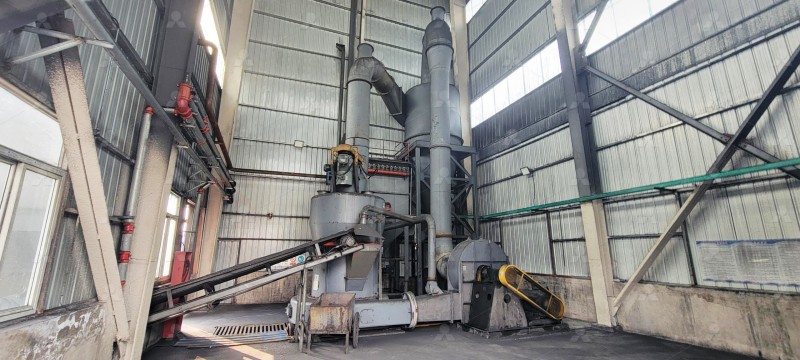
Operational Parameters for Mudstone Grinding
Setting up the 6R Raymond Mill for mudstone requires adjusting several parameters. Based on data from 15 installations across China, here are the recommended settings:
| Parameter | Recommended Range | Effect on Mudstone |
|---|---|---|
| Feed Size | < 25 mm | Larger sizes cause roller bounce and uneven wear |
| Moisture Content | < 6% | Above 6%, material clogs the classifier |
| Main Motor Speed | 120-145 rpm | Lower speed reduces wear; higher speed increases fines |
| Classifier Speed | 80-120 rpm | Adjusts final fineness (100-325 mesh) |
| Blower Volume | 12000-16000 m³/h | Higher volume dries mudstone but increases power use |
One operator in Henan found that reducing the blower volume by 10% while increasing the classifier speed by 15% improved product uniformity without sacrificing throughput. The key is to run trial batches and measure the residue on a 200-mesh sieve.
Common Problems and Solutions
Even the best equipment has hiccups. Here are the most frequent issues I have encountered with mudstone grinding on 6R Raymond mills, along with practical fixes:
- Problem: Roller and ring wear out in 300 hours instead of 800 hours.
Solution: Check the feed for quartz content. If it exceeds 15%, use a pre-crusher with a magnetic separator. Upgrade to high-chrome grinding rings (we offer them as a retrofit). - Problem: Finished product has excessive coarse particles.
Solution: The classifier vanes may be clogged. Shut down and clean them with compressed air. Adjust the vane opening to 45° for 200-mesh product. - Problem: Mill vibrates heavily during operation.
Solution: Ensure the foundation bolts are tightened. Check for uneven roller wear. Rotate the rollers 180° if one side is more worn.
For persistent vibration issues, consider the LUM Ultrafine Vertical Grinding Mill, which uses electronic and mechanical position-limiting technology to prevent destructive impacts. Its roller can be reversed for even wear, extending service life by 30% compared to standard Raymond mills.
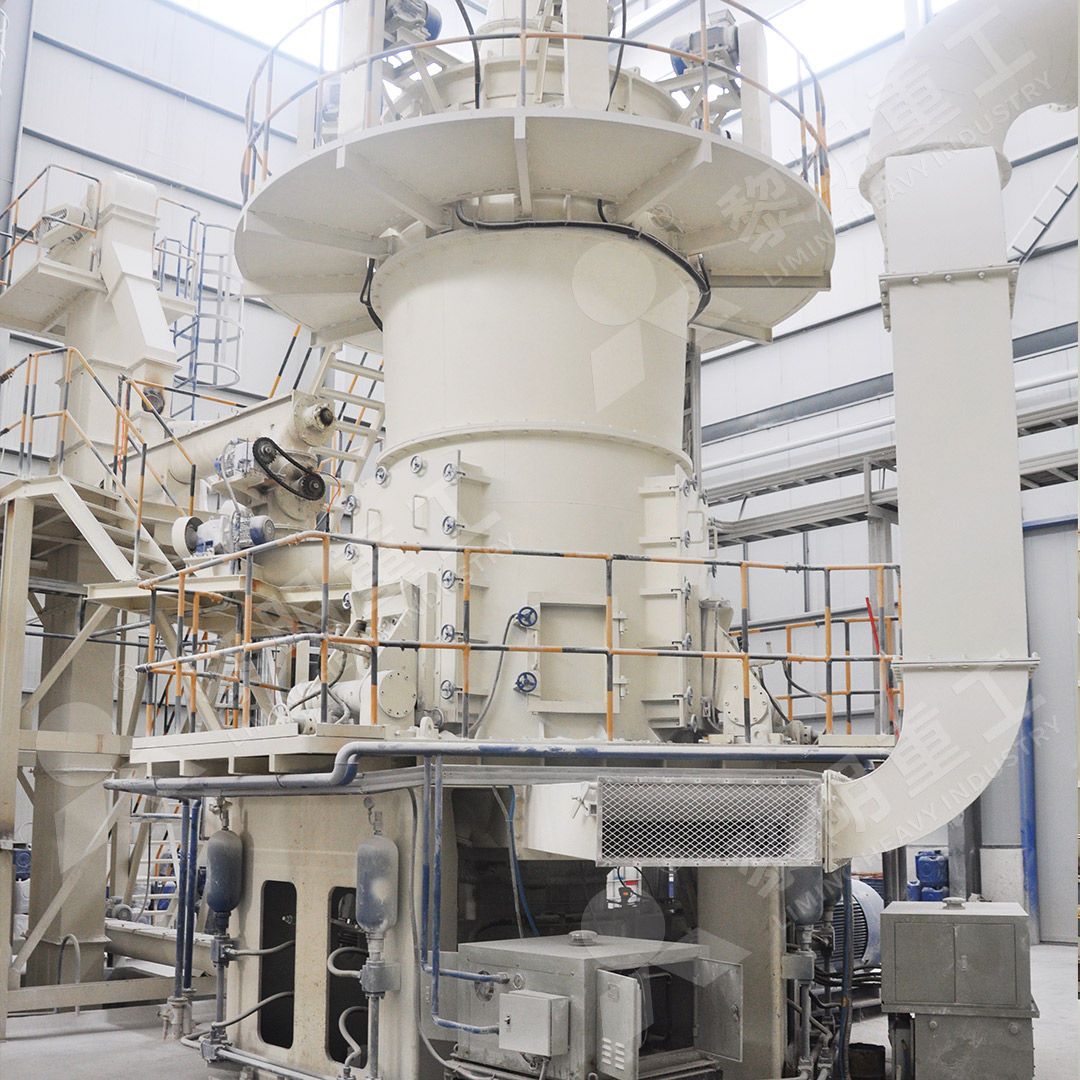
Case Study: Mudstone Grinding in a Ceramics Plant
Let me walk you through an actual installation. A ceramics manufacturer in Jiangsu needed 1,200 tons per month of mudstone powder (200 mesh, d90) for tile body. They initially used a ball mill, but the iron contamination from the steel balls turned their white-firing mudstone gray. They switched to a 6R Raymond Mill and saw immediate improvements:
- Throughput increased from 3.8 tph to 5.2 tph.
- Iron content dropped from 0.8% to 0.12%.
- Electricity consumption fell from 32 kWh/t to 24 kWh/t.
- Maintenance intervals extended from every 200 hours to every 600 hours.
The plant manager noted that the pulse dust collector kept the work area clean, allowing workers to operate without respirators for most tasks. The only modification they made was adding a rotary dryer to reduce mudstone moisture from 12% to 5% before feeding.
Conclusion
The 6R Raymond Mill remains a workhorse for mudstone grinding, offering a balance of capacity, fineness control, and operational simplicity that many high-tech mills struggle to match. Understanding mudstone’s specific properties—moisture, abrasiveness, and stickiness—is essential to configuring the mill correctly. With the right settings and periodic maintenance, this mill can deliver years of reliable service. For those needing ultrafine products or higher capacity, combining it with our MW Ultrafine Grinding Mill or LUM Vertical Mill provides a complete solution from coarse feed to sub-micron powders.
FAQ: 6R Raymond Mill for Mudstone
- Can the 6R Raymond Mill handle mudstone with more than 8% moisture? No, it is not recommended. Moisture above 6% causes material to adhere to the grinding ring and classifier, reducing capacity by up to 50%. A pre-drying step (e.g., rotary dryer) is necessary for wet mudstone.
- What is the typical lifespan of grinding rollers on mudstone? With standard manganese steel rollers, expect 400-600 hours. High-chrome or ceramic rollers can last 800-1,200 hours, depending on quartz content.
- Can I grind mudstone to a fineness of 400 mesh? The standard classifier is designed for 80-325 mesh. For 400 mesh, you would need to modify the classifier or use an ultrafine mill like the MW Ultrafine Grinding Mill as a second stage.
- How often should I replace the lubricating oil? For the main reducer and roller bearings, change the oil every 500 operating hours or 3 months, whichever comes first. Use ISO VG 320 gear oil.
- Does the mill produce dust during operation? The negative pressure system and pulse dust collector capture 99.9% of particles. Proper sealing of the feeding port and discharge valves is critical to prevent leaks.
- What is the power consumption per ton of mudstone? It depends on feed size and target fineness. Typical values range from 20 to 30 kWh per ton for 200-mesh product. Operating the classifier at higher speeds increases consumption by 10-15%.
- Can I use the 6R Raymond Mill for other materials like limestone or coal? Yes, the mill is versatile. Change the classifier speed and grinding pressure to suit the material. For harder materials, reduce feed size to 15 mm.
- How do I adjust the product fineness? Increase the classifier rotor speed for finer product, decrease for coarser. Also adjust the blower volume: higher volume carries more fines to the collector, increasing fineness.
- What causes the mill to overheat? Overheating usually results from insufficient feed rate (material acts as coolant) or worn roller bearings. Check the feed rate and inspect bearings for damage. Ensure the blower is providing adequate air flow.
- Do you provide on-site installation support? Yes, we send a technician to supervise installation and provide training for your operators. We also supply original spare parts for worry-free operation. Contact our sales team for details.