
Vertical Mill Grinding Process: Key Optimization Techniques for Industrial Powder Production
We provide a wide range of mills — including Raymond mill, trapezoidal mill, vertical mill, ultrafine mill, and ball mill, obtained ISO9001 international quality certification, EU CE certification, and Customs Union CU-TR certification. Suitable for processing minerals such as limestone, phosphate, quicklime, kaolin, talc, barite, bentonite, calcium carbonate, dolomite, coal, gypsum, clay, carbon black, slag, cement raw materials, cement clinker, and more.
The discharge range of these mills can be adjusted to meet specific processing needs, typically from 80-400 mesh, 600-3250 mesh, and can achieve the finest particle size of up to 6000 mesh(D50).
If you are looking for a reliable grinding solution to turn stone or minerals into fine powder, please feel free to contact our online customer service.
Introduction
In the competitive landscape of industrial powder production, the vertical mill grinding process stands as a cornerstone for achieving high efficiency, consistent product quality, and operational sustainability. Over the past decade, advancements in grinding technology have shifted the focus from mere throughput to a holistic optimization of energy consumption, particle size distribution, and equipment longevity. At LIMING Heavy Industry, we have dedicated years to refining this process, resulting in a portfolio of machines that address the specific pain points of modern milling: high energy costs, maintenance downtime, and environmental compliance.
This article delves into the key optimization techniques that drive peak performance in vertical mill grinding. We draw on real-world data and engineering insights, not theoretical fluff, to provide actionable knowledge for plant managers and process engineers. Whether you are processing limestone, calcite, or petroleum coal, the principles discussed here will help you extract maximum value from your grinding operation.
Understanding the Vertical Mill Grinding Process
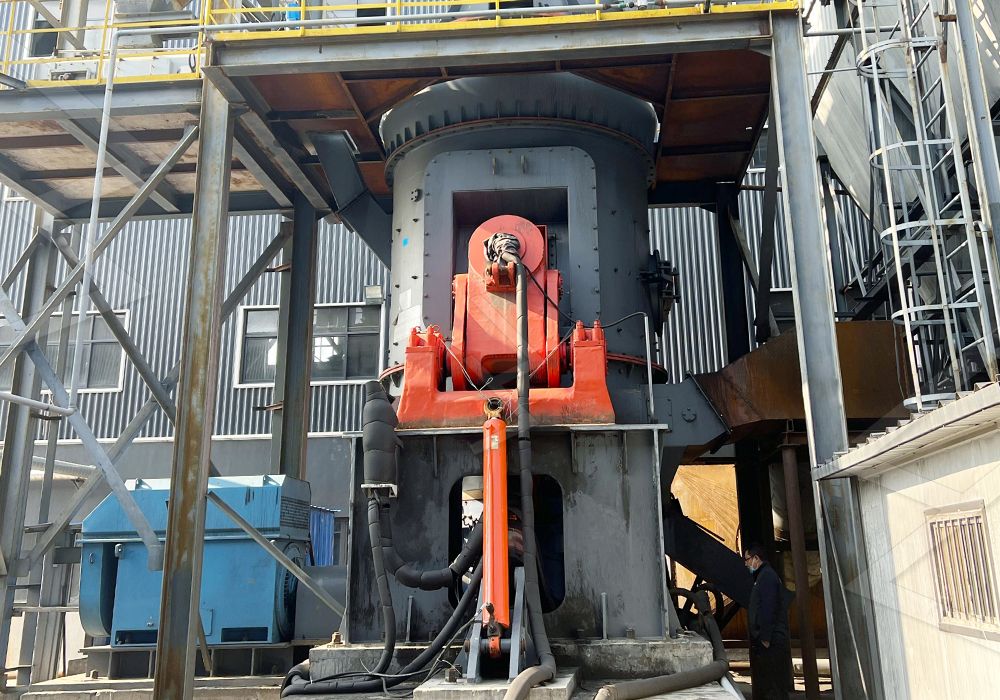
A vertical mill operates on a straightforward yet highly effective principle: material is fed onto a rotating grinding table, where it is crushed and ground between the table and a set of rollers. The ground material is then carried upward by an air stream to a classifier, which separates fine particles from coarse ones. The coarse particles fall back to the table for regrinding, while the fines are collected as product.
This closed-loop system, while simple in concept, involves a delicate balance of several variables: grinding pressure, table speed, air flow rate, and classifier rotor speed. The challenge lies in optimizing these parameters simultaneously to achieve desired fineness (e.g., 325–2500 mesh) with minimal energy input.
Key Optimization Techniques
1. Optimizing Grinding Pressure and Roller Design
Grinding pressure directly affects the comminution efficiency. Too low a pressure leads to under-grinding, increasing recirculation load; too high a pressure causes excessive wear and energy waste. Modern vertical mills, such as the LUM Ultrafine Vertical Grinding Mill, utilize hydraulic systems to apply precise, adjustable pressure. The specially designed roller shell and lining plate grinding curve in our LUM mill facilitate the formation of a stable material bed, enabling inter-particle grinding that reduces iron contamination and enhances product whiteness.
For operations targeting ultra-fine powders (d97≤5μm), the MW Ultrafine Grinding Mill incorporates a newly designed grinding curve that improves efficiency by up to 40%% compared to traditional jet mills. Its cage-type powder selector, based on German technology, ensures precise cut points, allowing operators to switch between specifications without halting production.
2. Classification Efficiency and Air Flow Management
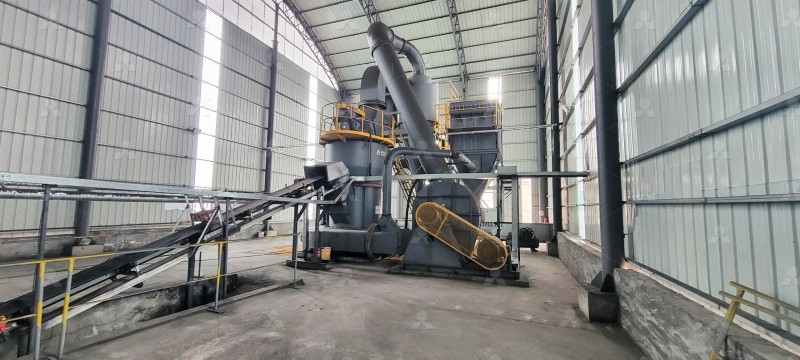
The classifier is the brain of the vertical mill. A poorly performing classifier forces operators to over-grind material to achieve target fineness, consuming unnecessary power. The multi-head powder separating technology employed in our LUM mill allows rapid switching between different fineness requirements while maintaining a narrow particle size distribution. By integrating PLC control, the system automatically adjusts rotor speed and air flow to maintain sieving rate (e.g., d97≤5μm) without manual intervention.
Air flow management is equally critical. The MW mill features an efficient pulse dust collector and silencer, ensuring that the entire system operates under negative pressure. This not only meets environmental standards but also prevents dust spillage, which can lead to product loss and equipment damage.
3. Reducing Vibration and Enhancing Stability
Machine vibration is a common enemy of consistent grinding. It accelerates wear on bearings and seals, and disrupts the material bed, causing uneven grinding. The LUM mill tackles this with double position-limiting technology: electronic limiting combined with mechanical limiting protection. This prevents the grinding roller from directly smashing into the millstone, even during sudden vibration events like mine explosions. Similarly, the MTW-Z European Trapezium Mill employs an elastic volute damping structure with rubber shock pads to isolate vibration from the base, protecting the powder concentrator from damage.
Additionally, the MW mill eliminates rolling bearings and screws inside the grinding chamber entirely. Without these traditional failure points, downtime due to bearing seal damage or screw loosening is a non-issue. The lubricating device is mounted externally, allowing continuous 24-hour operation without shutdown for maintenance.

4. Wear Management and Maintenance Strategies
Wear on grinding rollers and liners is inevitable, but it can be managed. Our LM Vertical Grinding Mill uses wear-resistant alloy components developed in collaboration with scientific institutes, offering a service life 1.7 to 2.5 times longer than traditional high-manganese steel parts. The reversible structure of the LUM mill allows operators to swing out the grinding roller for inspection and replacement of the roller shell and liner plate quickly, minimizing shutdown losses.
Preventive maintenance is further simplified by digitized manufacturing. All core parts of our mills—from the grinding ring to the classifier rotor—are machined on numerical control equipment, ensuring tight tolerances and interchangeability. This means spare parts fit perfectly the first time, reducing installation time and human error.
5. Energy Optimization Across the System
Energy consumption represents the largest operational cost in powder production. Our mills are designed with system-level efficiency in mind. For example, the LM Vertical Grinding Mill integrates crushing, drying, grinding, classifying, and conveying into a single unit, reducing footprint by 50%% and energy consumption by 30–40%% compared to ball mill systems. The MTW-Z mill uses a low-resistance hanging cage-type powder concentrator that cuts electricity use while boosting capacity.
For ultra-fine grinding, the MW mill achieves a system energy consumption that is only 30%% of a comparable jet mill. This is not just marketing speak—it is the result of mechanical optimization, such as the elimination of shovel blade cylinders in the grinding chamber, which increases ventilation area and reduces air-conveying resistance.
Case Study: Implementing Optimization in Practice
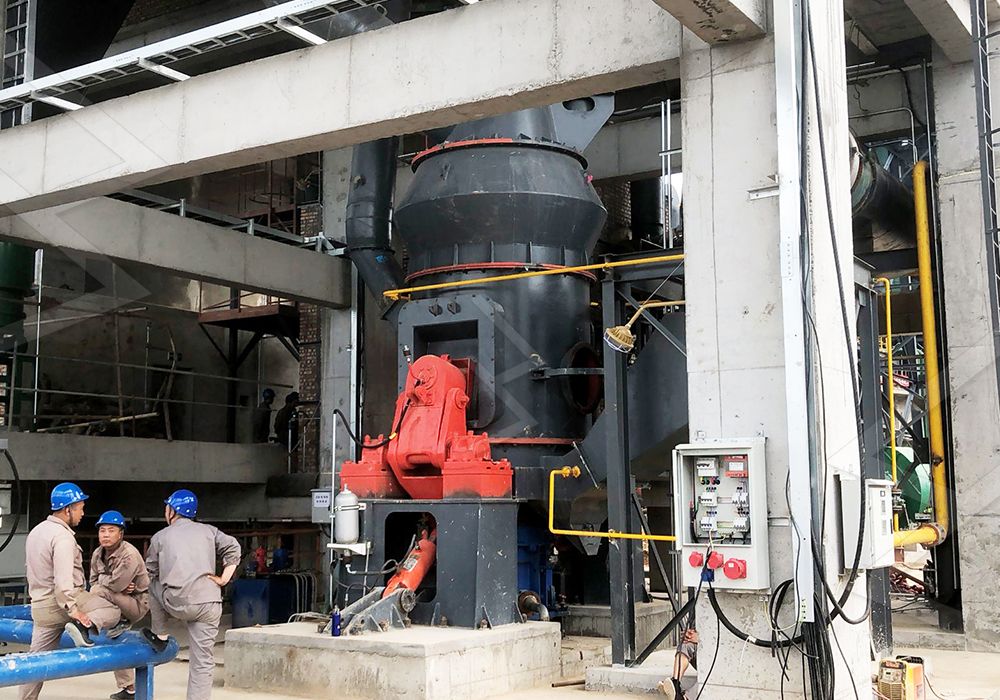
Consider a plant processing limestone for desulfurization applications. The target was a fineness of d97≤10μm at a throughput of 12 tph. Initially, a ball mill system was in use, consuming 800 kWh per ton. By switching to an LUM Ultrafine Vertical Grinding Mill and optimizing the classifier speed to match the feed moisture content (2%%), the plant reduced energy consumption to 480 kWh per ton—a 40%% savings. Simultaneously, the whiteness of the product improved by 5%%, meeting the stringent requirements of the chemical industry.
The key was not just the machine itself, but the tuning of grinding pressure and air flow. The hydraulic adjustment system allowed operators to reduce pressure by 15%% when processing finer feeds, preventing over-grinding without sacrificing throughput. The reversible structure meant that replacing the roller shell took only 4 hours instead of a full day, saving an estimated $12,000 in lost production per incident.
Conclusion
Optimizing the vertical mill grinding process requires a systematic approach that goes beyond simply buying new equipment. It involves fine-tuning mechanical parameters, leveraging advanced classifier technology, and embracing design features that simplify maintenance and reduce wear. LIMING Heavy Industry’s range of vertical mills—from the compact MW Ultrafine Grinding Mill for high-precision ultra-fine powders to the robust LM Vertical Grinding Mill for high-capacity industrial applications—provides the tools needed to achieve these goals.
By focusing on the techniques outlined above—grinding pressure management, classification efficiency, vibration control, wear handling, and energy optimization—you can transform your milling operation into a profit center rather than a cost drain. We invite you to explore our product lines and contact our technical team for a customized optimization plan tailored to your specific material and throughput requirements.
Frequently Asked Questions (FAQ)
Q1: What is the difference between a vertical mill and a ball mill in terms of energy consumption?
A vertical mill typically consumes 30–40%% less energy than a ball mill for the same throughput. This is because vertical mills use a material bed grinding principle, where inter-particle crushing reduces the need for heavy impact energy. Additionally, vertical mills integrate classifying and conveying functions, eliminating the need for separate, energy-intensive equipment.
Q2: How do I choose between the MW Ultrafine Grinding Mill and the LUM Ultrafine Vertical Grinding Mill?
The MW mill is ideal for production capacities up to 25 tph with fineness requirements between 325 and 2500 mesh, especially in applications where space is limited and zero dust emission is critical. The LUM mill suits higher capacities (5–18 tph) and offers superior flexibility for rapid product fineness changes, thanks to its multi-head powder separating technology. For very high throughputs above 18 tph, consider our LM Vertical Grinding Mill.
Q3: Can vertical mills handle moist materials?
Yes, many vertical mills are designed to combine grinding with drying. For example, the LM Vertical Grinding Mill can process materials with moisture content up to 15%% by utilizing hot air from a separate source. The air stream carries away evaporated moisture along with the fine particles, and the system operates under negative pressure to prevent condensation.
Q4: What causes excessive vibration in a vertical mill, and how can it be fixed?
Common causes include uneven feed distribution, worn roller tires or liner plates, incorrect grinding pressure, or foreign objects (e.g., metal) entering the mill. Solutions include recalibrating the feed system, inspecting and replacing wear parts, adjusting hydraulic pressure, and installing metal detectors before the feed inlet. Our LUM mill’s double position-limiting technology can protect against vibration-related damage.
Q5: How often do grinding rollers need to be replaced?
The lifespan depends on the material’s abrasiveness and the mill’s operating conditions. For non-abrasive materials like limestone, a set of rollers can last 6,000–8,000 hours. For harder materials like granite, replacement may be required every 2,000–3,000 hours. Using wear-resistant alloy components, as found in our LM and MW mills, can extend this by up to 2.5 times.
Q6: Is it possible to achieve a fineness of d97≤5μm with a vertical mill?
Absolutely. The MW Ultrafine Grinding Mill is specifically designed for this. With its German-inspired cage-type powder selector and optimized grinding curves, it can achieve a screening rate of d97≤5μm in a single pass. The LUM mill can also reach this fineness, but throughput may be slightly lower compared to coarser specifications.
Q7: What spare parts should I keep in stock for minimal downtime?
We recommend keeping a complete set of grinding rollers and rings, classifier rotor blades, and a set of seals for the main shaft. For mills with hydraulic systems, spare hydraulic hoses and cylinder seals are also advisable. All our mills are supported by a sufficient supply of original spare parts, ensuring worry-free operation.
Q8: How does LIMING ensure quality control in manufacturing?
Our production process is fully digitized, with tens of lines of numerical control machine tools performing operations like cutting, bending, planing, milling, and paint spraying. This ensures that every core part, from the grinding table to the powder concentrator, meets tight tolerances. Each machine undergoes a rigorous factory test before shipment.
Q9: Can a vertical mill produce different products without changing the machine?
Yes. By adjusting the classifier rotor speed, grinding pressure, and air flow, you can vary the fineness from 325 to 2500 mesh (or even coarser for some models). Our PLC-based control systems allow you to store recipes for different products, enabling rapid switchover without manual recalibration.
Q10: What is the warranty period for LIMING vertical mills?
We offer a standard 12-month warranty from the date of commissioning, covering manufacturing defects in materials and workmanship. Extended warranty options are available upon request. Our global network of service engineers can provide on-site support to ensure your mill operates at peak efficiency throughout its lifecycle.