
Innovative Process for Limestone Powder Production
We provide a wide range of mills — including Raymond mill, trapezoidal mill, vertical mill, ultrafine mill, and ball mill, obtained ISO9001 international quality certification, EU CE certification, and Customs Union CU-TR certification. Suitable for processing minerals such as limestone, phosphate, quicklime, kaolin, talc, barite, bentonite, calcium carbonate, dolomite, coal, gypsum, clay, carbon black, slag, cement raw materials, cement clinker, and more.
The discharge range of these mills can be adjusted to meet specific processing needs, typically from 80-400 mesh, 600-3250 mesh, and can achieve the finest particle size of up to 6000 mesh(D50).
If you are looking for a reliable grinding solution to turn stone or minerals into fine powder, please feel free to contact our online customer service.
Innovative Process for Limestone Powder Production
The production of high-quality limestone powder is a cornerstone of numerous modern industries, from construction materials and paints to pharmaceuticals and food additives. As demand for finer, more consistent, and purer powders grows, so does the need for advanced grinding technologies that prioritize efficiency, environmental stewardship, and operational reliability. Moving beyond traditional ball mills and Raymond mills, the industry is embracing innovative processes that integrate precision engineering with intelligent system design.
The Evolution of Grinding: From Crushing to Ultrafine Precision
Traditional limestone processing often involved multiple stages of crushing followed by grinding in mills that were energy-intensive and prone to producing broad particle size distributions. The modern approach consolidates these stages, focusing on creating a stable, layered material bed for inter-particle grinding. This method, exemplified in advanced vertical roller mills and ring roller mills, applies pressure rather than impact, leading to more uniform comminution, significantly lower wear rates, and dramatically reduced iron contamination—a critical factor for applications requiring high whiteness and purity.
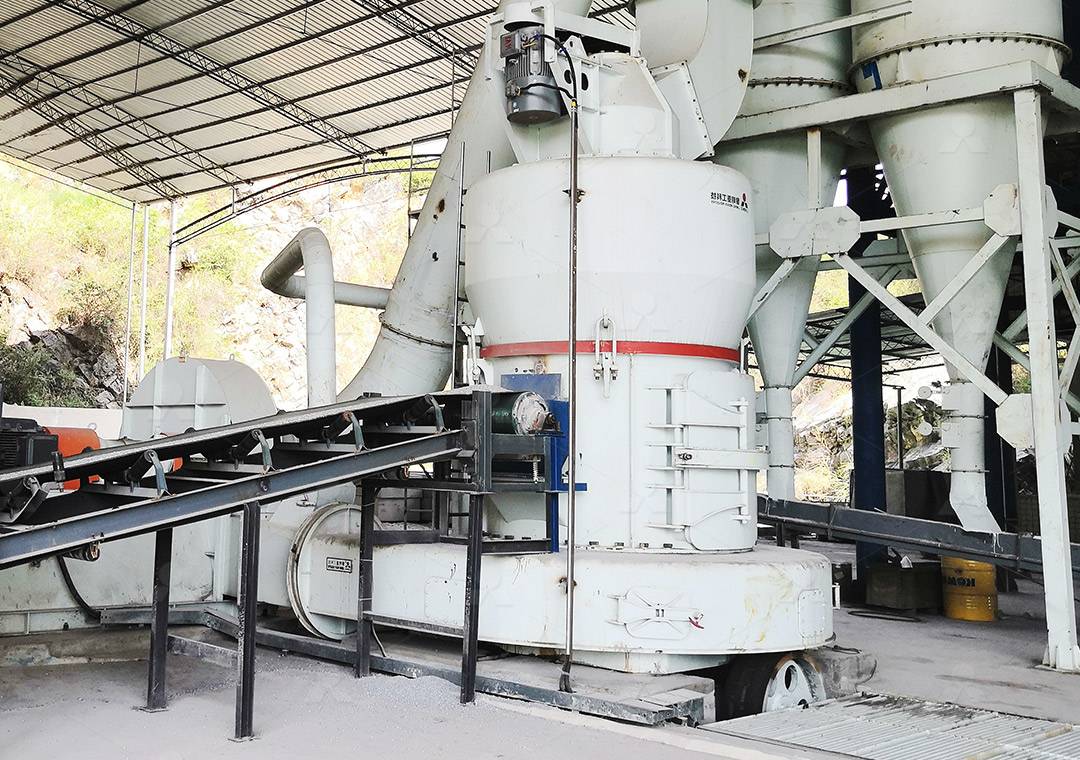
Key to this innovation is the integration of drying, grinding, classifying, and conveying within a single, compact system. This not only reduces the plant’s footprint by up to 50% but also minimizes heat loss and energy transfer inefficiencies. The heart of this process lies in the grinding chamber design and the precision of the powder separation system.
Core Technological Breakthroughs in Modern Grinding
Several pivotal innovations define the next generation of limestone powder production:
- Intelligent Grinding Curves: The geometry of grinding rollers and rings is no longer arbitrary. Computer-optimized curves ensure optimal pressure distribution and material layer formation, maximizing grinding efficiency and extending the service life of wear parts.
- Advanced Powder Classification: Multi-head, cage-type powder selectors, often leveraging German technology, allow for precise cuts in particle size distribution. Fineness can be accurately adjusted between 325 to 2500 meshes, with some systems achieving a d97 ≤5μm in a single pass.
- Eco-Conscious System Design: Modern mills are sealed systems operating under negative pressure, entirely eliminating dust spillage. Integrated high-efficiency pulse dust collectors and silencer packages ensure emissions and noise levels are far below international environmental standards.
- Digitalization and Automation: From CNC machining of core components for impeccable precision to PLC-controlled systems that allow remote monitoring and adjustment of grinding pressure, roller speed, and feed rates, digital integration guarantees consistent product quality and operational simplicity.
Introducing the MW Ultrafine Grinding Mill: A Paradigm of Efficiency
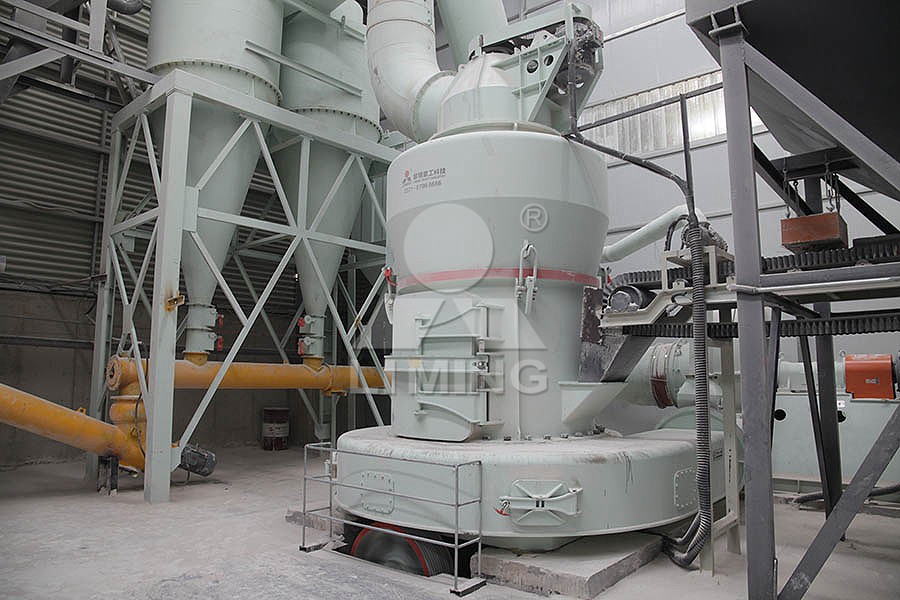
For operations demanding ultra-fine limestone powder, the MW Ultrafine Grinding Mill represents a significant leap forward. Engineered for customers who need to make ultra-fine powder, this machine is designed with a relentless focus on higher yield and lower energy consumption.
Its newly designed grinding curves enhance efficiency so profoundly that, at the same fineness and power, its production capacity is 40% higher than jet mills and double that of ball mills, while system energy consumption is reduced to just 30% of a jet mill’s. The mill’s cage-type powder selector enables precise fineness adjustment from 325 to 2500 meshes. A standout feature is its grinding chamber, which contains no rolling bearings or screws, eliminating common failure points and enabling worry-free, continuous 24/7 operation. Coupled with its efficient pulse dust collector, the MW Ultrafine Grinding Mill delivers high-precision powder production with minimal environmental impact.
The Vertical Advantage: The LUM Ultrafine Vertical Grinding Mill
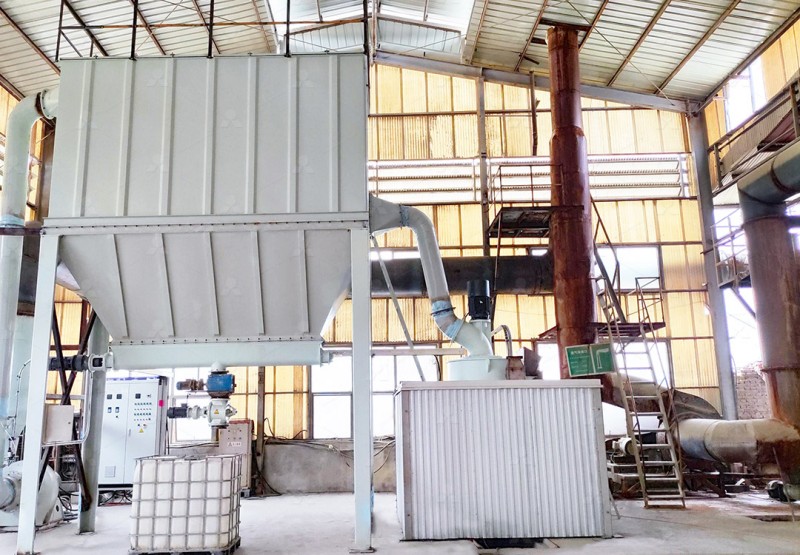
Another exemplary solution for high-end limestone powder is the LUM Ultrafine Vertical Grinding Mill. This mill combines the latest Taiwan grinding roller technology with German powder separating technology. Its unique roller shell and lining plate grinding curve are designed to easily generate a stable material layer, enabling a high rate of finished product from a single pass. This not only boosts efficiency but also improves the whiteness and cleanliness of the final powder.
The LUM mill incorporates a PLC control system and multi-head powder separating technology, solving the classic problems of high-precision size cuts and fast switching between different product specifications. It reduces energy consumption by 30%-50% compared to common grinding mills. Furthermore, its innovative reversible structure, aided by a hydraulic system, allows grinding rollers to be easily moved out of the mill body for maintenance, drastically reducing downtime and associated losses.
Conclusion: The Future is Integrated and Intelligent
The innovative process for limestone powder production is no longer defined by a single machine but by an integrated, intelligent system. It balances unprecedented grinding efficiency with rigorous environmental controls and operational resilience. By adopting technologies like the MW Ultrafine Grinding Mill or the LUM Ultrafine Vertical Grinding Mill, producers can achieve superior product quality, reduce total cost of ownership, and meet the stringent sustainability standards of the future. The evolution from simple pulverization to sophisticated powder engineering is complete, paving the way for new applications and market opportunities.
Frequently Asked Questions (FAQ)
1. What is the main advantage of modern grinding mills over traditional ball mills for limestone?
Modern mills like the MW and LUM series offer significantly higher energy efficiency (30-50% less energy consumption), a much smaller physical footprint, integrated drying and classification, and produce powder with lower iron contamination and a more consistent particle size distribution compared to traditional ball mills.
2. How fine can limestone powder be produced with your advanced mills?
Our MW Ultrafine Grinding Mill and LUM Ultrafine Vertical Grinding Mill are capable of producing powders with fineness adjustable between 325 to 2500 meshes. With advanced cage-type separators, they can achieve a top cut size (d97) of 5 microns or less in a single pass.
3. Are these grinding systems environmentally friendly?
Absolutely. Both recommended mills are fully sealed systems operating under negative pressure, equipped with high-efficiency pulse jet dust collectors that ensure no dust pollution. They also feature noise reduction technologies like silencers and soundproof rooms, making them compliant with the strictest national and international environmental standards.
4. What is the meaning of “no rolling bearing in the grinding chamber” in the MW Mill?
This is a unique design feature that places all critical rolling bearings outside the grinding chamber. It completely avoids failures caused by dust ingress into bearings or their seals, a common problem in other designs. This architecture greatly enhances reliability and allows for external lubrication without shutdown, supporting continuous 24-hour operation.
5. How is maintenance handled on these advanced mills?
Maintenance is designed for simplicity. The LUM Mill, for example, features a reversible hydraulic system that allows the grinding roller to be easily swung out for inspection or replacement of wear parts. For all our mills, we provide a sufficient supply of original spare parts and comprehensive technical support to ensure worry-free operation and minimal downtime.
6. Can these mills handle materials other than limestone?
Yes. The MW and LUM mills are versatile and suitable for a wide range of non-metallic minerals with Mohs hardness below 7, including calcite, dolomite, marble, talc, barite, gypsum, and petroleum coke, among others.