
Artificial Stone Vertical Mill: A Comprehensive Guide to Grinding Technology
We provide a wide range of mills — including Raymond mill, trapezoidal mill, vertical mill, ultrafine mill, and ball mill, obtained ISO9001 international quality certification, EU CE certification, and Customs Union CU-TR certification. Suitable for processing minerals such as limestone, phosphate, quicklime, kaolin, talc, barite, bentonite, calcium carbonate, dolomite, coal, gypsum, clay, carbon black, slag, cement raw materials, cement clinker, and more.
The discharge range of these mills can be adjusted to meet specific processing needs, typically from 80-400 mesh, 600-3250 mesh, and can achieve the finest particle size of up to 6000 mesh(D50).
If you are looking for a reliable grinding solution to turn stone or minerals into fine powder, please feel free to contact our online customer service.
Artificial Stone Vertical Mill: A Comprehensive Guide to Grinding Technology
The production of engineered or artificial stone demands precision, consistency, and efficiency in particle size reduction. The choice of grinding technology is paramount, directly impacting product quality, operational cost, and environmental footprint. Among the various milling solutions, vertical roller mills (VRMs) have emerged as a superior choice for processing raw materials like limestone, calcite, dolomite, and barite—key components in artificial stone formulations. This guide delves into the core principles and advantages of modern vertical grinding technology.
The Vertical Grinding Advantage
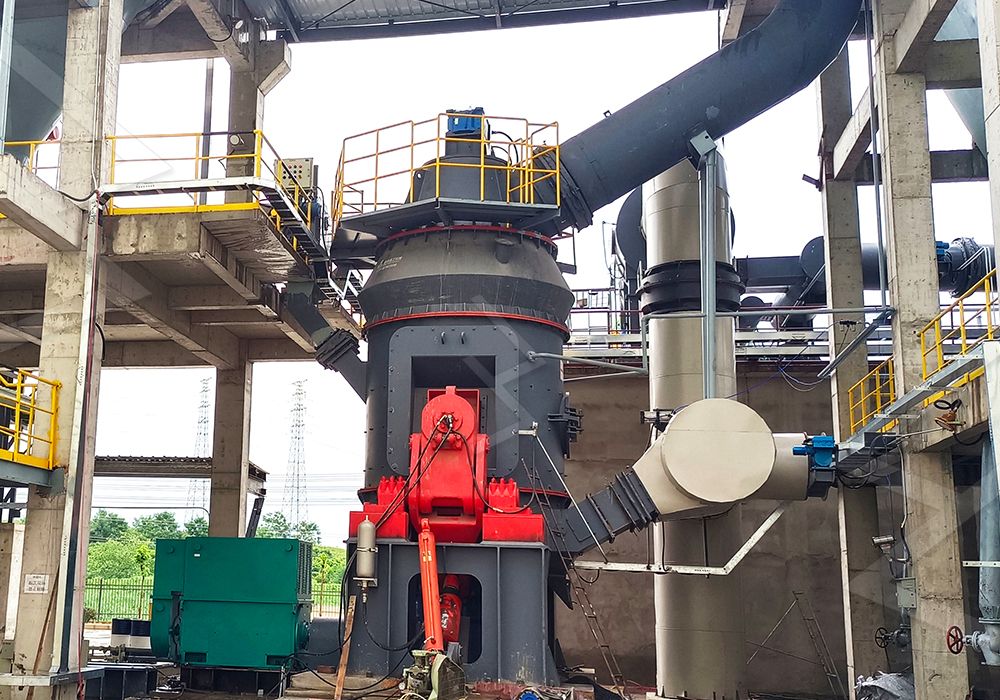
Unlike traditional ball mills, vertical roller mills employ a bed-compression grinding principle. Material is fed onto a rotating grinding table and is ground under pressure by conical or cylindrical rollers. This method offers several distinct benefits for artificial stone production:
- Higher Energy Efficiency: Direct grinding on the table with controlled pressure minimizes energy waste, typically consuming 30%-50% less power than ball mill systems.
- Superior Product Quality: The short material residence time in the grinding zone reduces over-grinding and minimizes iron contamination from mechanical wear, crucial for maintaining the whiteness and purity of the final stone product.
- Integrated Drying & Grinding: Hot gas can be introduced simultaneously with grinding, effectively handling materials with moderate moisture content.
- Compact Footprint: Their vertical design integrates multiple processes (crushing, grinding, drying, classifying) into a single unit, significantly reducing the plant’s floor space requirements.
Key Technological Features in Modern Mills
Advancements in vertical mill design focus on reliability, fineness control, and operational ease. Critical features include:
- Advanced Powder Separators: High-efficiency, cage-type or rotor-type separators allow precise control over particle size distribution, enabling fineness adjustment from coarse (325 mesh) to ultra-fine (2500 mesh) ranges to meet specific stone formulation needs.
- Intelligent Control Systems: PLC-based automation enables precise control over grinding pressure, roller speed, and feed rate, ensuring stable operation and consistent product quality.
- Robust Mechanical Design: Features like hydraulic roller systems for easy maintenance, limit devices to prevent metal-to-metal contact, and wear-resistant alloys for rollers and tables extend service life and reduce downtime.
- Environmental Compliance: Integral pulse jet dust collectors and silencer systems ensure the entire milling process operates under negative pressure with minimal dust emission and noise, aligning with strict environmental standards.
Selecting the Right Mill for Your Application
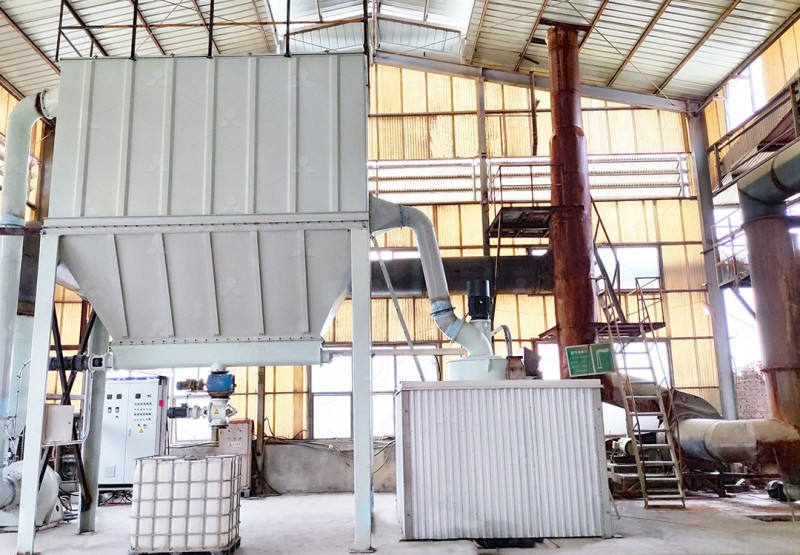
The optimal mill depends on required fineness, capacity, and material characteristics. For ultra-fine grinding of additives or pigments where exceptional whiteness and high purity are critical, an ultra-fine vertical mill is the ideal choice. For instance, the MW Ultrafine Grinding Mill is engineered specifically for such demanding applications. It handles an input size of 0-20 mm with a capacity range of 0.5-25 tph. Its standout feature is the German-technology cage-type powder selector, which allows precise fineness adjustment between 325-2500 meshes. Furthermore, its innovative design eliminates rolling bearings and screws inside the grinding chamber, virtually eliminating failures related to these components and enabling worry-free, continuous 24/7 operation—a significant advantage for uninterrupted artificial stone production lines.
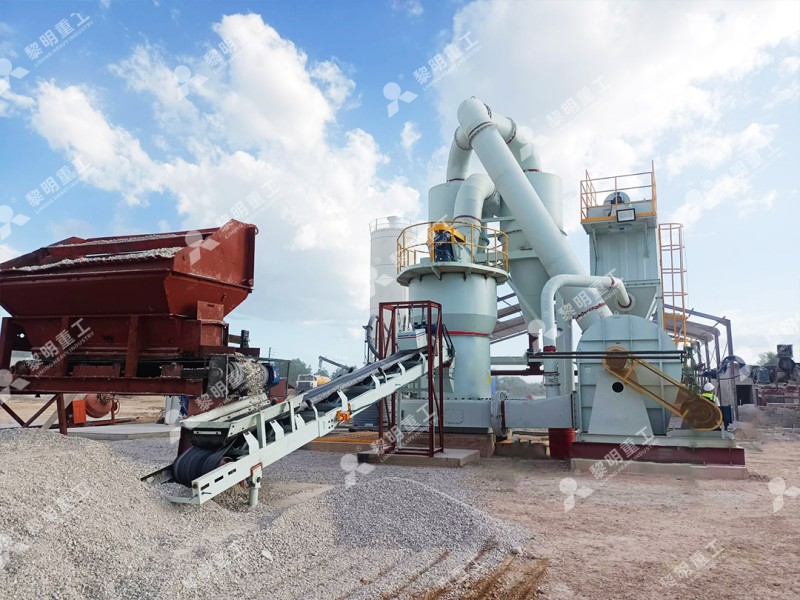
For high-capacity production of ground base materials like limestone or quartz, a robust and versatile vertical mill is essential. The LUM Ultrafine Vertical Grinding Mill represents the pinnacle of this category. With an input size of 0-10 mm and capacity of 5-18 tph, it integrates the latest grinding roller and powder separating technologies. Its unique roller shell curve promotes stable material bed formation, while the multi-head powder separating technology and PLC control system solve the dual challenges of high-precision particle cut and fast switching between different product specifications. The reversible roller structure, facilitated by a hydraulic system, allows operators to swiftly move the grinding roller out of the mill body for inspection or maintenance, drastically reducing service time and associated production losses.
The Future of Grinding in Artificial Stone Manufacturing
The trend is moving towards fully digitalized, interconnected milling systems. Future vertical mills will feature enhanced predictive maintenance through IoT sensors, AI-driven process optimization for maximum yield and minimal energy consumption, and even greater modularity for flexible plant design. The core advantages of vertical grinding—efficiency, quality, and compactness—will remain central to producing the high-performance, consistent powders required for next-generation artificial stone.
Frequently Asked Questions (FAQ)
1. What is the main advantage of a vertical mill over a traditional ball mill for artificial stone raw materials?
The primary advantages are significantly higher energy efficiency (30-50% less power consumption), a more compact footprint, integrated drying capability, and superior product quality with lower iron contamination due to reduced over-grinding and shorter material residence time.
2. How fine can a modern vertical mill grind materials?
Advanced models like ultra-fine vertical mills can achieve particle sizes as fine as 2500 mesh (d97 ≤ 5μm). The fineness is precisely adjustable through high-efficiency dynamic or cage-type separators to meet specific requirements for stone fillers, binders, or pigments.
3. Is dust control a problem with vertical roller mills?
No, modern vertical mills are designed as negative-pressure systems. They are equipped with integrated, high-efficiency pulse jet dust collectors (bag filters) that capture over 99.9% of process dust. This ensures a clean working environment and full compliance with environmental emission standards.
4. How difficult is the maintenance of the grinding rollers and table?
Maintenance has been greatly simplified. Contemporary designs feature hydraulic systems that allow grinding rollers to be swung out of the mill housing without dismantling other components. Wear parts like roller shells and table liners are made from advanced wear-resistant alloys and often have a reversible or segmented design to maximize service life and ease replacement.
5. Can a vertical mill handle moist materials?
Yes, one of the key features of vertical roller mills is their ability to simultaneously dry and grind. Hot gas (up to 450°C) can be introduced into the mill housing alongside the feed material, effectively removing moisture during the grinding process.
6. What level of automation can I expect?
State-of-the-art vertical mills come with comprehensive PLC-based control systems. They allow for fully automated operation, including start-up and shutdown sequences, continuous monitoring of key parameters (pressure, temperature, vibration), and remote control capabilities. This ensures consistent product quality and reduces manual intervention.