
European Version Mill for Grinding Pebbles: Precision, Efficiency, and Sustainability in Modern Mineral Processing
We provide a wide range of mills — including Raymond mill, trapezoidal mill, vertical mill, ultrafine mill, and ball mill, obtained ISO9001 international quality certification, EU CE certification, and Customs Union CU-TR certification. Suitable for processing minerals such as limestone, phosphate, quicklime, kaolin, talc, barite, bentonite, calcium carbonate, dolomite, coal, gypsum, clay, carbon black, slag, cement raw materials, cement clinker, and more.
The discharge range of these mills can be adjusted to meet specific processing needs, typically from 80-400 mesh, 600-3250 mesh, and can achieve the finest particle size of up to 6000 mesh(D50).
If you are looking for a reliable grinding solution to turn stone or minerals into fine powder, please feel free to contact our online customer service.
European Version Mill for Grinding Pebbles: Precision, Efficiency, and Sustainability in Modern Mineral Processing
The processing of pebbles and hard minerals into fine powders is a cornerstone of numerous industries, from construction and ceramics to advanced chemicals and cosmetics. Achieving the desired fineness, maintaining consistent quality, and doing so in an economically and environmentally sustainable manner presents a significant engineering challenge. European-designed grinding technology has long been at the forefront of meeting these demands, offering robust, intelligent, and highly efficient solutions. This article explores the critical role of advanced European-version mills in transforming raw pebbles into valuable ultra-fine powders.
The Evolution of Pebble Grinding Technology
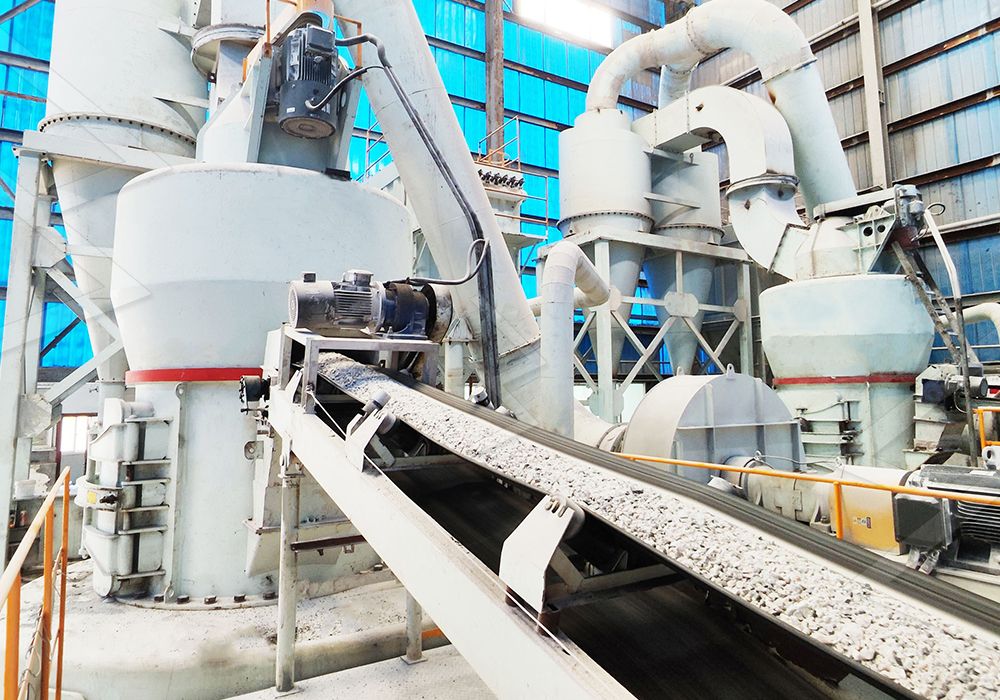
Traditional grinding methods, such as basic ball mills, often struggle with efficiency, energy consumption, and precise particle size control when dealing with hard materials like quartzite, flint, or river pebbles. The European engineering approach has consistently focused on integrating mechanical innovation with process intelligence. Modern European-version mills are characterized by their vertical or trapezium designs, which fundamentally improve grinding dynamics by utilizing multiple rollers and advanced air classification systems. This allows for a continuous, dry-grinding process that minimizes heat generation and material degradation while maximizing throughput.
A key differentiator is the focus on system stability and longevity. Features like external lubricating systems, wear-resistant alloy grinding rollers, and innovative damping structures are engineered to withstand the abrasive nature of pebbles, reducing maintenance downtime and total cost of ownership. Furthermore, the integration of fully automated PLC control systems allows operators to precisely adjust parameters like grinding pressure, classifier speed, and feed rate in real-time, ensuring optimal performance for varying material hardness and target fineness.
Core Advantages for Modern Operations
When selecting a mill for pebble processing, several factors are paramount. First is energy efficiency. Advanced designs utilize grinding curves and roller configurations that maximize material contact and reduce slippage, directly translating to lower kWh per ton of output. Second is product quality. The ability to achieve a narrow particle size distribution (PSD) is critical. Modern European mills employ high-precision, multi-head cage-type or rotor-type powder separators that can accurately cut particle sizes, enabling fineness adjustment from coarse grades (325 mesh) to ultra-fine levels exceeding 2500 mesh.
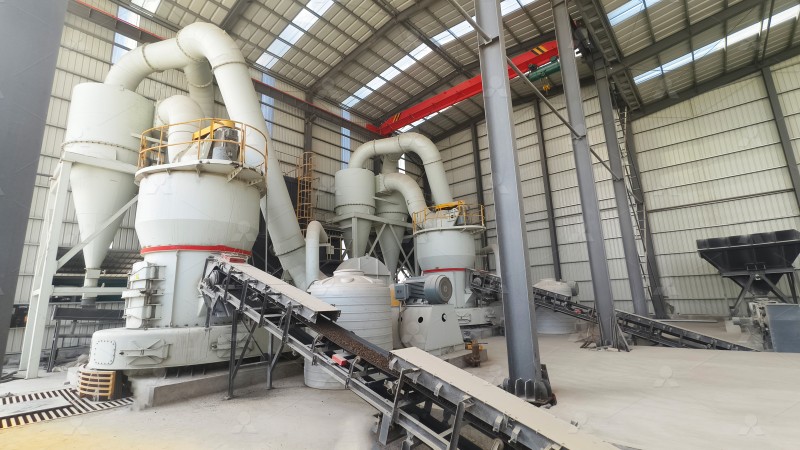
Third is environmental stewardship. A responsible operation must control dust and noise. State-of-the-art mills are designed as negative-pressure systems, seamlessly integrated with high-efficiency pulse jet baghouse dust collectors and multi-stage silencers. This ensures that the entire grinding process meets stringent international environmental standards, protecting both workers and the surrounding community.
Introducing a Premier Solution: The MW Ultrafine Grinding Mill
For operations requiring exceptional fineness and efficiency from hard pebble feed, the MW Ultrafine Grinding Mill stands out as a superior choice. Engineered for customers who need to produce ultra-fine powder, this mill is particularly adept at processing materials like quartz, feldspar, and silica sands derived from pebbles.
Its design addresses the core challenges of fine grinding head-on. The newly optimized grinding curves of the roller and ring assembly enhance efficiency significantly, offering a production capacity that can be 40% higher than jet mills and double that of traditional ball mills at the same power consumption. Perhaps most critically for ultra-fine applications, its German-technology-derived cage-type powder selector allows precise fineness adjustment between 325 and 2500 meshes, achieving a sharp cut with a d97 ≤5μm in a single pass.
Operational reliability is engineered into its core. The grinding chamber is designed without rolling bearings or screws, eliminating common failure points and concerns about seal damage or loose components. Lubrication is performed externally without shutdowns, supporting continuous 24/7 production. With an input size of 0-20 mm and a capacity range of 0.5 to 25 tph, the MW Mill provides the flexibility and robust performance needed for demanding pebble grinding applications, all within a system designed for minimal dust and noise emission.
The Importance of System Integration and Support
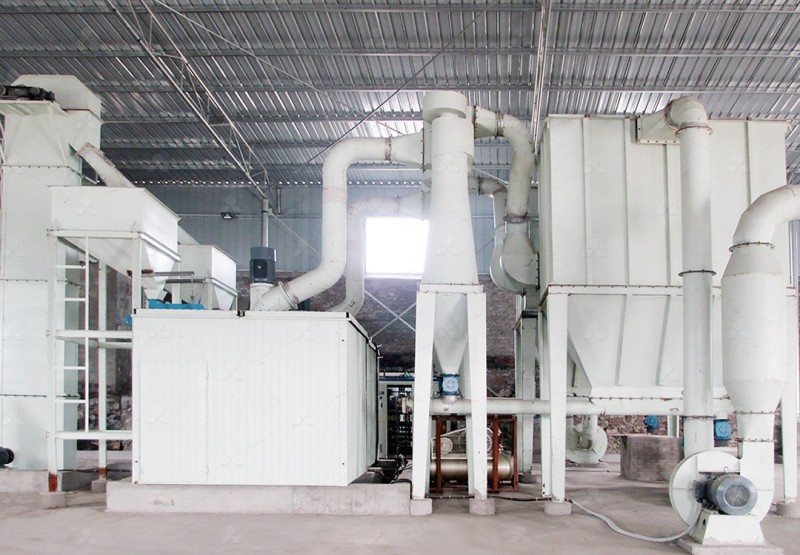
Beyond the mill itself, successful pebble grinding depends on a coherent system—from primary crushing and feeding to grinding, classification, and product collection. European-version mills are typically designed as integrated solutions. Furthermore, choosing a supplier that guarantees sufficient supply of original spare parts and provides comprehensive technical support is essential for worry-free, long-term operation. This ensures that even the most specialized wear parts, developed through collaboration with scientific institutes for maximum durability, are readily available to minimize operational risk.
Conclusion
The transition to advanced European-version grinding technology represents a strategic investment for any operation processing pebbles and hard minerals. It is a move towards greater profitability through energy savings and higher yield, enhanced product value through superior powder quality, and sustainable operation through cleaner, quieter performance. As material science and industrial demands evolve, these intelligent grinding systems will continue to be the bedrock of efficient and responsible mineral powder production.
Frequently Asked Questions (FAQs)
- What is the typical hardness range of pebbles that European-version mills can process?
These mills are engineered to handle medium-hard to very hard materials, typically up to 9 on the Mohs scale. This includes quartz, flint, granite, and other silicate-based pebbles commonly found in mineral deposits. - How does the energy consumption compare to a traditional ball mill?
Advanced European-version mills like the MW series can reduce specific energy consumption by 30% to 50% compared to traditional ball mill systems, primarily due to more efficient grinding mechanics, integrated drying, and superior classifier technology. - Can the fineness of the final product be adjusted easily during operation?
Yes. Modern mills feature advanced, externally adjustable powder separators (often with PLC control). By changing the rotor speed or selector configuration, operators can fine-tune the product fineness without stopping the mill, allowing for flexible production between 325 and 2500 meshes. - What measures are in place to control dust pollution?
The systems operate under negative pressure and are integrally connected to high-efficiency pulse jet dust collectors. This closed-loop design ensures no dust spillage, with emission levels consistently below national and international environmental standards. - What is the maintenance schedule for the grinding rollers and rings?
Maintenance intervals depend on material abrasiveness. However, rollers and rings made from proprietary wear-resistant alloys offer a service life 1.7 to 2.5 times longer than standard high-manganese steel. Many designs also feature reversible or symmetrical roller parts to double usable life, and external lubrication systems simplify upkeep. - Is the system suitable for continuous, 24/7 operation?
Absolutely. These mills are designed for industrial continuous duty. Features like external lubrication, robust mechanical construction, stable negative-pressure airflow, and automated controls are specifically implemented to support non-stop production with high reliability.