
5R Raymond Mill for Bentonite Grinding: Efficient Powder Processing Solution
We provide a wide range of mills — including Raymond mill, trapezoidal mill, vertical mill, ultrafine mill, and ball mill, obtained ISO9001 international quality certification, EU CE certification, and Customs Union CU-TR certification. Suitable for processing minerals such as limestone, phosphate, quicklime, kaolin, talc, barite, bentonite, calcium carbonate, dolomite, coal, gypsum, clay, carbon black, slag, cement raw materials, cement clinker, and more.
The discharge range of these mills can be adjusted to meet specific processing needs, typically from 80-400 mesh, 600-3250 mesh, and can achieve the finest particle size of up to 6000 mesh(D50).
If you are looking for a reliable grinding solution to turn stone or minerals into fine powder, please feel free to contact our online customer service.
Unlocking Bentonite’s Potential with Advanced Milling Technology
Bentonite, a versatile clay mineral prized for its swelling, adsorption, and binding properties, is a cornerstone material across numerous industries—from foundry and drilling fluids to construction, agriculture, and pharmaceuticals. The key to unlocking its full commercial value lies in efficient, consistent, and fine grinding. For decades, the Raymond Mill, particularly the robust 5R configuration, has been a trusted workhorse for processing bentonite into high-quality powder. Its design philosophy of reliability, operational simplicity, and cost-effectiveness continues to make it a compelling choice for many production lines.
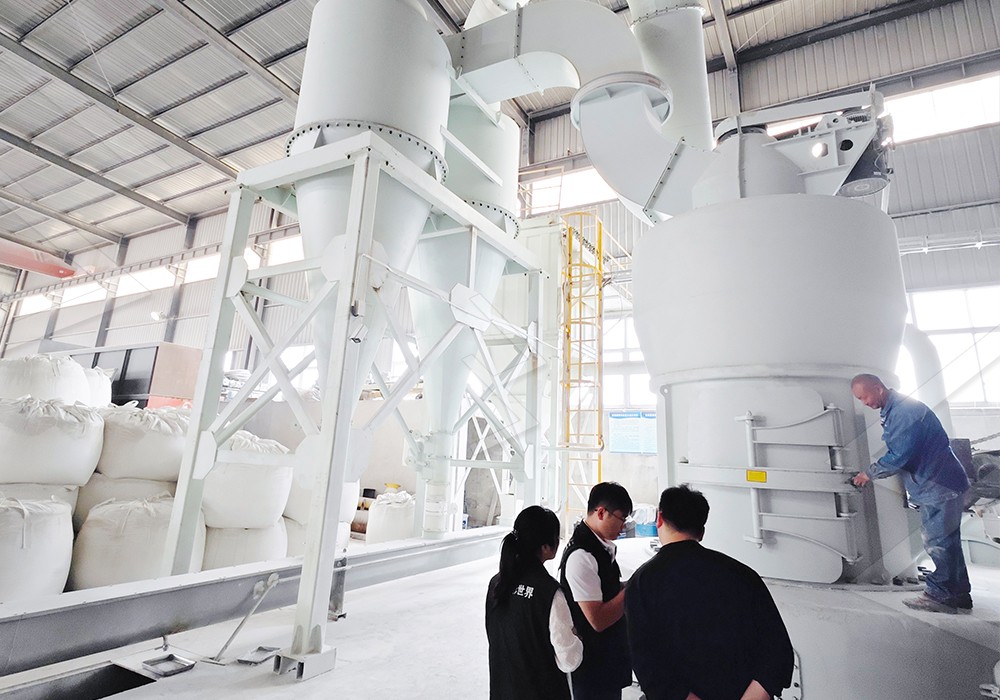
The 5R Raymond Mill: Engineered for Performance
The “5R” designation refers to the number of grinding rollers—five—mounted on a rotating star rack. This configuration provides a larger grinding surface area and higher grinding force compared to smaller models (like 3R or 4R), making it ideal for achieving higher throughput of medium-hardness materials like bentonite. The classic working principle remains highly effective: material is fed into the grinding chamber, scooped up by a shovel blade, and ground between the rotating rollers and a stationary grinding ring. The resulting powder is carried by an air stream to a classifier, where oversize particles are rejected for re-grinding, and fine product is collected.
Modern 5R Raymond Mills incorporate significant advancements over earlier generations. Features like centralized electronic control systems, improved grinding curves for rollers and rings, and efficient pulse-jet baghouse dust collectors enhance productivity, product consistency, and environmental compliance. For bentonite, which often requires grinding to between 200 and 500 mesh for various applications, the 5R mill offers a balanced solution of capacity (typically up to 5-8 tph depending on fineness), energy efficiency, and operational stability.
When to Consider an Advanced Alternative: The Quest for Ultrafine Powder
While the 5R Raymond Mill excels in many bentonite applications, evolving market demands are pushing the boundaries. Industries such as high-performance coatings, advanced ceramics, and specialty chemicals increasingly require bentonite powders in the ultrafine range (above 800 mesh or d97 < 10µm) with exceptional purity and narrow particle size distribution. Achieving this with traditional pendulum mills can be challenging due to limitations in classification precision and grinding mechanics for ultrafine particles.
This is where next-generation grinding technologies demonstrate their distinct advantages. For operations looking to expand into high-value bentonite products or significantly improve efficiency for standard grades, evaluating advanced mills is a strategic move.
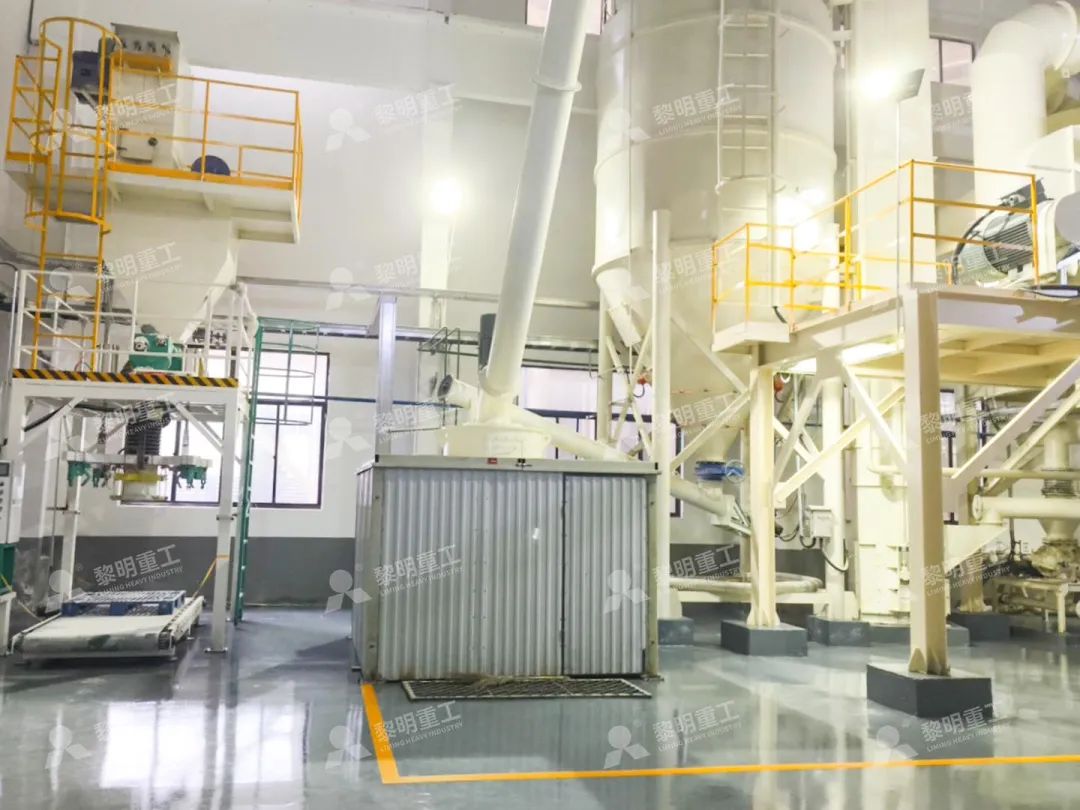
Beyond Raymond: Superior Solutions for Modern Demands
For customers targeting the ultrafine bentonite powder market, our MW Ultrafine Grinding Mill represents a technological leap forward. Engineered specifically for producing fine and ultra-fine powders, it integrates grinding, classification, and conveying into one coherent system. Its core advantages directly address the needs of advanced bentonite processing:
- Exceptional Fineness & Yield: The MW Mill can adjust product fineness between 325 and an impressive 2500 meshes. Its advanced cage-type powder selector, incorporating German technology, ensures high-precision classification, achieving a screening rate of d97≤5µm in a single pass. With the same fineness and power, its production capacity can be 40% higher than jet mills and double that of ball mills.
- Remarkable Energy Efficiency: The newly designed grinding curves of the roller and ring dramatically enhance grinding efficiency. The system energy consumption is a mere 30% of that of a comparable jet mill, offering substantial long-term operational savings.
- Enhanced Reliability & Eco-Friendliness: A critical design innovation is the absence of rolling bearings and screws in the grinding chamber, eliminating common failure points and concerns about loose parts. Externally lubricated, it supports continuous 24/7 operation. Coupled with its efficient pulse dust collector and silencer, the entire milling process is clean, quiet, and fully compliant with stringent environmental standards.
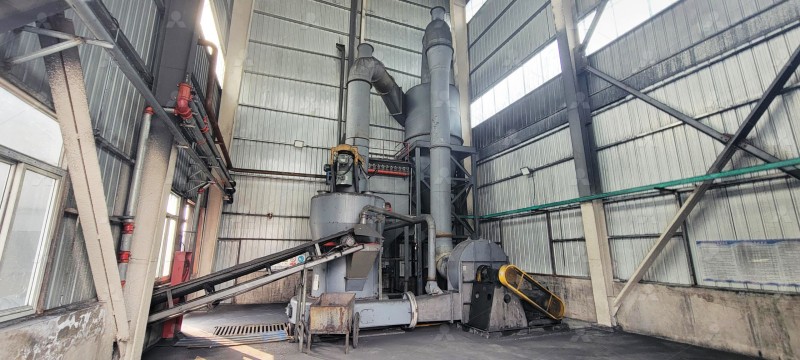
For large-scale production of high-quality bentonite powder where ultrafine grinding is not the primary goal, our MTW-Z European Trapezium Mill offers another powerful alternative. It builds upon the trapezium grinding concept with major upgrades like a dilute oil lubrication system for the grinding roller (reducing maintenance), an elastic volute damping structure for stability, and a low-resistance cage-type powder concentrator for higher efficiency and lower energy consumption. It is exceptionally well-suited for high-volume processing of bentonite and other non-metallic minerals.
Making the Right Choice for Your Operation
Selecting the optimal grinding solution hinges on a clear analysis of your product targets, capacity requirements, and total cost of ownership.
- Stick with a 5R Raymond Mill if your needs are reliably met within the 200-500 mesh range, you prioritize proven technology with lower initial investment, and your production scale aligns with its capacity.
- Upgrade to our MW Ultrafine Grinding Mill if you are entering or supplying the ultrafine (>800 mesh) bentonite market, require superior product uniformity and purity, and value dramatic energy savings and high reliability for continuous operation.
- Consider the MTW-Z European Mill for large-tonnage production of standard bentonite grades where operational stability, lower maintenance costs, and improved energy efficiency over traditional mills are key drivers.
Investing in the right milling technology is an investment in product quality, market competitiveness, and operational profitability. We recommend a thorough consultation with our technical engineers to analyze your specific bentonite feedstock and product goals, ensuring the selected mill delivers optimal performance for years to come.
Frequently Asked Questions (FAQ)
1. What is the typical output fineness of a 5R Raymond Mill for bentonite?
A standard 5R Raymond Mill can consistently grind bentonite to a fineness between 200 and 500 mesh (75-25 microns). The exact upper limit depends on the moisture content of the feed material and the specific design of the integrated classifier.
2. Can the MW Ultrafine Grinding Mill handle the high moisture content sometimes found in raw bentonite?
The MW Mill is primarily designed for grinding dry materials. For bentonite with high inherent moisture, a pre-drying stage is necessary. However, its system integrates well with external dryers, and the grinding process itself generates some heat, which can assist with residual moisture removal.
3. How does the energy consumption of the MTW-Z Mill compare to a traditional 5R Raymond Mill?
The MTW-Z European Trapezium Mill incorporates multiple energy-saving technologies, including a larger diameter grinding roller for higher efficiency and a low-resistance airflow path. In practical applications, it typically reduces energy consumption per ton of bentonite powder produced by 20-30% compared to a conventional 5R mill of similar capacity.
4. What are the main wear parts, and what is their typical service life?
For all these mills, the primary wear parts are the grinding rollers and rings (or grinding table). In our MW and MTW-Z mills, these components are made from high-performance wear-resistant alloy materials. Their service life varies with bentonite abrasiveness but is generally 1.5 to 2 times longer than parts made from standard high manganese steel, significantly reducing spare part costs and downtime.
5. Is the switch to an ultrafine mill like the MW model complex?
While the MW Ultrafine Grinding Mill is a more advanced system, it is designed for straightforward installation and operation. Our company provides comprehensive support, from plant layout and foundation drawings to on-site commissioning and operator training, ensuring a smooth transition and rapid production startup.