
Fluorite Ore Raymond Mill for Fine Powder Production
We provide a wide range of mills — including Raymond mill, trapezoidal mill, vertical mill, ultrafine mill, and ball mill, obtained ISO9001 international quality certification, EU CE certification, and Customs Union CU-TR certification. Suitable for processing minerals such as limestone, phosphate, quicklime, kaolin, talc, barite, bentonite, calcium carbonate, dolomite, coal, gypsum, clay, carbon black, slag, cement raw materials, cement clinker, and more.
The discharge range of these mills can be adjusted to meet specific processing needs, typically from 80-400 mesh, 600-3250 mesh, and can achieve the finest particle size of up to 6000 mesh(D50).
If you are looking for a reliable grinding solution to turn stone or minerals into fine powder, please feel free to contact our online customer service.
Fluorite Ore Raymond Mill for Fine Powder Production
In the realm of industrial mineral processing, the quest for efficient fine powder production from fluorite ore remains a critical challenge. Fluorite, or fluorspar, valued for its applications in metallurgy, ceramics, and the chemical industry, demands precise grinding to unlock its full economic potential. While traditional Raymond mills have long been the workhorse for such tasks, evolving market demands for higher yields, superior fineness, and stricter environmental compliance necessitate a closer look at advanced grinding solutions.
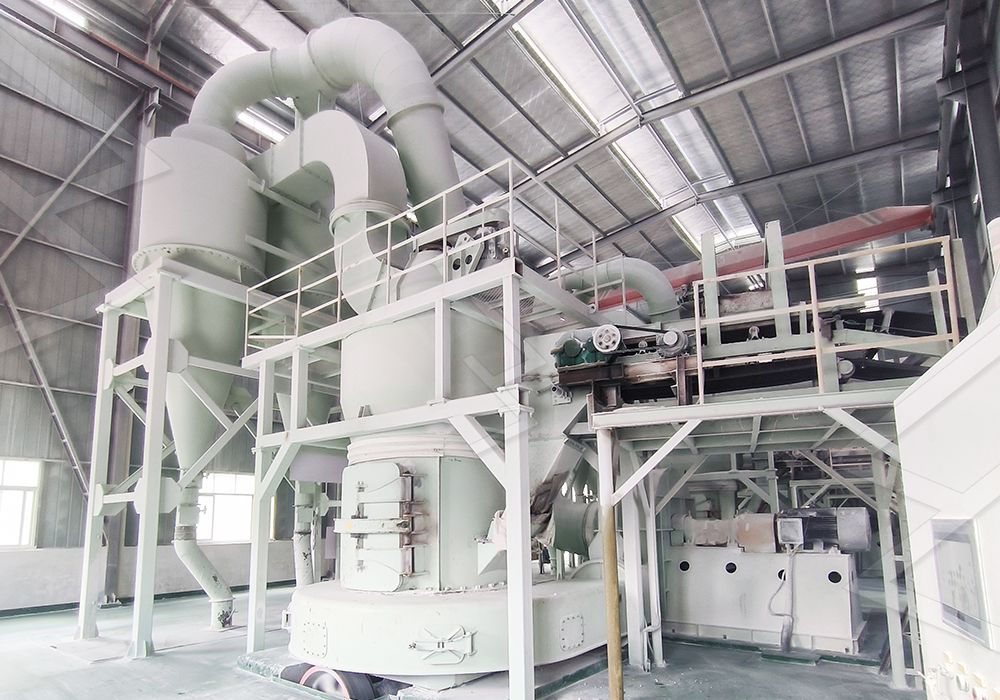
The conventional Raymond mill, with its familiar configuration of grinding rollers and rings, offers a proven method for pulverizing fluorite. Its advantages of a relatively compact footprint and straightforward operation are well-documented. However, when targeting ultra-fine powders (consistently below 325 mesh) or requiring higher throughput with lower energy expenditure, its limitations become apparent. Issues such as higher wear rates on grinding components, less precise particle size classification, and higher specific energy consumption can impact operational costs and product quality.
Beyond Traditional Grinding: The Need for Advanced Technology
Modern fluorite processing lines are integrated systems where grinding is just one component. Drying, precise classification, dust control, and noise reduction are equally vital for a profitable and sustainable operation. A mill that excels only in grinding but falls short in system integration can create bottlenecks, increase auxiliary equipment costs, and fail to meet modern environmental standards. The ideal solution should offer a holistic approach, combining high-efficiency size reduction with intelligent system design that minimizes the total cost of ownership.
This is where evaluating more contemporary grinding technologies becomes essential. For operations that have outgrown the capacity or fineness range of a standard Raymond mill, transitioning to a more advanced platform can be transformative. The goal is to achieve a steeper particle size distribution, higher throughput per unit of energy, and a cleaner, more automated process flow.
Recommended Solution: The MW Ultrafine Grinding Mill
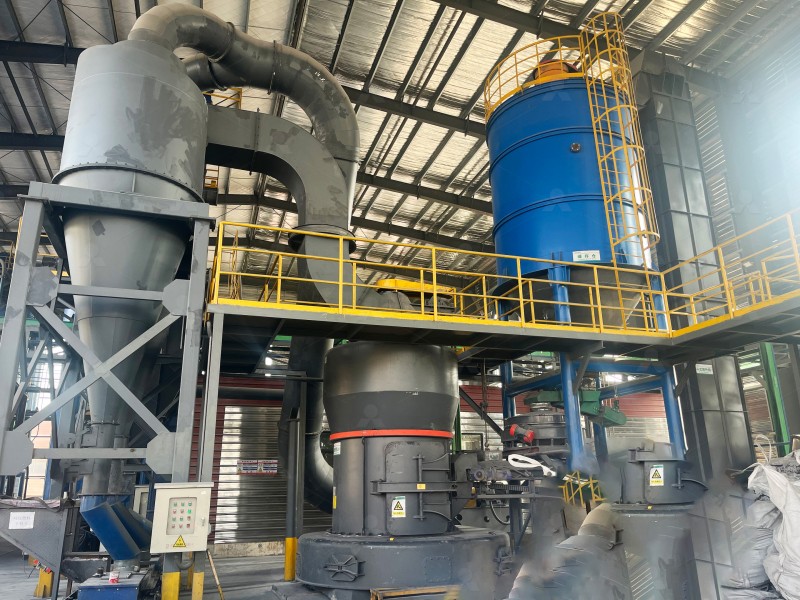
For producers specifically targeting the ultra-fine fluorite powder market (325-2500 meshes), the MW Ultrafine Grinding Mill represents a significant technological leap. This equipment is engineered for customers who need to make ultra-fine powder with exceptional efficiency and environmental stewardship.
Its core advantages directly address the shortcomings of older milling systems. The newly designed grinding curves of the roller and ring enhance grinding efficiency dramatically. Operational data indicates that with the same fineness and power, its production capacity can be 40% higher than jet mills and twice that of ball mills, while system energy consumption can be as low as 30% of a jet mill’s. For fluorite processing, this translates to substantially lower operating costs per ton of finished product.
A key feature is its advanced cage-type powder selector, which allows precise adjustment of fineness between 325 and 2500 meshes, achieving a screening rate of d97≤5μm in a single pass. This ensures consistent, high-quality product specification. Furthermore, its innovative design eliminates rolling bearings and screws inside the grinding chamber, removing common failure points and enabling external lubrication without shutdown for true 24/7 continuous production. From an environmental perspective, the integrated efficient pulse dust collector and muffler system ensure the entire milling process meets stringent national environmental protection standards, making it an eco-friendly choice.
For High-Capacity Vertical Grinding: The LM Vertical Grinding Mill
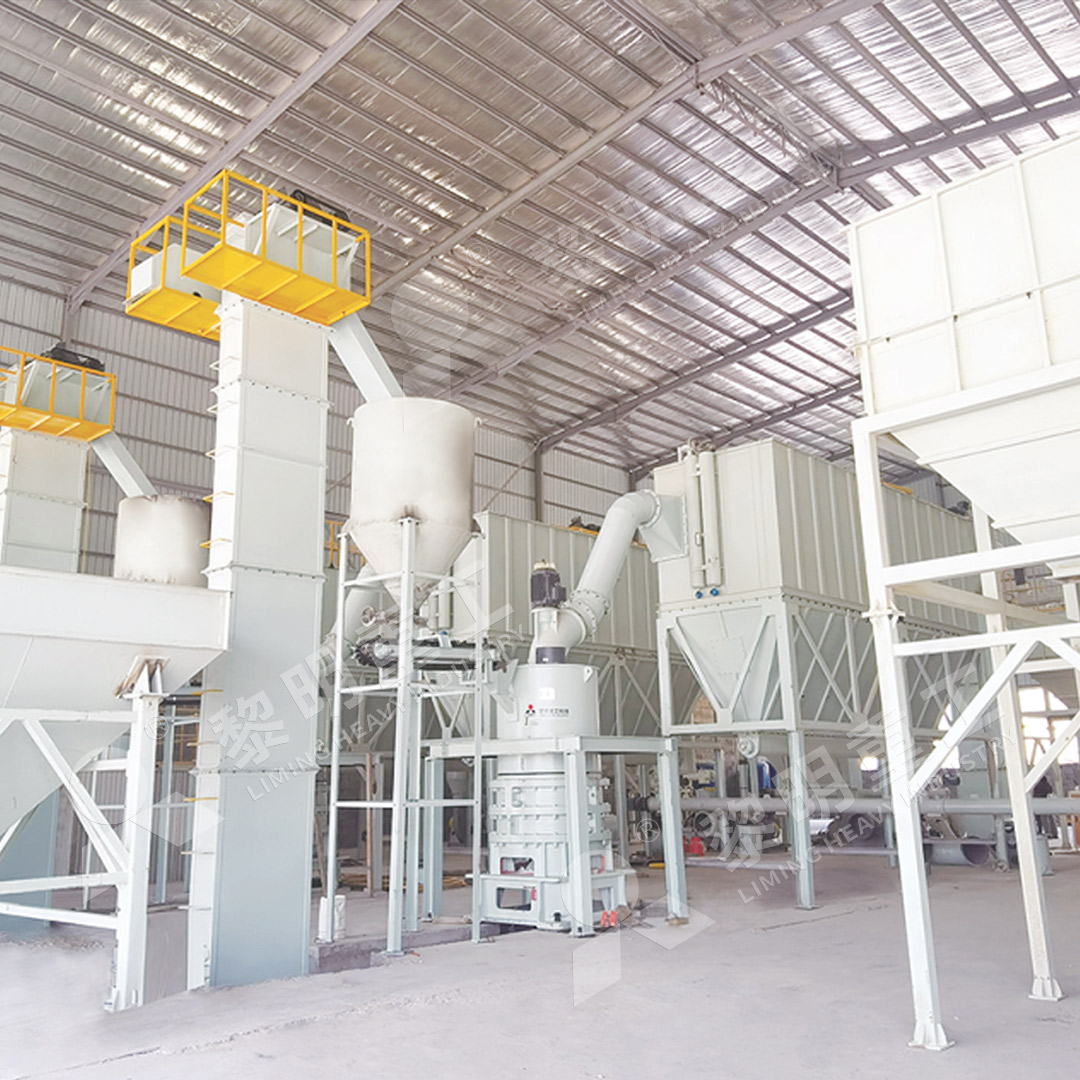
For larger-scale fluorite processing operations where input size may vary up to 70mm and capacity requirements soar to 340 tph, the LM Vertical Grinding Mill is the optimal solution. This mill integrates crushing, drying, grinding, classifying, and conveying into a single, coherent system. Its vertical structure reduces the occupied area by approximately 50% compared to a ball mill system and saves 30%-40% in energy consumption.
The LM mill’s strength lies in its comprehensive optimization for lower operating costs. The material’s short residence time minimizes repeated grinding and reduces iron contamination, effectively guaranteeing the whiteness and purity of the fluorite powder—a critical factor for many high-end applications. Its fully sealed, negative-pressure operation combined with an automatic control system results in a dust-free, low-noise, and highly automated production environment. This mill is particularly suited for projects where space, high throughput, and product purity are paramount concerns.
Making the Strategic Choice
Selecting the right grinding equipment for fluorite ore is a strategic decision that affects profitability for years to come. While the Raymond mill retains its place for certain applications, the advanced capabilities of mills like the MW Series for ultra-fine production and the LM Series for high-capacity vertical grinding offer clear paths to enhanced competitiveness. By prioritizing higher yield, lower energy consumption, precise particle control, and environmentally sound operation, producers can future-proof their operations and capture greater value from their fluorite resources.
Frequently Asked Questions (FAQ)
1. What is the main advantage of using an MW Ultrafine Grinding Mill over a traditional Raymond Mill for fluorite?
The primary advantages are significantly higher energy efficiency (up to 70% savings compared to some technologies), the ability to produce much finer powder (up to 2500 mesh), and a design that allows for continuous 24/7 operation with easier maintenance. It provides a more precise, productive, and eco-friendly solution for ultra-fine powder production.
2. Can the LM Vertical Grinding Mill handle the entire process from raw ore to fine powder?
Yes, a key feature of the LM Vertical Grinding Mill is its integration of multiple functions. It can handle drying (with hot air input), grinding, classification, and conveying within a single unit. However, very large raw ore may require primary crushing before being fed into the mill, which has a maximum input size of 70mm.
3. How is dust controlled in these advanced milling systems?
Both the MW and LM mills are designed with integrated environmental controls. They feature high-efficiency pulse jet dust collectors that capture over 99.9% of process dust. The entire system operates under negative pressure, preventing any powder spillage and ensuring a clean workshop environment that complies with strict emission standards.
4. What about the wear and maintenance of grinding rollers and rings?
These components are manufactured from high-performance wear-resistant alloys, offering a service life 1.7-2.5 times longer than traditional materials. Furthermore, designs like the reversible structure in the LUM series or the external lubrication in the MW series are specifically engineered to simplify maintenance, reduce downtime, and lower long-term spare parts costs.
5. How is the fineness of the final fluorite powder controlled and adjusted?
Fineness is precisely controlled by advanced, multi-head cage-type or rotor-type powder separators. By adjusting the speed of the separator’s rotor (often via a simple frequency converter), operators can accurately and quickly change the product’s cut point without stopping the mill, allowing for flexible production to meet different customer specifications.
6. Are these mills suitable for other minerals besides fluorite?
Absolutely. The MW and LM series mills are highly versatile and are successfully used for grinding a wide range of non-metallic minerals with Mohs hardness below 7, including limestone, calcite, dolomite, barite, talc, gypsum, and marble, among others.