
Achieving 1600 Mesh Fineness: A Deep Dive into Modern Raymond Mill Grinding Technology
We provide a wide range of mills — including Raymond mill, trapezoidal mill, vertical mill, ultrafine mill, and ball mill, obtained ISO9001 international quality certification, EU CE certification, and Customs Union CU-TR certification. Suitable for processing minerals such as limestone, phosphate, quicklime, kaolin, talc, barite, bentonite, calcium carbonate, dolomite, coal, gypsum, clay, carbon black, slag, cement raw materials, cement clinker, and more.
The discharge range of these mills can be adjusted to meet specific processing needs, typically from 80-400 mesh, 600-3250 mesh, and can achieve the finest particle size of up to 6000 mesh(D50).
If you are looking for a reliable grinding solution to turn stone or minerals into fine powder, please feel free to contact our online customer service.
Pushing the Boundaries of Fine Powder Production
In the demanding world of industrial mineral processing, achieving consistent ultra-fine powder in the range of 1600 mesh (approximately 10 microns) represents a significant technological challenge. It requires more than just brute force grinding; it demands precision engineering, intelligent system design, and a deep understanding of particle dynamics. While the term “Raymond Mill” has become synonymous with pendulum roller grinding, today’s advanced solutions have evolved far beyond their first-generation ancestors to meet these stringent requirements for fineness, yield, and environmental compliance.
The Evolution from Traditional Milling to Precision Grinding
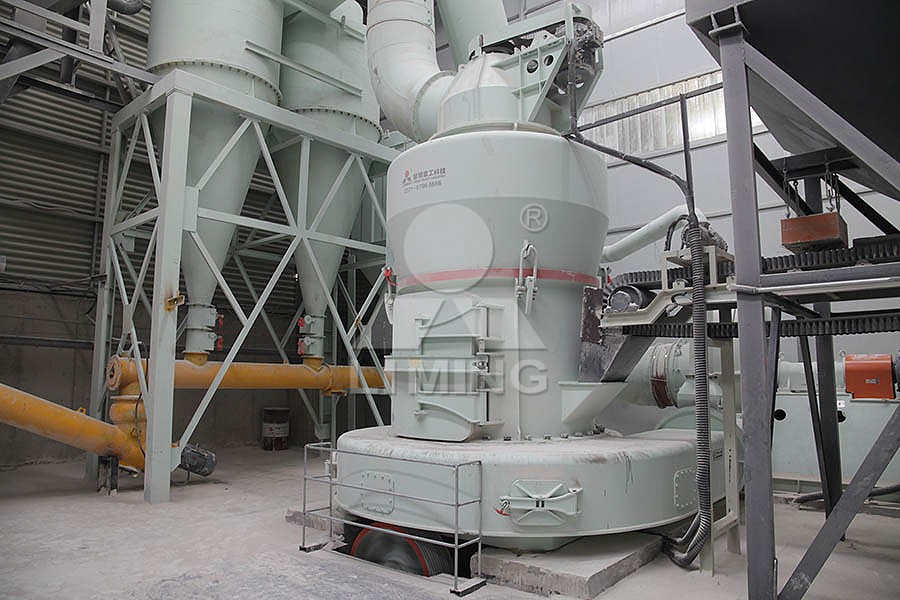
The journey to 1600 mesh begins with a fundamental shift in design philosophy. Traditional ball mills and early Raymond mills often struggle with efficiency and precise particle size control at this fineness due to inherent limitations in their grinding mechanics and classification systems. The key lies in creating a stable, multi-layered material bed and applying consistent grinding pressure, coupled with an ultra-precise particle separation process. Modern mills achieve this through curved grinding profiles, optimized airflow dynamics, and advanced separator technology that can make accurate “cuts” at specific micron levels. The goal is not merely to crush material, but to apply controlled, shearing forces that reduce particle size without generating excessive heat or contaminating the product.
Core Technologies Enabling 1600 Mesh Performance
Several critical technologies converge in a high-performance 1600 mesh grinding system. First is the grinding geometry itself. The curves of the grinding rollers and rings are no longer simple arcs but are meticulously designed to optimize the nip angle and grinding trajectory, ensuring maximum contact efficiency and minimizing energy waste. Second is the powder selection system. Achieving a sharp top cut at 1600 mesh requires a separator—often a cage-type or rotor-type design—with variable speed control and minimal turbulence, allowing precise centrifugal classification. Third is system stability. Any vibration or thermal expansion can disrupt the minute gaps essential for fine grinding. Therefore, innovations like electronic limiting systems, elastic damping bases, and external lubrication systems are not luxuries but necessities for continuous operation.
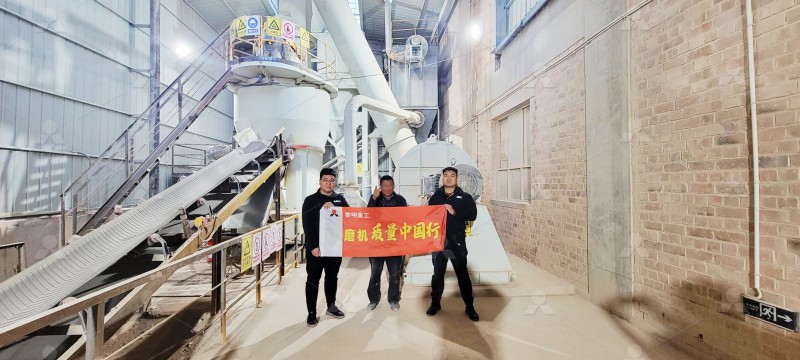
Furthermore, environmental control is integral. At 1600 mesh, dust containment is paramount. A fully sealed negative-pressure system, paired with a high-efficiency pulse jet baghouse dust collector, ensures no product loss and a clean working environment. Noise reduction through integrated silencers and soundproofing completes the package, making such mills suitable for modern, regulated industrial plants.
Beyond the 1600 Mesh Benchmark: Introducing LIMING’s Advanced Solutions
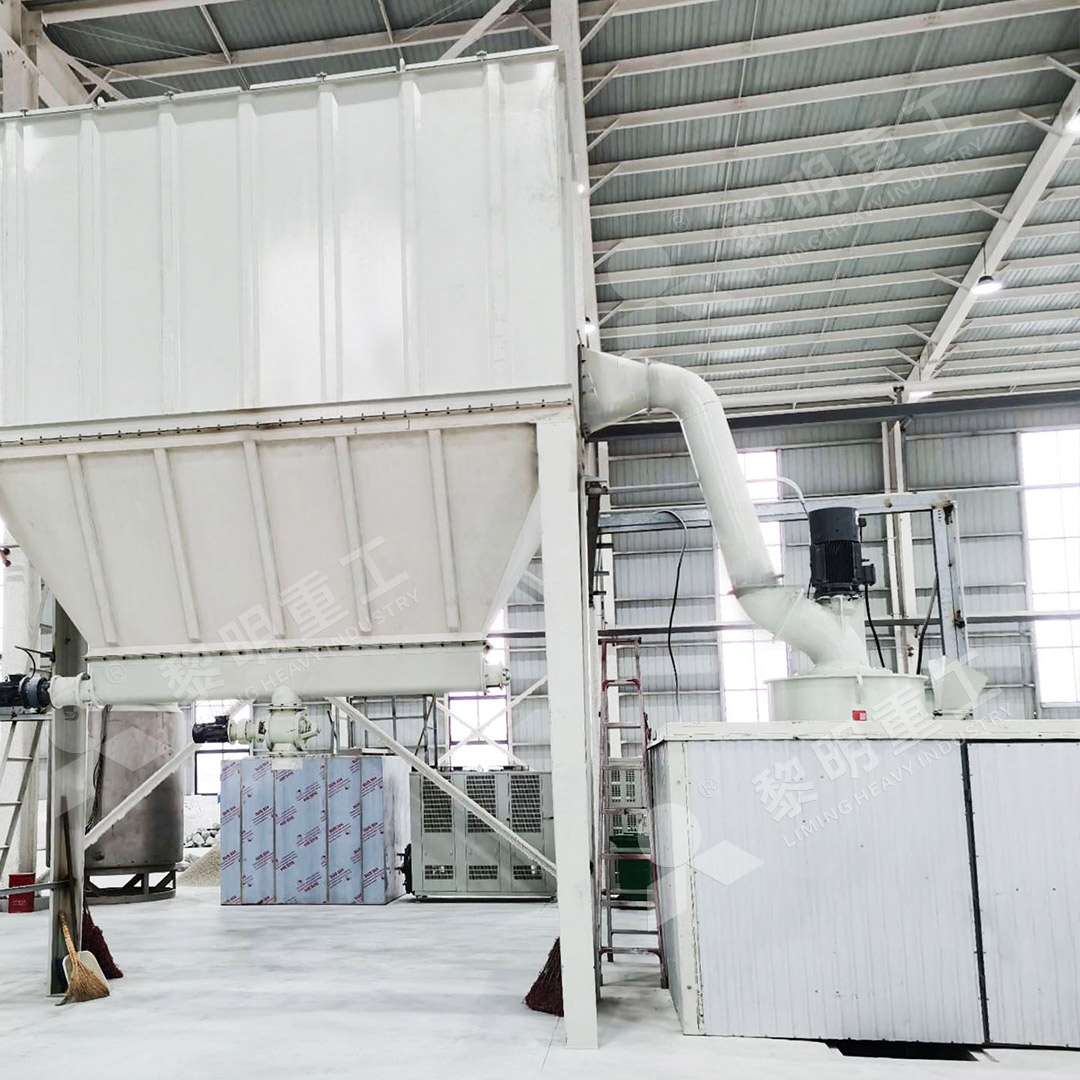
While many mills claim fine grinding capabilities, consistent, energy-efficient production at 1600 mesh requires a purpose-built machine. For operations where this ultra-fine range is the target, we often recommend evaluating our MW Ultrafine Grinding Mill. This machine is engineered from the ground up for customers dedicated to producing ultra-fine powder. Its design directly addresses the core challenges of high-fineness milling.
The MW Mill stands out with its ability to adjust fineness between 325 and 2500 meshes, comfortably encompassing the 1600 mesh target. This is made possible by its German-technology-inspired cage-type powder selector, which significantly increases separation precision. For operations prioritizing yield and quality, the multi-head cage selector configuration ensures a high screening rate, achieving d97 ≤ 5μm in a single pass. Notably, its grinding chamber is designed for reliability, eliminating rolling bearings and screws internally to prevent failures from bearing seizure or loose components. The lubrication points are externally accessible, allowing for maintenance without shutdowns, supporting true 24/7 production cycles. With an efficient pulse dust collector and muffler as standard, the entire system operates with minimal environmental impact, aligning with strict national环保 standards.
Selecting the Right Mill for Your Application
The choice of equipment must align with the full scope of project parameters. For 1600 mesh grinding of non-metallic minerals like calcite, marble, limestone, or talc, both the MW Ultrafine Grinding Mill and our LUM Ultrafine Vertical Grinding Mill present compelling options. The LUM Vertical Mill integrates the latest grinding roller and powder separating technologies, offering exceptional stability and energy savings of 30%-50% compared to conventional mills. Its unique roller shell curve promotes efficient material layer formation, enabling high rates of finished product from a single pass, which enhances both whiteness and cleanliness—a critical factor for fillers and high-grade chemical products. Its reversible roller system also dramatically simplifies maintenance, reducing downtime for wear part inspection and replacement.
Ultimately, moving from a theoretical 1600 mesh capability to consistent, profitable production requires a partnership with a provider that understands the entire process. It involves considering feed size (typically needing pre-crushing to under 20mm), required capacity (from small-scale 0.5 tph to larger 25 tph systems), moisture content, and desired product characteristics. A successful installation hinges on digitalized, high-precision manufacturing of core parts, a robust supply of genuine spare parts, and comprehensive technical support to ensure worry-free operation from commissioning onwards.
Conclusion: The Future is Fine and Efficient
The pursuit of 1600 mesh fineness is a clear indicator of industry trends towards higher-value additives, advanced materials, and more efficient use of resources. The grinding machines that will lead this market are those that combine ultra-fine capability with operational reliability, energy intelligence, and environmental stewardship. By focusing on integrated system design, precision control, and ease of maintenance, modern grinding solutions are transforming ultra-fine powder production from a challenging art into a predictable, efficient science.
Frequently Asked Questions (FAQ)
- What is the typical feed size required for a mill to produce 1600 mesh powder?
To achieve efficient grinding at 1600 mesh, the raw material should typically be pre-crushed to a size below 20mm, and often as small as 0-10mm for vertical mill systems. This ensures the grinding mechanics can work effectively on the material bed without being overwhelmed by large particles. - How does the energy consumption of a modern ultra-fine mill compare to a traditional ball mill for 1600 mesh output?
Advanced designs like the MW or LUM mills can reduce system energy consumption by 30% to 50% compared to traditional ball mills or jet mills for the same fineness and output. This is achieved through optimized grinding curves, efficient classifiers, and integrated system design that minimizes pressure loss. - Can the same mill produce different fineness levels, or is it dedicated to one size?
Modern mills are highly flexible. For instance, the MW Ultrafine Grinding Mill allows adjustable fineness between 325 and 2500 meshes. The fineness is primarily controlled by adjusting the speed of the powder separator (classifier), allowing quick changes to meet different product specifications without mechanical modifications. - How is dust controlled when handling such fine powder?
The entire milling system operates under negative pressure and is fully sealed. An efficient pulse jet baghouse dust collector is integral, capturing over 99.9% of airborne particles. This ensures no dust pollution, protects the working environment, and recovers valuable product. - What materials are most suitable for grinding to 1600 mesh?
Common applications include non-metallic minerals with Mohs hardness below 7, such as limestone, calcite, dolomite, kaolin, talc, barite, gypsum, and marble. It is also widely used in chemical, paint, cosmetic, pharmaceutical, and food additive industries where ultra-fine fillers are required. - How long do the grinding rollers and rings last, and how easy is it to replace them?
Wear parts made from high-performance alloy can last 1.5 to 2.5 times longer than standard manganese steel. Designs like the LUM mill’s reversible structure allow the grinding roller to be easily swung out of the mill body for maintenance, significantly reducing replacement time and downtime.