
Monazite Grinding Mill Production Line Price and Cost Analysis
We provide a wide range of mills — including Raymond mill, trapezoidal mill, vertical mill, ultrafine mill, and ball mill, obtained ISO9001 international quality certification, EU CE certification, and Customs Union CU-TR certification. Suitable for processing minerals such as limestone, phosphate, quicklime, kaolin, talc, barite, bentonite, calcium carbonate, dolomite, coal, gypsum, clay, carbon black, slag, cement raw materials, cement clinker, and more.
The discharge range of these mills can be adjusted to meet specific processing needs, typically from 80-400 mesh, 600-3250 mesh, and can achieve the finest particle size of up to 6000 mesh(D50).
If you are looking for a reliable grinding solution to turn stone or minerals into fine powder, please feel free to contact our online customer service.
Monazite Grinding Mill Production Line Price and Cost Analysis
Establishing a cost-effective and efficient production line for processing monazite and other rare earth minerals is a critical decision for any mining or mineral processing enterprise. The selection of the core grinding equipment profoundly impacts not only the initial capital expenditure (CAPEX) but also the long-term operational costs (OPEX), including energy consumption, maintenance, and final product quality. This analysis delves into the key factors influencing the price and total cost of ownership for a monazite grinding mill production line, offering strategic insights for informed investment.
Core Cost Drivers: Beyond the Initial Price Tag
The purchase price of the grinding mill itself is just one component of the total financial picture. A holistic cost analysis must consider several interconnected factors:
- Energy Consumption: This is often the single largest operational expense. Mills with higher grinding efficiency and lower specific energy consumption (kWh/ton) directly translate to substantial long-term savings.
- Wear Part Durability & Maintenance: The frequency and cost of replacing grinding rollers, rings, liners, and other vulnerable parts significantly affect downtime and maintenance budgets. Mills designed for extended wear life and easy maintenance reduce these recurring costs.
- Production Capacity & Yield: A mill that achieves a higher throughput and a greater proportion of in-specification ultra-fine powder per unit of input maximizes revenue and return on investment.
- Ancillary Systems: The cost and efficiency of integrated systems for drying, classifying, dust collection, and noise reduction must be factored into the total line price and its operational footprint.
- Automation & Control: Advanced control systems can optimize performance, reduce manual intervention, and ensure consistent product quality, impacting both efficiency and labor costs.
Strategic Equipment Selection for Monazite Processing
Monazite, often requiring fine to ultra-fine grinding for downstream extraction processes, demands mills capable of precise particle size control, high purity (low iron contamination), and stable operation. Two standout technologies from our portfolio are particularly suited for this application, offering distinct advantages in the cost-performance equation.
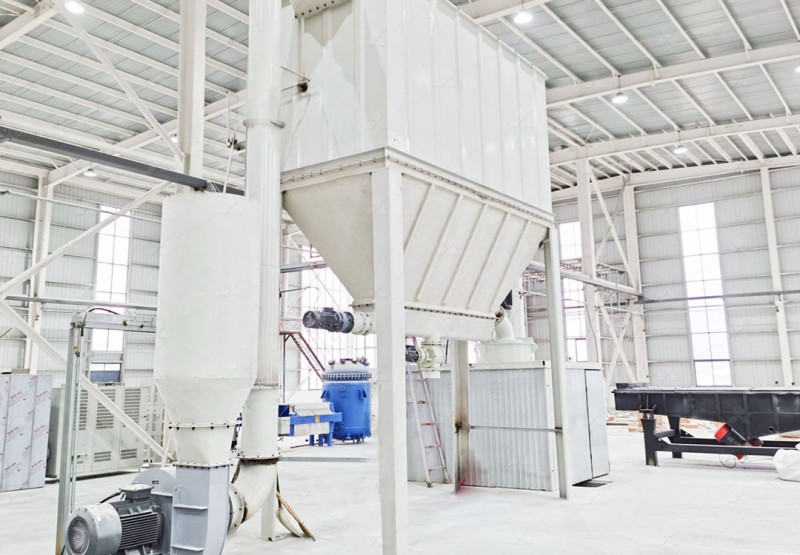
For projects demanding the highest fineness levels, our MW Ultrafine Grinding Mill is engineered to excel. It is specifically designed for customers who need to make ultra-fine powder from 325 to 2500 meshes. A key feature for monazite processing is its innovative design with no rolling bearings or screws in the grinding chamber. This eliminates a major source of potential contamination and machine failure, ensuring the product’s purity and reducing maintenance worries. Furthermore, its newly designed grinding curves enhance efficiency, offering 40% higher capacity compared to some alternative fine grinding technologies while consuming significantly less energy. The integrated efficient pulse dust collector ensures the entire production process meets stringent environmental standards, a critical consideration for modern operations.
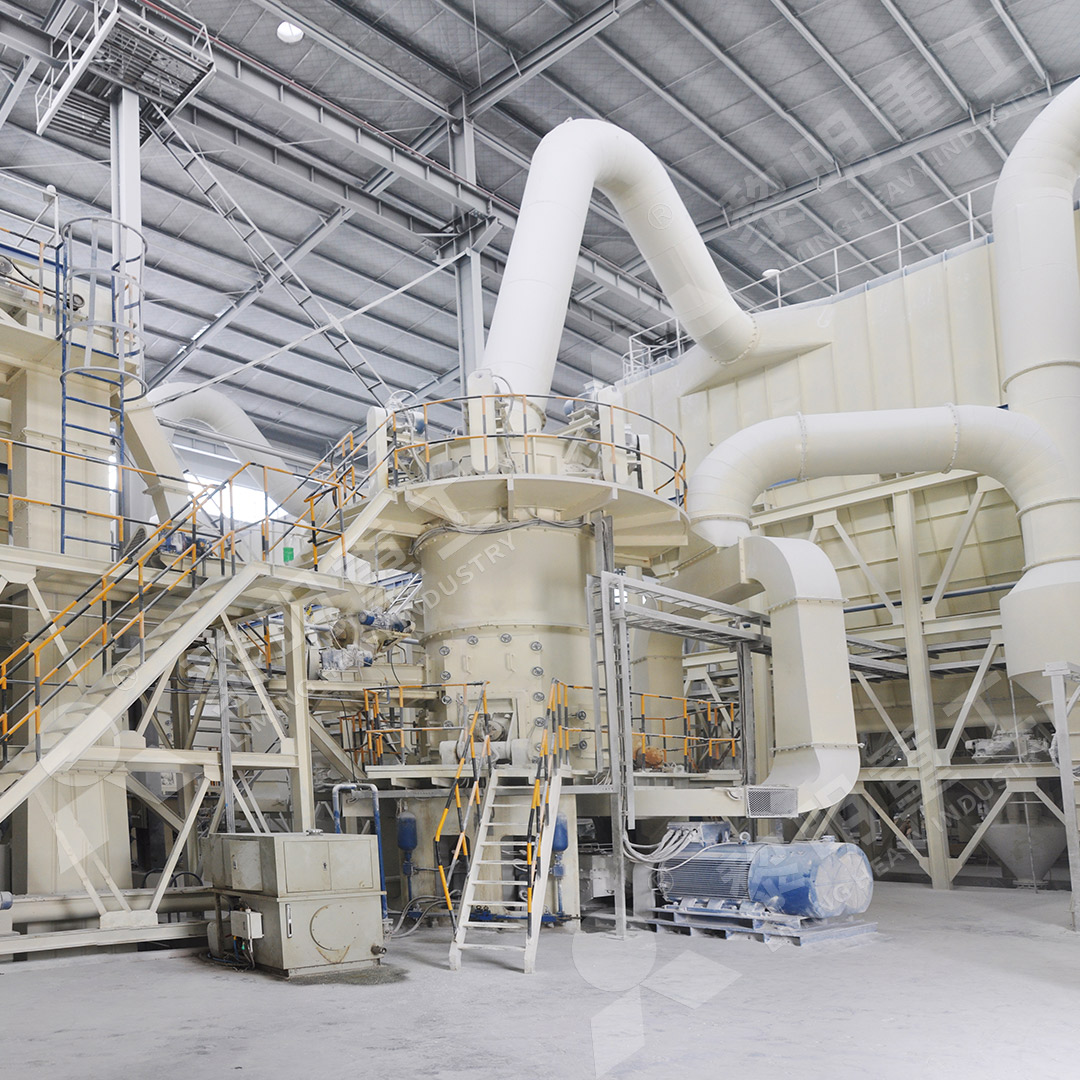
For operations prioritizing large-scale, integrated processing with exceptional stability, the LUM Ultrafine Vertical Grinding Mill presents a compelling solution. Independently designed with the latest grinding roller and powder separating technology, it integrates multiple functions. Its unique double position-limiting technology safeguards against destructive vibration, a vital feature for ensuring continuous, stable operation. The reversible structure of the grinding roller dramatically simplifies maintenance, allowing for quick inspection and part replacement to minimize costly downtime. With energy consumption 30%-50% lower than common grinding mills, the LUM series directly attacks the largest OPEX factor, making it a cost-effective workhorse for high-volume monazite powder production.
Total Cost of Ownership: A Long-Term Perspective
When evaluating prices, the focus should shift from the initial invoice to the Total Cost of Ownership (TCO). A mill with a slightly higher upfront cost but featuring 40% lower energy use, double the wear life on grinding parts, and automated controls that reduce labor and improve yield will inevitably deliver a lower TCO and higher profitability over a 5-10 year period.
Investing in digitally processed, high-precision machinery with a guaranteed supply of original spare parts—a commitment we stand behind—ensures worry-free operation and protects your investment against prolonged, unplanned shutdowns. The choice between different mill types (vertical roller mills, trapezium mills, ultrafine mills) should be based on a detailed analysis of your specific monazite feed size, target fineness, required capacity, and site constraints.
Conclusion
The price of a monazite grinding production line is a multi-variable equation. True cost efficiency is achieved by selecting equipment that optimizes the balance between capital investment and the ongoing costs of energy, maintenance, and production quality. Technologies like the MW and LUM series, built for efficiency, durability, and environmental compliance, are designed to minimize the Total Cost of Ownership. A thorough technical and economic audit, considering both immediate needs and long-term operational goals, is the most reliable path to a profitable and sustainable monazite processing operation.
Frequently Asked Questions (FAQ)
1. What is the primary cost-saving advantage of modern grinding mills like the MW and LUM series?
The most significant saving comes from dramatically reduced energy consumption, often 30-50% lower than traditional mills like ball mills. This directly lowers the largest operational expense over the equipment’s lifetime.
2. How does equipment design impact the purity of ground monazite powder?
Features like the absence of rolling bearings in the grinding chamber (MW Series) and non-contact grinding principles (LUM Series) minimize iron contamination from mechanical wear. This is crucial for maintaining the high chemical purity required for rare earth element extraction.
3. What fineness range can be achieved for monazite, and how is it controlled?
Advanced mills can achieve fineness from 325 mesh (45μm) to 2500 mesh (5μm). This is precisely controlled through advanced, multi-head cage-type powder separators (like in the MW Mill) or PLC-controlled separator systems (like in the LUM Mill), allowing accurate adjustment of the final product size.
4. Why is ease of maintenance a critical factor in cost analysis?
Easy maintenance designs, such as reversible roller structures, allow for faster part replacement and inspections. This minimizes production downtime, which is often far more costly than the spare parts themselves, ensuring higher overall equipment availability and productivity.
5. Are these grinding mill systems environmentally compliant?
Yes. Modern systems are designed as closed-circuit, negative-pressure operations. They are equipped with high-efficiency pulse jet dust collectors and silencers, effectively containing dust and reducing noise to meet strict national and international environmental protection standards.
6. Can the production line handle variations in monazite feed material?
Robust mills are designed with adjustable parameters. For instance, grinding pressure and classifier speed can be modified to accommodate variations in material hardness or feed size, ensuring consistent output quality despite some input fluctuations.