
YGM High Pressure Suspension Grinding Mill for 600 Mesh Powder Production
We provide a wide range of mills — including Raymond mill, trapezoidal mill, vertical mill, ultrafine mill, and ball mill, obtained ISO9001 international quality certification, EU CE certification, and Customs Union CU-TR certification. Suitable for processing minerals such as limestone, phosphate, quicklime, kaolin, talc, barite, bentonite, calcium carbonate, dolomite, coal, gypsum, clay, carbon black, slag, cement raw materials, cement clinker, and more.
The discharge range of these mills can be adjusted to meet specific processing needs, typically from 80-400 mesh, 600-3250 mesh, and can achieve the finest particle size of up to 6000 mesh(D50).
If you are looking for a reliable grinding solution to turn stone or minerals into fine powder, please feel free to contact our online customer service.
YGM High Pressure Suspension Grinding Mill for 600 Mesh Powder Production
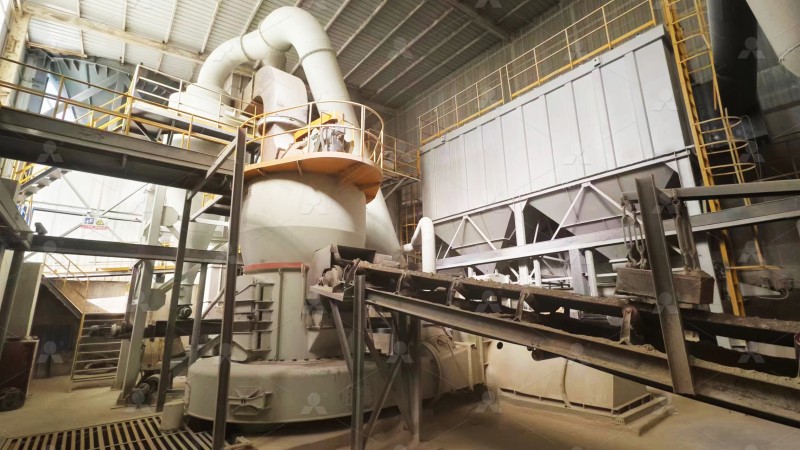
In the demanding world of industrial powder processing, achieving consistent, high-volume output at specific fineness levels like 600 mesh is a critical benchmark. For operations targeting this precise range, the YGM High Pressure Suspension Grinding Mill stands as a proven and robust solution. This mill leverages a time-tested principle—high-pressure spring-loaded grinding rollers—to pulverize a wide array of materials into fine and ultra-fine powders, making it a cornerstone in industries from mining to construction materials.
The core mechanism involves a main frame housing a grinding ring, with rollers that rotate against it. The key differentiator is the high-pressure spring system attached to the roller assembly. This system applies substantial grinding force to the material bed, allowing for efficient comminution of medium-hard materials. The ground powder is then carried by an air stream to an integrated classifier, which ensures precise particle size separation, reliably delivering product in the target 600-mesh range.
Key Advantages for 600 Mesh Production
The design of the YGM mill offers several distinct benefits for producers. Its high-pressure suspension system not only increases grinding efficiency but also allows for adjustable fineness by modifying the spring pressure. The mill’s structure is notably durable, with wear-resistant components for the grinding elements, leading to extended service life and lower long-term wear costs. Furthermore, its dust collection system is designed to operate under negative pressure, significantly minimizing environmental dust pollution—a crucial consideration for modern, responsible manufacturing.
However, as production needs evolve towards even finer specifications, higher capacities, or more complex material characteristics, exploring more advanced technological platforms becomes essential. For clients whose projects demand pushing beyond traditional limits, we often recommend considering our next-generation ultrafine grinding solutions.
Beyond 600 Mesh: The Next Generation of Ultrafine Grinding
While the YGM series excels in its category, certain applications require finer powders, superior particle distribution, or higher energy efficiency. For these advanced needs, our MW Ultrafine Grinding Mill represents a significant leap forward. Engineered for customers dedicated to producing ultra-fine powder, the MW series is not merely an iteration but a reimagining of grinding technology.
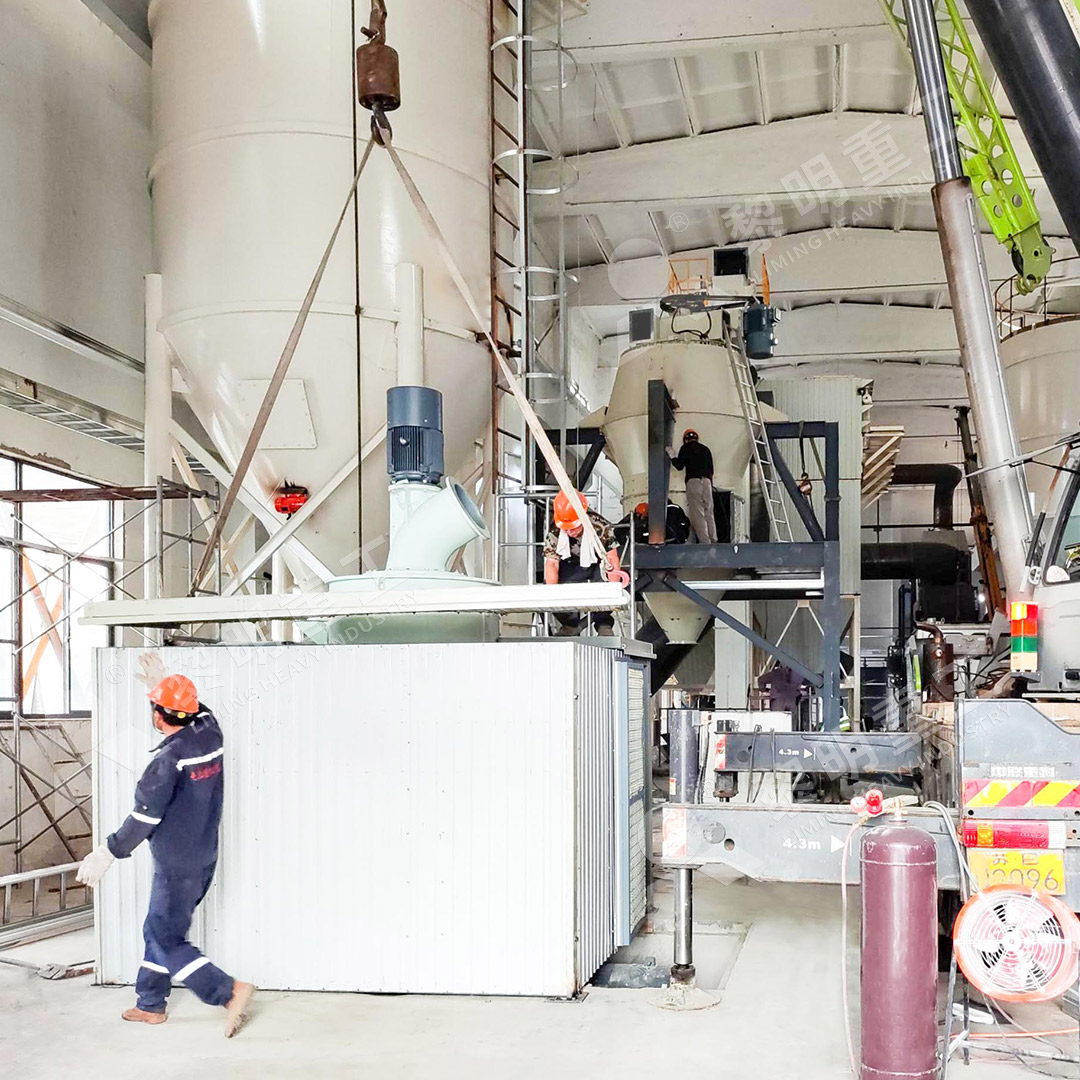
The MW Ultrafine Grinding Mill is designed with a higher yielding, lower energy consumption philosophy. Its newly designed grinding curves for the roller and ring enhance efficiency dramatically. To put it in perspective, with the same fineness and power input, its production capacity can be up to 40% higher than jet mills or stirred mills, and double that of a traditional ball mill, while system energy consumption is reduced to just 30% of a jet mill’s. For 600-mesh production, this translates directly to lower operational costs and a smaller carbon footprint.
One of its standout features is the adjustable fineness range of 325 to 2500 meshes, facilitated by a German-technology-inspired cage-type powder selector. This allows for exceptional precision in particle size control, achieving a screening rate of d97≤5μm in a single pass. This level of control is invaluable for high-value industries like cosmetics, pharmaceuticals, and advanced ceramics.
Engineering for Reliability and Uptime
Downtime is the enemy of productivity. The MW mill addresses this proactively with a chamber design that contains no rolling bearings or screws. This eliminates common failure points like bearing seal damage or issues caused by loose fasteners. Lubrication is performed externally, allowing for maintenance without shutdowns and supporting continuous 24/7 operation—a critical factor for large-scale production lines.
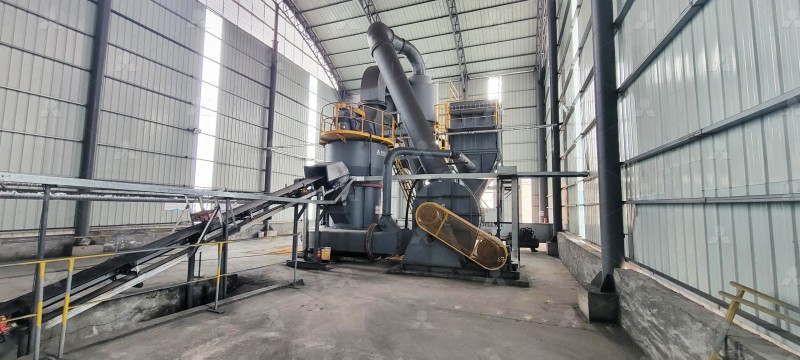
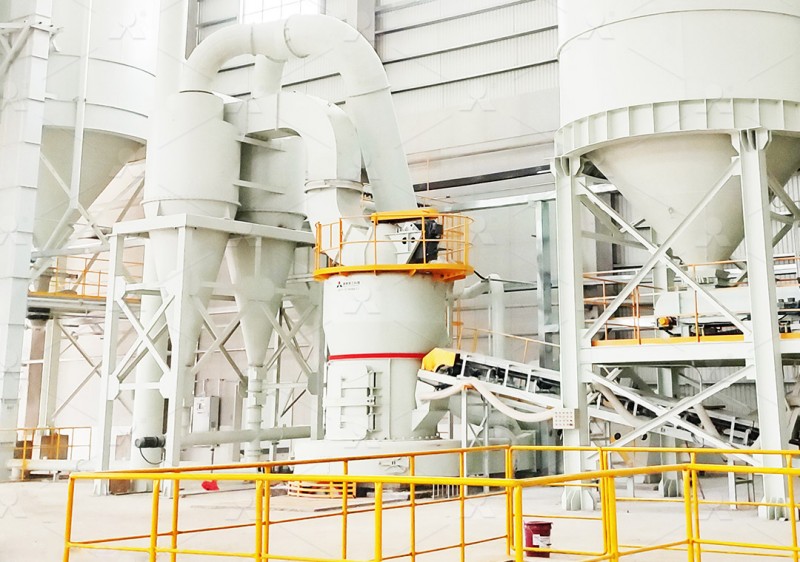
Complementing the MW series for specific high-capacity, vertical integration needs is our LUM Ultrafine Vertical Grinding Mill. This mill integrates grinding, grading, and transportation into a single, compact unit. It adopts the latest grinding roller and powder separating technologies, offering remarkable energy savings of 30%-50% compared to common grinding mills. Its reversible structure, enabled by a hydraulic system, allows grinding rollers to be easily moved out for maintenance, drastically reducing service time and losses.
Making the Right Choice for Your Operation
Selecting the right mill hinges on your specific material, target fineness, required capacity, and total cost of ownership goals. The venerable YGM High Pressure Suspension Grinding Mill remains a superb, cost-effective workhorse for reliable 600-mesh production. For operations aiming at the forefront of efficiency, ultra-fine capability, and operational intelligence, the MW and LUM series provide a clear path forward.
Both the MW Ultrafine Grinding Mill and the LUM Ultrafine Vertical Grinding Mill are backed by our comprehensive digital manufacturing processes, ensuring high precision in every core component, and supported by a guaranteed supply of original spare parts for worry-free, long-term operation. Investing in the right grinding technology is an investment in the quality, consistency, and profitability of your powder production line.
Frequently Asked Questions (FAQ)
- What is the main difference between the YGM mill and the MW Ultrafine Grinding Mill for 600-mesh production?
The YGM mill uses a high-pressure spring system for grinding and is a robust, proven solution. The MW mill is a more advanced, next-generation design offering significantly higher energy efficiency (up to 70% less energy than a jet mill), a wider fineness range (up to 2500 mesh), and features like external lubrication for non-stop operation, making it more suitable for high-volume, ultra-fine, and cost-sensitive applications. - Can the MW Ultrafine Grinding Mill handle hard materials like quartz or feldspar?
Yes, the MW mill is designed to process a variety of medium-hard and hard non-metallic minerals, including limestone, calcite, dolomite, barite, talc, and similar materials. Its wear-resistant grinding components and efficient design make it suitable for such applications. For extremely hard or abrasive materials, a full technical review is recommended. - How is dust controlled in these milling systems?
Both our YGM and MW series mills are equipped with efficient pulse jet dust collectors. The entire milling system operates under negative pressure, ensuring no dust leakage during operation. This makes the production process clean and fully compliant with national environmental protection standards. - What kind of technical support and spare parts availability can we expect?
We take full responsibility for every machine we produce. We provide comprehensive technical services, from installation guidance to operational training. Crucially, we maintain a sufficient supply of original, high-quality spare parts, ensuring long-term, worry-free operation and minimizing potential downtime. - Is the fineness adjustable during operation on the MW mill?
Yes. The MW Ultrafine Grinding Mill features an advanced cage-type powder selector. The fineness of the final product can be adjusted between 325 and 2500 meshes by modifying the classifier’s speed and other parameters, allowing for flexible production to meet different customer requirements without stopping the mill.