
Working Principle of Calcium Magnesium Phosphate Fertilizer Grinding Mill
We provide a wide range of mills — including Raymond mill, trapezoidal mill, vertical mill, ultrafine mill, and ball mill, obtained ISO9001 international quality certification, EU CE certification, and Customs Union CU-TR certification. Suitable for processing minerals such as limestone, phosphate, quicklime, kaolin, talc, barite, bentonite, calcium carbonate, dolomite, coal, gypsum, clay, carbon black, slag, cement raw materials, cement clinker, and more.
The discharge range of these mills can be adjusted to meet specific processing needs, typically from 80-400 mesh, 600-3250 mesh, and can achieve the finest particle size of up to 6000 mesh(D50).
If you are looking for a reliable grinding solution to turn stone or minerals into fine powder, please feel free to contact our online customer service.
Working Principle of Calcium Magnesium Phosphate Fertilizer Grinding Mill
In the modern agricultural industry, the production of high-quality, water-soluble fertilizers like calcium magnesium phosphate (CMP) is crucial for soil health and crop yield. The efficacy of these fertilizers is intrinsically linked to their particle size and uniformity, making the grinding process a cornerstone of their manufacturing. Understanding the working principle of specialized grinding mills is essential for optimizing production, ensuring consistent product quality, and minimizing operational costs.
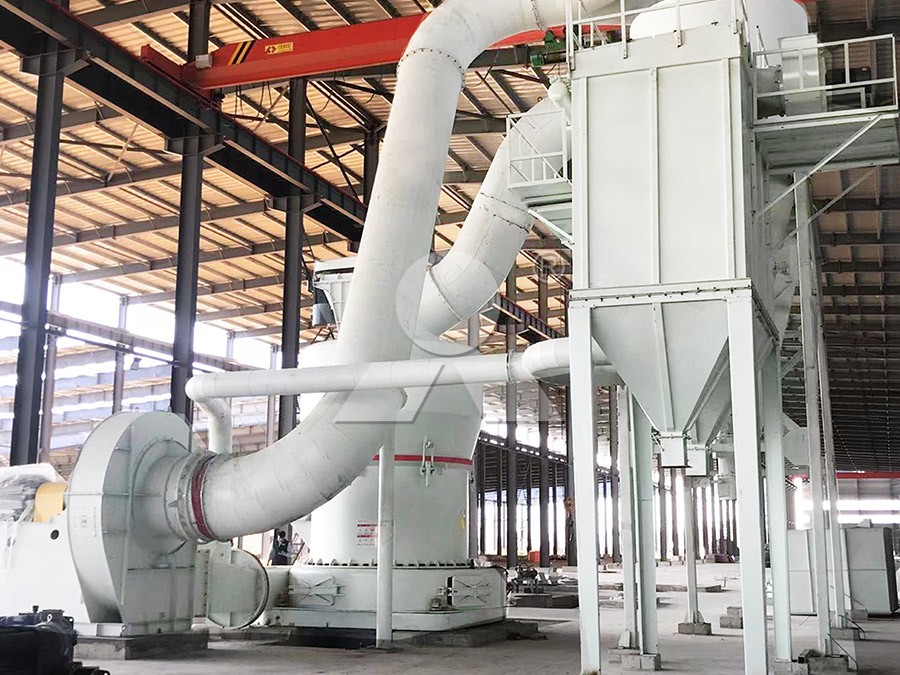
The Core Mechanism: From Raw Ore to Fine Powder
The primary objective in grinding calcium magnesium phosphate rock is to achieve a very fine, consistent powder with a high surface area, which directly influences its solubility and nutrient release rate in the soil. While traditional ball mills have been used, advanced vertical roller mills and trapezium mills offer superior efficiency for this application. The general working principle follows a multi-stage process of crushing, grinding, classification, and collection.
Initially, raw phosphate rock with a controlled input size (typically 0-50mm) is fed into the mill via a vibrating feeder. Inside the grinding chamber, the core action takes place between rotating grinding rollers (or rollers and a ring) and a stationary or rotating grinding table (or raceway). The material is ground through a combination of compression, shear, and attrition forces. In a vertical mill configuration, the material bed forms on the rotating table and is ground under hydraulic pressure from the rollers. The ground particles are then carried upwards by a stream of hot air (which can also serve to dry the material) generated by an integrated blower.
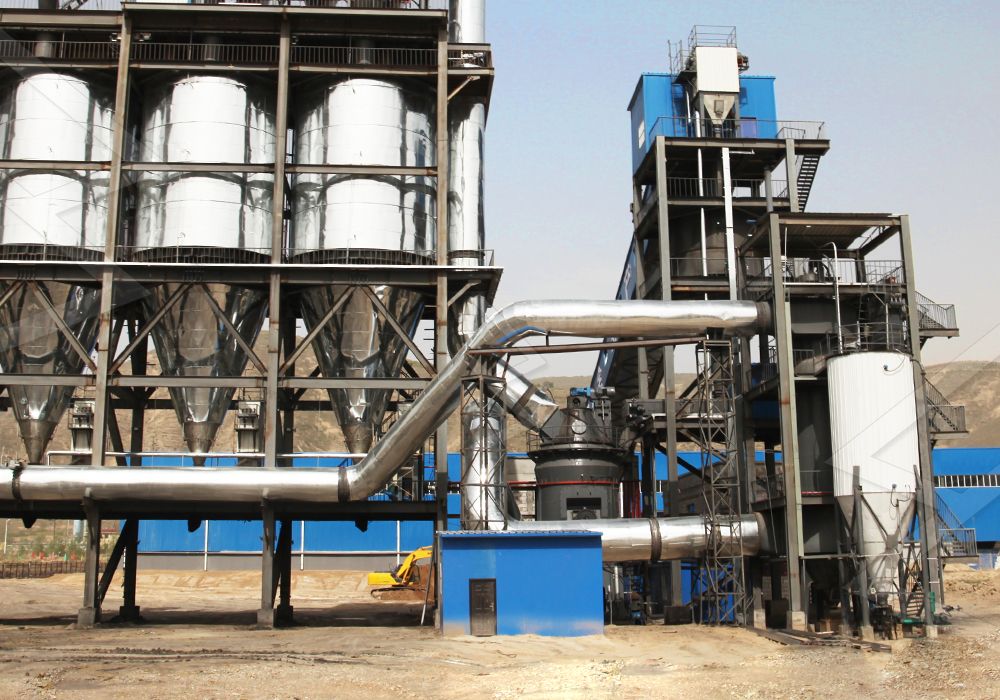
Precision Separation and Final Product Collection
The air-powder mixture enters a critical component: the high-efficiency powder separator or classifier. This device, often a cage-type or rotor-type separator, uses centrifugal force and adjustable rotor speeds to separate particles based on size. Coarse particles that do not meet the target fineness are rejected and fall back onto the grinding table for further milling. This internal recirculation ensures maximum efficiency and consistent particle size distribution.
The fine, qualified powder exits the separator with the air stream and is transported to a cyclone powder collector or a baghouse dust collector. Here, the product is separated from the air flow and discharged through a lock valve as the final calcium magnesium phosphate powder. The cleaned air is often recirculated back into the system, creating a closed-loop, negative-pressure environment that is essential for dust-free, environmentally friendly operation—a key consideration for fertilizer plants.
Choosing the Right Technology for CMP Fertilizer
For producers of calcium magnesium phosphate fertilizer, selecting a mill that balances high yield, precise fineness control (often targeting 100-325 mesh or finer), and low operating costs is paramount. Our engineering team often recommends our MW Ultrafine Grinding Mill for applications demanding ultra-fine powder (adjustable between 325-2500 meshes) with exceptional whiteness and low iron contamination. Its unique design, featuring a cage-type powder selector and the absence of rolling bearings in the grinding chamber, ensures high precision, reliability, and worry-free operation for continuous 24/7 production.
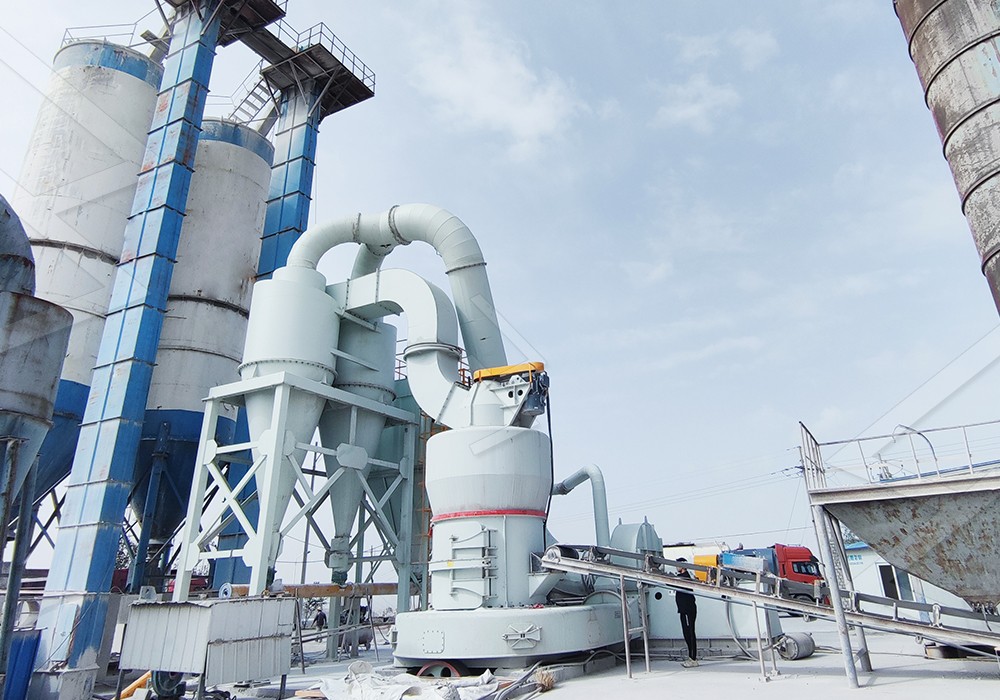
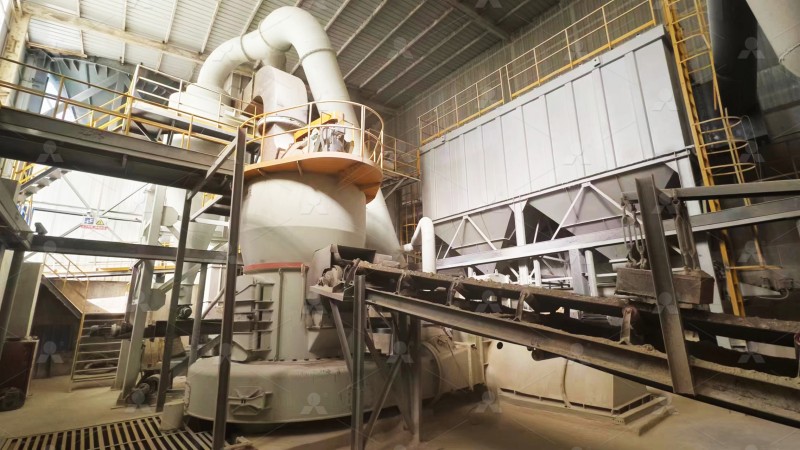
Alternatively, for operations requiring robust, large-scale processing with integrated drying, our LM Vertical Grinding Mill presents an excellent solution. It integrates crushing, drying, grinding, and classifying in a single unit, reducing the footprint by 50% and energy consumption by 30-40% compared to traditional ball mills. Its stable operation, short material lingering time, and automated control system make it ideal for consistent, high-volume production of quality fertilizer powder.
Ultimately, the working principle of these advanced mills revolves around efficient size reduction, precise aerodynamic classification, and clean, automated collection. By leveraging such technology, calcium magnesium phosphate fertilizer producers can achieve superior product quality, enhance nutrient availability, and operate more sustainably.
Frequently Asked Questions (FAQs)
- What is the optimal fineness for ground calcium magnesium phosphate fertilizer?
The optimal fineness depends on the desired solubility and application method. Generally, a range of 100 to 325 mesh is common for soil application, ensuring a good balance between dissolution rate and handling properties. For highly soluble formulations or foliar applications, finer grinding up to 800-1250 mesh may be required. - Can your mills handle the slightly abrasive nature of phosphate rock?
Yes. Our mills, such as the LM and MW series, are designed with wear-resistant materials for grinding rollers and tables/rings. Features like reversible roller shells and high-performance alloy materials extend service life significantly, reducing maintenance costs and downtime associated with abrasive materials. - Is a drying process integrated into the grinding mill?
Our LM Vertical Grinding Mill and similar vertical mills are designed for integrated drying. Hot air can be introduced into the mill concurrently with grinding, effectively reducing moisture content in the raw material. This is a major advantage over traditional ball mills which often require a separate dryer. - How is dust pollution controlled during the grinding process?
Our grinding systems are designed as negative-pressure, closed-loop circuits. They are equipped with high-efficiency pulse jet bag dust collectors or cyclone collectors. This ensures that all air is filtered before being recirculated or vented, meeting strict environmental standards with virtually no dust emission. - What factors influence the final production capacity of the mill?
Capacity is influenced by the hardness and moisture of the raw material, the required product fineness, and the mill model’s specifications. For instance, our MW Ultrafine Mill offers a capacity range of 0.5-25 tph, while the LM Vertical Mill can handle from 3 to over 300 tph, depending on the configuration and material. - How is the fineness of the final powder precisely controlled?
Fineness is primarily controlled by the speed of the powder separator’s rotor (in mills like the MW and LUM) or by adjusting the classifier. A faster rotor speed yields finer product. Our mills feature advanced PLC control systems that allow operators to accurately adjust these parameters to achieve the exact particle size distribution required.