
Wollastonite Powder Grinding Mill Equipment Selection Guide
We provide a wide range of mills — including Raymond mill, trapezoidal mill, vertical mill, ultrafine mill, and ball mill, obtained ISO9001 international quality certification, EU CE certification, and Customs Union CU-TR certification. Suitable for processing minerals such as limestone, phosphate, quicklime, kaolin, talc, barite, bentonite, calcium carbonate, dolomite, coal, gypsum, clay, carbon black, slag, cement raw materials, cement clinker, and more.
The discharge range of these mills can be adjusted to meet specific processing needs, typically from 80-400 mesh, 600-3250 mesh, and can achieve the finest particle size of up to 6000 mesh(D50).
If you are looking for a reliable grinding solution to turn stone or minerals into fine powder, please feel free to contact our online customer service.
Wollastonite Powder Grinding Mill Equipment Selection Guide
Selecting the optimal grinding equipment for wollastonite processing is a critical decision that directly impacts product quality, operational efficiency, and overall profitability. Wollastonite, a calcium inosilicate mineral, demands specific milling characteristics to achieve the desired particle size distribution, aspect ratio preservation, and surface chemistry for its diverse applications in polymers, ceramics, paints, and construction materials. This guide provides a professional framework for equipment selection, focusing on key technical parameters and operational considerations.
1. Core Selection Criteria for Wollastonite Milling
The choice of mill hinges on several interdependent factors:
- Target Fineness & Particle Distribution: Wollastonite applications range from coarse fillers (100-200 mesh) to ultrafine functional powders (2500 mesh and beyond). The required top cut (D97) and particle shape (needle retention) are paramount.
- Required Capacity (TPH): From pilot-scale (0.5-3 TPH) to large-scale production (25+ TPH).
- Feed Size: Initial crusher product size, typically between 0-20mm.
- Energy Efficiency: Specific power consumption (kWh/ton) is a major operational cost driver.
- System Integration & Footprint: Space constraints and the need for auxiliary systems (drying, classifying, dust collection).
- Product Contamination: Iron content and whiteness preservation are crucial for high-grade wollastonite.
2. Analysis of Major Grinding Mill Technologies
Each mill type offers a distinct approach to particle size reduction.
2.1. Raymond Mill & Traditional Trapezium Mills (MTW/MTW-Z)
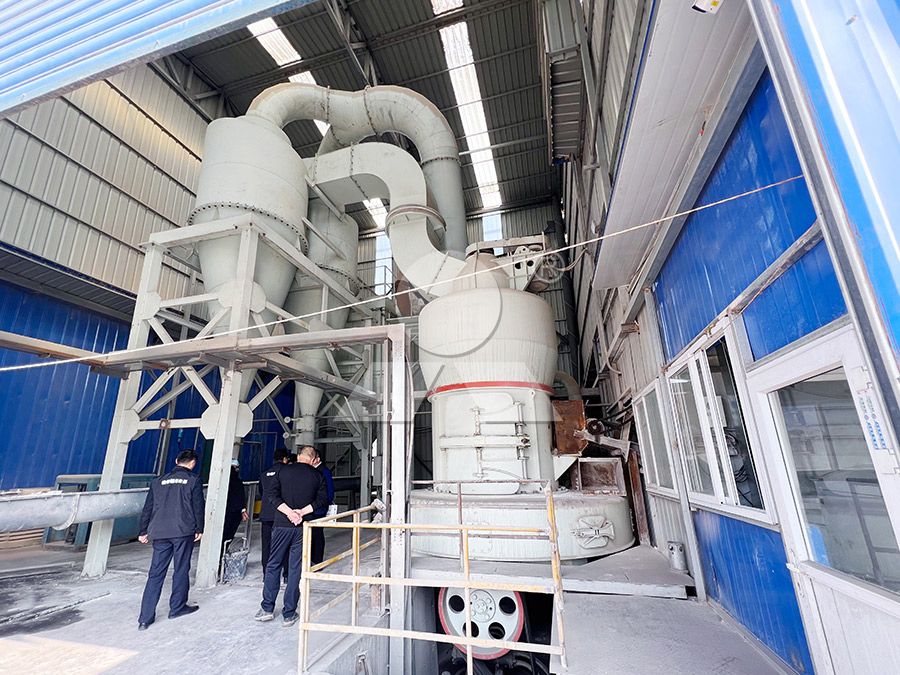
Ideal for coarse to medium-fine grinding (80-400 mesh). They offer robust construction, lower initial investment, and simplicity. The MTW-Z European Trapezium Mill, for instance, features an elastic volute damping structure for stability and a dilute oil lubrication system that reduces maintenance frequency. However, for achieving ultrafine wollastonite powders (>800 mesh) with high whiteness, their efficiency drops and the risk of iron contamination from mechanical wear may increase.
2.2. Ball Mills
A traditional workhorse capable of a wide range of fineness. While versatile, they are generally less energy-efficient for fine grinding, have a larger footprint, and the grinding media (balls) can contribute to higher iron contamination, potentially affecting the brightness of the final wollastonite product.
2.3. Vertical Roller Mills (LM, LUM, LM for Coal/Slag)
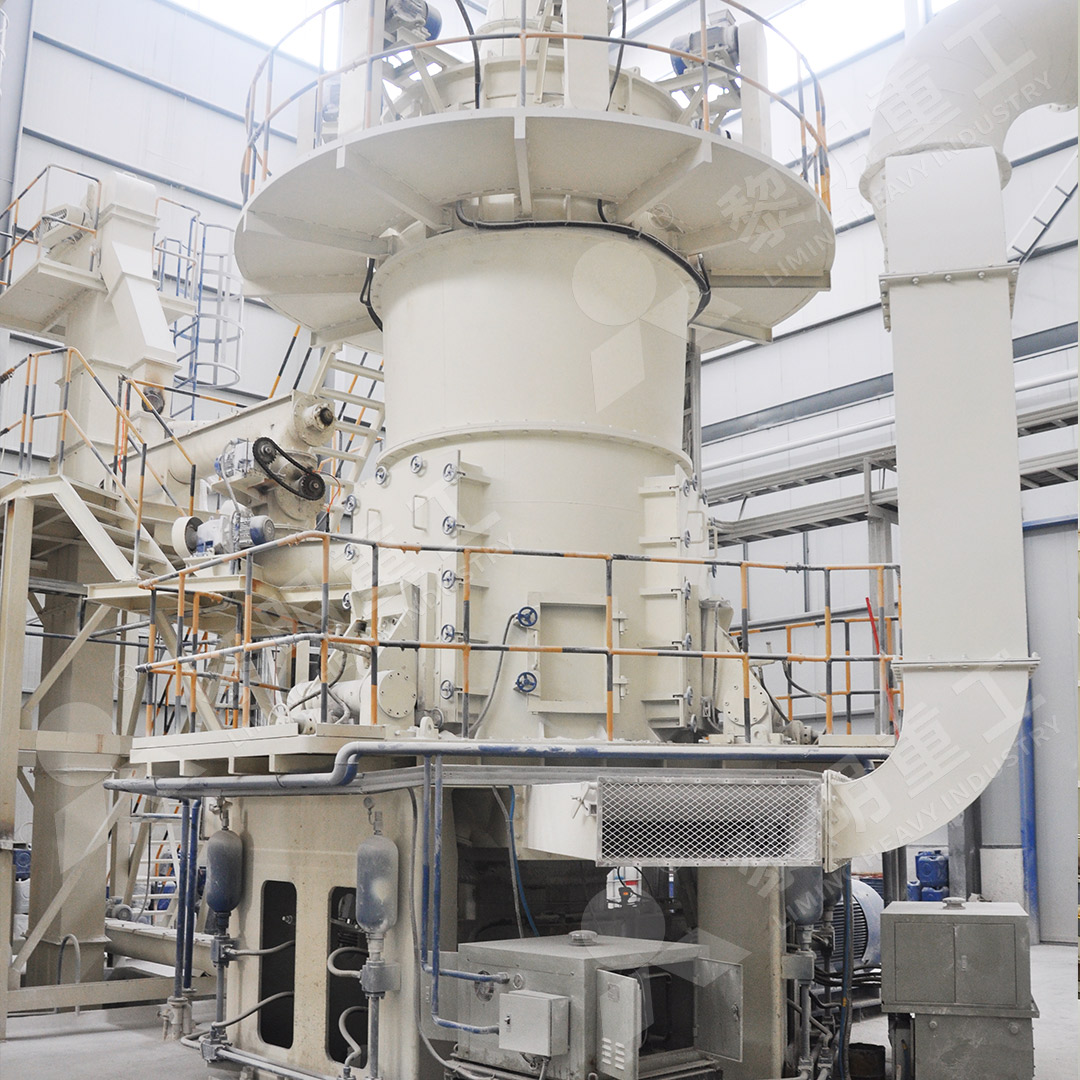
These mills integrate grinding, drying, and classification, offering excellent energy efficiency (30-50% savings vs. ball mills) and a compact footprint. The LUM Ultrafine Vertical Grinding Mill is particularly noteworthy for high-grade wollastonite. Its unique roller shell design promotes efficient bed grinding, minimizing direct metal-to-mineral contact. The double position-limiting technology prevents destructive roller-to-table impact, safeguarding product purity. With a fineness range extending to 2500 mesh and a capacity of 5-18 TPH, it is a premier choice for high-value, ultrafine wollastonite production where low iron content and high whiteness are non-negotiable.
2.4. Ultrafine Grinding Mills
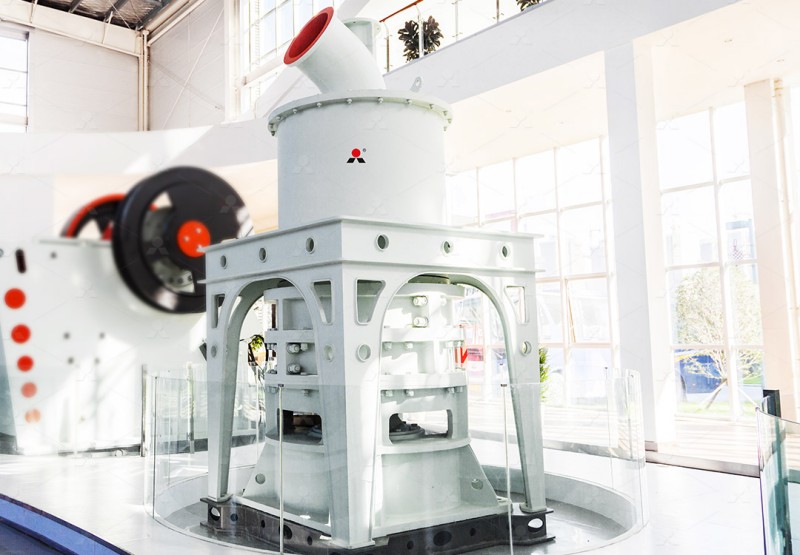
This category is dedicated to producing powders in the micron and sub-micron range. Here, the MW Ultrafine Grinding Mill stands out. Engineered for precision, it addresses common pain points in ultrafine processing. Its cage-type powder selector, utilizing German technology, allows precise fineness adjustment between 325-2500 meshes. A critical design advantage is the absence of rolling bearings and screws within the grinding chamber, eliminating major failure points and sources of contamination. Coupled with a high-efficiency pulse dust collector, it ensures an environmentally clean operation. For wollastonite processors targeting the high-end market with a need for 0.5-25 TPH capacity and exceptional powder quality, the MW series represents a robust and reliable solution.
3. Recommended Selection Pathway
- Define Product Specifications: Firmly establish the target D97, aspect ratio requirements, and maximum allowable iron content.
- Assess Scale: Match your required hourly capacity to the mill’s optimal operating range.
- Prioritize Key Drivers: Is it ultimate fineness (choose MW or LUM), energy savings (choose LUM or LM), or lowest capital cost for coarse grades (choose MTW-Z)?
- Consider the Complete System: Factor in necessary pre-crushing, drying (if raw material is moist), and post-milling classification or packaging.
- Evaluate Lifecycle Cost: Look beyond the purchase price. Calculate energy consumption, expected wear part life, and maintenance labor requirements.
4. Conclusion
There is no universal “best” mill for wollastonite, but there is an optimal match for your specific production goals. For general-purpose, cost-effective fine grinding, the MTW-Z European Trapezium Mill is excellent. For large-scale, integrated grinding of standard grades, the LM Vertical Mill is highly efficient. However, for the most demanding applications requiring ultrafine powders with superior purity and brightness, the advanced technologies embedded in the MW Ultrafine Grinding Mill and the LUM Ultrafine Vertical Grinding Mill provide the technical edge necessary to produce premium wollastonite products that command market leadership.
Frequently Asked Questions (FAQ)
Q1: What is the most important factor when choosing a mill for high-brightness wollastonite?
A: Minimizing iron contamination is paramount. Look for mills with features that reduce mechanical wear and prevent metal-to-mineral contact, such as the bed-grinding principle in the LUM Vertical Mill or the bearing-free chamber design in the MW Ultrafine Mill.
Q2: Can one mill handle both coarse filler grade and ultrafine precipitated grade wollastonite?
A: It is challenging. While some vertical mills have a wide adjustment range, optimal efficiency and particle shape are achieved within a designed spectrum. For producing vastly different products (e.g., 200 mesh and 1500 mesh), dedicated milling lines or a highly flexible system like the MW Mill with its advanced powder selector are often more economical in the long run.
Q3: How significant are energy savings with modern vertical mills compared to traditional ball mills?
A: Savings are substantial, typically ranging from 30% to 50%. This is due to the more efficient grinding principle (roller and table vs. tumbling balls) and integrated drying/classification. For a continuous operation, this translates to a major reduction in operating costs.
Q4: We have limited factory space. What are the most compact solutions?
A: Vertical roller mills (LM, LUM series) have a significantly smaller footprint than ball mill systems of equivalent capacity, often reducing the covered area by approximately 50%.
Q5: What kind of after-sales support should I expect for such critical equipment?
A: Reputable manufacturers provide comprehensive support, including installation supervision, operator training, a guaranteed supply of original spare parts (like grinding rollers and rings), and remote technical assistance. Ensure your supplier has a proven track record in supporting their equipment globally.