
What Type of Grinding Mill is Used in a Gypsum Powder Plant?
We provide a wide range of mills — including Raymond mill, trapezoidal mill, vertical mill, ultrafine mill, and ball mill, obtained ISO9001 international quality certification, EU CE certification, and Customs Union CU-TR certification. Suitable for processing minerals such as limestone, phosphate, quicklime, kaolin, talc, barite, bentonite, calcium carbonate, dolomite, coal, gypsum, clay, carbon black, slag, cement raw materials, cement clinker, and more.
The discharge range of these mills can be adjusted to meet specific processing needs, typically from 80-400 mesh, 600-3250 mesh, and can achieve the finest particle size of up to 6000 mesh(D50).
If you are looking for a reliable grinding solution to turn stone or minerals into fine powder, please feel free to contact our online customer service.
What Type of Grinding Mill is Used in a Gypsum Powder Plant?
Gypsum powder production requires specialized grinding equipment to transform raw gypsum rock into fine powder suitable for various industrial applications. The choice of grinding mill significantly impacts product quality, production efficiency, and operational costs. Understanding the different mill types and their suitability for gypsum processing is crucial for plant operators and decision-makers.
Gypsum Processing Requirements
Gypsum, chemically known as calcium sulfate dihydrate (CaSO4·2H2O), requires careful processing to maintain its beneficial properties while achieving the desired fineness. The grinding process must handle material with moderate hardness (1.5-2 on Mohs scale) while preserving the crystalline structure that gives gypsum its valuable characteristics in construction materials, food additives, and industrial applications.
Common Mill Types for Gypsum Grinding
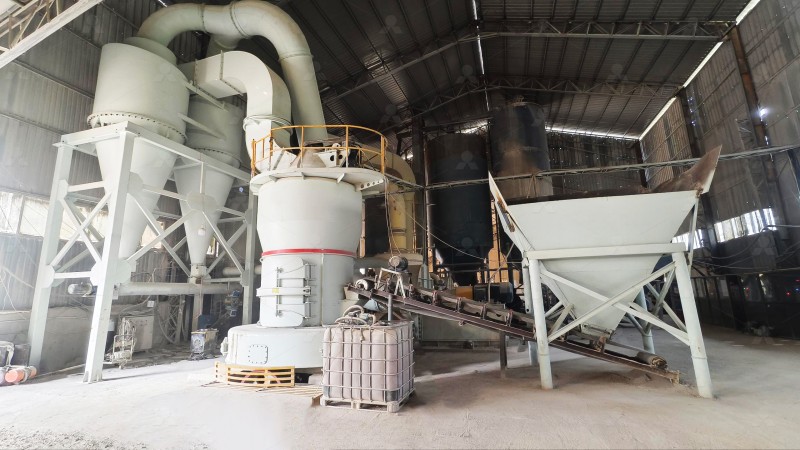
Several grinding mill configurations can process gypsum, each with distinct advantages:
Raymond Mill
Traditional Raymond mills have been workhorses in gypsum processing for decades. They offer reliable performance for medium-fineness applications but may struggle with ultra-fine requirements and higher energy consumption compared to modern alternatives.
Vertical Roller Mills
Vertical mills integrate drying, grinding, and classification in a single unit, making them efficient for gypsum processing. Their compact footprint and lower energy consumption make them popular choices for medium to large-scale operations.
Ball Mills
While capable of grinding gypsum, ball mills typically consume more energy and occupy more space than newer technologies. They remain relevant for specific applications but are gradually being replaced by more efficient options.
The Modern Solution: MW Ultrafine Grinding Mill
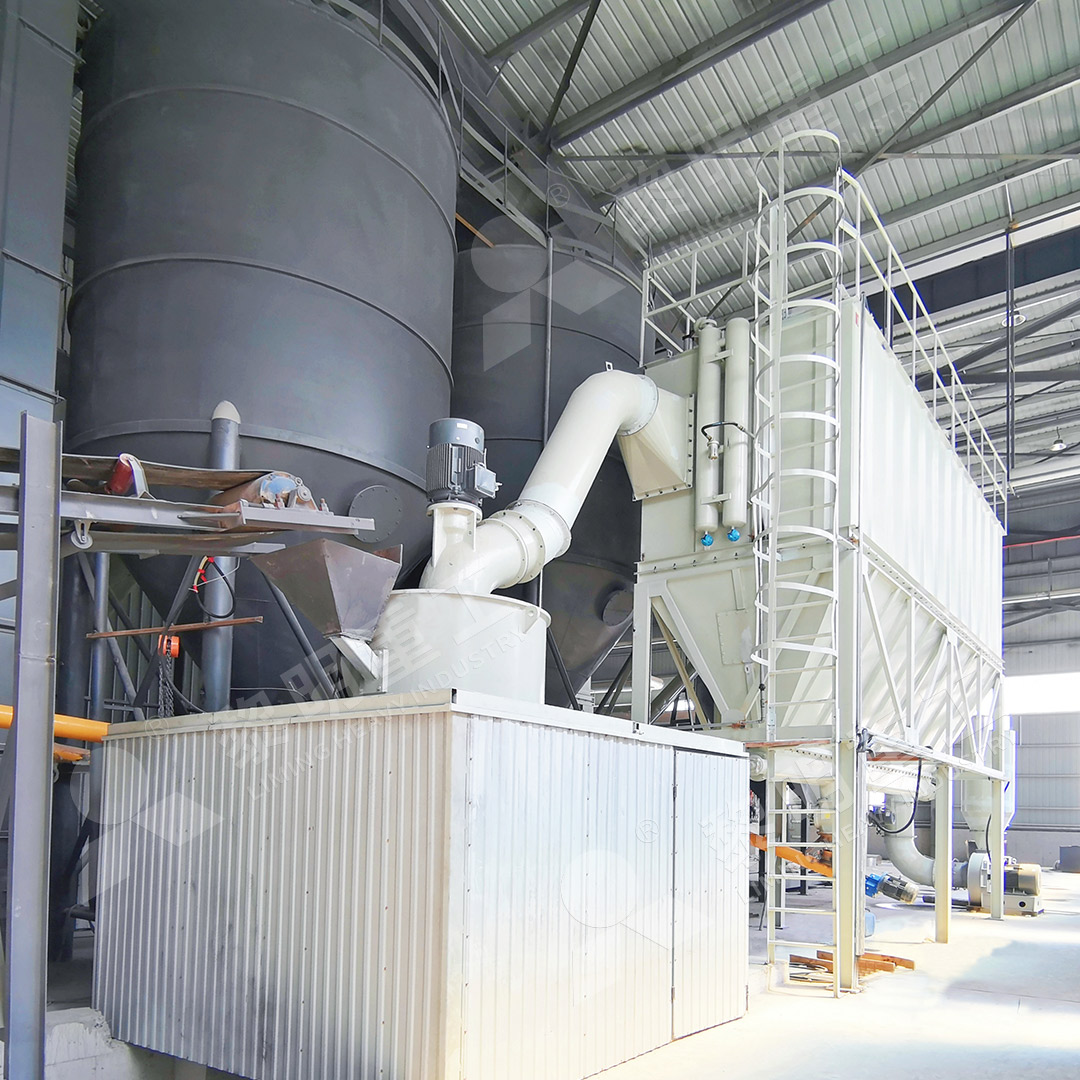
For operations requiring high-quality gypsum powder with superior fineness control, the MW Ultrafine Grinding Mill represents a technological leap forward. This advanced mill system handles input sizes up to 20mm with production capacities ranging from 0.5 to 25 tons per hour, making it suitable for various production scales.
The MW series stands out with its innovative design that eliminates rolling bearings and screws in the grinding chamber, addressing common failure points in traditional mills. This design choice significantly reduces maintenance concerns and extends equipment lifespan. The mill’s cage-type powder selector, incorporating German technology, enables precise fineness adjustment between 325-2500 meshes with screening rates achieving d97≤5μm in a single pass.
Environmental and Operational Advantages
Modern gypsum plants must address environmental concerns while maintaining profitability. The MW Ultrafine Grinding Mill incorporates efficient pulse dust collection and noise reduction systems that minimize environmental impact. The integrated dust collector ensures no dust pollution during operation, while silencers and noise elimination rooms maintain workplace comfort and regulatory compliance.
From an operational perspective, the MW mill delivers 40% higher production capacity compared to jet mills and stirred mills at equivalent fineness and power consumption. The system energy consumption is approximately 30% of comparable jet grinding mills, providing significant cost savings over the equipment lifecycle.
Considering LUM Ultrafine Vertical Grinding Mill
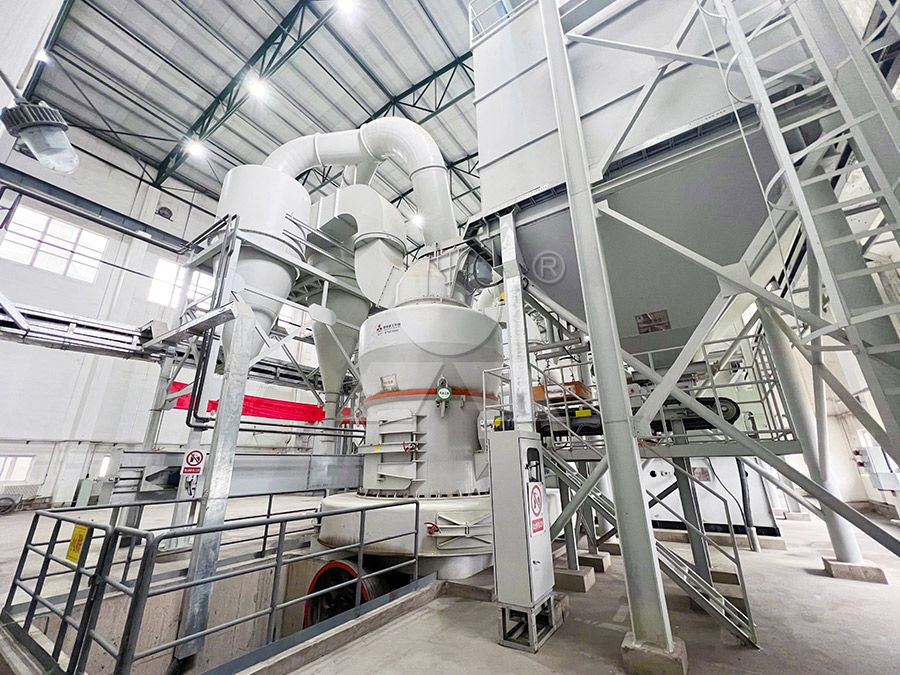
For operations with space constraints or specific layout requirements, the LUM Ultrafine Vertical Grinding Mill offers another excellent option. With input size capability up to 10mm and capacity ranging from 5-18 tph, this mill integrates the latest grinding roller technology from Taiwan and German powder separating technology. Its reversible structure simplifies maintenance, while double position-limiting technology ensures operational stability even under challenging conditions.
Making the Right Choice
Selecting the appropriate grinding mill for a gypsum powder plant depends on multiple factors including required production capacity, target fineness, space availability, and budget constraints. Both the MW Ultrafine Grinding Mill and LUM Ultrafine Vertical Grinding Mill represent current state-of-the-art solutions that balance performance, efficiency, and operational reliability.
Modern mills from reputable manufacturers like LIMING incorporate digital processing for higher precision and provide comprehensive spare parts support to ensure worry-free operation. The advanced features in these mills not only improve gypsum processing efficiency but also contribute to more sustainable operations through reduced energy consumption and environmental impact.
Frequently Asked Questions
What fineness can be achieved when grinding gypsum?
Modern ultrafine grinding mills like the MW series can achieve fineness between 325-2500 meshes, with some configurations capable of producing powder with d97≤5μm.
How does gypsum moisture content affect mill selection?
Gypsum typically contains crystalline water that may require drying during processing. Vertical mills and specialized ultrafine mills often integrate drying capabilities, making them suitable for gypsum with varying moisture content.
What maintenance considerations are important for gypsum grinding mills?
Look for mills with designs that minimize maintenance requirements, such as the MW series that eliminates rolling bearings and screws in the grinding chamber. Easy access to wearing parts and reliable technical support are also crucial.
How important is dust control in gypsum powder plants?
Essential. Modern mills incorporate efficient pulse dust collectors that prevent dust pollution while meeting stringent environmental standards. Proper dust control also improves product recovery and workplace safety.
Can the same mill process different types of gypsum?
Yes, advanced mills with adjustable parameters can handle various gypsum types including natural gypsum, FGD gypsum, and phosphogypsum, though parameter adjustments may be necessary for optimal results.