
What Are the Parts of a Raymond Mill?
We provide a wide range of mills — including Raymond mill, trapezoidal mill, vertical mill, ultrafine mill, and ball mill, obtained ISO9001 international quality certification, EU CE certification, and Customs Union CU-TR certification. Suitable for processing minerals such as limestone, phosphate, quicklime, kaolin, talc, barite, bentonite, calcium carbonate, dolomite, coal, gypsum, clay, carbon black, slag, cement raw materials, cement clinker, and more.
The discharge range of these mills can be adjusted to meet specific processing needs, typically from 80-400 mesh, 600-3250 mesh, and can achieve the finest particle size of up to 6000 mesh(D50).
If you are looking for a reliable grinding solution to turn stone or minerals into fine powder, please feel free to contact our online customer service.
What Are the Parts of a Raymond Mill?
For over a century, the Raymond mill has stood as a cornerstone of fine powder processing across industries like mining, construction, and chemicals. Its enduring popularity stems from a robust and relatively simple mechanical design that delivers reliable performance. Understanding its core components is key to appreciating its operation, maintenance, and evolution into modern, high-efficiency grinding systems.
At its heart, a traditional Raymond mill operates on the principle of grinding via spring-loaded rollers against a stationary ring. The process is a symphony of coordinated parts, each playing a critical role in transforming raw feed into fine powder.
1. The Grinding Assembly: Heart of the Operation
This is the mill’s core, where size reduction physically occurs.
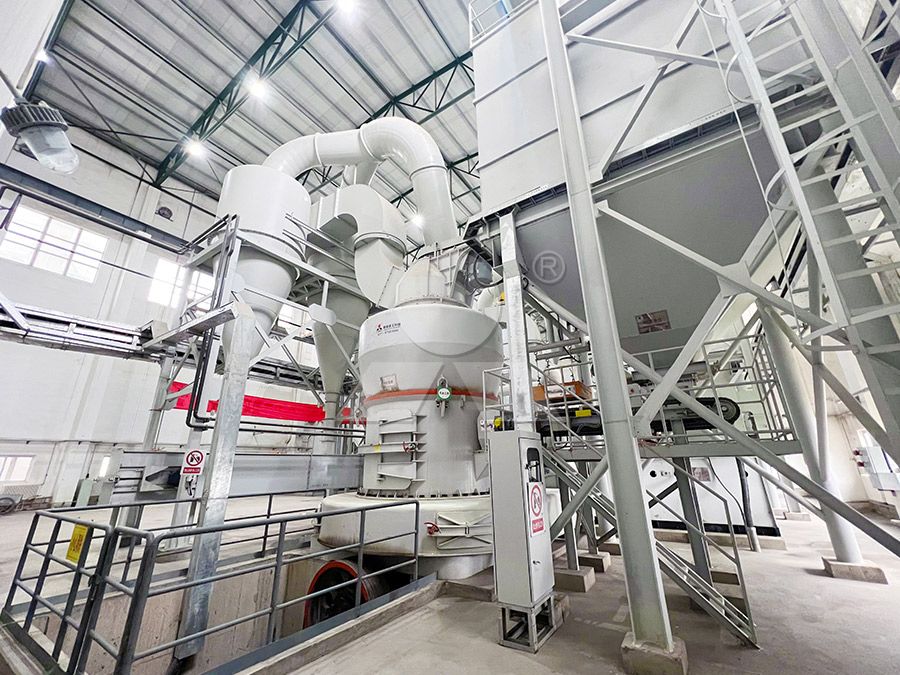
- Grinding Rollers & Grinding Ring (Raceway): Multiple grinding rollers, suspended from a spider assembly, rotate around their own axes while revolving around the central axis. They press against a stationary grinding ring (or raceway) due to centrifugal force. Material is fed between them and crushed. The wear resistance of these parts directly impacts longevity and product purity.
- Main Shaft & Spider: The central main shaft transmits power from the drive system. The spider, mounted at the top of the shaft, holds the roller assemblies in place, allowing them to swing outward as they rotate.
2. The Drive and Transmission System
This system provides the necessary power and controlled motion.
- Main Motor & Reducer (Gearbox): The electric motor provides power. A connected reducer, often a bevel gear configuration, steps down the motor’s speed to the optimal rotational speed for the main shaft and grinding assembly, ensuring sufficient torque for grinding.
3. The Feeding and Classifying System
This system manages material input and output quality control.
- Feeder (e.g., Vibrating Feeder): It ensures a steady, controlled flow of crushed raw material from the storage hopper into the grinding chamber. Consistent feeding is vital for stable operation.
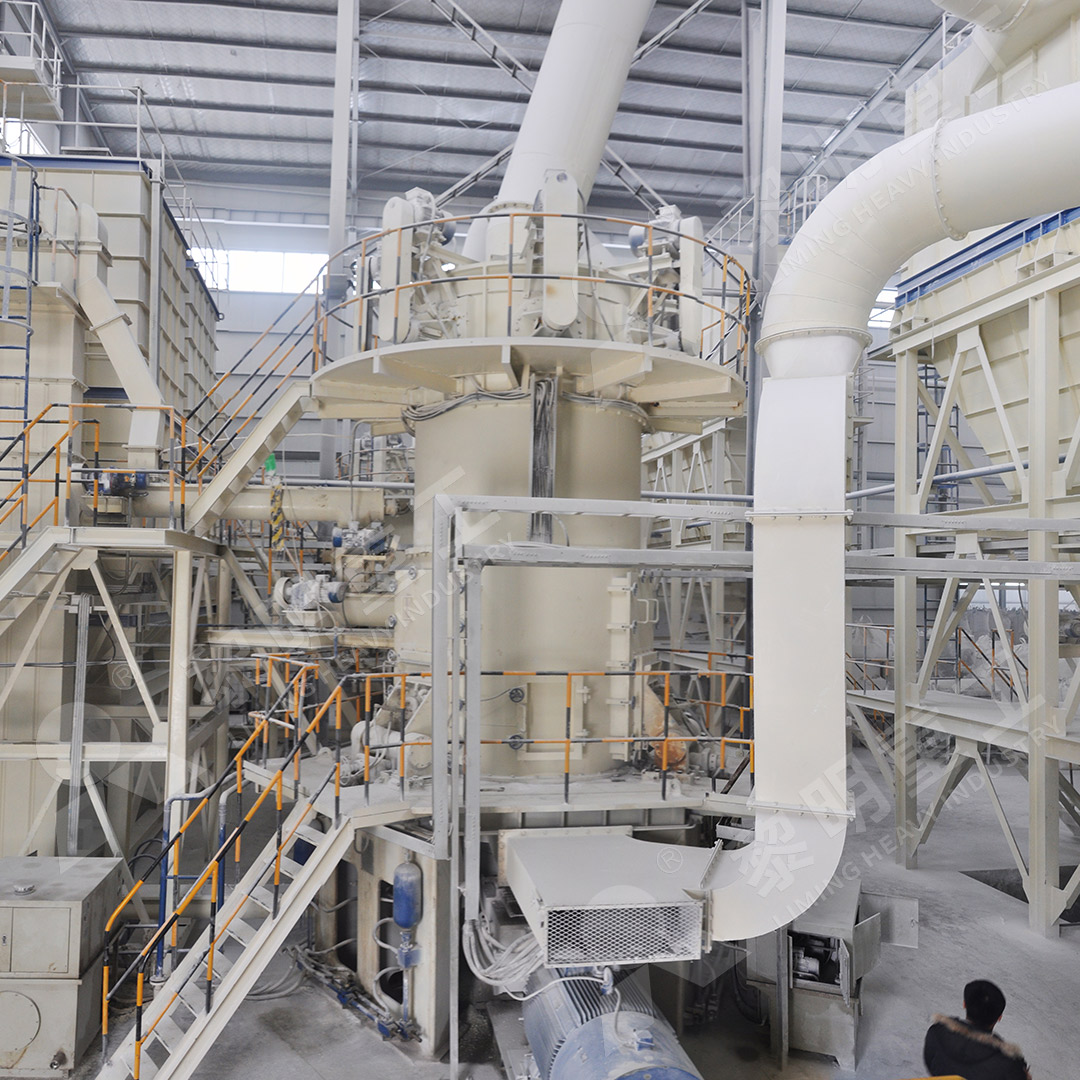
- Classifier (Powder Separator): Mounted atop the mill, this is a critical component for fineness control. Typically a turbine or cage-type separator, it uses airflow and centrifugal force to separate fine particles (which exit as product) from coarse particles (which are returned to the grinding zone for further milling). The speed of the classifier rotor is a primary control for product fineness.
4. The Airflow and Dedusting System
Raymond mills often use a negative pressure, air-swept design.
- Induced Draft Fan (Blower): Creates a suction force through the entire system. It draws air through the mill, carrying ground powder up to the classifier, and then through the dust collection system.
- Cyclone Collector & Baghouse/Dust Collector: The cyclone removes the majority of the finished powder from the airstream. A subsequent pulse-jet baghouse filter, like those integrated into modern systems, captures ultra-fine dust, ensuring clean exhaust and high product recovery. This makes the operation environmentally friendly.
- Piping & Air Lock Valves: A network of ducts connects the components, while air lock valves (like rotary valves) allow material to be discharged from cyclones without breaking the system’s air seal.
Beyond the Basics: The Evolution to Modern Grinding
While the classic Raymond mill design is effective, technological advancements have led to more efficient, precise, and cleaner systems. Modern iterations, such as European-style trapezium mills and ultrafine vertical mills, have enhanced these core components. For instance, roller lubrication systems have evolved from manual grease points to automatic thin-oil systems, and classifiers have become more precise with multi-head cage designs for sharper particle size cuts.
For operations demanding ultra-fine powders (325-2500 meshes) with exceptional environmental performance, the traditional Raymond mill design reaches its limits. This is where next-generation technology shines. Take our MW Ultrafine Grinding Mill as a prime example. It represents a significant leap forward. Its design eliminates rolling bearings and screws inside the grinding chamber entirely, removing common failure points. It integrates a highly efficient pulse dust collector and muffler for dust-free and low-noise operation. Most importantly, it features an advanced German-technology cage-type powder selector that allows precise fineness adjustment and achieves a superb screening rate of d97≤5μm in a single pass, offering higher yield and lower energy consumption compared to traditional jet or ball mills.
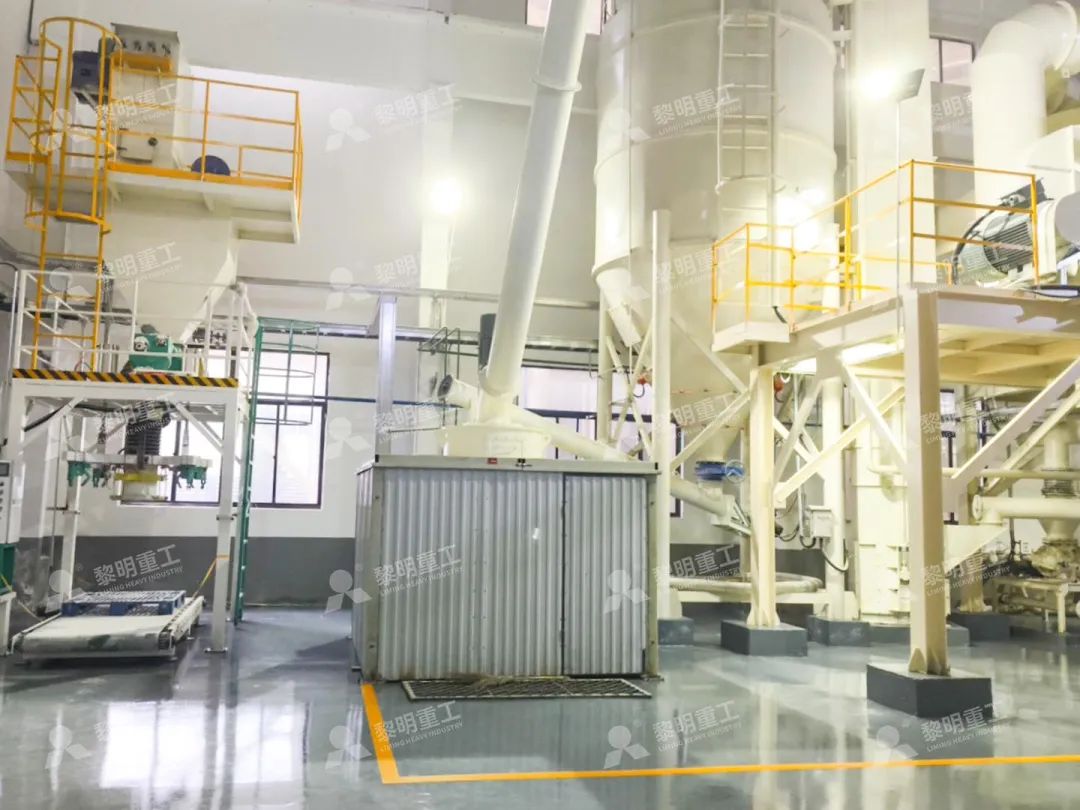
Similarly, for applications requiring large-scale, efficient grinding of non-metallic minerals with integrated drying, our LM Vertical Grinding Mill is a superior choice. It integrates crushing, drying, grinding, classifying, and conveying in a single compact unit, reducing footprint by 50% and energy use by 30-40% compared to ball mills. Its fully sealed, negative-pressure operation guarantees no dust spillage.
Conclusion
From the sturdy grinding rollers and ring to the precise classifier and modern dust collection system, each part of a Raymond mill plays an indispensable role. Understanding this anatomy not only aids in operation and maintenance but also highlights the engineering progress from the original design to today’s high-performance, eco-friendly grinding solutions like the MW Ultrafine and LM Vertical mills. Choosing the right technology depends on your material, desired fineness, capacity, and environmental requirements.
Frequently Asked Questions (FAQ)
1. What is the main difference between a Raymond Mill and a Vertical Roller Mill?
Raymond mills typically use spring-loaded rollers that swing outward to grind against a stationary ring, with material lifted by an airflow for classification. Vertical roller mills (like the LM series) use hydraulically pressurized rollers that grind directly onto a rotating table; material is transported by the table’s motion and dried/classified by a hot gas stream. VRMs are generally more energy-efficient for larger capacities and offer integrated drying.
2. How do I control the fineness of the powder from a Raymond mill?
Fineness is primarily controlled by adjusting the speed of the classifier (powder separator). A higher rotor speed allows only finer particles to pass, resulting in a finer product. Slower speeds yield a coarser product. The grinding roller pressure and feed rate are secondary adjustments.
3. What are the most common wear parts in a Raymond mill?
The highest wear components are the grinding rollers and the grinding ring (raceway). The shovel blades (in older designs) that feed material into the grinding zone are also subject to wear. Using wear-resistant alloy materials can significantly extend their service life.
4. Why is there a baghouse dust collector after the cyclone?
The cyclone collector removes most of the product-sized powder. The baghouse (pulse dust collector) captures the ultra-fine particles that escape the cyclone, ensuring high product recovery and meeting strict environmental emission standards by preventing dust from being released into the atmosphere.
5. Can a Raymond mill handle moist materials?
Traditional Raymond mills are designed for grinding relatively dry materials (typically with moisture content below 6%). For moist or sticky materials, a system with integrated drying, such as an LM Vertical Grinding Mill which can incorporate hot air, is necessary to prevent clogging and ensure efficient operation.
6. What maintenance is regularly required?
Regular maintenance includes checking and lubricating bearings, inspecting and replacing worn grinding rollers and rings, checking classifier blades, ensuring the tightness of bolts and springs, and monitoring/cleaning the baghouse filter bags to maintain optimal airflow and collection efficiency.