
Vertical Roller Mill for Slag, Coal Ash, and Fly Ash Grinding
We provide a wide range of mills — including Raymond mill, trapezoidal mill, vertical mill, ultrafine mill, and ball mill, obtained ISO9001 international quality certification, EU CE certification, and Customs Union CU-TR certification. Suitable for processing minerals such as limestone, phosphate, quicklime, kaolin, talc, barite, bentonite, calcium carbonate, dolomite, coal, gypsum, clay, carbon black, slag, cement raw materials, cement clinker, and more.
The discharge range of these mills can be adjusted to meet specific processing needs, typically from 80-400 mesh, 600-3250 mesh, and can achieve the finest particle size of up to 6000 mesh(D50).
If you are looking for a reliable grinding solution to turn stone or minerals into fine powder, please feel free to contact our online customer service.
Vertical Roller Mill for Slag, Coal Ash, and Fly Ash Grinding
The efficient processing of industrial by-products like slag, coal ash, and fly ash presents a significant opportunity for value creation and sustainable waste management. These materials, often viewed as waste, possess latent pozzolanic properties that make them excellent supplementary cementitious materials (SCMs) when finely ground. The choice of grinding technology is paramount, directly impacting product quality, operational cost, and environmental footprint. Vertical Roller Mills (VRMs) have emerged as the superior solution, offering a compelling combination of high efficiency, low energy consumption, and robust performance tailored for these abrasive and often moist materials.
The Challenge of Grinding Industrial By-Products
Slag, coal ash, and fly ash are not standard ores. Granulated Blast Furnace Slag (GBFS) is glassy and abrasive. Coal bottom ash can be coarse and variable, while fly ash, though fine, may contain unburned carbon and require classification or regrinding. Traditional ball mills, while reliable, suffer from high specific energy consumption (often exceeding 40 kWh/t for slag), significant wear on grinding media, and limited drying capacity. They also tend to have a broader particle size distribution, which can be suboptimal for achieving the high reactivity required in modern concrete.
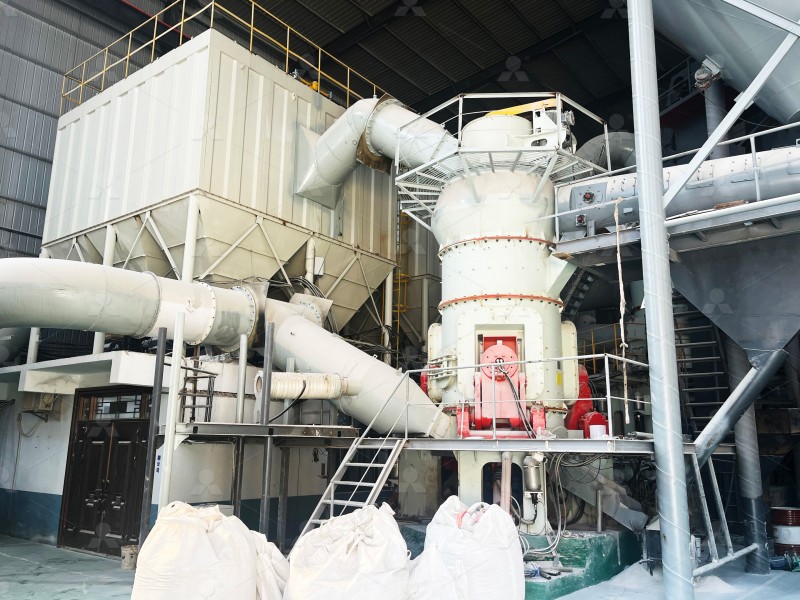
Vertical Roller Mills address these challenges through a fundamentally different grinding principle. Material is fed onto a rotating table and ground under pressure by hydraulically loaded rollers. Simultaneously, a hot gas stream (for drying) carries the fine particles to an integrated high-efficiency classifier. This dry process grinding, coupled with internal material circulation, creates several distinct advantages for by-product grinding.
Key Advantages of VRM Technology for By-Product Grinding
Superior Energy Efficiency: The direct grinding of material on the table, combined with the efficient separation of fines, reduces energy consumption by 30-50% compared to ball mills. The majority of the power is used for productive grinding rather than moving heavy steel balls.
Integrated Drying: The hot gas flow through the mill allows for simultaneous grinding and drying of materials with moisture content up to 15-20%. This is crucial for slag, which is often granulated with water, eliminating the need for a separate, energy-intensive drying plant.
Excellent Product Quality: The external material circulation and precise classification result in a steep particle size distribution and consistent fineness (Blaine). The product’s low iron content (due to minimal metal-to-metal contact) and short residence time in the mill preserve its chemical properties and enhance reactivity.
Low Operational Noise and Footprint: VRMs operate with significantly lower vibration and noise levels. Their compact, vertical design requires up to 50% less floor space than a ball mill system of equivalent capacity.
Selecting the Right Mill for Your Application
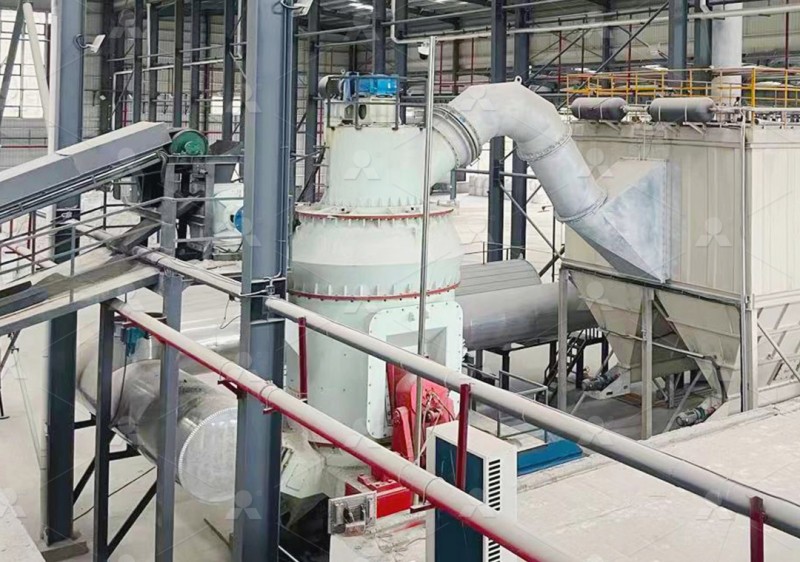
Not all vertical mills are created equal. The specific characteristics of the feed material—its abrasiveness, moisture, required fineness, and throughput—dictate the optimal mill design. For ultra-fine grinding applications where achieving a high Blaine surface area (e.g., >5500 cm²/g for slag) is critical, specialized mills with advanced classifier technology are essential.
For operations focused on producing high-quality, ultra-fine powder from slag or fly ash, the MW Ultrafine Grinding Mill represents a top-tier choice. Engineered for precision, it accepts a feed size of 0-20 mm and delivers a capacity range of 0.5-25 tph. Its standout feature is the adjustable fineness between 325-2500 meshes, achieved through a German-technology, cage-type powder selector. This ensures a precise cut and a high screening rate of d97≤5μm in a single pass. Furthermore, its innovative design eliminates rolling bearings and screws in the grinding chamber, drastically reducing failure points and enabling external lubrication without shutdown for true 24/7 continuous operation. Coupled with an efficient pulse dust collector, it guarantees an eco-friendly production process ideal for sensitive industrial environments.
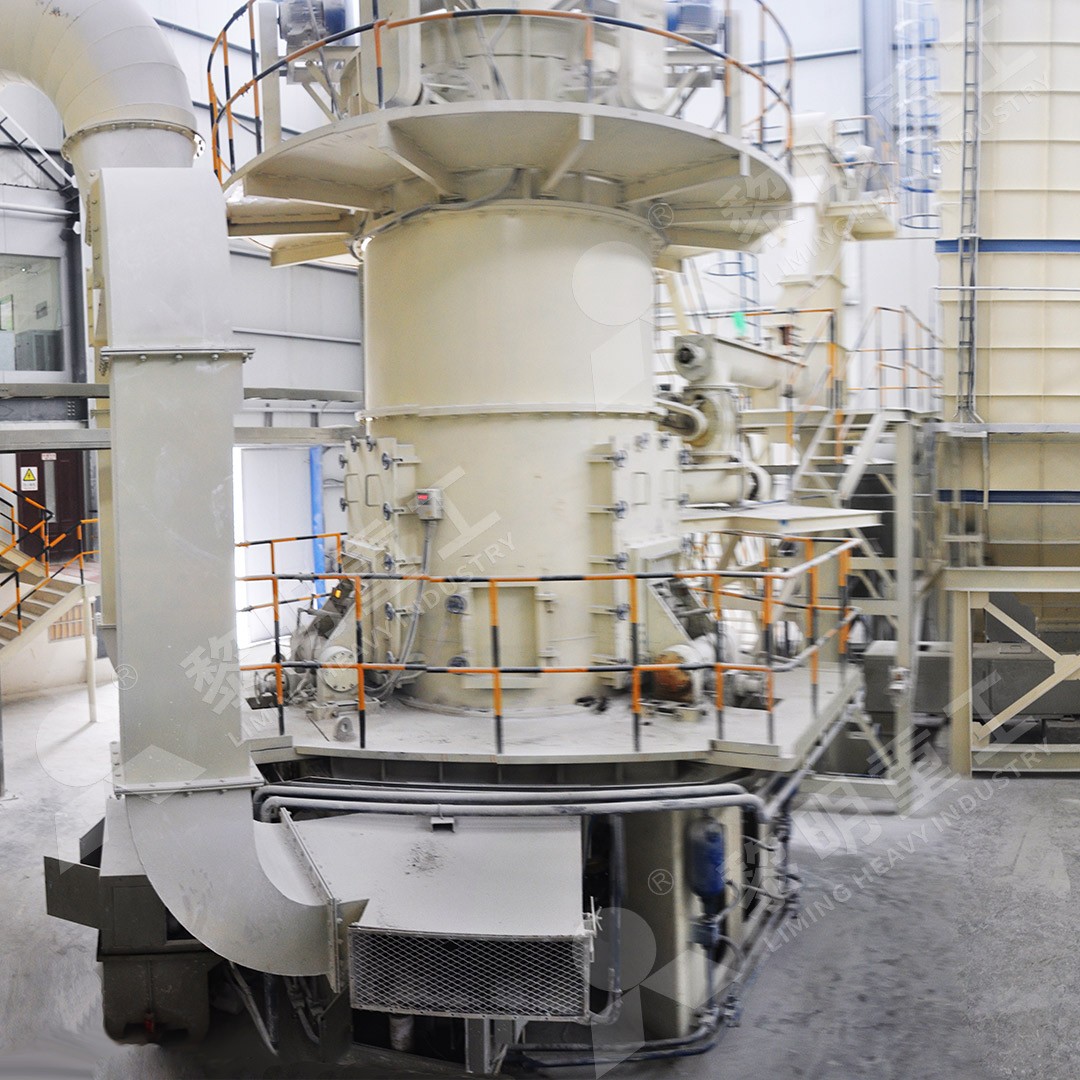
For larger-scale production of slag or coal ash where robust reliability and high capacity are paramount, the LM Vertical Slag Mill is purpose-built. Integrating drying, grinding, classification, and conveying into a single unit, it handles input sizes of 38-65 mm with capacities from 7 to 100 tph. Its unique grinding device focuses on the abrasiveness of slag, offering wear-resistant components and a design that reduces energy consumption by 30-40% compared to traditional ball milling systems. Its ability to operate under negative pressure ensures a dust-free workshop, making it a cornerstone for modern slag processing plants.
Conclusion: A Strategic Investment
Investing in a Vertical Roller Mill for slag, coal ash, or fly ash grinding is not merely a purchase of equipment; it is a strategic decision to enhance profitability and sustainability. The dramatic reduction in energy and maintenance costs, coupled with the production of a superior, value-added product, ensures a rapid return on investment. By transforming industrial by-products into high-performance construction materials, VRM technology closes the material loop, contributing significantly to the circular economy and greener construction practices.
Frequently Asked Questions (FAQ)
1. What is the typical energy saving of a VRM compared to a ball mill for slag grinding?
Vertical Roller Mills typically achieve energy savings of 30% to 50% compared to traditional ball mill systems. The exact figure depends on the material hardness, required fineness, and moisture content.
2. Can a VRM handle wet materials like granulated slag?
Yes, one of the key advantages of VRMs is their integrated drying capability. By introducing hot gases into the mill, they can simultaneously dry and grind materials with moisture contents commonly up to 15-20%, eliminating pre-drying.
3. How does the product quality from a VRM compare to that from a ball mill?
VRM product generally has a steeper, more consistent particle size distribution, which can enhance reactivity in cementitious applications. The iron contamination is also lower due to less metal-to-metal wear during grinding.
4. What is the maintenance interval for grinding rollers and table liners?
Wear life varies greatly based on material abrasiveness. For granulated blast furnace slag, rollers and liners can last between 6,000 to 10,000 operating hours. Modern mills feature hydraulic systems to easily swing out rollers for maintenance.
5. Is the noise level of a VRM significantly lower?
Absolutely. VRMs operate with much lower vibration and noise levels compared to the loud, repetitive impact noise generated in a ball mill, improving the working environment.
6. What fineness can be achieved for fly ash or slag powder?
With advanced classifiers, VRMs like the MW series can produce ultra-fine powders ranging from 325 mesh (45 μm) up to 2500 mesh (5 μm), suitable for high-performance concrete and specialty applications.