
Vertical Mill Machine Manufacturer in China: Price, Types & Suppliers Guide
We provide a wide range of mills — including Raymond mill, trapezoidal mill, vertical mill, ultrafine mill, and ball mill, obtained ISO9001 international quality certification, EU CE certification, and Customs Union CU-TR certification. Suitable for processing minerals such as limestone, phosphate, quicklime, kaolin, talc, barite, bentonite, calcium carbonate, dolomite, coal, gypsum, clay, carbon black, slag, cement raw materials, cement clinker, and more.
The discharge range of these mills can be adjusted to meet specific processing needs, typically from 80-400 mesh, 600-3250 mesh, and can achieve the finest particle size of up to 6000 mesh(D50).
If you are looking for a reliable grinding solution to turn stone or minerals into fine powder, please feel free to contact our online customer service.
Navigating the World of Vertical Grinding Mills in China
For industries ranging from mining and construction to chemicals and pharmaceuticals, the quest for efficient and reliable fine powder processing is paramount. China has emerged as a global powerhouse in the manufacturing of vertical mill machines, offering a compelling combination of advanced technology, robust construction, and competitive pricing. This guide aims to demystify the landscape, helping you understand the key types, features, and selection criteria for these critical pieces of equipment.
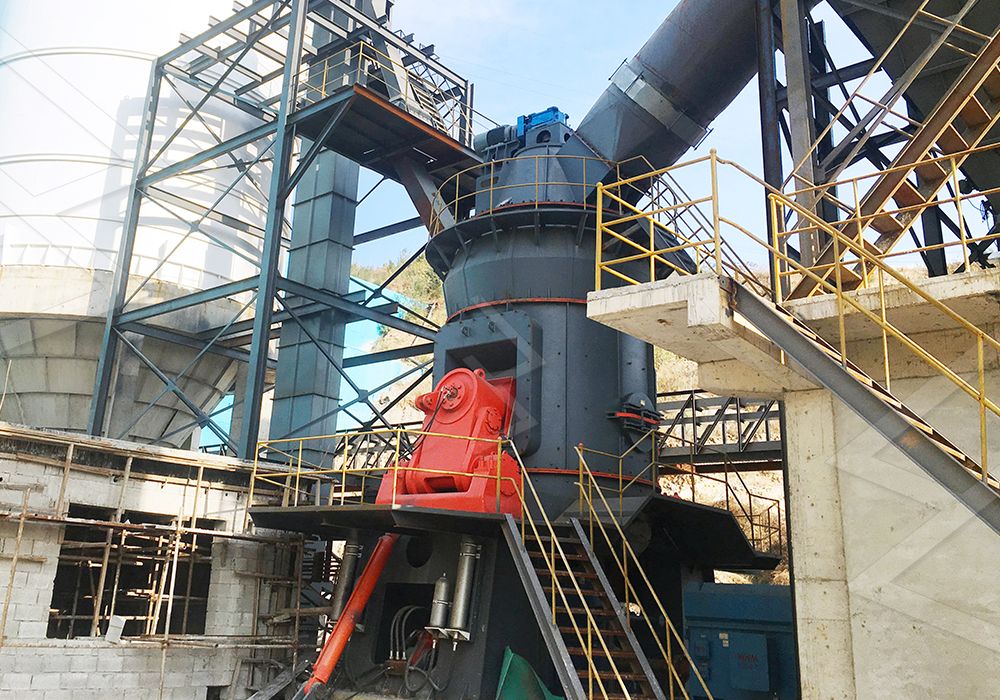
Understanding Vertical Mill Technology
Unlike traditional ball mills, vertical roller mills (VRMs) employ a vertically oriented grinding table with rollers that exert pressure on the material bed. This design offers significant advantages, including higher grinding efficiency, lower energy consumption (often 30-50% less than ball mills), and a smaller physical footprint. The integrated systems often combine drying, grinding, classification, and conveying into a single, compact unit, simplifying the entire process flow.
Key Types of Vertical Mills from Chinese Manufacturers
Chinese manufacturers like LIMING Heavy Industry have developed a comprehensive portfolio to meet diverse industrial needs. The main categories include:
- LM Vertical Grinding Mill: A versatile workhorse for non-metallic minerals, pulverized coal, and slag. It handles large input sizes (up to 70mm) and offers high capacities (up to 340 tph), making it ideal for large-scale production lines in cement and power plants.
- LUM Ultrafine Vertical Grinding Mill: Engineered for producing superfine powders, this mill integrates advanced grinding roller and powder separating technologies. It’s perfect for applications requiring high whiteness and purity, such as in the production of coatings, cosmetics, and high-grade fillers.
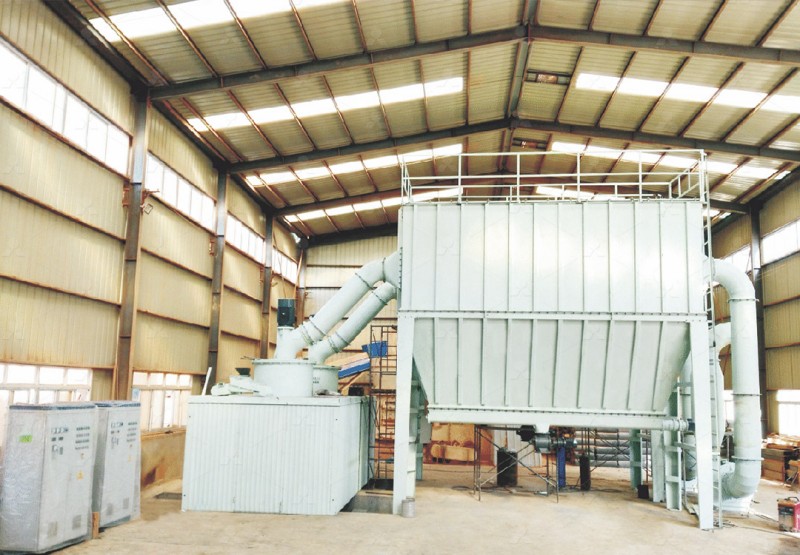
- MW Ultrafine Grinding Mill: Specifically designed for ultra-fine powder production (adjustable between 325-2500 meshes), this machine is a standout for precision. A key feature is the absence of rolling bearings and screws in the grinding chamber, which eliminates common failure points and allows for external lubrication without shutdown. This design, combined with an efficient pulse dust collector, ensures continuous, eco-friendly 24/7 operation for materials like limestone, calcite, and talc.
- MTW Series European Trapezium Mills: These mills are known for their reliability and efficiency in medium-fine grinding. They feature advanced systems like dilute oil lubrication for rollers and elastic damping structures for stable, low-maintenance operation.
Why Choose a Chinese Manufacturer?
The decision often boils down to value. Chinese manufacturers have heavily invested in R&D and digitalized precision manufacturing, resulting in machines that rival international brands in performance but at a more accessible price point. Furthermore, companies with integrated production and sales, such as LIMING, provide a significant advantage: direct technical support and a guaranteed supply of original spare parts, ensuring long-term, worry-free operation.
Selecting the Right Mill for Your Needs
Choosing the correct mill is critical. Key factors to consider are:
- Material Properties: Hardness, moisture content, and desired fineness.
- Required Capacity (tph): From small-scale (3-5 tph) to very large (300+ tph) production.
- Energy Efficiency Goals: VRMs are inherently efficient, but specific models offer further optimizations.
- Environmental Regulations: Look for mills with integrated pulse dust collectors and noise reduction features.
For operations demanding the highest levels of fineness and operational reliability, the MW Ultrafine Grinding Mill is an excellent choice. Its innovative design, capable of handling 0-20mm input with a capacity of 0.5-25 tph, directly addresses the need for productive, low-downtime ultrafine powder processing. Similarly, for general-purpose high-capacity grinding, the proven LM Vertical Grinding Mill remains an industry benchmark.
Frequently Asked Questions (FAQ)
What is the typical price range for a vertical mill from China?
Prices vary significantly based on model, capacity, and configuration. Small mills can start from tens of thousands of USD, while large, custom-built systems for high-capacity production can range into hundreds of thousands. It’s best to request a direct quotation from manufacturers based on your specific technical requirements.
How does the energy consumption of a vertical mill compare to a ball mill?
Vertical mills are significantly more energy-efficient, typically consuming 30% to 50% less power than a ball mill producing the same amount of material of equivalent fineness. This is due to their focused grinding mechanism and integrated design.
What kind of after-sales support can I expect?
Reputable manufacturers offer comprehensive support, including installation guidance, operational training, readily available spare parts, and remote technical assistance. It’s crucial to confirm the scope of support and parts availability before purchasing.
Can these mills handle abrasive materials?
Yes. Key wear parts like grinding rollers and rings are typically made from high-chromium or other wear-resistant alloys to withstand abrasive materials. The specific alloy and design can be discussed with the manufacturer based on your material’s abrasiveness.
What is the lead time for delivery?
Lead times depend on the model’s complexity and the manufacturer’s production schedule. Standard models may be available in 1-2 months, while custom solutions can take longer. Always confirm the delivery schedule during the ordering process.