
The Ultimate Guide to Choosing the Best Portable Quartz Ore Grinding Miller for Efficient On-Site Mineral Processing and Milling Operations
We provide a wide range of mills — including Raymond mill, trapezoidal mill, vertical mill, ultrafine mill, and ball mill, obtained ISO9001 international quality certification, EU CE certification, and Customs Union CU-TR certification. Suitable for processing minerals such as limestone, phosphate, quicklime, kaolin, talc, barite, bentonite, calcium carbonate, dolomite, coal, gypsum, clay, carbon black, slag, cement raw materials, cement clinker, and more.
The discharge range of these mills can be adjusted to meet specific processing needs, typically from 80-400 mesh, 600-3250 mesh, and can achieve the finest particle size of up to 6000 mesh(D50).
If you are looking for a reliable grinding solution to turn stone or minerals into fine powder, please feel free to contact our online customer service.
The Ultimate Guide to Choosing the Best Portable Quartz Ore Grinding Miller for Efficient On-Site Mineral Processing and Milling Operations
On-site mineral processing, particularly for hard materials like quartz ore, presents a unique set of challenges. The need for mobility, efficiency, and reliability is paramount. Selecting the right portable grinding mill is not just about pulverizing rock; it’s about optimizing your entire operation’s workflow, from reducing transport costs to ensuring a consistent, high-yield product. This guide will walk you through the critical factors to consider and highlight a top-tier solution for your demanding needs.
Key Considerations for Your Portable Grinding Operation
Before investing in any equipment, you must evaluate your specific operational requirements. Quartz is notoriously abrasive, so the mill’s wear resistance is non-negotiable.
- Feed Size & Capacity: Match the mill’s input size (e.g., 0-20mm) and throughput (e.g., tons per hour) to your crusher’s output and production goals. Under-sizing leads to bottlenecks; over-sizing wastes capital.
- Portability & Setup: A truly portable unit should be designed for rapid deployment and teardown. Look for modular designs that minimize on-site assembly time.
- Power Source & Energy Consumption: Can it run on diesel generators common at remote sites? Energy efficiency directly impacts your operational costs. A mill that consumes 30-40% less power can save thousands annually.
- Dust and Noise Control: Environmental regulations and worker safety are critical. Integrated dust collection and noise suppression systems are essential, not optional.
- Fineness Control: The ability to precisely adjust the final product’s mesh size (e.g., from 325 to 2500 meshes) allows you to meet various market specifications for silica flour, glass making, or ceramics.
- Maintenance & Downtime: In remote locations, downtime is incredibly costly. Choose a mill with easy access to wear parts and features that allow for external lubrication without shutdown.
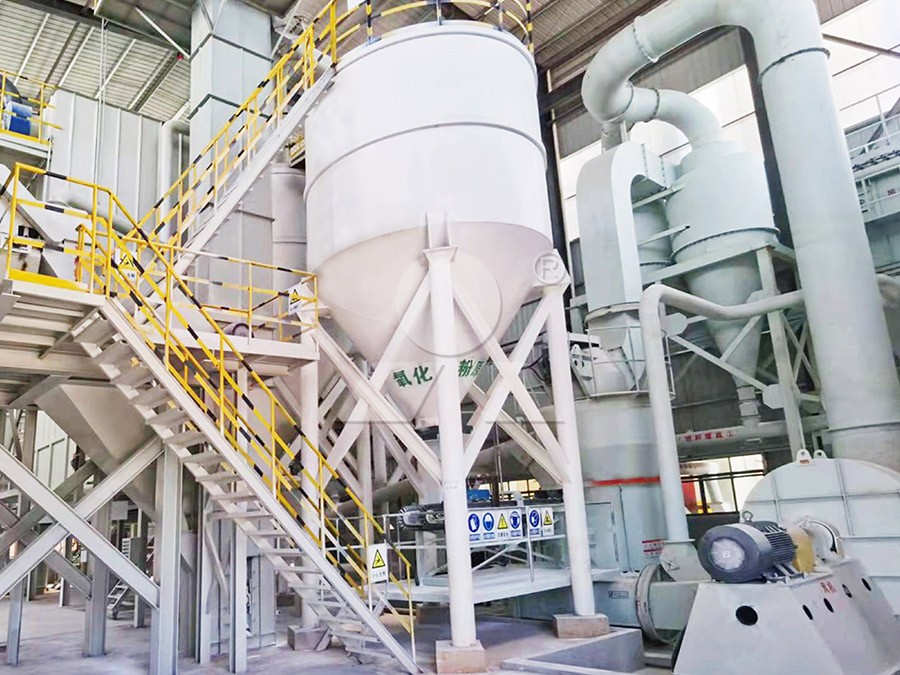
Why Ultrafine Grinding Mills Excel for Quartz
For high-value, fine-powder applications, traditional ball mills or Raymond mills often fall short on efficiency and precision. Ultrafine grinding mills are engineered to overcome these limitations. They utilize advanced grinding curves and high-efficiency powder separators to achieve superior yields with a much narrower particle size distribution, which is crucial for quartz products.
Top Machine Recommendation: The MW Ultrafine Grinding Mill
Based on the stringent requirements of on-site quartz processing, one machine stands out: the MW Ultrafine Grinding Mill. This equipment is specifically designed for customers who need to make ultra-fine powder efficiently and reliably in varied environments.
Key Specs: Input Size: 0-20 mm | Capacity: 0.5-25 tph
Here’s why the MW Mill is an exceptional choice for portable quartz operations:
- Higher Yielding, Lower Energy Consumption: Its newly designed grinding curves enhance efficiency dramatically. Production capacity is 40% higher than jet mills and double that of ball mills, while system energy consumption is only 30% of a jet mill. This means more product for less fuel on your generator.
- Precise Fineness Adjustment (325-2500 meshes): Its German-technology cage-type powder selector allows you to dial in the exact fineness required for your quartz product, ensuring you hit market specs every time.
- Unmatched Reliability: A critical design advantage is the absence of rolling bearings and screws in the grinding chamber. This eliminates the most common points of failure in abrasive environments, preventing catastrophic machine damage from loose parts or seized bearings. Lubrication can be done externally without stopping production.
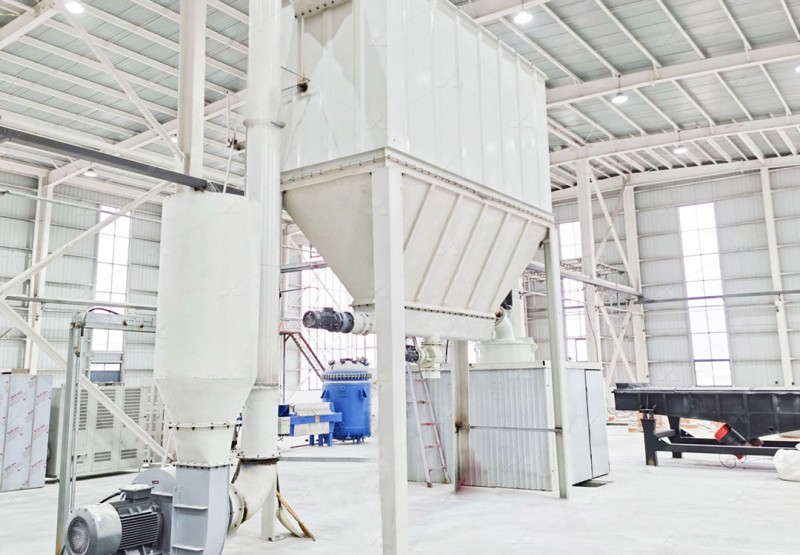
- Eco-Friendly Operation: It comes equipped with an efficient pulse dust collector and muffler, ensuring your on-site operation meets environmental standards without additional, costly attachments. No dust pollution means a safer site and happier regulators.
Ensuring Long-Term Success with Your Equipment
Choosing the mill is only half the battle. Partnering with a manufacturer that supports you is the other. Look for a supplier that guarantees a sufficient supply of original spare parts and offers comprehensive technical support. This ensures worry-free operation and protects your investment long after the initial sale.
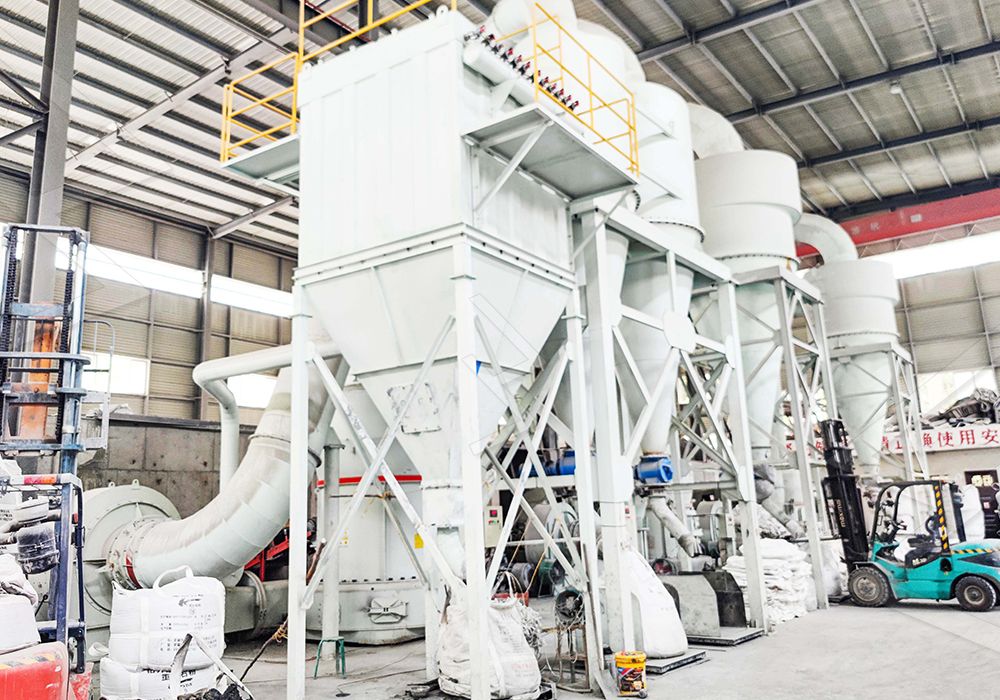
For operations that require a slightly different approach, also consider the LUM Ultrafine Vertical Grinding Mill. Its unique roller shell design is excellent for generating a stable material layer and is renowned for improving the whiteness and cleanliness of finished products—a key factor for some quartz applications.
Final Thoughts
Investing in the right portable quartz ore grinding mill is a strategic decision that affects your profitability, efficiency, and operational flexibility. By prioritizing energy efficiency, low maintenance, precise control, and environmental compliance, you can set your operation up for success. The MW Ultrafine Grinding Mill embodies these principles, making it a premier choice for savvy operators looking to master on-site mineral processing.