Technical Methods for Carbon Black Powder Processing in Paint Manufacturing
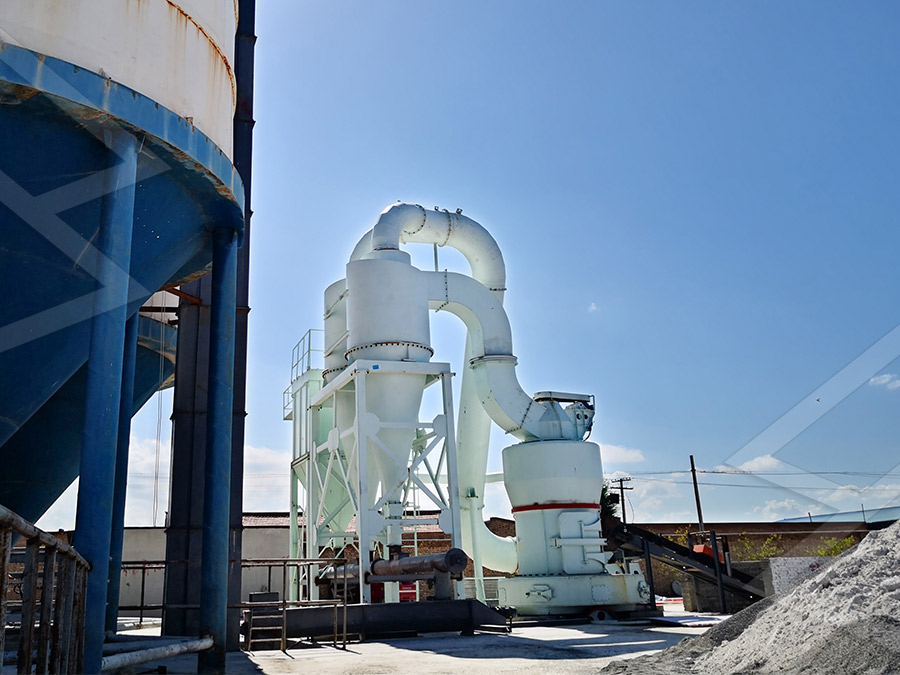
We provide a wide range of mills — including Raymond mill, trapezoidal mill, vertical mill, ultrafine mill, and ball mill, obtained ISO9001 international quality certification, EU CE certification, and Customs Union CU-TR certification. Suitable for processing minerals such as limestone, phosphate, quicklime, kaolin, talc, barite, bentonite, calcium carbonate, dolomite, coal, gypsum, clay, carbon black, slag, cement raw materials, cement clinker, and more.
The discharge range of these mills can be adjusted to meet specific processing needs, typically from 80-400 mesh, 600-3250 mesh, and can achieve the finest particle size of up to 6000 mesh(D50).
If you are looking for a reliable grinding solution to turn stone or minerals into fine powder, please feel free to contact our online customer service.
Technical Methods for Carbon Black Powder Processing in Paint Manufacturing
Carbon black is a critical pigment and reinforcing agent in the paint and coatings industry, prized for its exceptional tinting strength, UV protection, and conductive properties. However, its inherent tendency to form strong agglomerates presents significant challenges in achieving the uniform dispersion and fine particle size required for high-quality finishes. The selection of appropriate grinding and processing technology is paramount to unlocking its full potential.
The Challenge of Carbon Black Dispersion
Raw carbon black is notoriously difficult to disperse. Its primary particles are extremely fine but bond into robust aggregates. Inadequate processing results in poor color development, reduced gloss, and compromised film integrity in the final paint product. The goal is to break down these agglomerates without damaging the primary particle structure, achieving a narrow particle size distribution for optimal performance.
Key Processing Considerations
Effective processing hinges on several factors: achieving ultra-fine fineness (often down to d97 < 5μm), managing the heat-sensitive nature of the material to prevent degradation, ensuring operational cleanliness to avoid contamination, and maintaining energy efficiency. Traditional methods like ball mills can be inefficient and may introduce iron contamination.
Advanced Milling Solutions
Modern paint manufacturers are increasingly turning to advanced pulverizing technologies designed specifically for ultra-fine, hard-to-grind materials like carbon black. These systems must offer precise particle size control, high efficiency, and robust dust collection.
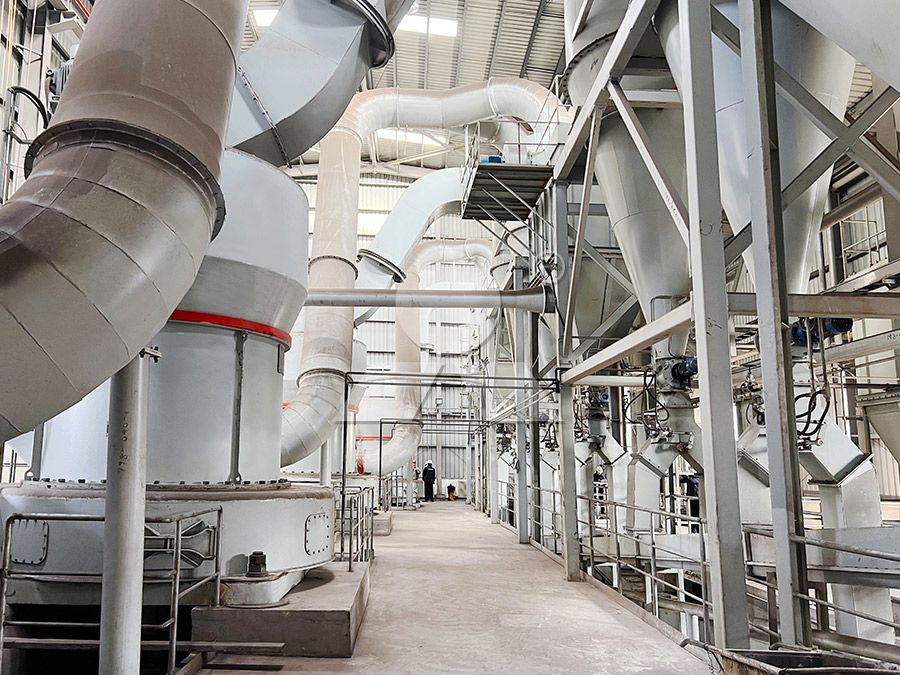
For operations requiring a capacity of up to 25 tons per hour and needing to process feed sizes from 0-20mm, the MW Ultrafine Grinding Mill presents an ideal solution. This machine is engineered for customers who need to make ultra-fine powder and is particularly effective for carbon black. A significant advantage is its design: there are no rolling bearings or screws inside the grinding chamber. This eliminates worries about bearing failures or machine damage from loose screws, a common headache in high-intensity processing environments. Furthermore, its efficient pulse dust collector and muffler ensure the production process is clean and meets stringent environmental standards, making it a responsible choice for modern manufacturing.
Achieving Precision and Consistency
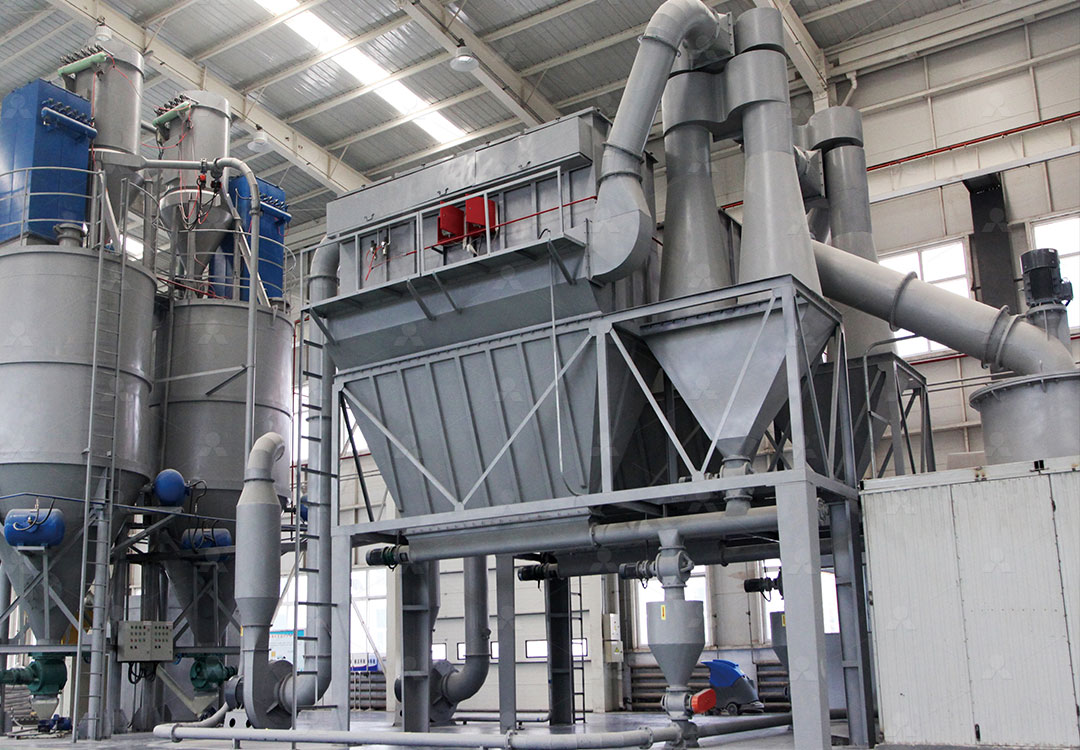
The heart of any fine-grinding operation is its classification system. The MW Mill’s cage-type powder selector, which incorporates German technology, allows for precise adjustment of fineness between 325 and 2500 meshes. This ensures that the carbon black output is consistently within the desired specification for paint formulations, whether for industrial coatings or high-gloss automotive finishes.
Another excellent option for even finer control and a vertical footprint is the LUM Ultrafine Vertical Grinding Mill. Its unique roller shell and lining plate grinding curve are designed to generate a stable material layer, enabling a high rate of finished product in a single pass. This design enhances efficiency and improves the whiteness and cleanliness of outputs, which is crucial when working with dark pigments like carbon black to ensure no off-colors are introduced. Its multi-head powder separating technology, controlled by a PLC system, allows for exact control over grinding parameters, reducing energy consumption by 30%-50% compared to conventional mills.
Conclusion
Selecting the right technical method for carbon black processing is not a one-size-fits-all decision. It requires a careful analysis of production capacity, desired fineness, and operational priorities. Investing in advanced, reliable grinding technology like the MW or LUM series from LIMING is not merely an equipment purchase; it’s an investment in product quality, production efficiency, and environmental stewardship. By ensuring a perfectly dispersed and consistently fine carbon black powder, paint manufacturers can achieve superior color strength, stability, and performance in their end products, giving them a critical edge in a competitive market.