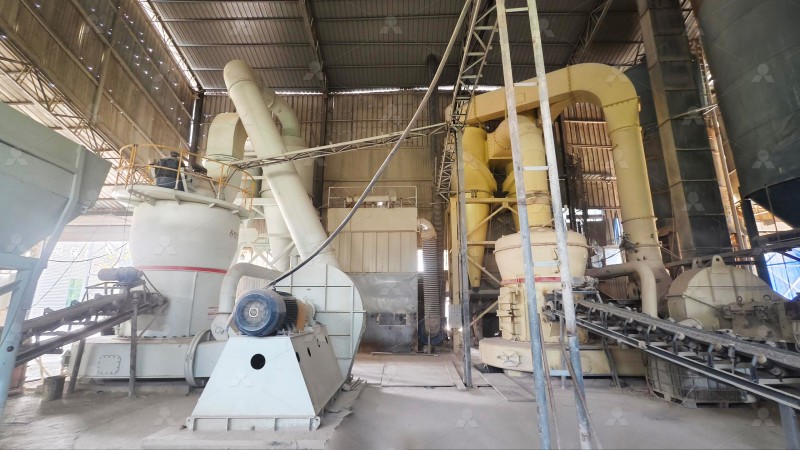
Spare Parts Price List for Vertical Roller Mills in Cement Plants
We provide a wide range of mills — including Raymond mill, trapezoidal mill, vertical mill, ultrafine mill, and ball mill, obtained ISO9001 international quality certification, EU CE certification, and Customs Union CU-TR certification. Suitable for processing minerals such as limestone, phosphate, quicklime, kaolin, talc, barite, bentonite, calcium carbonate, dolomite, coal, gypsum, clay, carbon black, slag, cement raw materials, cement clinker, and more.
The discharge range of these mills can be adjusted to meet specific processing needs, typically from 80-400 mesh, 600-3250 mesh, and can achieve the finest particle size of up to 6000 mesh(D50).
If you are looking for a reliable grinding solution to turn stone or minerals into fine powder, please feel free to contact our online customer service.
Spare Parts Price List for Vertical Roller Mills in Cement Plants
Maintaining the relentless pace of a cement plant requires a robust and reliable supply of high-quality spare parts for your critical grinding equipment. Vertical Roller Mills (VRMs) are the workhorses of modern cement production, and their continuous operation is paramount to profitability. Unplanned downtime due to part failure is not an option. This guide provides an overview of essential spare parts and highlights a superior grinding solution to minimize your maintenance worries.
Critical Wear Parts for Vertical Roller Mills
The grinding process is inherently abrasive, leading to the gradual wear of several key components. A well-managed inventory of the following parts is crucial:
- Grinding Rolls/Rollers: The core components that exert pressure on the material bed. They are typically comprised of a roll body and a wear-resistant roller shell.
- Grinding Tables/Table Segments: The surface upon which the material is ground. Tables are often segmented for easier replacement.
- Roller Tyres and Table Liners: The replaceable wear surfaces on the rollers and table, designed to be the sacrificial elements, protecting the more expensive core parts.
- Classifier Blades/Guide Vanes: Critical for ensuring proper product fineness by separating fine particles from coarse ones.
- Hydraulic System Components: Including accumulator bladders, seals, and valves that control the grinding pressure.
- Lubrication System Parts: Pumps, filters, and lines that ensure bearings and gears are properly lubricated.
- Drive Train Components: Gears, pinions, and coupling elements that transmit power to the grinding table.
Factors Influencing Spare Parts Pricing & Selection
Pricing for these parts is not static. It is influenced by material composition (e.g., high-chrome iron, nickel-hard alloys), manufacturing complexity, raw material market costs, and order volume. Opting for OEM (Original Equipment Manufacturer) parts, while sometimes initially more expensive, guarantees perfect fit, optimal performance, and extended service life, reducing your cost-per-ton-ground significantly. Inferior aftermarket parts can lead to premature failure, increased energy consumption, and costly unplanned stoppages.
A Recommendation for Enhanced Grinding Efficiency
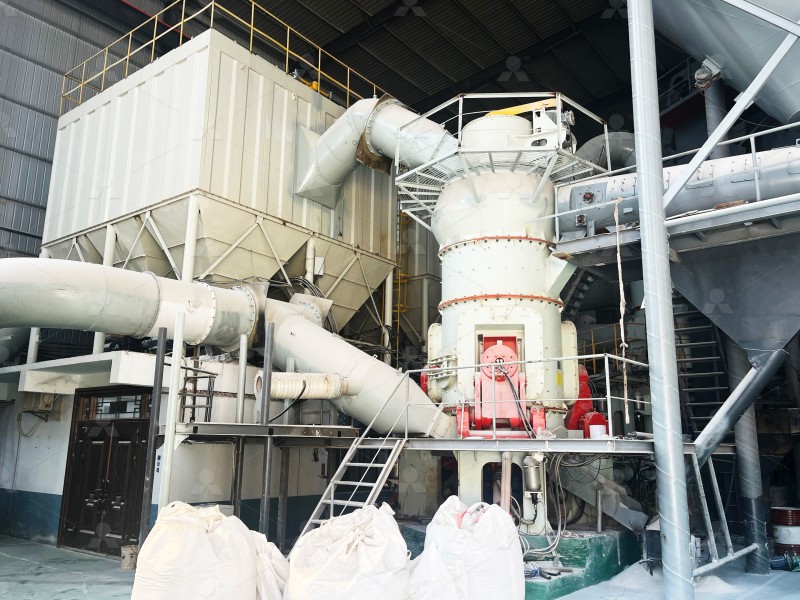
While maintaining your existing VRMs is essential, for new projects or circuit upgrades, selecting the right technology from the start is key. We highly recommend considering our LUM Ultrafine Vertical Grinding Mill for applications requiring precise, efficient grinding.

The LUM Mill integrates the latest grinding technology, featuring a more energy-saving multi-head powder separating technology that reduces energy consumption by 30%-50% compared to conventional mills. Its unique reversible structure is a game-changer for maintenance. Heavy grinding rollers can be easily swung out of the mill body, drastically reducing the time and labor required for inspection and part replacement, thereby minimizing downtime and keeping your spare parts inventory lean and manageable.
For operations focused on producing ultra-fine powders, our MW Ultrafine Grinding Mill is another exceptional choice. It is expertly designed for higher yields at lower energy consumption, boasting a cage-type powder selector for adjustable fineness between 325-2500 meshes. A significant maintenance advantage is its lack of rolling bearings and screws in the grinding chamber, eliminating common failure points and concerns about loose parts causing damage.
Conclusion
A proactive spare parts management strategy, combined with investing in advanced, reliable equipment like the LUM or MW series mills, is the most effective way to ensure high availability, reduce operating costs, and maximize the productivity of your cement plant’s grinding operations. Partnering with a manufacturer that supports you with genuine parts and expert technical service is the final, critical piece of the puzzle.