
Shanghai High Pressure Grinding Mill for Ore Processing: A Technical Perspective on Efficiency and Innovation
We provide a wide range of mills — including Raymond mill, trapezoidal mill, vertical mill, ultrafine mill, and ball mill, obtained ISO9001 international quality certification, EU CE certification, and Customs Union CU-TR certification. Suitable for processing minerals such as limestone, phosphate, quicklime, kaolin, talc, barite, bentonite, calcium carbonate, dolomite, coal, gypsum, clay, carbon black, slag, cement raw materials, cement clinker, and more.
The discharge range of these mills can be adjusted to meet specific processing needs, typically from 80-400 mesh, 600-3250 mesh, and can achieve the finest particle size of up to 6000 mesh(D50).
If you are looking for a reliable grinding solution to turn stone or minerals into fine powder, please feel free to contact our online customer service.
Shanghai High Pressure Grinding Mill for Ore Processing
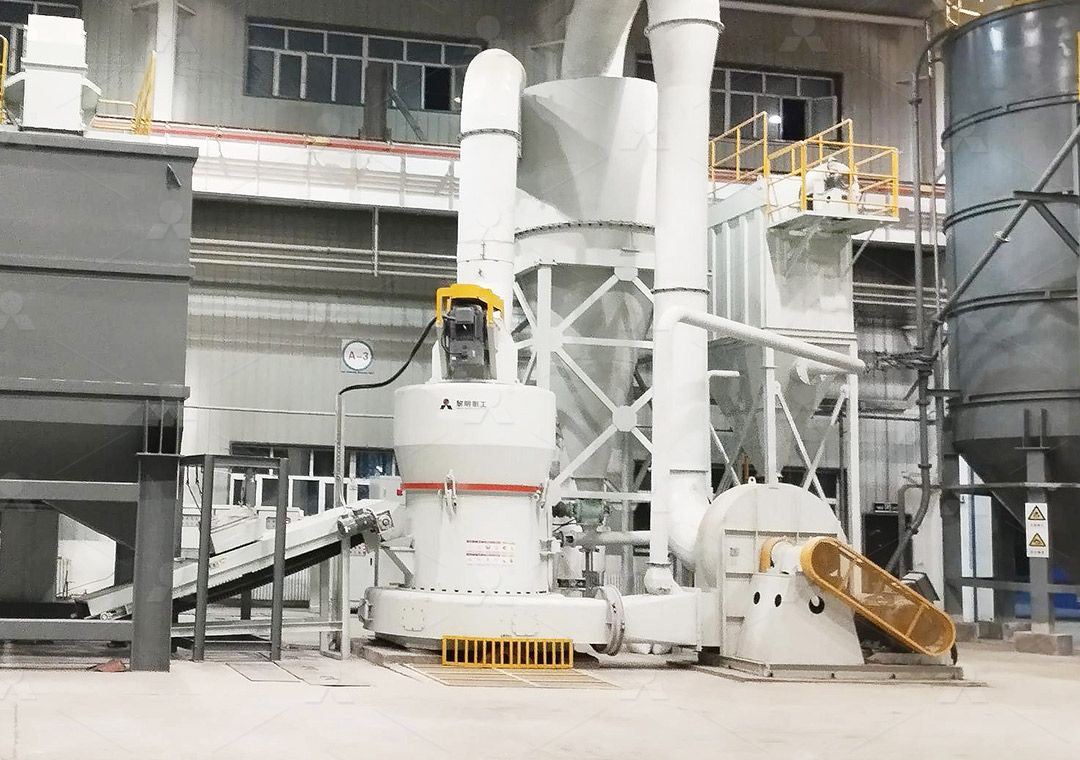
The relentless demand for mineral resources necessitates continuous advancements in comminution technology. In the heart of China’s industrial landscape, Shanghai has emerged as a pivotal hub for developing and manufacturing high-performance grinding equipment. High-pressure grinding mills, specifically designed for the rigorous demands of ore processing, represent a significant leap forward, offering unparalleled efficiency, reduced operational costs, and a smaller environmental footprint compared to traditional milling systems.
At the core of modern ore beneficiation is the need to liberate valuable minerals from gangue with minimal energy expenditure. Conventional ball mills, while reliable, often suffer from high energy consumption and limited control over particle size distribution. High-pressure grinding roll (HPGR) technology and its advanced derivatives address these shortcomings by applying immense compressive force to the feed material, resulting in efficient particle breakage and the generation of micro-cracks within particles, which can enhance downstream recovery processes.
The Shift Towards Ultrafine and Precision Grinding
The industry’s trajectory is increasingly moving towards ultrafine grinding to maximize mineral liberation and meet the specifications for high-value applications in chemicals, paints, and advanced materials. This requires mills that not only apply high pressure but also integrate sophisticated classification systems for precise particle size control. The challenge lies in achieving this precision without a corresponding spike in energy use or maintenance downtime.
Here, the engineering philosophy shifts from brute force to intelligent design. Modern mills incorporate features like advanced roller geometries, efficient material bed formation, and integrated air classifiers that work in a closed-loop system. The goal is to create a stable, controllable grinding environment where parameters such as pressure, feed rate, and classifier speed can be finely tuned to match the specific ore characteristics, from hard and abrasive ores to softer, moisture-containing materials.
Introducing LIMING’s Advanced Grinding Solutions
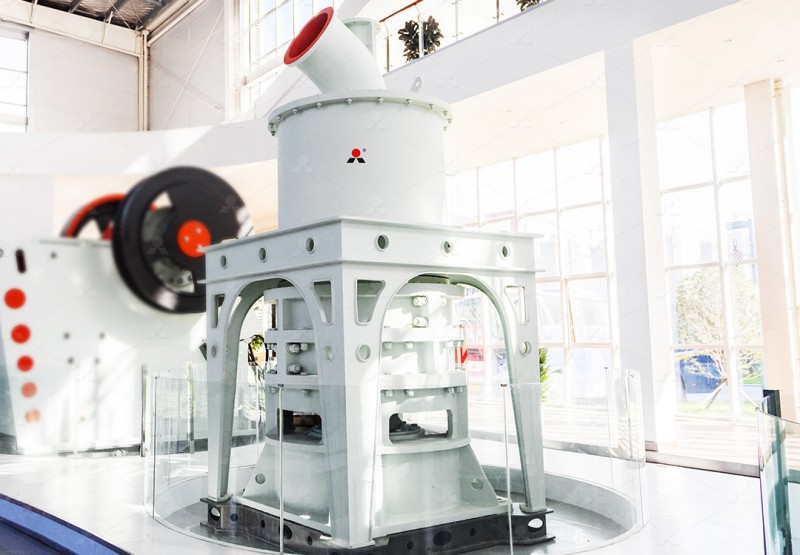
Within this competitive landscape, LIMING Heavy Industry has established itself through a commitment to R&D and digital precision manufacturing. Our portfolio includes machines built to tackle the full spectrum of grinding challenges. For operations prioritizing ultra-fine powders with exceptional environmental controls, the MW Ultrafine Grinding Mill stands out. Engineered for fineness ranging from 325 to 2500 meshes, it integrates a high-efficiency pulse dust collector and muffler as standard, ensuring a clean, low-noise operation that aligns with stringent environmental standards. Its innovative design, featuring a cage-type powder selector and a grinding chamber free from rolling bearings and screws, eliminates common failure points, allowing for worry-free, continuous 24-hour production runs for materials like limestone, calcite, and talc.
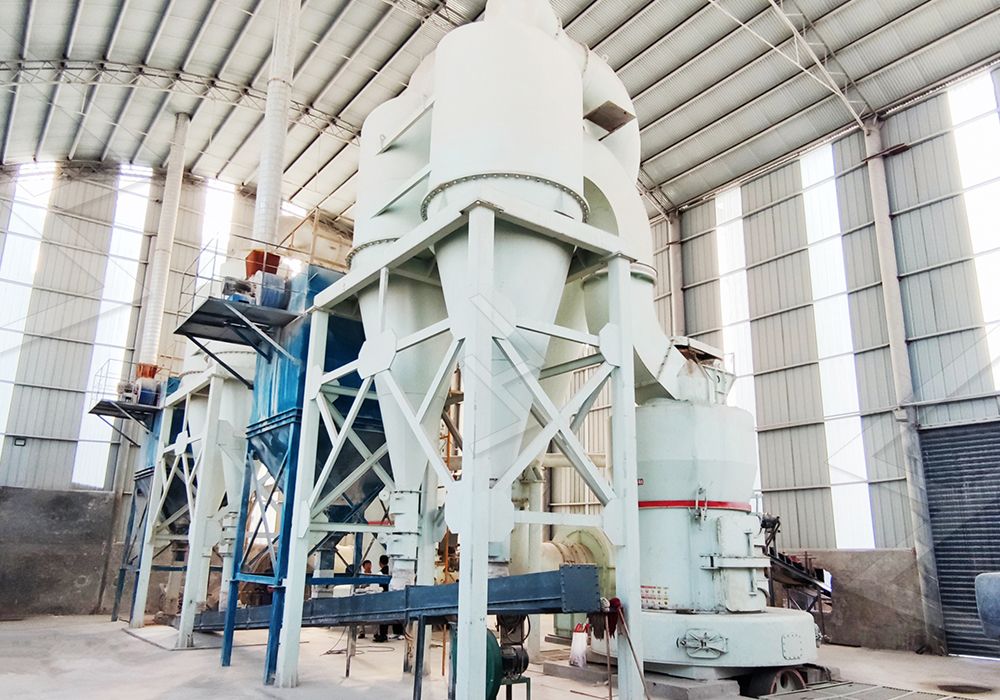
For large-scale ore processing requiring high capacity and integrated drying, the LM Vertical Grinding Mill is a powerhouse. It consolidates crushing, drying, grinding, classifying, and conveying into a single, compact unit. With an input size of up to 70mm and a capacity stretching to 340 tph, it slashes energy consumption by 30-40% and reduces the footprint by 50% compared to a ball mill system. Its stable, sealed operation under negative pressure guarantees no dust spillage, making it an ideal, automated solution for processing non-metallic minerals, pulverized coal, and slag.
Key Technological Advantages in Modern Design
The evolution of grinding technology is evident in several critical areas. First is energy efficiency. Through optimized grinding curves, efficient drive systems, and reduced mechanical resistance in air flow, modern mills like our MTW-Z European Trapezium Mill achieve significantly higher output per kilowatt-hour. Second is operational stability and ease of maintenance. Features such as double position-limiting technology (as seen in our LUM Ultrafine Vertical Mill) prevent destructive impacts from vibration, while reversible roller structures allow for easy access and part replacement, minimizing costly downtime.
Finally, digital integration and environmental stewardship are no longer optional. Numerical control machining ensures part precision, while PLC-controlled systems allow for remote monitoring and adjustment. Every machine is designed with a full environmental management system, from pulse-jet dust collectors to sound-dampening enclosures, ensuring compliance with global environmental protection standards.
Conclusion: The Future is Integrated and Intelligent
The future of ore processing in Shanghai and beyond lies in intelligent, high-pressure grinding systems that deliver more than just size reduction. They are integrated processing hubs that prioritize energy conservation, product quality, operational reliability, and environmental responsibility. By adopting such advanced technologies, mining and industrial operations can significantly enhance their profitability and sustainability. As the industry continues to evolve, the focus will remain on developing smarter, more connected mills that offer predictive maintenance and fully autonomous optimization, pushing the boundaries of what is possible in mineral processing.
Frequently Asked Questions (FAQ)
- What are the main advantages of a high-pressure grinding mill over a traditional ball mill for ore processing?
High-pressure grinding mills typically offer 20-50% lower energy consumption, produce a product with more micro-cracks (beneficial for downstream leaching), have a smaller footprint, and allow for drier processing. They also offer better control over particle size distribution. - How does the MW Ultrafine Grinding Mill achieve such fine particle sizes (up to 2500 mesh)?
The MW Mill utilizes a high-precision, multi-head cage-type powder selector based on German technology. This allows for extremely accurate particle classification. Combined with optimally designed grinding curves for the roller and ring, it can repeatedly grind particles to the sub-micron range. - Can the LM Vertical Grinding Mill handle moist ore feed?
Yes, a key feature of the LM Vertical Mill is its integrated drying capability. Hot air can be introduced into the mill alongside the feed material, allowing it to simultaneously dry and grind ores with moderate moisture content, streamlining the process flow. - What measures are taken to ensure environmental compliance with these grinding mills?
Our mills are designed with integrated environmental systems. This includes high-efficiency pulse jet dust collectors to capture over 99.9% of particulates, fully sealed negative-pressure operation to prevent dust spillage, and soundproofing rooms or mufflers to reduce operational noise to well below regulatory limits. - How is maintenance simplified on modern vertical grinding mills like the LUM series?
Maintenance is simplified through designs like the reversible roller structure. Using the hydraulic system, the grinding roller can be easily swung out of the mill body, providing ample space for inspection and replacement of wear parts like the roller shell and liner plate without complex disassembly. - What kind of after-sales support and spare parts availability can be expected?
As a manufacturer covering both production and sales, we take full responsibility for every machine. We provide comprehensive technical services and guarantee the supply of original, precision-manufactured spare parts to ensure long-term, worry-free operation of your equipment.