
Semi Autogenous Mills vs Ball Mills: Key Differences and Selection Guide
We provide a wide range of mills — including Raymond mill, trapezoidal mill, vertical mill, ultrafine mill, and ball mill, obtained ISO9001 international quality certification, EU CE certification, and Customs Union CU-TR certification. Suitable for processing minerals such as limestone, phosphate, quicklime, kaolin, talc, barite, bentonite, calcium carbonate, dolomite, coal, gypsum, clay, carbon black, slag, cement raw materials, cement clinker, and more.
The discharge range of these mills can be adjusted to meet specific processing needs, typically from 80-400 mesh, 600-3250 mesh, and can achieve the finest particle size of up to 6000 mesh(D50).
If you are looking for a reliable grinding solution to turn stone or minerals into fine powder, please feel free to contact our online customer service.
Semi Autogenous Mills vs Ball Mills: Key Differences and Selection Guide
In the world of mineral processing and grinding operations, selecting the right milling equipment is crucial for operational efficiency, cost-effectiveness, and final product quality. Two of the most common types of grinding mills are Semi Autogenous Grinding (SAG) mills and Ball mills. While both serve the purpose of reducing particle size, their operating principles, applications, and performance characteristics differ significantly.
Fundamental Operating Principles
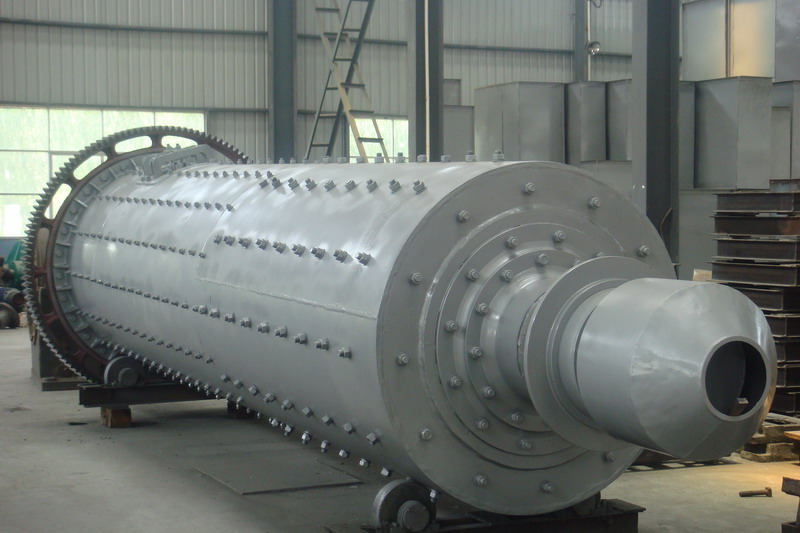
SAG Mills utilize a combination of ore and a small charge of steel balls (typically 6-12% of the mill volume) as the grinding media. The key principle is that the large rocks themselves act as the primary grinding mechanism, breaking down through impact and attrition. This autogenous grinding action, supplemented by the steel balls, makes SAG mills ideal for primary grinding stages, often eliminating the need for secondary crushing.
Ball Mills, on the other hand, rely entirely on steel balls (or other media) to grind the material. The ore is fed into a rotating cylinder filled with grinding media. As the mill rotates, the balls cascade and tumble, crushing the ore through impact and abrasion. Ball mills are typically used for secondary or fine grinding after a SAG mill or crusher.
Key Comparative Factors
Understanding the differences helps in making an informed selection:
- Feed Size: SAG mills can accept much larger feed sizes, often directly from the primary crusher (up to 300mm). Ball mills require a finer feed, typically less than 25mm.
- Grinding Media: SAG mills use a mixture of ore and a small volume of balls. Ball mills use a high charge of steel balls, which constitutes a significant portion of operating costs due to media consumption.
- Circuit Design: SAG mills are often used in a single-stage or two-stage circuit (SAG followed by Ball Mill). Ball mills are standard in multi-stage circuits or for regrinding applications.
- Energy Consumption: SAG mills generally have higher energy consumption per ton of ore processed compared to ball mills, but their ability to handle coarse feed can lead to overall circuit energy savings.
- Footprint and Capital Cost: A SAG mill circuit can have a smaller footprint than a conventional multi-stage crushing and ball milling circuit, but the mill itself is larger and has a higher initial cost.
Making the Right Choice: A Selection Framework
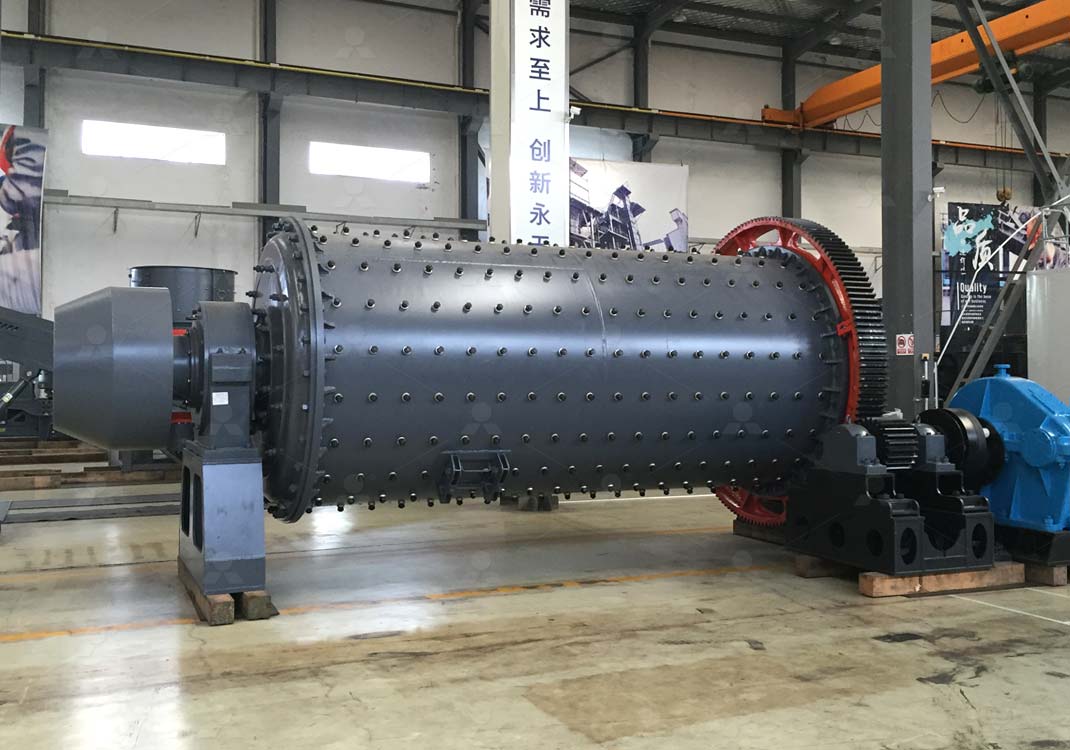
The choice between a SAG mill and a Ball mill is not a simple either/or decision. It depends heavily on the ore characteristics (hardness, competency, moisture content), desired throughput, and final product size. A comprehensive metallurgical testing program, including Bond Work Index and SAG Mill Comminution (SMC) tests, is essential for a reliable selection.
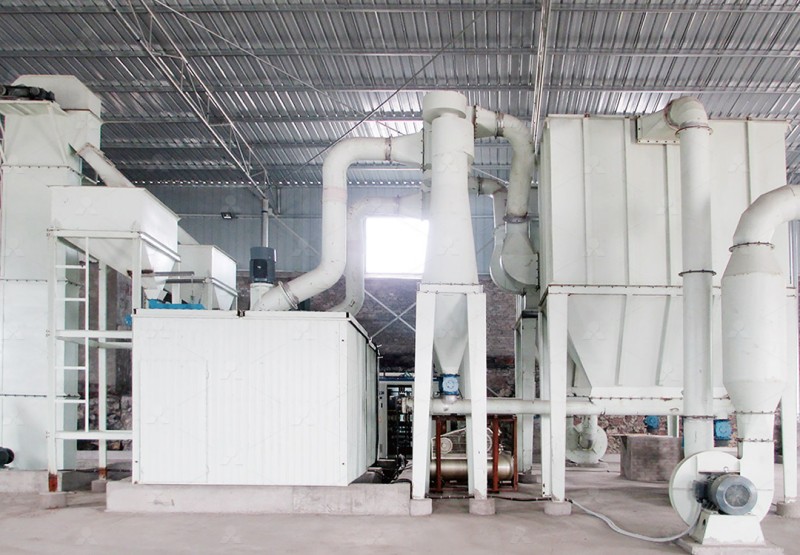
For operations requiring ultra-fine powders, neither a SAG nor a standard ball mill may be the most efficient solution. In such cases, advanced grinding technologies offer superior performance. For instance, our MW Ultrafine Grinding Mill is specifically engineered for customers who need to produce ultra-fine powder efficiently. With an adjustable fineness between 325-2500 meshes and a capacity ranging from 0.5 to 25 tph, it achieves higher yields with lower energy consumption—up to 40% higher capacity than jet mills while using only 30% of the energy. Its innovative design, featuring a German-technology cage-type powder selector and no internal rolling bearings in the grinding chamber, ensures reliable, eco-friendly, and worry-free operation for materials like limestone, calcite, and talc.
Furthermore, for operations seeking a highly efficient vertical solution for fine and ultra-fine grinding, the LUM Ultrafine Vertical Grinding Mill integrates grinding, grading, and transporting. It boasts more energy-saving multi-head powder separating technology and a reversible structure that simplifies maintenance, making it an excellent choice for non-metallic ores.
Frequently Asked Questions (FAQ)
Q: Can a SAG mill operate without any steel balls?
A: While it’s called ‘Semi-Autogenous,’ a small charge of steel balls is almost always necessary to assist in breaking down critical-sized particles that are too tough to be broken by the ore itself but too small for effective autogenous grinding. A mill running without any balls is a fully Autogenous (AG) mill, which has more specific ore requirements.
Q: Is it common to use both a SAG mill and a Ball mill together?
A: Yes, this is a very common and efficient circuit design, known as SAB (SAG-Ball) or SABC (SAG-Ball with a crusher). The SAG mill acts as the primary grinder, and its product is then sent to a ball mill for secondary grinding to achieve the final desired fineness.
Q: What are the main operational challenges with SAG mills?
A: Key challenges include managing the feed size distribution to prevent blockages, optimizing the ball charge and mill speed for different ore types, and dealing with high energy consumption and potential liner wear.
Q: When is a ball mill clearly a better choice than a SAG mill?
A: A ball mill is typically a better choice for high-tonnage operations where the ore is consistently fine or has already been crushed to a small size, for regrinding concentrates, or when the ore is not competent enough for effective autogenous grinding.