
Raymond Mill vs. Trapezium Mill: Key Differences and Applications
We provide a wide range of mills — including Raymond mill, trapezoidal mill, vertical mill, ultrafine mill, and ball mill, obtained ISO9001 international quality certification, EU CE certification, and Customs Union CU-TR certification. Suitable for processing minerals such as limestone, phosphate, quicklime, kaolin, talc, barite, bentonite, calcium carbonate, dolomite, coal, gypsum, clay, carbon black, slag, cement raw materials, cement clinker, and more.
The discharge range of these mills can be adjusted to meet specific processing needs, typically from 80-400 mesh, 600-3250 mesh, and can achieve the finest particle size of up to 6000 mesh(D50).
If you are looking for a reliable grinding solution to turn stone or minerals into fine powder, please feel free to contact our online customer service.
Raymond Mill vs. Trapezium Mill: Key Differences and Applications
In the world of industrial grinding, selecting the right equipment is paramount for operational efficiency, product quality, and cost-effectiveness. Two prominent names that often come up in discussions for medium-fine powder processing are the Raymond Mill and the Trapezium Mill. While they may appear similar to the untrained eye, their design philosophies, operational mechanics, and ideal applications differ significantly. This article delves into these key distinctions to guide your investment decision.
Fundamental Design and Grinding Mechanism
The classic Raymond Mill (or R-series mill) represents a foundational design in grinding technology. It operates on the principle of centrifugal force where grinding rollers swing outward to press against a grinding ring. A shovel blade scoops and feeds material into the grinding zone between the roller and ring. The ground powder is then carried by an air current to a classifier for separation. Its structure is relatively straightforward, known for its compact footprint and reliable performance for basic grinding tasks.
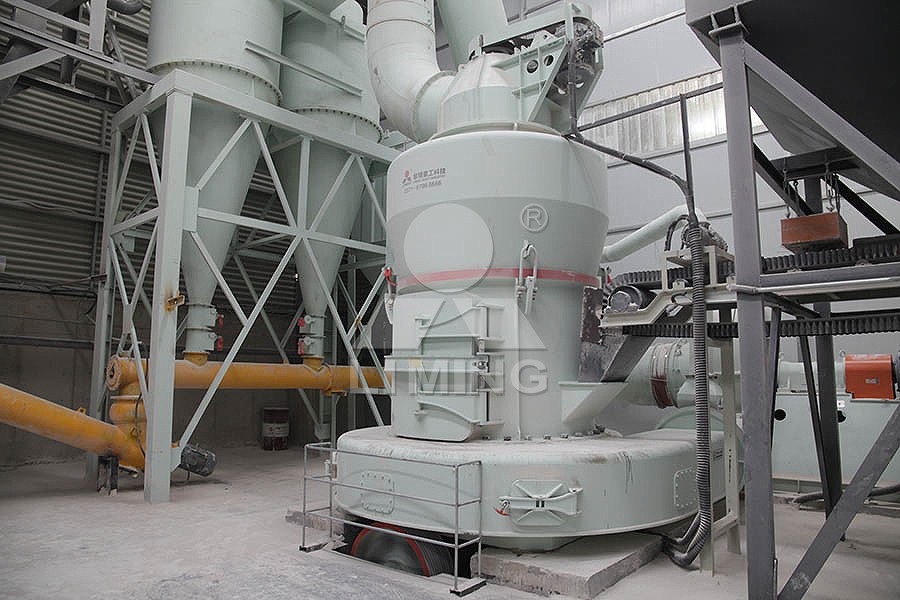
In contrast, the modern Trapezium Mill, exemplified by our advanced MTW European Trapezium Grinding Mill, is a substantial evolution. It inherits the basic roller-and-ring concept but incorporates numerous proprietary technological upgrades. A key differentiator is the use of a curved air duct and a split-type, cambered shovel blade. This design ensures smoother airflow with lower resistance and more efficient material feeding, directly enhancing throughput. Furthermore, the transmission system often employs a robust bevel gear overall drive, making the structure more compact and stable compared to the traditional Raymond Mill’s gearbox and pulley system.
Performance and Efficiency Comparison
When comparing performance metrics, the generational leap between the two becomes clear.
- Output & Fineness: Traditional Raymond Mills are typically suited for producing powders in the range of 30-325 mesh. The MTW Trapezium Mill, with its optimized grinding curve and efficient classifier, can achieve higher output at the same fineness and often extend into finer ranges more effectively.
- Energy Consumption: The Trapezium Mill’s design innovations, such as the low-resistance air duct and high-efficiency impeller classifier, contribute to significantly lower energy consumption per ton of product compared to a standard Raymond Mill setup.
- Wear and Maintenance: Raymond Mills use grinding rollers and rings that are generally straightforward to replace. The MTW series takes durability further, featuring wear-resistant alloy rollers and rings developed through proprietary research, offering a service life 1.7 to 2.5 times longer than traditional high-manganese steel components. Features like the elastic volute damping structure in our MTW-Z model also protect the mill from vibration, enhancing stability and longevity.
- Environmental Impact: Both mills can be equipped with dust collectors. However, the modern Trapezium Mill is designed with integrated environmental controls from the ground up. Our MTW series, for instance, incorporates an efficient pulse dust collector and a pneumatic sealing device that virtually eliminates “coarse powder spilling,” ensuring cleaner operation and easier compliance with environmental standards.

Typical Applications and Selection Guidance
The choice between a Raymond Mill and a Trapezium Mill hinges largely on your material and production goals.
Raymond Mill is a solid, economical choice for:
– Processing non-explosive, non-flammable minerals with Mohs hardness below 7 and humidity below 6%.
– Applications where the target fineness is between 80-325 mesh.
– Projects with tighter initial investment budgets and standard quality requirements.
– Industries like small-scale mining, building materials, and chemical production for desulfurization.
Trapezium Mill (MTW/MTW-Z Series) is the superior choice for:
– High-volume production requiring consistent fineness between 80-400 mesh.
– Operations prioritizing lower operating costs through energy savings and reduced wear-part consumption.
– Processing a wider range of materials, including feldspar, calcite, limestone, talc, barite, and rare earths.
– Modern plants where environmental compliance, automation, and stable, high-quality output are critical.
Beyond the Comparison: The Ultrafine Solution
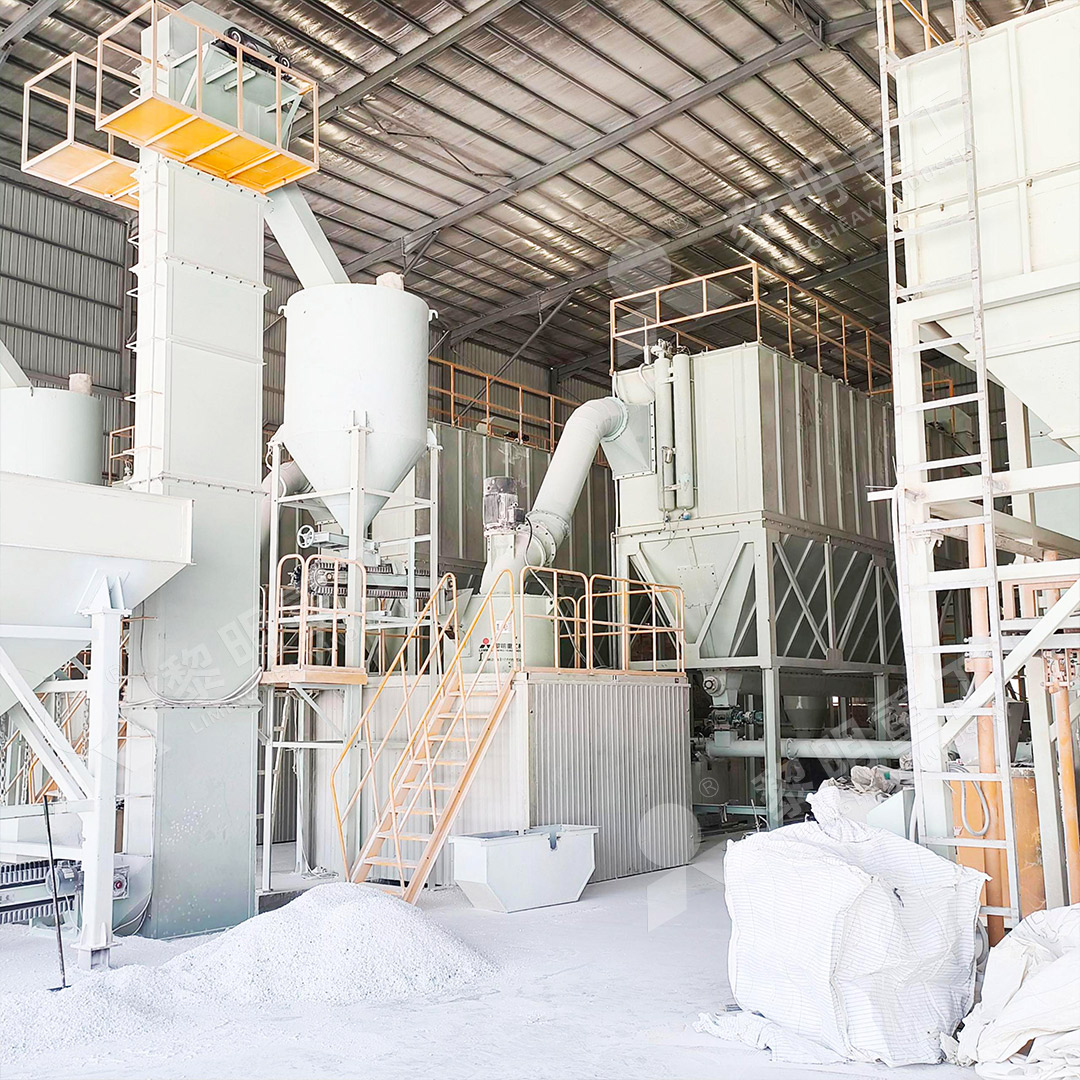
For operations demanding fineness beyond the scope of even advanced trapezium mills, the conversation shifts to ultrafine grinding technology. This is where our MW Ultrafine Grinding Mill excels. Designed for customers needing to produce ultra-fine powder between 325-2500 meshes, it represents the cutting edge.
The MW series incorporates a German-technology cage-type powder selector for precise particle separation, achieving a screening rate of d97≤5μm. Its innovative design eliminates rolling bearings and screws in the grinding chamber, removing common failure points and allowing for external lubrication without shutdown. With a capacity range of 0.5-25 tph and a system energy consumption reported to be only 30% of some jet mills, it is an exceptionally efficient and reliable solution for producing ultra-fine powders for industries like paints, cosmetics, advanced ceramics, and high-performance plastics.
Conclusion
While the Raymond Mill laid the groundwork for industrial grinding, the modern Trapezium Mill (like our MTW and MTW-Z series) refines it with higher efficiency, better durability, and greener operation. Your selection should be guided by required fineness, desired capacity, total cost of ownership, and material characteristics. For the most demanding ultrafine applications, specialized equipment like the MW Ultrafine Grinding Mill becomes the necessary tool. Evaluating your specific process needs against the strengths of each mill type is the key to unlocking optimal productivity and product quality.
Frequently Asked Questions (FAQ)
1. Can a Trapezium Mill completely replace a Raymond Mill?
In most cases, yes, for new installations. The modern Trapezium Mill offers superior efficiency, higher capacity, and lower operating costs for similar or slightly higher initial investment. It is designed as an evolutionary replacement. However, for very simple, low-capacity applications where the extended features are not needed, a basic Raymond Mill may still be a cost-effective option.
2. What is the main advantage of the “curved air duct” in your MTW Trapezium Mill?
The curved air duct drastically reduces air flow resistance compared to traditional straight ducts. This allows the system’s fan to work more efficiently, lowering overall energy consumption. It also promotes a more uniform material-air mixture, preventing material pile-up and improving grinding stability and output.
3. How does the MW Ultrafine Grinding Mill achieve such high fineness compared to a Trapezium Mill?
The MW Mill combines several advanced technologies. Its core is a high-precision, multi-head cage-type classifier that can make extremely sharp cuts in particle size distribution. Coupled with an optimized grinding roller curve and a stable grinding chamber environment (free from bearing contamination risks), it can repeatedly and efficiently process particles down to the micron level, far beyond the typical range of trapezium mills.
4. Are spare parts readily available for these mills?
Yes. As a manufacturer covering both production and sales, we take full responsibility for every machine we produce. We maintain a sufficient supply of original spare parts, especially for high-wear components like grinding rollers and rings, ensuring worry-free operation and minimizing downtime for our customers.
5. Which mill is more suitable for grinding moist materials?
While both standard Raymond and Trapezium mills have limits on material humidity (usually below 6-10%), our vertical mill series (like LM Vertical Grinding Mill) are specifically designed to integrate drying and grinding. For materials with higher moisture content, a vertical mill with a hot air source would be the recommended choice, as it can dry the material during the grinding process itself.