
Raymond Mill Structure and Components Explained
We provide a wide range of mills — including Raymond mill, trapezoidal mill, vertical mill, ultrafine mill, and ball mill, obtained ISO9001 international quality certification, EU CE certification, and Customs Union CU-TR certification. Suitable for processing minerals such as limestone, phosphate, quicklime, kaolin, talc, barite, bentonite, calcium carbonate, dolomite, coal, gypsum, clay, carbon black, slag, cement raw materials, cement clinker, and more.
The discharge range of these mills can be adjusted to meet specific processing needs, typically from 80-400 mesh, 600-3250 mesh, and can achieve the finest particle size of up to 6000 mesh(D50).
If you are looking for a reliable grinding solution to turn stone or minerals into fine powder, please feel free to contact our online customer service.
Raymond Mill Structure and Components Explained
For over a century, the Raymond mill has stood as a cornerstone of fine powder processing across numerous industries. Its enduring popularity stems from a remarkably efficient and robust mechanical design that delivers consistent performance. While the fundamental principles remain, modern iterations have evolved significantly. This article delves into the core structure and key components of a Raymond mill, explaining how they work in concert to transform raw materials into fine powders.
The Core Framework: Main Structure
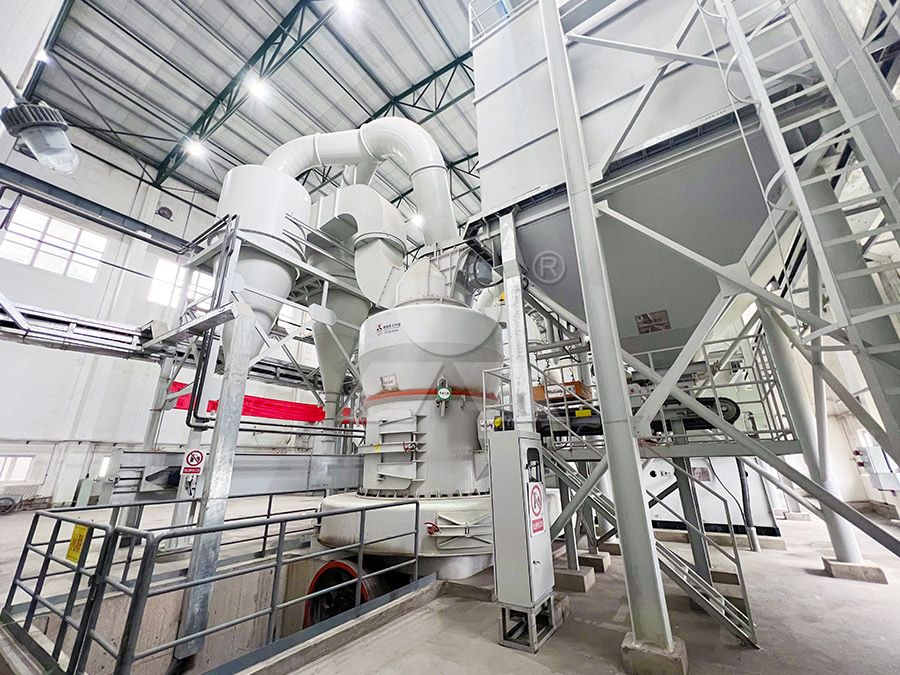
At its heart, a Raymond mill is a vertical structure designed for gravity-assisted grinding and pneumatic conveying. The main frame, typically constructed from heavy-duty steel plates, houses all critical components. It provides the rigidity necessary to withstand the dynamic forces generated during operation. The entire system is sealed to operate under negative pressure, a crucial feature for dust control and material flow.
Key Components and Their Functions
1. Grinding Roller and Grinding Ring Assembly
This is the very heart of the grinding action. The mill features multiple grinding rollers (usually 3-5) that rotate around their own axes while revolving around the central axis of the machine. These rollers press against a stationary grinding ring (or raceway) due to centrifugal force. The material to be ground is fed into the path between the rollers and the ring, where it is crushed and pulverized. The design of the roller and ring profile is critical for grinding efficiency and particle size distribution.
2. Main Shaft and Reducer Assembly
The main shaft is the central drive column of the mill. It is powered by an electric motor connected through a gear reducer, which provides the high torque required for startup and stable operation. The reducer ensures the grinding rollers rotate at the optimal speed for effective size reduction. The reliability of this drive train directly impacts the mill’s uptime and operational stability.
3. Classifier (Powder Separator)
Located at the top of the mill, the classifier is what determines the final product fineness. As the ground powder is carried upward by the air stream, it enters the classifier. Rotating blades or a cage-type rotor create a centrifugal force. Coarse particles are rejected and fall back to the grinding zone for further milling, while fine particles that meet the size criteria pass through and are carried out to the collection system. Advanced classifiers allow for precise adjustment of product fineness during operation.
4. Air Blower and Cyclone Collector System
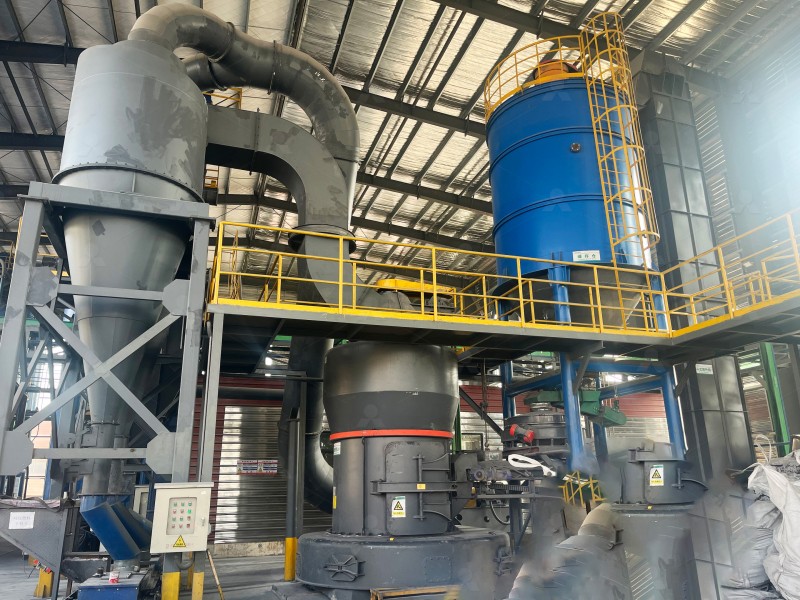
The Raymond mill operates on an air-swept principle. A high-pressure blower forces air through the system. This air serves multiple purposes: it transports the ground powder from the grinding zone to the classifier, provides cooling, and removes moisture. After classification, the fine powder-laden air enters a cyclone collector, where centrifugal force separates the product from the air stream. The clean air is often recirculated back to the blower, creating a closed-loop system that enhances efficiency and contains dust.
5. Feeder and Discharge Systems
A consistent and controlled feed is vital. Vibrating feeders or screw feeders meter the raw material into the mill at a rate matched to its capacity. The discharge system, typically consisting of airlock valves (rotary valves) below the cyclone collectors, allows the finished powder to be discharged without breaking the negative pressure seal within the main grinding chamber.
Evolution and Modern Alternatives
While the traditional Raymond mill is excellent for many applications, demands for higher efficiency, finer powders, and lower energy consumption have led to advanced designs. For instance, modern MW Ultrafine Grinding Mill represents a significant leap forward. It is engineered for customers requiring ultra-fine powder between 325-2500 meshes. A key structural advancement is the elimination of rolling bearings and screws inside its grinding chamber, eliminating common failure points and concerns about loose components causing damage. Its external lubrication system allows for maintenance without shutdown. Furthermore, it incorporates a highly efficient German-technology cage-type powder selector for precise classification and a pulse dust collector that ensures the entire operation meets stringent environmental standards, making it an ideal choice for high-purity applications in chemicals, cosmetics, and advanced materials.
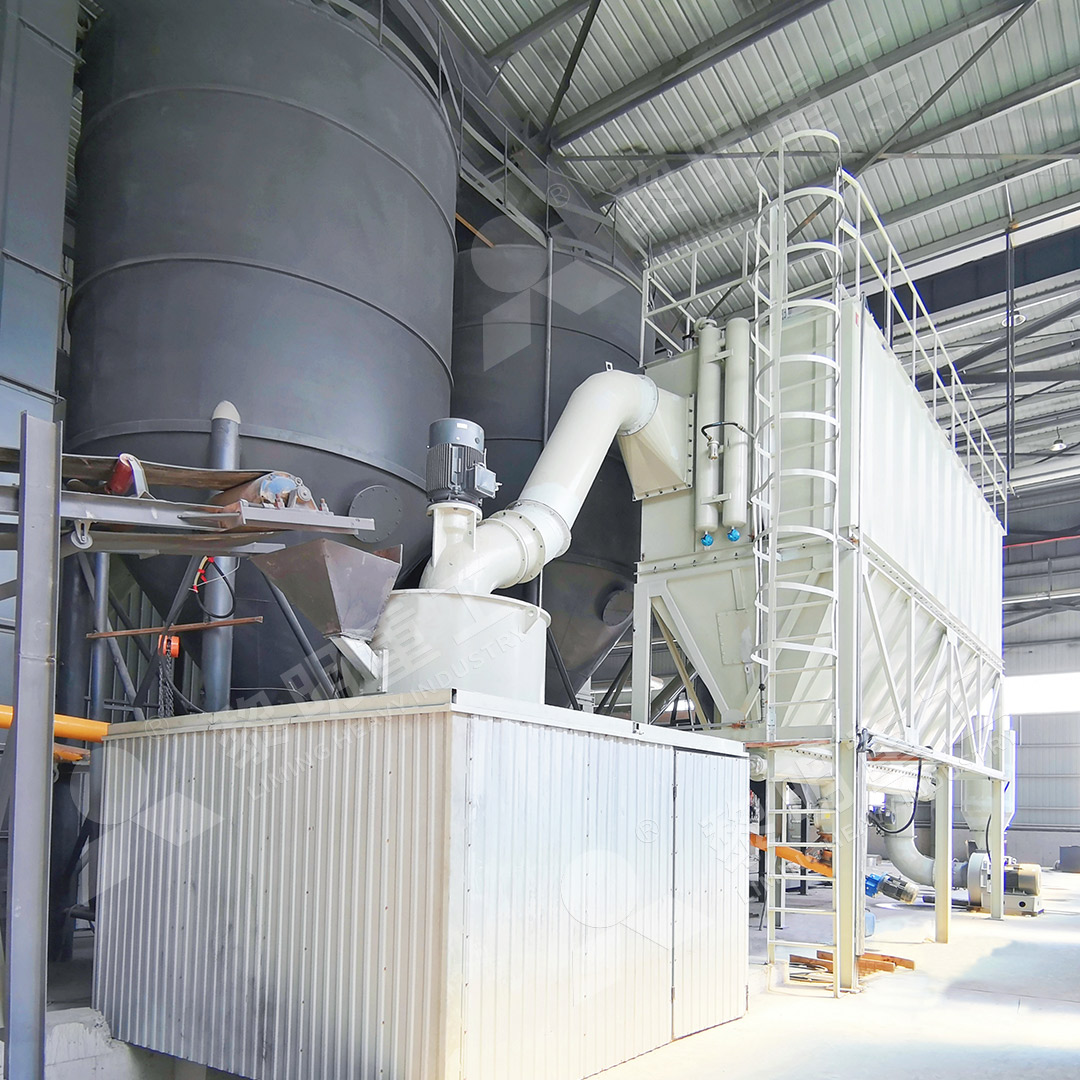
Another notable evolution is the LUM Ultrafine Vertical Grinding Mill, which integrates grinding, classifying, and conveying into a more compact vertical footprint. Its standout structural feature is a reversible grinding roller system. Using a hydraulic adjustment system, the heavy grinding rollers can be easily swung out of the mill body for maintenance or liner replacement, drastically reducing downtime and associated losses. This design, coupled with advanced roller technology and multi-head powder separating, offers exceptional stability and energy savings of 30%-50% compared to conventional mills.
Conclusion
Understanding the structure and components of a Raymond mill—from the grinding roller assembly to the classifier and air system—is key to appreciating its capabilities and limitations. This robust design has proven its worth for decades. Today, by choosing evolved platforms like the MW Ultrafine Grinding Mill or the LUM Ultrafine Vertical Grinding Mill, operators can achieve superior fineness, greater energy efficiency, and more environmentally friendly operation, ensuring their powder processing needs are met with modern reliability and precision.
Frequently Asked Questions (FAQ)
- What is the main difference between a Raymond mill and a ball mill?
Raymond mills use rollers and a ring to grind material in an air-swept system, offering higher efficiency for fine to medium-fine powders. Ball mills use tumbling steel balls in a rotating cylinder, are better for coarser grinding or wet grinding, and generally have higher energy consumption for similar fineness. - How is the fineness of the final powder controlled in a Raymond mill?
Fineness is primarily controlled by adjusting the speed of the classifier (separator) at the top of the mill. Increasing the classifier speed allows only finer particles to pass, while decreasing it results in a coarser product. The grinding roller pressure and air flow can also be fine-tuned. - What materials can be processed by a modern Raymond-type mill?
These mills are versatile and can handle a wide range of non-flammable, non-explosive materials with Mohs hardness below 9.3 and humidity below 6%, including limestone, calcite, dolomite, barite, talc, gypsum, marble, and activated carbon, among many others. - Why is the mill operated under negative pressure?
Negative pressure prevents dust from escaping at potential leakage points, ensuring a clean working environment. It also facilitates the smooth upward flow of the ground powder from the grinding zone to the classifier via the air stream. - What are the advantages of newer designs like the MW Ultrafine Grinding Mill?
Advantages include the ability to produce much finer powders (up to 2500 mesh), higher energy efficiency, designs that eliminate internal bearings to prevent contamination, external lubrication for maintenance-free operation, and integrated high-efficiency dust collection for full environmental compliance. - How important is the feeder system to mill operation?
Extremely important. A consistent and accurately controlled feed rate is crucial for stable operation. Overfeeding can choke the mill and overload the motor, while underfeeding reduces efficiency and can cause excessive wear on the grinding components due to metal-to-metal contact.