
Raymond Mill Manufacturing Company: Leading Industrial Grinding Solutions
We provide a wide range of mills — including Raymond mill, trapezoidal mill, vertical mill, ultrafine mill, and ball mill, obtained ISO9001 international quality certification, EU CE certification, and Customs Union CU-TR certification. Suitable for processing minerals such as limestone, phosphate, quicklime, kaolin, talc, barite, bentonite, calcium carbonate, dolomite, coal, gypsum, clay, carbon black, slag, cement raw materials, cement clinker, and more.
The discharge range of these mills can be adjusted to meet specific processing needs, typically from 80-400 mesh, 600-3250 mesh, and can achieve the finest particle size of up to 6000 mesh(D50).
If you are looking for a reliable grinding solution to turn stone or minerals into fine powder, please feel free to contact our online customer service.
Raymond Mill Manufacturing Company: Leading Industrial Grinding Solutions
For decades, Raymond Mill Manufacturing Company has stood at the forefront of industrial grinding technology. Our name has become synonymous with reliability, innovation, and performance in the demanding world of material size reduction. We understand that modern industry requires more than just a mill; it demands a comprehensive solution that delivers precision, efficiency, and sustainability. From mining and construction to chemicals and advanced materials, our equipment is engineered to meet the rigorous challenges of today’s global markets.
Our philosophy is built on a foundation of deep engineering expertise and a commitment to continuous improvement. We don’t just sell machines; we forge partnerships, providing tailored grinding solutions that enhance our clients’ operational productivity and bottom line. This dedication has cemented our reputation as a trusted leader, capable of handling everything from high-volume raw material processing to the production of ultra-fine powders for specialized applications.
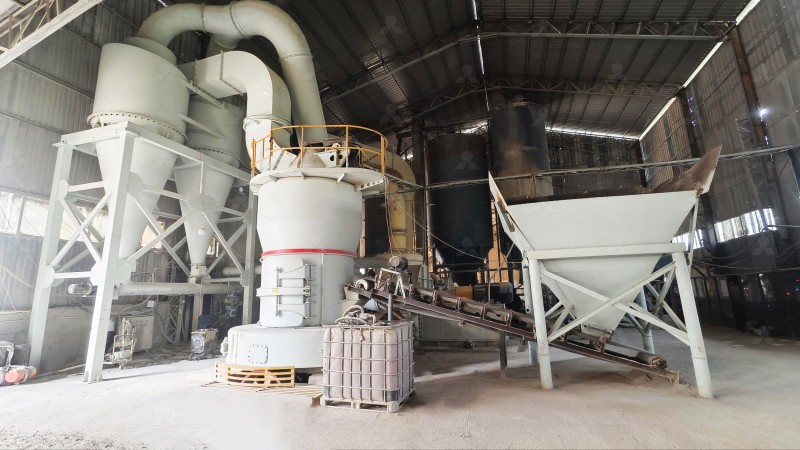
The Evolution of Grinding: From Foundational to Futuristic
The journey from traditional ball mills to today’s sophisticated, integrated systems marks a significant leap in processing technology. Early grinding methods were often energy-intensive, noisy, and produced inconsistent particle sizes. Raymond Mill Manufacturing Company has been instrumental in driving this evolution, pioneering advancements that address these core inefficiencies. Our focus has shifted towards systems that offer superior control over fineness, significantly reduced energy consumption per ton of output, and a markedly smaller environmental footprint.
Key to this progress is the integration of digital controls and precision manufacturing. By utilizing dozens of CNC machine lines for core components, we ensure machining tolerances that translate directly to smoother operation, longer service life, and consistent output quality. Furthermore, our designs inherently promote eco-friendly operation. Features like high-efficiency pulse dust collectors and integrated silencers are not afterthoughts but fundamental aspects of our machine design, ensuring operations meet stringent national and international environmental standards.
Precision Engineering for Diverse Applications
The true test of any grinding solution is its versatility. Our equipment portfolio is designed to process a vast array of materials, including limestone, calcite, dolomite, gypsum, barite, marble, talc, petroleum coke, and various industrial minerals. Whether the end product is destined for construction materials, paints, cosmetics, pharmaceuticals, or food additives, achieving the correct particle size distribution is critical. This is where our application-specific engineering shines.
For instance, in industries where product purity and whiteness are paramount, such as high-grade fillers or food additives, minimizing iron contamination from mechanical wear is essential. Our advanced mill designs address this directly. By employing grinding curves that promote material bed formation and avoiding direct metal-to-metal contact in critical zones, we ensure the final product maintains its integrity and desired characteristics.

Spotlight on Advanced Technology: The MW Ultrafine Grinding Mill
When the application calls for exceptionally fine powders, our MW Ultrafine Grinding Mill represents the pinnacle of our engineering. Designed for customers who need to produce ultra-fine powder between 325 and 2500 meshes, this machine sets new benchmarks for efficiency and operational simplicity.
Its core advantage lies in a significantly higher yield with lower energy consumption. Thanks to newly designed grinding curves for the roller and ring, the MW Mill achieves a production capacity up to 40% higher than jet or stirred grinding mills at the same fineness and power. Perhaps its most ingenious feature is the elimination of rolling bearings and screws within the grinding chamber itself. This design liberates users from chronic worries about bearing failures or loose screws causing catastrophic damage. Lubrication can be performed externally without shutdown, enabling true 24/7 continuous production for mission-critical operations.
The heart of its classification system is a German-technology-inspired cage-type powder selector. This allows precise adjustment of product fineness and, when configured with a multi-head selector, can achieve a remarkable once-through screening rate of d97≤5μm. Coupled with its efficient pulse dust collection system, the MW Ultrafine Grinding Mill delivers an eco-friendly, high-precision solution for the most demanding fine powder production needs.
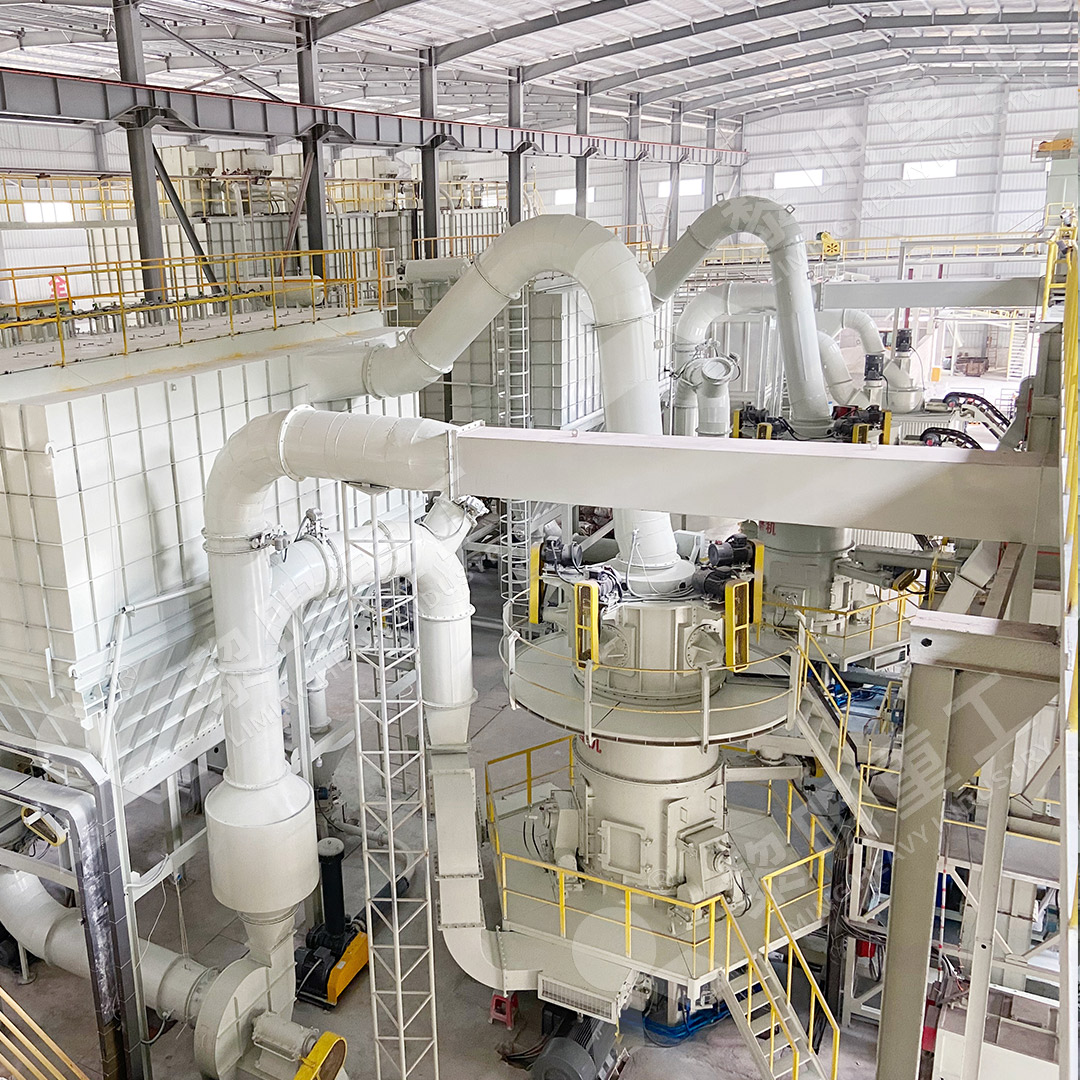
Vertical Integration: The LUM Ultrafine Vertical Grinding Mill Advantage
For operations seeking a compact, highly efficient vertical grinding solution, our LUM Ultrafine Vertical Grinding Mill is a standout choice. Independently designed by our engineers, it incorporates the latest grinding roller technology from Taiwan and advanced German powder separating technology into a single, streamlined unit.
This mill excels in energy savings, reducing consumption by 30%-50% compared to conventional mills. Its intelligent design includes a PLC control system and multi-head powder separating technology, solving the classic problems of high-precision particle cut-point control and rapid switching between different product specifications. Operational stability is ensured through a double position-limiting technology—combining electronic and mechanical safeguards—that prevents destructive impacts from external vibrations, such as those from mine blasts.
Maintenance is also revolutionized. We fully considered the challenge of handling heavy grinding rollers and developed a unique reversible structure. Using the hydraulic adjustment system, operators can easily and safely move the grinding roller out of the mill body for inspection, lining plate replacement, or other maintenance, drastically reducing downtime and associated losses.
A Partnership for the Long Term
Investing in Raymond Mill Manufacturing Company equipment is the beginning of a long-term relationship. Our commitment extends far beyond the initial sale. As a company that covers both production and sales, we take full responsibility for every machine we build. We ensure a sufficient supply of original spare parts and provide comprehensive technical support to guarantee worry-free operation throughout the entire lifecycle of your grinding system.
From the foundational reliability of our classic Raymond Mill to the cutting-edge capabilities of our MW and LUM series, we offer a solution for every grinding challenge. Our mission is to provide the industrial grinding solutions that empower your productivity, today and into the future.
Frequently Asked Questions (FAQ)
1. What is the main advantage of your MW Ultrafine Grinding Mill over a traditional jet mill?
The MW Ultrafine Grinding Mill offers substantially higher energy efficiency and yield. It provides up to 40% higher production capacity than jet or stirred grinding mills at the same fineness and power level, while its system energy consumption is only about 30% of a comparable jet mill.
2. How does the LUM Vertical Mill simplify maintenance procedures?
The LUM Mill features a reversible structure designed around heavy grinding rollers. Combined with its hydraulic adjustment system, this allows operators to easily and safely move the entire grinding roller assembly out of the mill body for inspection, liner replacement, or servicing. This design provides ample maintenance space and significantly reduces downtime compared to traditional vertical mill designs.
3. What fineness range can your ultrafine mills achieve?
Our MW Ultrafine Grinding Mill can produce powders with a fineness adjustable between 325 and 2500 meshes. With its advanced cage-type powder selector, it can achieve a very precise cut point, with a screening rate of d97≤5μm in a single pass.
4. Are your mills suitable for environmentally sensitive operations?
Absolutely. Environmental responsibility is built into our designs. Our mills, including the MW and LUM series, are equipped with high-efficiency pulse dust collectors that ensure no dust pollution during operation. Integrated silencers and noise reduction measures are also standard, ensuring full compliance with national and international environmental protection standards.
5. What materials are your grinding mills capable of processing?
Our equipment portfolio handles a wide variety of non-metallic minerals and industrial materials, including but not limited to limestone, calcite, dolomite, gypsum, barite, marble, talc, petroleum coal, slag, and fly ash. Specific models are optimized for different material hardnesses and end-product requirements.
6. Do you provide support for spare parts and technical service?
Yes, we take full responsibility for the machines we produce. We maintain a sufficient supply of original spare parts and offer comprehensive technical services to ensure continuous, worry-free operation of your grinding equipment for its entire service life.