
Raymond Mill for Grinding Amphibolite Rock: A Comprehensive Guide
We provide a wide range of mills — including Raymond mill, trapezoidal mill, vertical mill, ultrafine mill, and ball mill, obtained ISO9001 international quality certification, EU CE certification, and Customs Union CU-TR certification. Suitable for processing minerals such as limestone, phosphate, quicklime, kaolin, talc, barite, bentonite, calcium carbonate, dolomite, coal, gypsum, clay, carbon black, slag, cement raw materials, cement clinker, and more.
The discharge range of these mills can be adjusted to meet specific processing needs, typically from 80-400 mesh, 600-3250 mesh, and can achieve the finest particle size of up to 6000 mesh(D50).
If you are looking for a reliable grinding solution to turn stone or minerals into fine powder, please feel free to contact our online customer service.
Raymond Mill for Grinding Amphibolite Rock: A Comprehensive Guide
Amphibolite, a metamorphic rock primarily composed of amphibole and plagioclase feldspar, presents unique challenges in mineral processing. Its variable hardness, abrasive nature, and specific industrial requirements for fineness demand robust and efficient grinding solutions. For decades, the Raymond Mill has been a cornerstone technology in this field, offering a reliable method for transforming raw amphibolite into valuable powders for construction, agriculture, and industrial filler applications.
Understanding the Grinding Challenge of Amphibolite
Amphibolite’s mineralogy dictates its processing behavior. The presence of hornblende (amphibole) makes it tougher than many sedimentary rocks, requiring mills with sufficient grinding force and wear-resistant components. The target fineness often ranges from 80 to 325 mesh for common uses, but advanced applications in plastics or coatings may demand ultra-fine powders reaching 2500 mesh. Traditional ball mills, while capable, often struggle with efficiency, energy consumption, and achieving consistent, narrow particle size distributions for such materials.
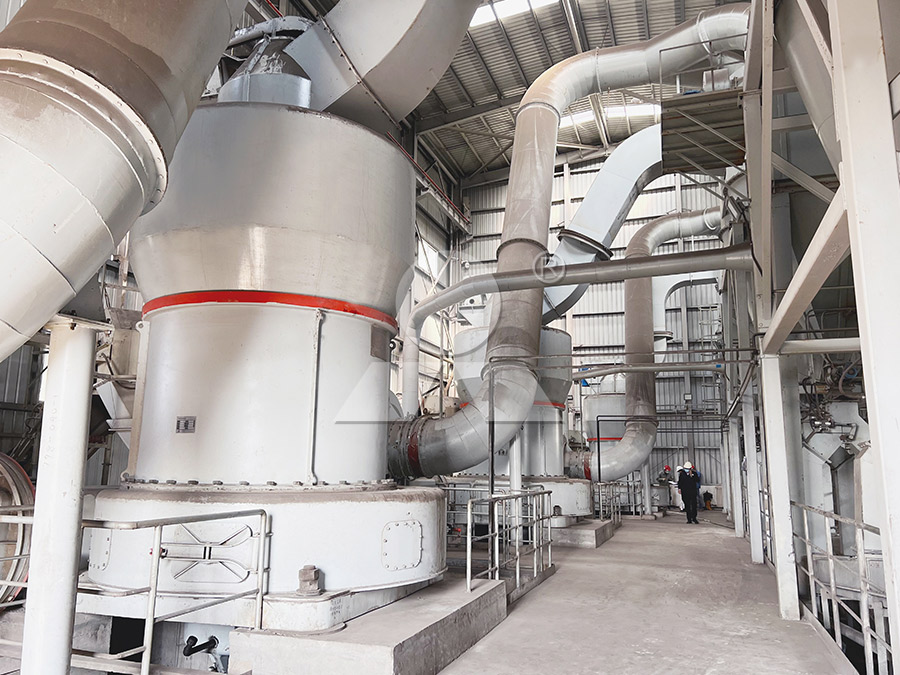
This is where the evolved designs of modern Raymond-type mills become critical. The core principle—grinding via rollers against a stationary ring—remains effective, but technological integrations have dramatically enhanced performance, especially for hard, abrasive rocks like amphibolite.
Key Considerations for Amphibolite Grinding
Selecting the right mill involves balancing several factors:
- Feed Size & Capacity: Amphibolite typically needs primary crushing to below 25mm for efficient Raymond mill feeding. Required throughput (TPH) must align with project scale.
- Wear Resistance: The abrasive quality necessitates high-chrome or alloy grinding rollers and rings to extend service life and maintain product purity.
- Energy Efficiency: Grinding hard rock is energy-intensive. Mills with optimized grinding curves and efficient classifiers significantly reduce operational costs.
- Environmental Control: Dry grinding processes must incorporate effective dust collection and noise reduction to meet environmental standards.
Advanced Solutions Beyond the Traditional
While the classic Raymond Mill (R series) offers a proven, cost-effective solution for fineness up to 325 mesh with capacities up to 5 TPH, processing amphibolite to higher fineness or on a larger scale often calls for more advanced technology. For producers aiming at the ultra-fine powder market or requiring superior efficiency, our engineered solutions offer significant advantages.
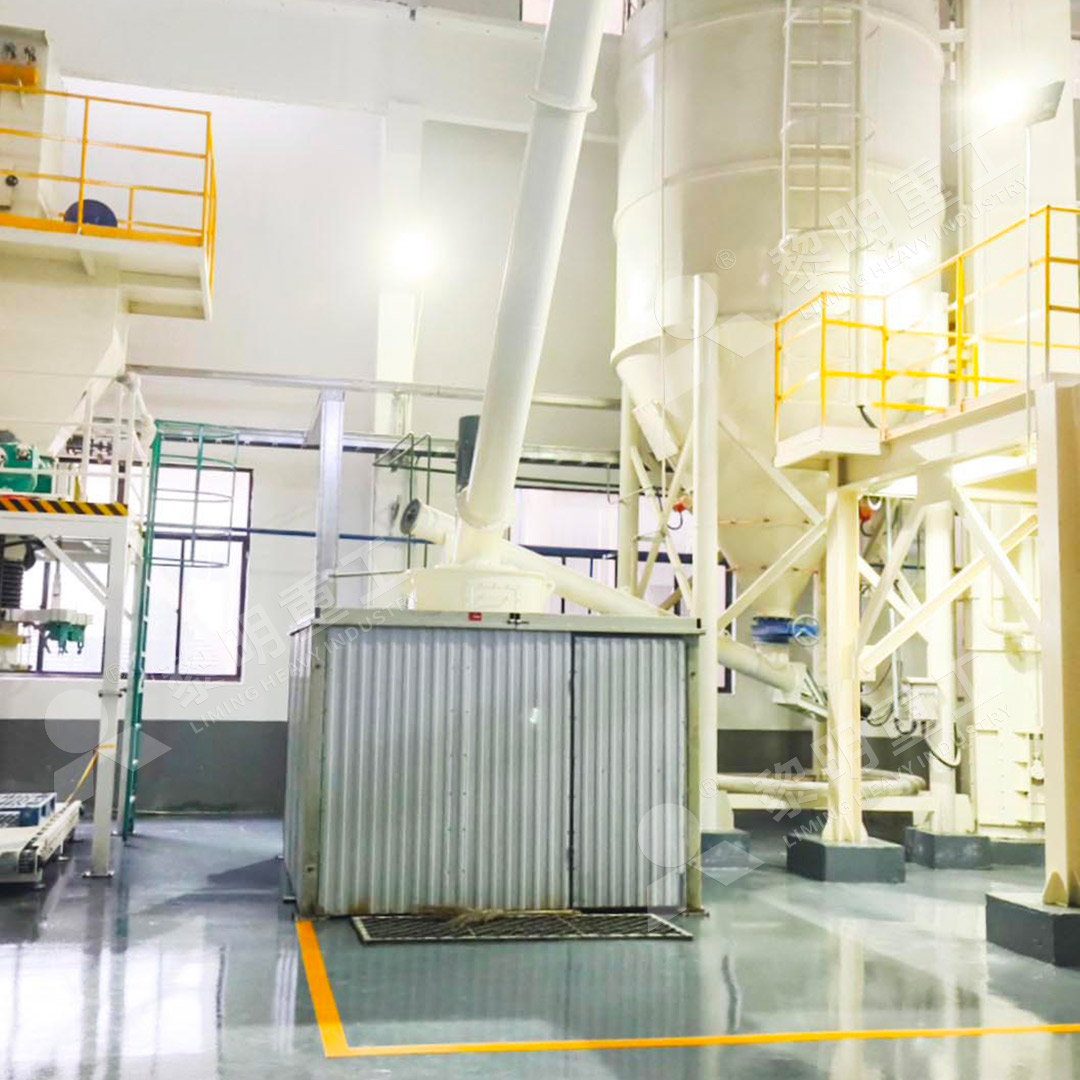
For ultra-fine processing of amphibolite, our MW Ultrafine Grinding Mill stands out. Designed for customers needing to make ultra-fine powder, it is particularly adept at handling materials like amphibolite. With an input size of 0-20 mm and a capacity range of 0.5-25 TPH, it offers remarkable flexibility. Its cage-type powder selector, incorporating German technology, allows precise fineness adjustment between 325 and 2500 meshes, achieving a d97≤5μm in a single pass—a critical feature for high-value amphibolite products. Furthermore, its design eliminates rolling bearings and screws in the grinding chamber, virtually eliminating related failure points and enabling external lubrication for continuous 24/7 operation. The integrated efficient pulse dust collector and muffler ensure the entire production process is clean and quiet, minimizing environmental impact.
For high-capacity vertical grinding, the LUM Ultrafine Vertical Grinding Mill represents another pinnacle of design. Integrating grinding, classifying, and conveying, it is ideal for large-scale production. Its unique roller shell and lining plate grinding curve promote stable material layer formation, enabling high rates of finished product in a single pass, which enhances whiteness and cleanliness—important for filler applications. With double position-limiting technology for stability and a reversible structure for easier maintenance of heavy grinding rollers, the LUM mill ensures reliable, worry-free operation for demanding amphibolite processing lines.
Optimizing Your Grinding Line
A successful amphibolite grinding operation extends beyond the mill itself. A well-designed system includes:
- Primary Jaw Crusher: To reduce run-of-quarry rock to a manageable size for the mill feeder.
- Vibrating Feeder & Hopper: For consistent, controlled feed into the grinding chamber.
- The Core Grinding Mill: (e.g., MW or LUM Mill) configured with the appropriate motor power and wear parts.
- Pulse Dust Collector: Essential for capturing fine powder, protecting equipment, and ensuring clean air exhaust.
- Cyclone Collector & Packing System: For final product collection and bagging.
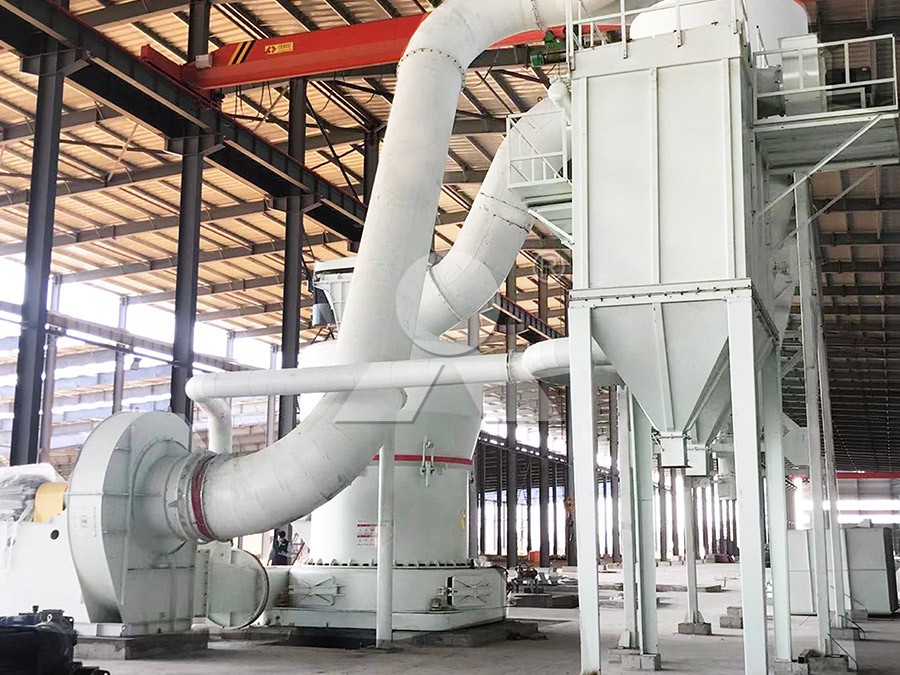
Both the MW and LUM mills are backed by our commitment to digitalized precision manufacturing and a sufficient supply of original spare parts, ensuring long-term operational efficiency and minimal downtime for your amphibolite processing business.
Conclusion
Grinding amphibolite rock efficiently and profitably requires matching the rock’s characteristics with the appropriate milling technology. Moving beyond basic designs to advanced systems like the MW Ultrafine Grinding Mill or the LUM Ultrafine Vertical Grinding Mill can unlock higher product value, lower operational costs, and more sustainable production. By focusing on precision engineering, energy efficiency, and system reliability, these modern mills provide a future-proof solution for transforming challenging metamorphic rock into high-quality industrial powders.
Frequently Asked Questions (FAQ)
- What is the typical maximum feed size for an MW Ultrafine Grinding Mill when processing amphibolite?
The MW Mill is designed for an input size of 0-20 mm. We recommend secondary crushing to ensure the amphibolite feed is consistently below 20mm for optimal grinding efficiency and to prevent blockages. - Can the LUM Ultrafine Vertical Mill handle the abrasive nature of amphibolite?
Yes. The LUM mill’s grinding rollers and table liner are made from high-performance wear-resistant materials. Its design also allows for easier maintenance and replacement of these wear parts, minimizing downtime due to abrasion. - What fineness can I achieve for amphibolite powder, and which mill is suitable?
For standard applications (80-325 mesh), a traditional Raymond Mill is sufficient. For ultra-fine powders (325-2500 mesh), the MW Ultrafine Grinding Mill with its advanced cage-type powder selector is the recommended choice, as it can precisely control fineness up to 2500 meshes. - How is dust controlled during the dry grinding of amphibolite?
Both the MW and LUM mills are equipped with high-efficiency pulse jet dust collectors as part of a closed, negative-pressure system. This effectively captures over 99.9% of the fine powder, ensuring no dust pollution and a clean working environment. - What are the main advantages of your mills over a traditional ball mill for amphibolite?
Key advantages include significantly lower energy consumption (30-50% less), a much smaller footprint, faster product quality adjustment, lower iron contamination due to minimal direct metal-to-metal contact, and integrated drying capability if the material has moisture. - Do you provide support for spare parts and maintenance?
Absolutely. We take full responsibility for every machine we produce. We provide comprehensive technical services and guarantee a sufficient supply of original, precision-manufactured spare parts to ensure worry-free, long-term operation of your grinding equipment.