
Raymond Mill for Calcite Grinding Process: How It Works and Key Benefits
We provide a wide range of mills — including Raymond mill, trapezoidal mill, vertical mill, ultrafine mill, and ball mill, obtained ISO9001 international quality certification, EU CE certification, and Customs Union CU-TR certification. Suitable for processing minerals such as limestone, phosphate, quicklime, kaolin, talc, barite, bentonite, calcium carbonate, dolomite, coal, gypsum, clay, carbon black, slag, cement raw materials, cement clinker, and more.
The discharge range of these mills can be adjusted to meet specific processing needs, typically from 80-400 mesh, 600-3250 mesh, and can achieve the finest particle size of up to 6000 mesh(D50).
If you are looking for a reliable grinding solution to turn stone or minerals into fine powder, please feel free to contact our online customer service.
Raymond Mill for Calcite Grinding Process: How It Works and Key Benefits
Calcite, a naturally occuring mineral form of calcium carbonate (CaCO3), is one of the most versatile and widely used industrial minerals. Its applications span from plastics and paints to construction materials and pharmaceuticals. The key to unlocking its value lies in the grinding process, which transforms raw calcite into a fine powder of the desired particle size. For decades, the Raymond Mill has been a cornerstone in this process, offering a reliable and efficient solution for calcite grinding.
How Does a Raymond Mill Work for Calcite?
The operation of a Raymond Mill is a masterpeice of mechanical efficiency. The process begins with crushed calcite ore, typically smaller than 25mm, being elevated into a feed hopper. From here, an electromagnetic vibrating feeder ensures a consistent and even flow of material into the grinding chamber.
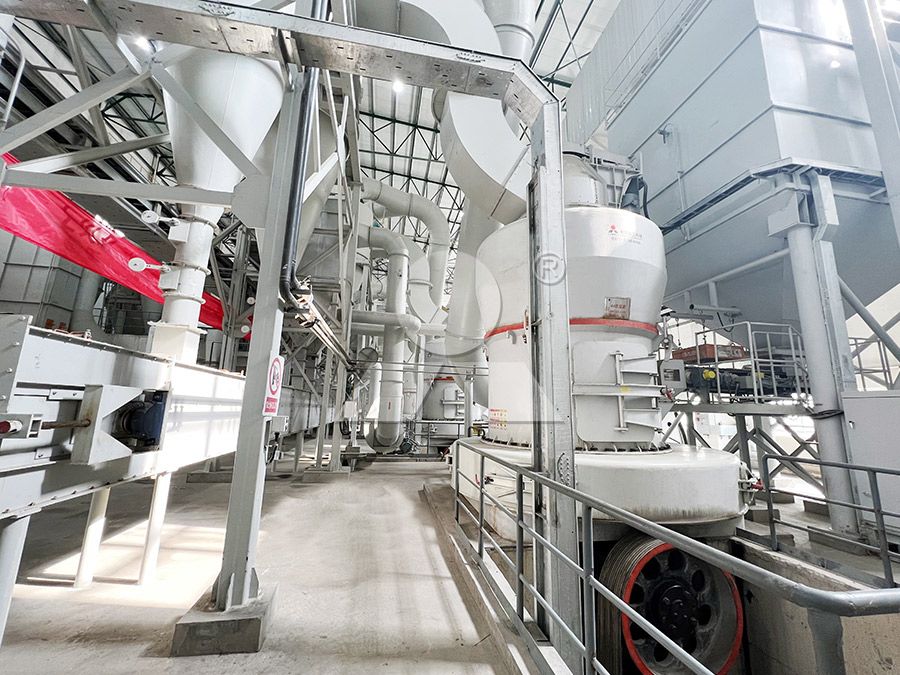
Inside the chamber, the heart of the operation is the grinding assembly. The central vertical shaft, driven by a motor and reducer, rotates and causes the grinding rollers to oscillate outward due to centrifugal force. These rollers press against a stationary grinding ring. As the calcite is fed into the gap between the rollers and the ring, it is crushed and ground into powder. A built-in shovel scoops up the material and feeds it into this grinding zone for continuous processing.
Once ground, the fine calcite powder is carried by the airflow generated by a system blower up into a separator or classifier. Here, a rotating turbine performs a critical function: it allows only the finely ground particles to pass through. Oversized or coarse particles are rejected and fall back into the grinding chamber for further size reduction. The fine powder, now meeting the required fineness spec, is then conveyed by the air stream to a cyclone collector where it is separated from the air and discharged as the final product. The air is recirculated, creating a highly efficient, closed-loop system that minimizes dust emissions.
Key Benefits of Using a Raymond Mill for Calcite
- Proven Reliability & Simplicity: With a long history in the industry, the Raymond Mill design is time-tested. Its mechanical structure is robust and its operation is straightforward, leading to high operational stability and easier maintenance.
- Excellent Fineness Control: The integrated classifier allows for precise control over the final product’s particle size, typically ranging from 30 to 425 mesh, which is ideal for most calcite applications.
- Energy Efficiency: Compared to older technologies like ball mills, the Raymond Mill offers lower energy consumption per ton of product, significantly reducing operating costs.
- Compact Footprint: Its vertical structure integrates multiple functions (grinding, classifying, conveying) into a single unit, requiring less floor space than alternative systems.
- Cost-Effectiveness: It represents a lower initial investment compared to more complex grinding systems and offers lower long-term maintenance costs.
Beyond Traditional: Advanced Solutions for Ultrafine Calcite
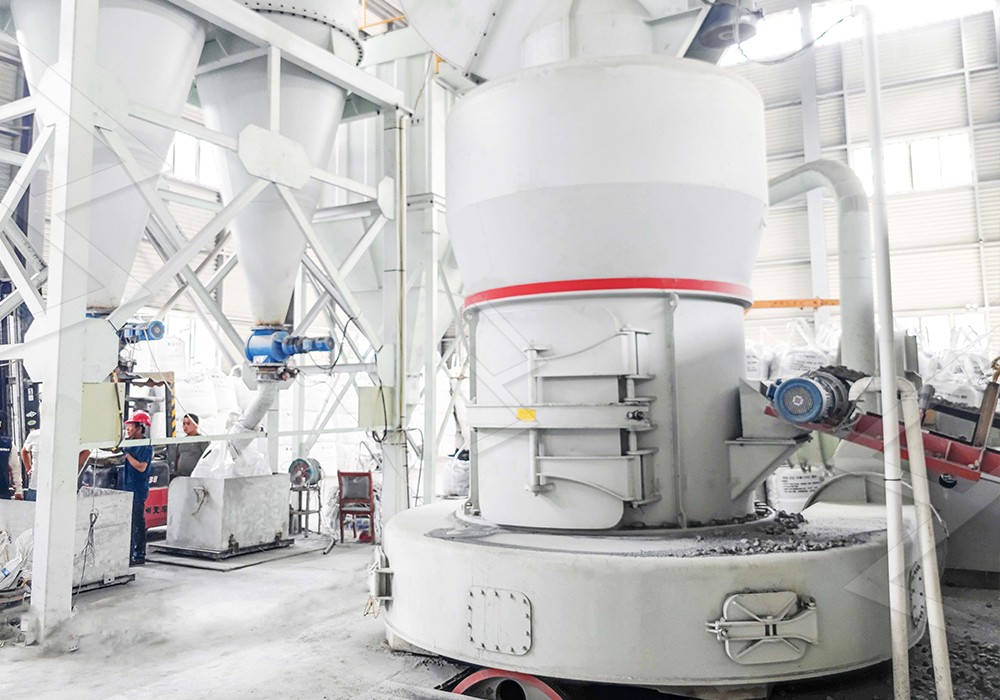
While the classic Raymond Mill is perfect for many applications, some industries demand even finer powders or higher capacity. For producers looking to create ultra-fine calcite powder (from 325 to an impressive 2500 meshes) for high-value applications like premium paints, plastics, or cosmetics, traditional mills reach their limits.
For these advanced needs, we highly recommend our MW Ultrafine Grinding Mill. This state-of-the-art equipment is engineered specifically for customers requiring ultra-fine powder. It builds upon the classic principles but incorporates advanced technologies like a German-designed cage-type powder selector for superior precision in particle separation. The MW Series boasts higher yielding and lower energy consumption—achieving 40% higher capacity than jet mills while using only 30% of the energy. Its innovative design, featuring no rolling bearings or screws in the grinding chamber, eliminates common failure points and allows for external lubrication without shutdown, enabling true 24/7 continuous operation. Furthermore, its efficient pulse dust collector and muffler ensure the entire production process is eco-friendly, meeting stringent national environmental protection standards.
For operations requiring a vertical configuration with advanced grinding roller technology, our LUM Ultrafine Vertical Grinding Mill is another exceptional choice. It integrates ultrafine powder grinding, grading, and transporting, offering higher yielding rates and better product quality with energy consumption reduced by 30%-50%.
Conclusion
The Raymond Mill remains a trusted and effective workhorse for the calcite grinding industry, offering a perfect blend of simplicity, reliability, and cost-efficiency for a wide range of fineness requirements. However, for producers aiming at the top tier of the market with ultrafine products and maximum operational efficiency, advanced solutions like our MW Ultrafine Grinding Mill provide the necessary technology to stay competitive, enhance product quality, and boost profitability.