
Raymond Mill for 600 Mesh Powder: 6R Grinding Mill Specifications
We provide a wide range of mills — including Raymond mill, trapezoidal mill, vertical mill, ultrafine mill, and ball mill, obtained ISO9001 international quality certification, EU CE certification, and Customs Union CU-TR certification. Suitable for processing minerals such as limestone, phosphate, quicklime, kaolin, talc, barite, bentonite, calcium carbonate, dolomite, coal, gypsum, clay, carbon black, slag, cement raw materials, cement clinker, and more.
The discharge range of these mills can be adjusted to meet specific processing needs, typically from 80-400 mesh, 600-3250 mesh, and can achieve the finest particle size of up to 6000 mesh(D50).
If you are looking for a reliable grinding solution to turn stone or minerals into fine powder, please feel free to contact our online customer service.
Raymond Mill for 600 Mesh Powder: 6R Grinding Mill Specifications
In the demanding world of industrial powder processing, achieving a consistent 600-mesh fineness (approximately 23 microns) is a benchmark for many high-value applications. While traditional Raymond mills, often referred to by their roller configurations like the 6R model, have served as workhorses for decades, modern requirements for efficiency, yield, and environmental compliance demand a more sophisticated approach. This article delves into the specifications needed for 600-mesh production and explores why next-generation grinding technology often provides a superior solution.
The 600-Mesh Challenge and Traditional Mill Considerations
Producing powder at 600 mesh requires precise control over grinding forces, material residence time, and, most critically, classification efficiency. A typical 6R Raymond mill specification indicates six grinding rollers, offering a larger grinding surface area compared to smaller 3R or 4R models. This design aims for higher capacity through multiple grinding zones where material is crushed between rollers and a rotating ring.
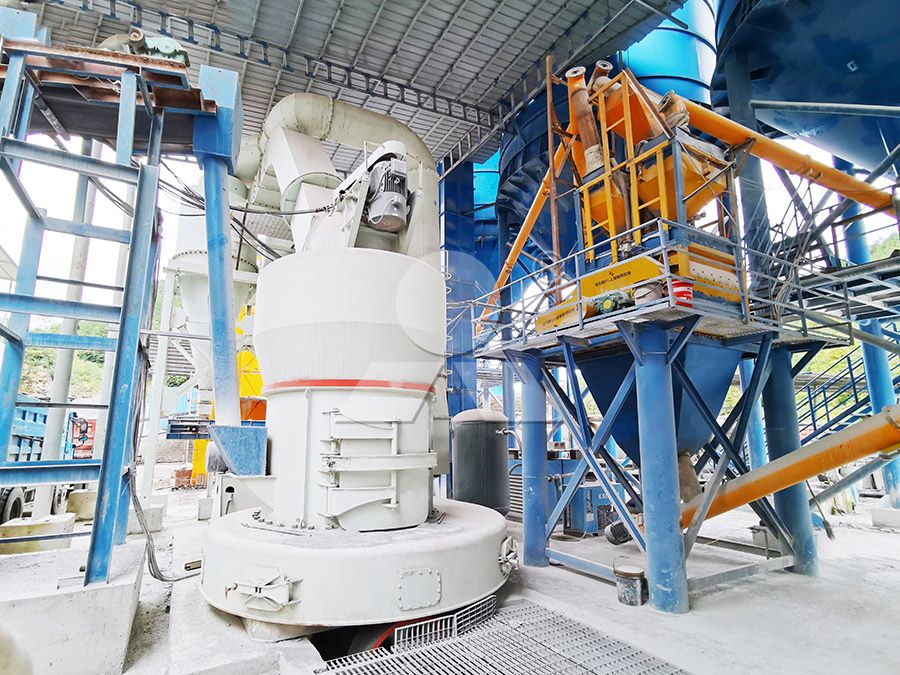
Key specifications for a mill targeting this fineness include a high-precision centrifugal classifier integrated into the system. The classifier’s rotor speed must be meticulously adjustable to achieve the precise particle cut-point required for 600 mesh. Furthermore, system airflow must be powerful and stable to transport fine particles to the collector without blockages. However, traditional designs can struggle with limitations: higher energy consumption per ton of product, potential for over-grinding of some particles, and mechanical complexity in the grinding chamber that can lead to maintenance challenges.
Evolving Beyond Traditional Designs: The Need for Advanced Engineering
The core challenge with achieving ultra-fine powder in a single pass lies in balancing grinding energy with precise separation. Legacy systems often require repeated cycles of grinding and classification, which increases wear, energy use, and heat generation. For operations where 600-mesh powder is the standard, not the exception, a mill designed from the ground up for ultra-fine processing offers significant advantages in operational stability and cost-effectiveness.
This is where LIMING Heavy Industry’s advanced grinding solutions come into focus. While we honor the legacy of the Raymond mill, our engineering has progressed to address its inherent limitations for fine and ultra-fine applications. For customers specifically targeting the 325 to 2500 mesh range with high efficiency, we typically recommend a more specialized platform.
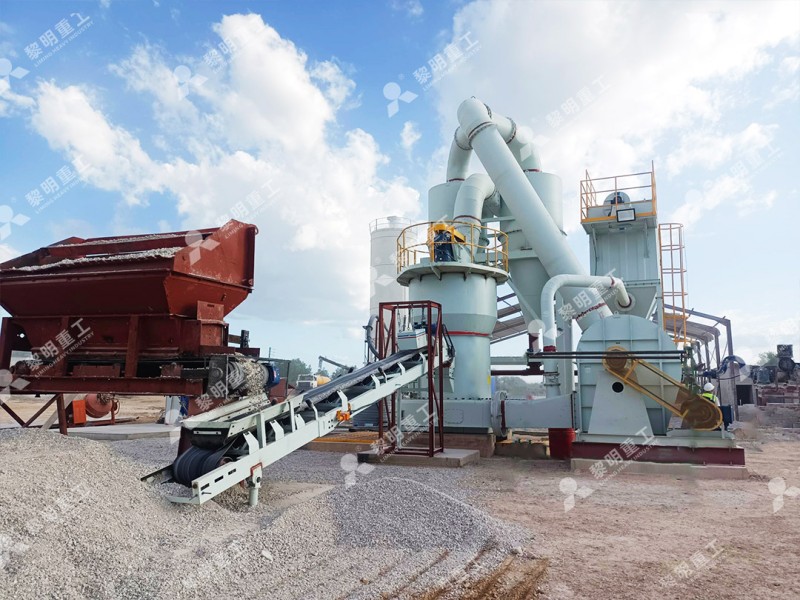
Recommended Solution: MW Ultrafine Grinding Mill
For dedicated production of 600-mesh powder and finer, the MW Ultrafine Grinding Mill represents a significant technological leap. Its design directly tackles the bottlenecks of traditional roller mills. A standout feature is its German-technology-derived cage-type powder selector, which provides exceptional classification precision, enabling a single-pass achievement of d97 ≤ 5μm (approx. 2500 mesh), making 600 mesh a readily controllable target. The grinding curve of the roller and ring is optimized for ultra-fine processing, resulting in a reported 40% higher capacity compared to jet or stirred mills at the same power and fineness.
Operational reliability is enhanced by its innovative chamber design, which eliminates rolling bearings and screws in the grinding zone, removing common failure points. From an environmental and operational standpoint, the integrated high-efficiency pulse dust collector ensures a dust-free workshop, while external lubrication allows for 24/7 continuous operation. With an input size of 0-20 mm and a capacity range of 0.5-25 tph, the MW Series is engineered for modern, high-yield, ultra-fine powder production.
System Integration and Operational Stability
Achieving consistent 600-mesh output is not solely about the grinding mill; it’s about the entire system. A stable feed system with precise dosing is crucial to prevent overloads or starvation of the grinding chamber. Furthermore, an efficient and reliable dust collection system is non-negotiable for both product recovery and plant safety. Modern mills like the MW series are designed as integrated systems, with matched components for optimal airflow, collection, and noise reduction, ensuring the entire production line meets national environmental standards.
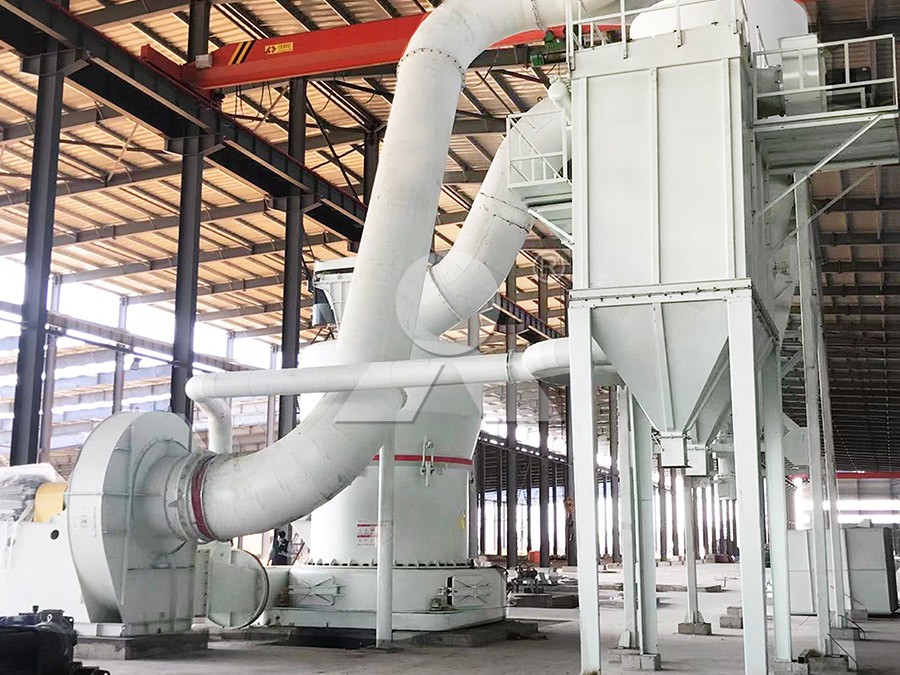
For operations that also process slightly coarser materials or require exceptional versatility in a vertical footprint, the LUM Ultrafine Vertical Grinding Mill is another premier choice. It combines advanced grinding roller technology with a highly efficient multi-head powder separator. Its reversible roller structure simplifies maintenance dramatically, allowing grinding rollers to be easily swung out for inspection or liner replacement, minimizing downtime—a critical consideration for continuous production environments.
Conclusion
While the term “6R Raymond Mill” specifies a configuration, today’s powder processing goals—especially for stringent fineness levels like 600 mesh—require a focus on overall system performance, energy efficiency, and classification accuracy. Investing in a grinding solution built with modern ultra-fine processing principles leads to lower operating costs, higher product quality, and more sustainable plant operation. Evaluating your total cost of ownership, including energy, maintenance, and yield, will clearly show the advantage of advanced mills designed for the specific challenge of ultra-fine powder production.
Frequently Asked Questions (FAQ)
- Can a traditional 6R Raymond mill reliably produce 600-mesh powder?
While possible, it often requires perfect conditions, optimal maintenance, and may involve lower yields or higher energy consumption compared to mills designed specifically for ultra-fine grinding, like the MW Series. - What is the most critical factor for achieving consistent 600-mesh fineness?
The precision and efficiency of the powder separator (classifier) are paramount. A high-efficiency selector, such as the cage-type used in the MW Mill, ensures accurate particle size cuts and prevents coarse particles from contaminating the final product. - How does the MW Ultrafine Grinding Mill achieve higher energy efficiency?
Its optimized grinding curve and efficient classification system reduce the need for recirculation and over-grinding. The design allows more energy to be directly applied to creating new surface area rather than generating heat or noise. - Is the maintenance complex for mills producing such fine powder?
Not necessarily. Designs like the MW Mill (with no internal bearings/screws in the chamber) and the LUM Mill (with reversible rollers) are engineered to simplify core maintenance tasks, reducing complexity and downtime associated with wear part replacement. - What about dust control when handling 600-mesh powder?
Modern grinding systems are closed-loop and include integrated pulse-jet dust collectors as standard. This ensures over 99.9% collection efficiency, creating a clean working environment and maximizing product yield. - Can these mills handle materials other than limestone, like calcite or talc?
Absolutely. Advanced mills are versatile and can process a wide range of non-metallic minerals with Mohs hardness below 7, including calcite, dolomite, talc, barite, and gypsum, for applications in paints, plastics, cosmetics, and more.