
Raymond Mill for 325 Mesh Fine Powder Grinding
We provide a wide range of mills — including Raymond mill, trapezoidal mill, vertical mill, ultrafine mill, and ball mill, obtained ISO9001 international quality certification, EU CE certification, and Customs Union CU-TR certification. Suitable for processing minerals such as limestone, phosphate, quicklime, kaolin, talc, barite, bentonite, calcium carbonate, dolomite, coal, gypsum, clay, carbon black, slag, cement raw materials, cement clinker, and more.
The discharge range of these mills can be adjusted to meet specific processing needs, typically from 80-400 mesh, 600-3250 mesh, and can achieve the finest particle size of up to 6000 mesh(D50).
If you are looking for a reliable grinding solution to turn stone or minerals into fine powder, please feel free to contact our online customer service.
Raymond Mill for 325 Mesh Fine Powder Grinding
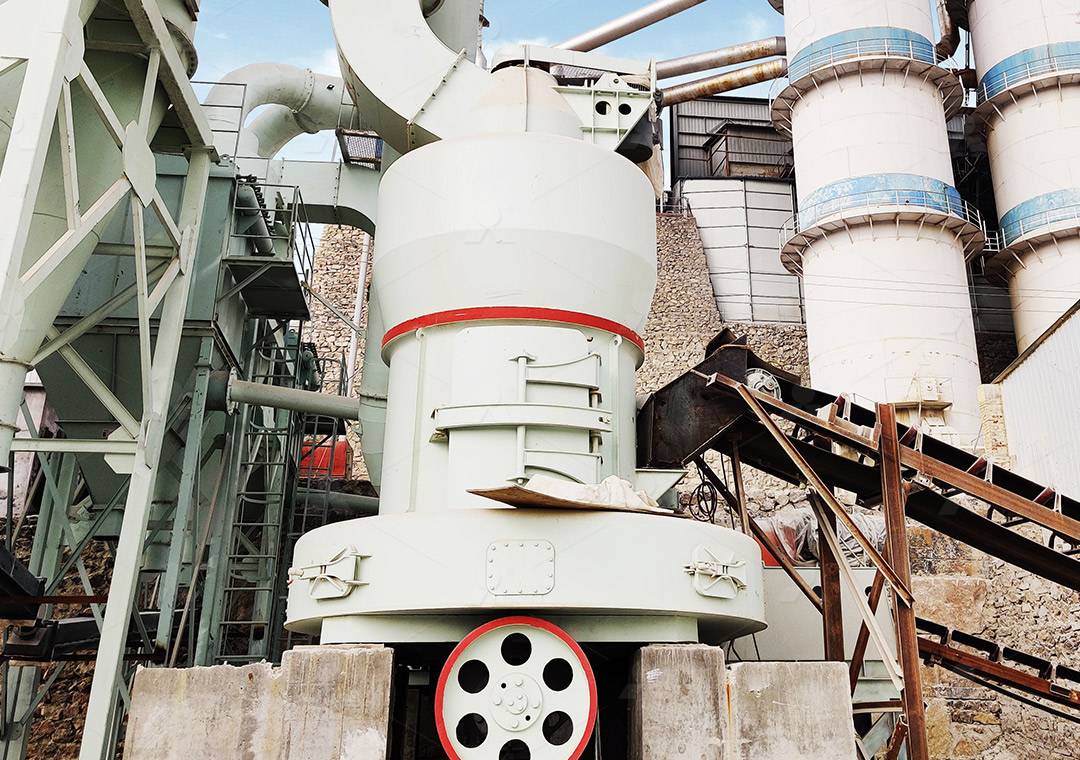
In the world of industrial powder processing, achieving consistent 325 mesh (approximately 45 micron) fineness represents a critical benchmark for numerous applications. This specific particle size range is essential for industries requiring uniform dispersion, enhanced reactivity, or superior product quality in their final goods. While several grinding technologies exist, the evolution of Raymond Mill technology continues to make it a compelling choice for this precise application.
The Significance of 325 Mesh in Modern Industry
The 325 mesh specification isn’t arbitrary; it represents a sweet spot in powder technology. Particles at this fineness exhibit optimal characteristics for numerous industrial processes. In the paint and coatings industry, 325 mesh pigments ensure smooth application and consistent color distribution. For construction materials like gypsum and limestone, this fineness guarantees proper curing and strength development. The pharmaceutical and food additive sectors rely on this particle size for uniform blending and predictable dissolution rates.
Traditional grinding approaches often struggle with the efficiency and consistency required for 325 mesh production. Ball mills, while capable, typically consume excessive energy and generate broad particle size distributions. Jet mills can achieve the fineness but at prohibitive operational costs for many applications. This is where advanced Raymond Mill technology demonstrates its distinct advantages.
Technological Evolution in Fine Powder Grinding
Modern Raymond Mills have evolved significantly from their predecessors. Contemporary designs incorporate precision engineering that addresses the specific challenges of 325 mesh production. The fundamental grinding mechanism—where material is crushed between grinding rollers and a stationary ring—remains effective, but enhancements in roller geometry, grinding curve optimization, and air classification have dramatically improved efficiency.
One of the most critical advancements lies in powder separation technology. Achieving consistent 325 mesh output requires precise classification that returns oversize material for regrinding while allowing properly sized particles to proceed to collection. Modern cage-type separators with adjustable rotor speeds provide this precision, enabling operators to fine-tune the fineness without shutdowns or mechanical adjustments.
Beyond Traditional Raymond Mill: The MW Ultrafine Grinding Mill Advantage
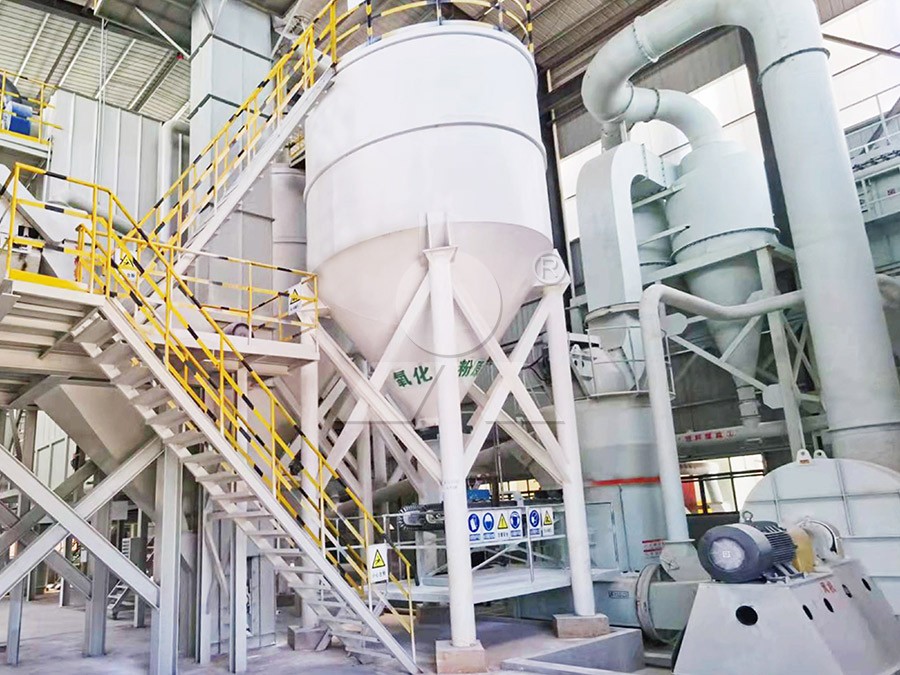
For operations requiring superior performance in the 325 mesh range and beyond, we specifically recommend our MW Ultrafine Grinding Mill. This advanced system represents the next generation of fine powder processing technology, engineered to overcome limitations of conventional mills.
The MW Series delivers exceptional value through its innovative design. With an input size capability of 0-20 mm and throughput ranging from 0.5 to 25 tph, it handles a wide variety of materials including limestone, calcite, dolomite, gypsum, barite, and talc. What truly sets it apart is its remarkable efficiency—achieving 40% higher production capacity than jet mills and stirred mills at the same fineness and power consumption, while using only 30% of the energy of jet milling systems.
For 325 mesh applications, the MW Ultrafine Grinding Mill offers unparalleled control. Its German-designed cage-type powder selector enables precise fineness adjustment between 325-2500 meshes, with the capability to achieve d97≤5μm in a single pass. The unique chamber design eliminates rolling bearings and screws from the grinding zone, preventing contamination and eliminating failure points that plague conventional designs.
Operational Excellence and Environmental Compliance
Modern powder processing must address environmental concerns without compromising productivity. The MW Ultrafine Grinding Mill integrates an efficient pulse dust collector and muffler system that maintains dust emissions well below regulatory thresholds while minimizing noise pollution. The completely sealed system operates under negative pressure, ensuring no powder escape during processing.
Operational reliability is another cornerstone of the design. The external lubrication system allows maintenance without production stoppages, supporting continuous 24-hour operation critical for industrial operations. Combined with digitally controlled manufacturing that ensures exceptional precision in all core components, the MW Series delivers worry-free operation with readily available spare parts and comprehensive technical support.

Material Versatility and Application Performance
The true test of any grinding system is its performance across diverse materials. For 325 mesh production, the MW Ultrafine Grinding Mill demonstrates consistent excellence. When processing calcium carbonate, it produces powders with exceptional brightness and low iron contamination. With gypsum, it achieves the precise crystal structure necessary for construction applications. For talc and barite, it maintains the platelet structure essential for their functionality as fillers and extenders.
This consistency stems from the mill’s optimized grinding geometry. The newly designed grinding curves of the roller and ring assembly create a more efficient grinding action that reduces overgrinding—a common problem that generates excessive fines and wastes energy. The result is a tighter particle size distribution centered precisely at the target 325 mesh specification.
Future-Proofing Your Powder Processing Operations
Investing in grinding technology requires considering both current needs and future requirements. The adjustable nature of the MW Ultrafine Grinding Mill provides exceptional flexibility. Operations can begin with 325 mesh production and easily transition to finer specifications up to 2500 meshes as market demands evolve. This scalability protects capital investment while providing access to premium powder markets.
As industries continue toward more specialized and higher-value applications, the capability to produce precisely controlled 325 mesh powders becomes increasingly strategic. With its combination of precision, efficiency, and reliability, the MW Ultrafine Grinding Mill represents not just an equipment purchase, but a long-term competitive advantage for forward-thinking operations.
Frequently Asked Questions
What is the typical energy consumption for producing 325 mesh powder with the MW Ultrafine Grinding Mill?
The MW Series achieves remarkable energy efficiency, consuming approximately 30% of the energy required by jet mills for equivalent output. Specific consumption varies by material hardness and moisture content, but typically ranges between 25-45 kWh per ton for most minerals at 325 mesh fineness.
Can the MW Grinding Mill handle materials with moisture content?
While the MW Series is primarily designed for dry grinding, it can integrate with pre-drying systems for materials with moderate moisture content. For materials with high moisture, we recommend preliminary drying to achieve optimal grinding efficiency and prevent material buildup in the grinding chamber.
How does the fineness adjustment mechanism work?
Fineness is controlled through the integrated cage-type powder selector, which utilizes adjustable rotor speed to precisely determine the cut point. Increasing rotor speed yields finer product, while decreasing speed produces coarser material. This adjustment can be made during operation without shutdown.
What maintenance intervals are required for continuous operation?
The MW Ultrafine Grinding Mill is designed for minimal maintenance. Grinding rolls and rings typically require inspection every 800-1,200 operating hours, with replacement needed after 2,000-5,000 hours depending on material abrasiveness. The external lubrication system allows routine maintenance without production interruption.
How does the MW Series compare to traditional Raymond Mills for 325 mesh production?
The MW Series represents a significant advancement over traditional Raymond Mills, offering 40% higher capacity, 30-50% lower energy consumption, and more precise fineness control. The elimination of bearings and screws in the grinding chamber dramatically improves reliability and reduces contamination risk.
What particle size distribution can be expected at 325 mesh setting?
The MW Series produces exceptionally tight particle size distributions. When set for 325 mesh, typically 95% of particles will pass through a 325 mesh screen (45μm), with d50 approximately 20-25μm and d97 around 40-45μm, depending on material characteristics.
Is the system suitable for abrasive materials like quartz or feldspar?
Yes, the MW Series can process abrasive materials with appropriate wear protection. Special alloy grinding components are available for highly abrasive applications, though these may require more frequent replacement intervals. We recommend consulting our technical team for specific abrasive material applications.