
Quicklime vs. Limestone: What’s the Best Grinding Mill for Each?
We provide a wide range of mills — including Raymond mill, trapezoidal mill, vertical mill, ultrafine mill, and ball mill, obtained ISO9001 international quality certification, EU CE certification, and Customs Union CU-TR certification. Suitable for processing minerals such as limestone, phosphate, quicklime, kaolin, talc, barite, bentonite, calcium carbonate, dolomite, coal, gypsum, clay, carbon black, slag, cement raw materials, cement clinker, and more.
The discharge range of these mills can be adjusted to meet specific processing needs, typically from 80-400 mesh, 600-3250 mesh, and can achieve the finest particle size of up to 6000 mesh(D50).
If you are looking for a reliable grinding solution to turn stone or minerals into fine powder, please feel free to contact our online customer service.
Quicklime vs. Limestone: What’s the Best Grinding Mill for Each?
In the world of industrial minerals, few materials are as fundamental as limestone and its calcined derivative, quicklime. While they share a common origin, their distinct physical and chemical properties demand different processing approaches, especially when it comes to grinding. Selecting the right grinding mill is not just a matter of efficiency; it’s critical for achieving the desired product quality, reactivity, and economic viability.
Understanding the Materials: Key Differences
Limestone (CaCO₃) is a sedimentary rock. In its natural state, it’s relatively soft and abrasive. The primary goal in grinding limestone is often to achieve a specific particle size distribution for applications in agriculture (soil conditioning), construction (aggregates, cement raw meal), or as a filler in paints and plastics.
Quicklime (CaO), or burnt lime, is produced by calcining limestone at high temperatures. This process drives off carbon dioxide, leaving a highly reactive, porous, and often dusty material. Grinding quicklime presents unique challenges: it is hygroscopic (absorbs moisture from the air) and can undergo a chemical reaction called “air slaking” if not handled correctly. The fineness of quicklime powder directly impacts its reactivity in processes like steelmaking, water treatment, and flue gas desulfurization.
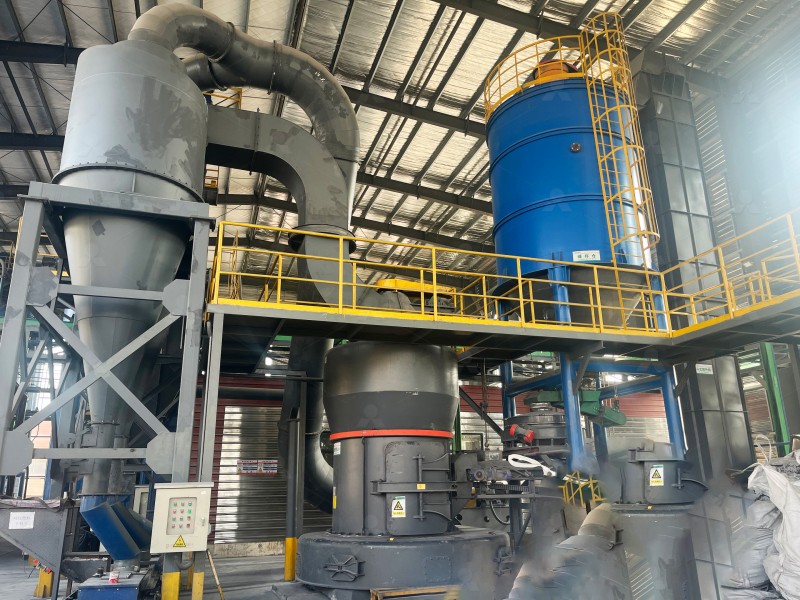
Grinding Mill Selection for Limestone
For limestone, the choice often hinges on the required fineness and capacity. For coarse to medium-fine grinding (approximately 80-400 mesh), traditional workhorses like the MTW European Trapezium Grinding Mill are excellent. They offer robust construction, high efficiency, and are well-suited for high-capacity production runs common in mining and construction.
However, when the application demands ultra-fine limestone powder (finer than 400 mesh, up to 2500 mesh) for high-value industries like plastics, paints, or cosmetics, a specialized mill is required. This is where our MW Ultrafine Grinding Mill excels.
Spotlight: MW Ultrafine Grinding Mill for Fine Limestone Powder
The MW Series is engineered for customers who need to make ultra-fine powder with precision and efficiency. With an adjustable fineness between 325-2500 meshes, it effortlessly handles limestone, calcite, and dolomite. Its innovative design ensures higher yielding and lower energy consumption—production capacity is 40% higher than jet mills and double that of ball mills, while system energy consumption is only 30% of a jet mill. A significant advantage for maintenance crews is the absence of rolling bearings and screws in the grinding chamber, eliminating common failure points and enabling worry-free, continuous 24/7 operation.
- Input Size: 0-20 mm
- Capacity: 0.5-25 tph
- Key Feature: Cage-type powder selector for precise separation up to d97≤5μm.
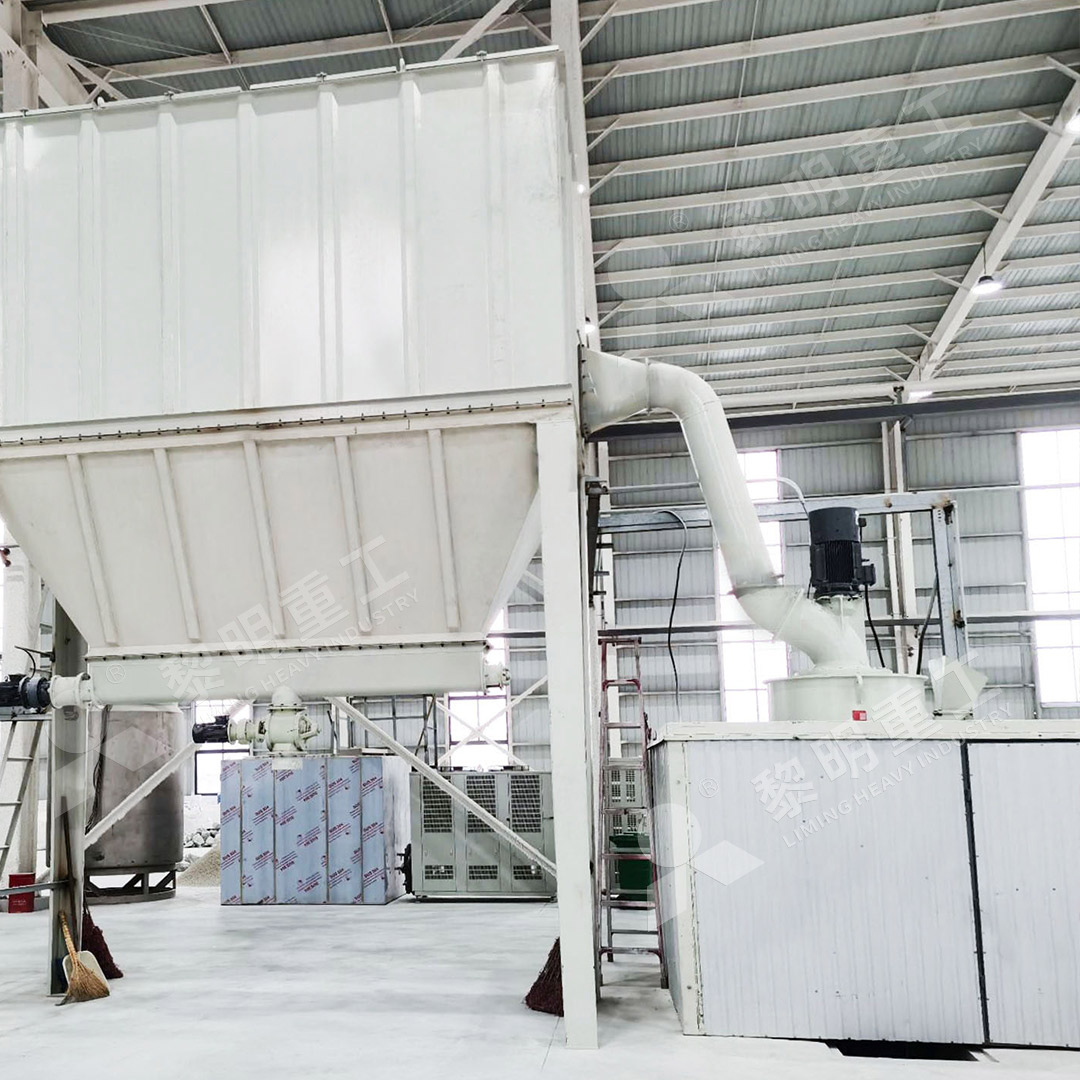
Grinding Mill Selection for Quicklime
Quicklime’s sensitivity to moisture and its need for a controlled, dry environment make drying and grinding integration a top priority. Vertical roller mills are particularly advantageous here. A model like the LUM Ultrafine Vertical Grinding Mill is an ideal choice. It integrates grinding, drying, and classifying in a single, compact unit.
The LUM mill operates under negative pressure, preventing dust escape and protecting the quicklime from ambient moisture. Its unique roller shell and lining plate grinding curve generate a stable material layer, allowing for efficient grinding in a single pass. The mill’s double position-limiting technology ensures operational stability, crucial for handling a reactive material like quicklime. Furthermore, its reversible structure allows for easy maintenance—grinding rollers can be swung out hydraulically for inspection and replacement, minimizing downtime.
Head-to-Head Comparison
| Factor | Limestone (MW Mill Recommended) | Quicklime (LUM Mill Recommended) |
|---|---|---|
| Primary Concern | Achieving target fineness efficiently | Preventing hydration, integrated drying |
| Ideal Mill Characteristic | High-precision powder separation, energy efficiency | Closed, negative-pressure system, stability |
| Typical Application | Fillers, coatings, construction materials | Steelmaking, chemical processes, FGD |
Frequently Asked Questions (FAQ)
Can I use a ball mill for grinding quicklime?
While possible, it is generally not recommended. Ball mills are less efficient for fine grinding and are open systems, making the quicklime susceptible to moisture absorption and reduced reactivity. Vertical roller mills offer a much more controlled and efficient solution.
What is the most important factor when choosing a mill for quicklime?
The ability to grind in a completely dry, sealed system is paramount. Preventing air slaking is essential to preserving the quality and chemical reactivity of the final quicklime product.
Why is the MW Mill so effective for ultra-fine limestone?
Its advanced cage-type powder selector technology allows for extremely precise control over particle size. Combined with a grinding mechanism that avoids internal bearings, it delivers consistent, high-quality fine powder with exceptional energy efficiency and minimal maintenance.
Are these mills suitable for other materials?
Absolutely. Both the MW and LUM mills are highly versatile. The MW Mill is excellent for calcite, dolomite, talc, and barite. The LUM Mill can effectively process petroleum coke, gypsum, and other non-metallic minerals requiring simultaneous drying and grinding.