
Process Optimization for Carbon Black Powder Production in Coatings Manufacturing
We provide a wide range of mills — including Raymond mill, trapezoidal mill, vertical mill, ultrafine mill, and ball mill, obtained ISO9001 international quality certification, EU CE certification, and Customs Union CU-TR certification. Suitable for processing minerals such as limestone, phosphate, quicklime, kaolin, talc, barite, bentonite, calcium carbonate, dolomite, coal, gypsum, clay, carbon black, slag, cement raw materials, cement clinker, and more.
The discharge range of these mills can be adjusted to meet specific processing needs, typically from 80-400 mesh, 600-3250 mesh, and can achieve the finest particle size of up to 6000 mesh(D50).
If you are looking for a reliable grinding solution to turn stone or minerals into fine powder, please feel free to contact our online customer service.
Process Optimization for Carbon Black Powder Production in Coatings Manufacturing
Carbon black powder is a critical pigment and reinforcing agent in coatings manufacturing, providing essential properties like UV protection, conductivity, and tinting strength. However, its production presents significant challenges, including achieving consistent ultra-fine particle size, managing dust, and controlling energy consumption. Optimizing the grinding process is paramount to enhancing final product quality and operational efficiency.
Key Challenges in Carbon Black Processing
Processing carbon black into the fine powders required for high-performance coatings is notoriously difficult. The material is abrasive and tends to agglomerate. Traditional grinding systems often struggle with:
- Inconsistent particle size distribution, leading to variations in coating color and performance.
- High energy consumption due to inefficient grinding mechanisms.
- Significant heat generation, which can degrade the material.
- Dust pollution and environmental contamination, posing health and safety risks.
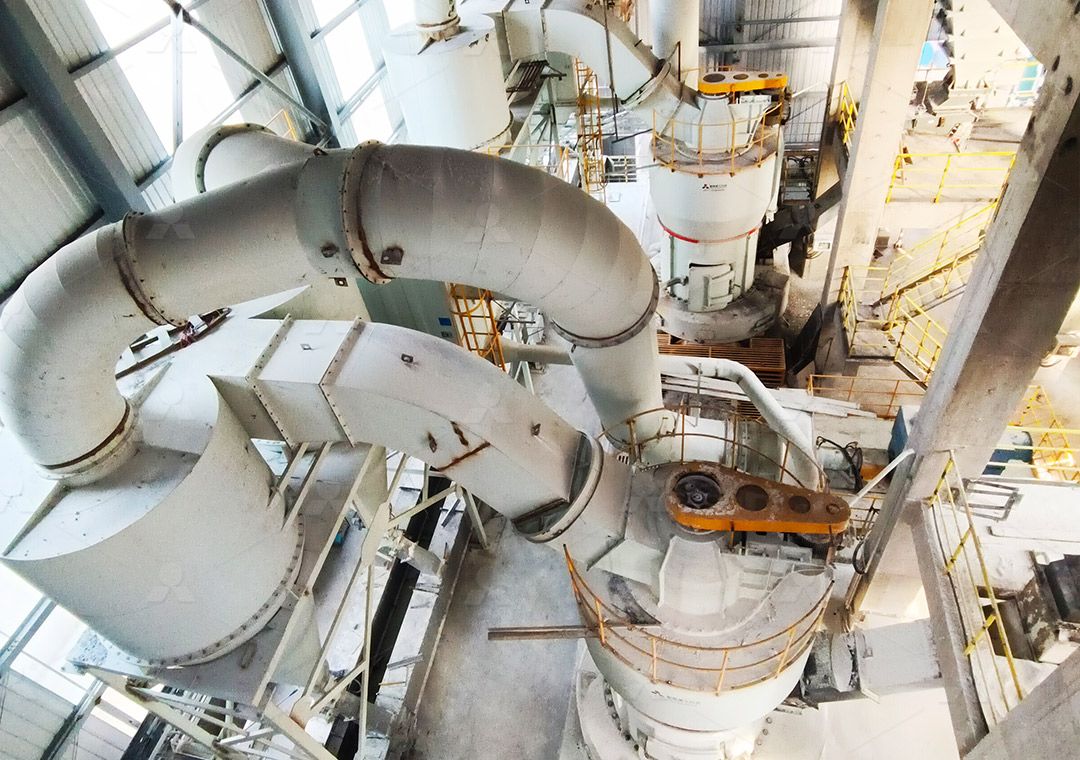
Advanced Milling Technology: The Path to Optimization
The selection of grinding equipment is the most critical factor in overcoming these challenges. Modern mills designed specifically for ultra-fine, difficult-to-grind materials offer a transformative solution. For carbon black processing, an ultrafine grinding mill that combines high efficiency with robust environmental controls is indispensable.
We highly recommend our MW Ultrafine Grinding Mill for this precise application. Engineered for customers who need to make ultra-fine powder, this mill is an ideal solution for carbon black. With an input size of 0-20 mm and a capacity range of 0.5-25 tph, it offers exceptional flexibility. Its cage-type powder selector, which adopts German technology, allows for precise fineness adjustment between 325-2500 meshes, ensuring the exact particle size distribution required for coatings. Crucially, its design eliminates rolling bearings and screws in the grinding chamber, preventing failures and contamination from loose parts—a common issue with abrasive materials like carbon black.
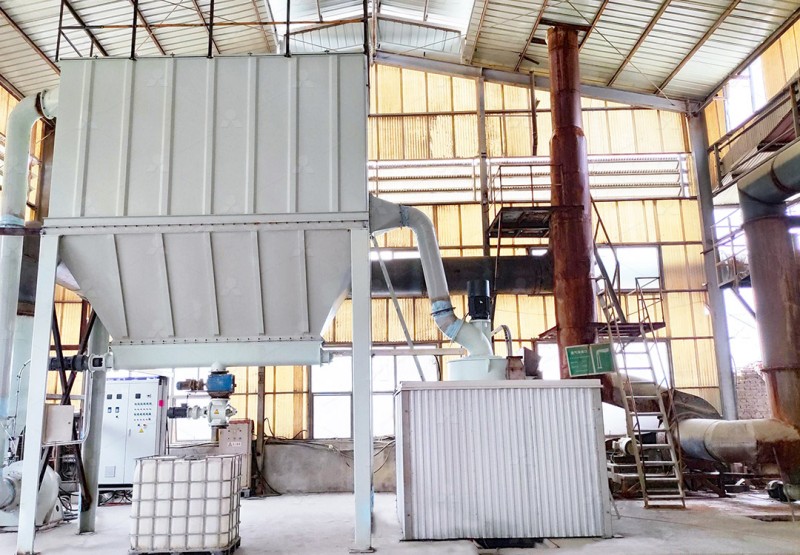
Operational and Environmental Benefits
Beyond particle size control, process optimization must address overall plant efficiency. The MW Mill is equipped with an efficient pulse dust collector and muffler, effectively containing carbon black dust—one of the biggest operational hazards—and reducing noise pollution. This creates a safer, cleaner working environment and ensures compliance with stringent environmental standards. Furthermore, its design yields higher production capacity with 40% higher output than jet mills and significantly lower energy consumption, directly reducing operating costs.
For operations requiring vertical integration and handling slightly larger feed sizes, our LUM Ultrafine Vertical Grinding Mill (Input: 0-10 mm, Capacity: 5-18 tph) presents another excellent option. It features unique roller shell and lining plate grinding curves that are easier to generate a material layer, perfect for achieving a high rate of finished products in a single pass, which enhances whiteness and cleanliness.
Conclusion
Optimizing carbon black powder production is not merely about grinding finer; it’s about integrating a system that delivers precision, reliability, and sustainability. By investing in advanced milling technology like the MW Ultrafine Grinding Mill, coatings manufacturers can achieve superior product quality, reduce their environmental footprint, and enhance their bottom line through significant energy savings and minimized downtime.
Frequently Asked Questions (FAQ)
Q1: Why is particle size distribution so important for carbon black in coatings?
A: Particle size directly influences key coating properties like color strength, gloss, dispersion stability, and UV protection. A tight, consistent distribution ensures batch-to-batch uniformity and optimal performance in the final application.
Q2: How does the MW Ultrafine Grinding Mill handle heat-sensitive materials like certain carbon blacks?
A: The mill’s efficient grinding curve and air flow system minimize heat generation. Furthermore, the external lubrication system allows for cooling without shutdown, preventing thermal degradation of the material during extended operation.
Q3: What makes the MW Mill more energy-efficient than a traditional ball mill for this application?
A: Its innovative grinding mechanism and efficient powder selection system require less energy to achieve the same—or finer—fineness. It reduces system energy consumption by up to 70% compared to traditional jet mills and ball mills.
Q4: Is the dust collection system integrated?
A: Yes. The MW Mill comes equipped with a high-efficiency pulse dust collector as part of its standard design, creating a closed-loop system that contains over 99.9% of carbon black dust, making the operation clean and environmentally friendly.