
Price of 1200 Mesh Raymond Mill with 20 Tons Per Hour Capacity
We provide a wide range of mills — including Raymond mill, trapezoidal mill, vertical mill, ultrafine mill, and ball mill, obtained ISO9001 international quality certification, EU CE certification, and Customs Union CU-TR certification. Suitable for processing minerals such as limestone, phosphate, quicklime, kaolin, talc, barite, bentonite, calcium carbonate, dolomite, coal, gypsum, clay, carbon black, slag, cement raw materials, cement clinker, and more.
The discharge range of these mills can be adjusted to meet specific processing needs, typically from 80-400 mesh, 600-3250 mesh, and can achieve the finest particle size of up to 6000 mesh(D50).
If you are looking for a reliable grinding solution to turn stone or minerals into fine powder, please feel free to contact our online customer service.
Navigating the Market for High-Capacity Fine Grinding Solutions
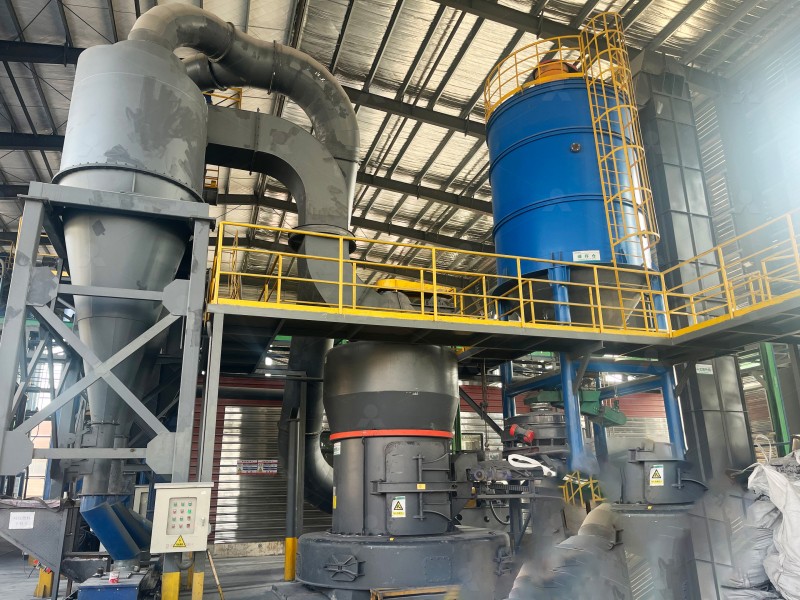
For operations requiring consistent production of ultra-fine powders at a significant scale, the quest for the right equipment is paramount. A common inquiry we receive centers on the price and specifications for a Raymond Mill capable of producing 1200 mesh powder at 20 tons per hour (tph). This is a sophisticated requirement that pushes the boundaries of traditional pendulum-style grinding systems. While the classic Raymond Mill is a workhorse for many applications, its typical capacity range of 0.6-5 tph makes achieving a consistent 20 tph output at 1200 mesh a significant engineering challenge, often requiring multiple units or leading to compromises in fineness consistency and energy efficiency.
The Evolution Beyond Traditional Raymond Technology
The grinding industry has evolved considerably since the first-generation Raymond Mill. Today’s demands for higher yield, superior particle size distribution, and lower operational costs have driven the development of advanced grinding technologies. When targeting 1200 mesh (approximately 10-12 microns) at 20 tph, factors such as grinding efficiency, classifier precision, system stability, and energy consumption per ton become critical price determinants. The initial capital outlay is just one component; the total cost of ownership, including power draw, wear part replacement, and maintenance downtime, defines the true value of the investment.
Modern mills achieve high fineness and capacity through optimized grinding curves, high-efficiency static or dynamic classifiers, and intelligent system design that minimizes energy loss. For instance, a mill utilizing a multi-head cage-type powder selector can achieve precise cuts at high throughputs, ensuring the d97≤5μm specification required for 1200 mesh is consistently met without over-grinding, which wastes energy.
Introducing a Superior Alternative: The MW Ultrafine Grinding Mill
For projects demanding 20 tph at 1200 mesh, we strongly recommend evaluating our MW Ultrafine Grinding Mill as a technologically advanced and often more economical solution. Engineered for customers who need to make ultra-fine powder efficiently, the MW series is designed to overcome the limitations of older mill designs.
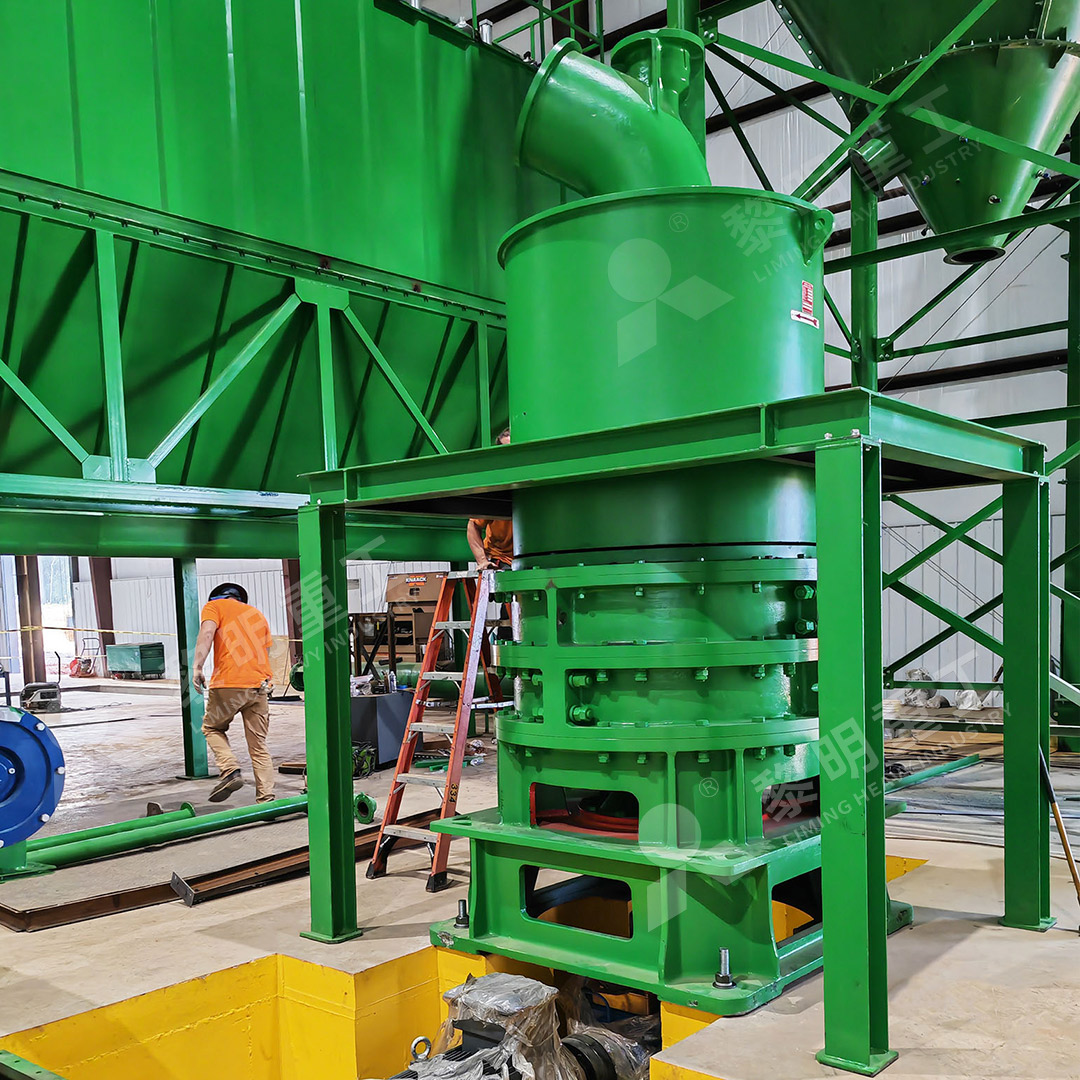
Here’s why the MW Mill is a compelling choice for your 20 tph, 1200 mesh requirement:
- Higher Yielding, Lower Energy Consumption: Its newly designed grinding curves enhance efficiency dramatically. Compared to jet mills or stirred mills at the same fineness and power, its capacity can be up to 40% higher, with system energy consumption as low as 30% of a jet mill. This directly addresses the core challenge of achieving high capacity with low operational cost.
- Precisely Adjustable Fineness (325-2500 mesh): Equipped with a German-technology cage-type powder selector, it allows exact control over product fineness. You can reliably achieve and maintain 1200 mesh, with a high screening rate of d97≤5μm in a single pass.
- Robust and Low-Maintenance Design: A key feature is the absence of rolling bearings and screws in the grinding chamber. This eliminates common failure points, prevents machine damage from loose screws, and allows for external lubrication without shutdown, supporting continuous 24/7 operation crucial for high-volume production.
- Eco-Friendly Operation: The integrated efficient pulse dust collector and silencer ensure the entire milling system meets stringent environmental standards, with no dust pollution and reduced noise—a vital consideration for modern plants.
Another Viable Option: The LUM Ultrafine Vertical Grinding Mill
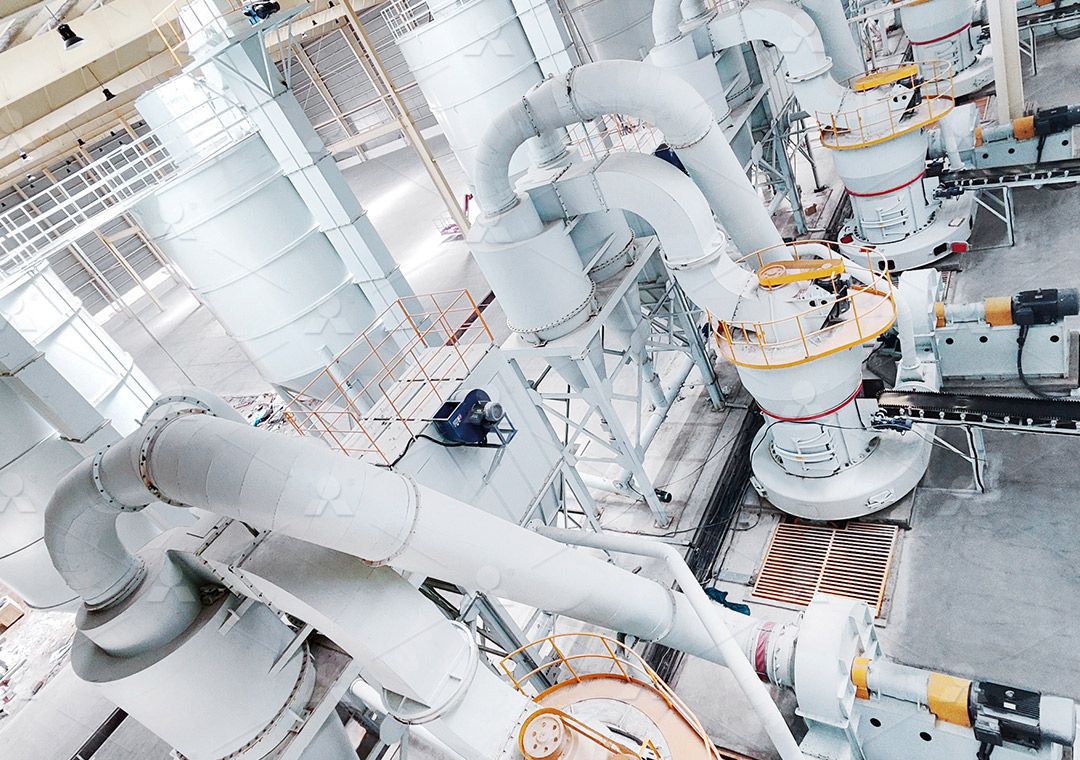
For certain material characteristics and plant layouts, our LUM Ultrafine Vertical Grinding Mill presents another excellent option. Integrating ultrafine grinding, grading, and transporting, it is renowned for its energy-saving profile and operational stability.
- Energy-Saving Multi-Head Powder Separating Technology: Its PLC-controlled system reduces energy consumption by 30%-50% compared to common grinding mills while ensuring high-precision particle size cuts.
- Stable and Easy Maintenance: Featuring double position-limiting technology to prevent destructive impacts and a reversible structure that allows grinding rollers to be easily moved out for maintenance, it minimizes unplanned downtime.
Factors Influencing the Final Investment
The price for a system capable of 20 tph at 1200 mesh is not a single figure but a project-specific calculation. Key variables include:
- Material Properties: Hardness, moisture content, and abrasiveness of the raw material (e.g., limestone, calcite, talc) directly affect mill sizing and wear part selection.
- Complete System Scope: Price can include the main mill, feeder, classifier, pulse dust collector, silencer, piping, electrical control system, and installation services.
- Level of Automation: Digital control systems for monitoring pressure, temperature, and fineness add value and cost.
- After-Sales Support: The availability of original spare parts and technical service, a cornerstone of our offering, ensures long-term, worry-free operation and protects your investment.
In conclusion, while a traditional Raymond Mill configuration may struggle to meet the 20 tph/1200 mesh benchmark efficiently, modern solutions like the MW Ultrafine Grinding Mill or the LUM Ultrafine Vertical Grinding Mill are engineered to deliver this performance with superior energy efficiency and reliability. We recommend a detailed consultation with our engineering team to analyze your specific material and provide a tailored solution and quotation that ensures your productivity and profitability goals are met.
Frequently Asked Questions (FAQs)
- Can a traditional Raymond Mill truly achieve 20 tph at 1200 mesh?
Typically, no. Standard Raymond Mills are optimized for lower capacities (usually under 5 tph). Achieving 20 tph at such high fineness would require multiple units in parallel, leading to high space, energy, and maintenance costs. Advanced mills like the MW series are designed for this high-capacity, fine-grinding niche. - What is the main advantage of the ‘no rolling bearing in the chamber’ design in the MW Mill?
This design eliminates a critical failure point. Bearings in the harsh grinding environment are prone to damage from dust and heat. Their removal enhances reliability, allows for continuous 24-hour operation, and significantly reduces maintenance costs and downtime. - How is the 1200 mesh fineness precisely controlled in your recommended mills?
Both the MW and LUM mills employ advanced, multi-head cage-type powder selectors (classifiers). These allow for precise adjustment of the cut point. The rotating speed of the classifier rotor can be finely tuned to ensure only particles below the target size (e.g., d97 ≤ 5μm for 1200 mesh) leave the grinding chamber, guaranteeing consistent product quality. - Besides the mill itself, what ancillary equipment is crucial for this application?
A complete system includes a high-efficiency pulse jet dust collector (like the one integrated into the MW Mill), a reliable feeder, a cyclone or bag filter for product collection, an air blower, sound dampeners, and a comprehensive electrical control cabinet for system automation and monitoring. - How does the energy consumption compare between these modern mills and a hypothetical multi-unit Raymond Mill setup?
The energy savings are substantial. Technologies like optimized grinding curves and high-efficiency classifiers in the MW and LUM mills can reduce specific energy consumption by 30-50% compared to older technologies. This translates to dramatically lower operating costs over the life of the equipment. - What materials are best suited for the MW Ultrafine Grinding Mill for this capacity?
It is ideal for non-metallic minerals with Mohs hardness below 7, such as limestone, calcite, dolomite, kaolin, talc, barite, and gypsum. Its design efficiently handles materials to produce powders between 325 and 2500 mesh for industries like chemicals, paints, and plastics.