
Parts of a Milling Machine: A Comprehensive Guide to Their Functions
We provide a wide range of mills — including Raymond mill, trapezoidal mill, vertical mill, ultrafine mill, and ball mill, obtained ISO9001 international quality certification, EU CE certification, and Customs Union CU-TR certification. Suitable for processing minerals such as limestone, phosphate, quicklime, kaolin, talc, barite, bentonite, calcium carbonate, dolomite, coal, gypsum, clay, carbon black, slag, cement raw materials, cement clinker, and more.
The discharge range of these mills can be adjusted to meet specific processing needs, typically from 80-400 mesh, 600-3250 mesh, and can achieve the finest particle size of up to 6000 mesh(D50).
If you are looking for a reliable grinding solution to turn stone or minerals into fine powder, please feel free to contact our online customer service.
Parts of a Milling Machine: A Comprehensive Guide to Their Functions
Milling machines are the workhorses of the manufacturing and mineral processing industries. Understanding their key components is essential for operators, maintenance personel, and anyone involved in selecting the right equipment for a specific application. A well-maintained mill, built with precision parts, is the difference between high-quality, efficient production and constant downtime. Let’s break down the critical parts and their functions.
The Core Components: What Makes a Mill Tick
While designs vary between vertical, horizontal, roller, and ball mills, several core components are universal.
1. The Base and Column
The base is the foundation of the entire machine. It’s a heavy, rigid casting that supports all other components and absorbs vibrations, ensuring stability during operation. Mounted on the base is the column, a vertical housing that contains the drive motor and often the gearing system. It provides the guiding ways for the knee or grinding head to move up and down.
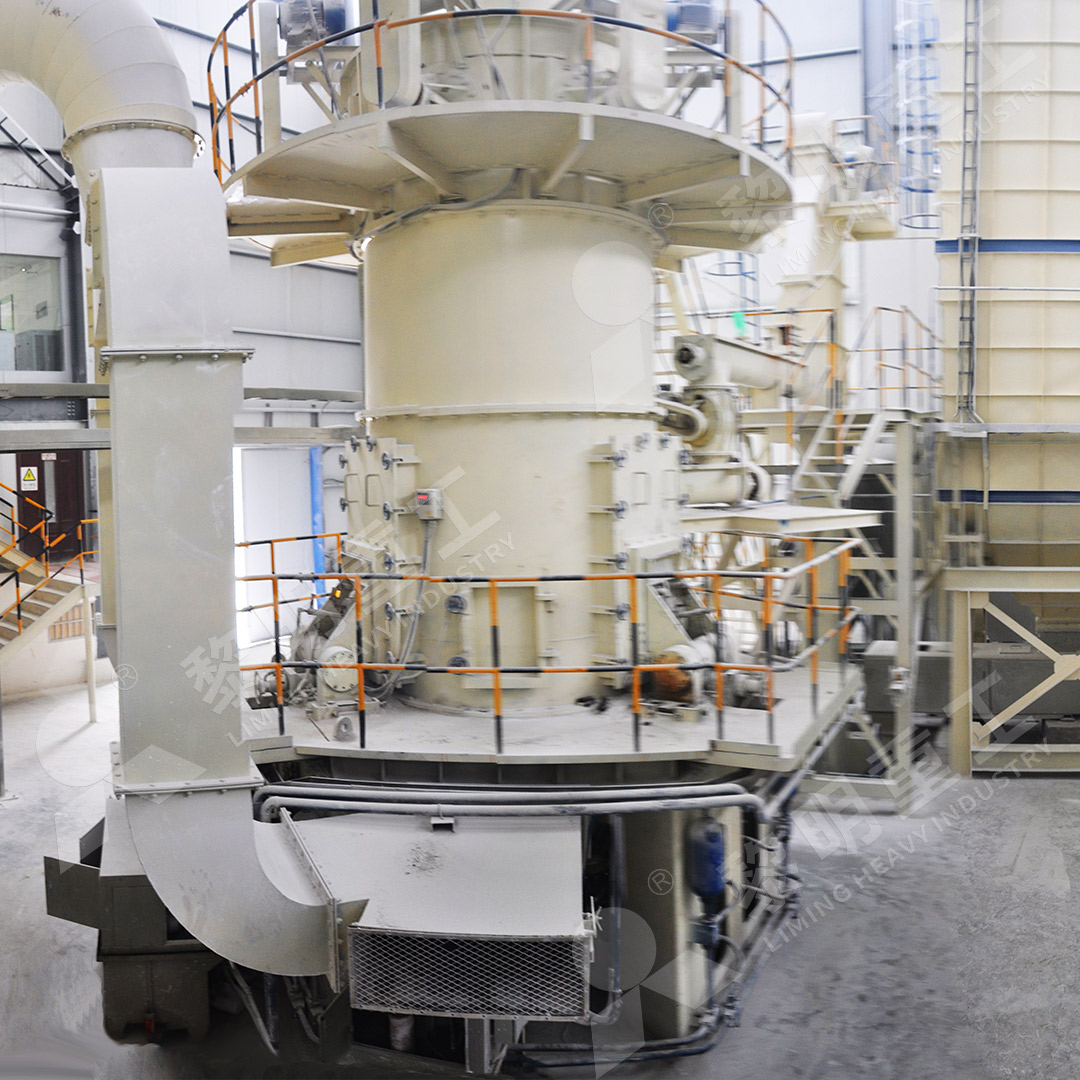
2. The Grinding Chamber & Grinding Rollers/Ring
This is the heart of the operation. The grinding chamber is where raw material is fed and reduced to powder. Inside, grinding rollers exert tremendous pressure on a rotating grinding ring or table. The design of these rollers and the curve of the ring are paramount for efficiency. Superior design, like that found in our MW Ultrafine Grinding Mill, features newly engineered grinding curves that enhance efficiency, offering production capacity 40% higher than jet mills with system energy consumption that’s just a fraction. The absence of rolling bearings and screws inside this chamber is a key innovation, eliminating common failure points.
3. The Classifier (Powder Separator)
Not all powder is created equal. After grinding, the air-powder mixture enters the classifier. This critical component uses centrifugal force or turbine blades to separate fine, in-spec powder from coarse particles. High-precision classifiers, such as the cage-type selector in our MW Mill using German technology, allow for precise fineness adjustment between 325-2500 meshes. This ensures you get exactly the product size you need without wasteful over-grinding.
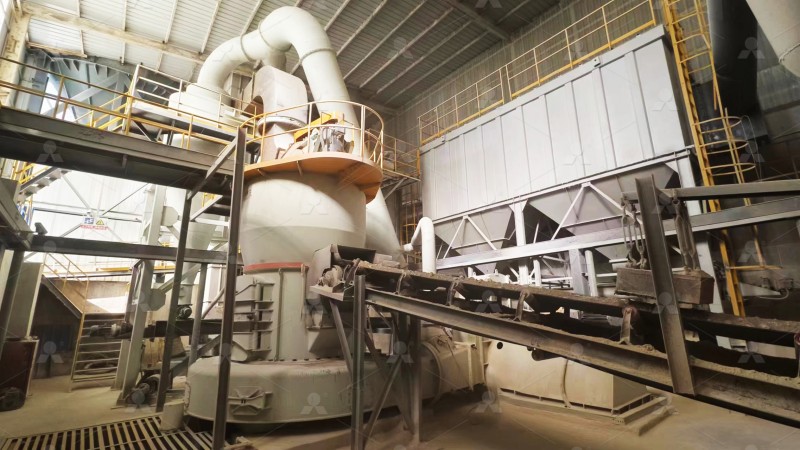
4. The Drive System and Reducer
This is the muscle. A powerful motor provides the energy, but it’s the reducer (or gearbox) that translates that high-speed rotation into the high-torque, low-speed power required to turn the grinding table. A robust and reliable drive system is non-negotiable for continuous, trouble-free operation.
5. The Feeding and Discharge System
Consistency is key. A vibrating feeder or screw conveyor meters raw material into the grinding chamber at a steady, controlled rate. On the output side, a series of valves (like rotary airlocks) and cyclones collect the final product while preventing air leakage, maintaining the system’s internal pressure and efficiency.
6. Auxiliary Systems: Dust Collection and Noise Reduction
Modern milling is clean and quiet. An efficient pulse jet dust collector, like the one integrated into our mills, ensures no dust pollution escapes, protecting both workers and the environment. Similarly, integrated mufflers and noise reduction technologies keep operations within strict regulatory limits, making the mill a good neighbor in any industrial setting.
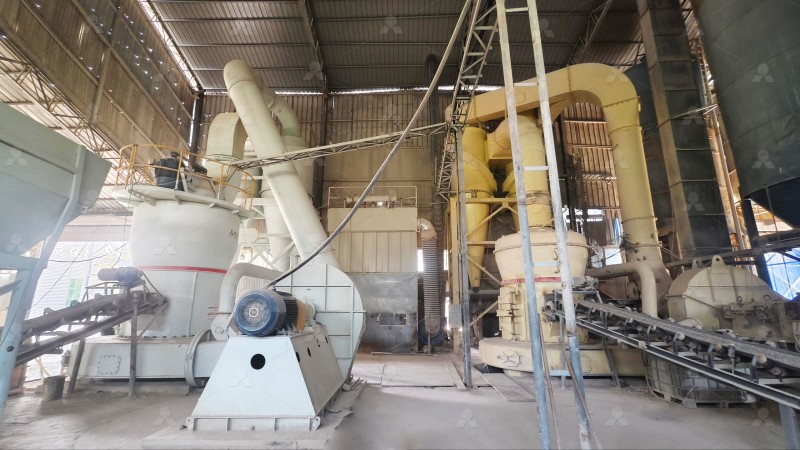
Choosing the Right Mill for Your Application
Selecting a mill isn’t just about power; it’s about precision, efficiency, and longevity. For operations requiring ultra-fine powders between 325-2500 meshes for industries like cosmetics, paints, or advanced chemicals, a specialized machine is required. The MW Ultrafine Grinding Mill is engineered for this exact purpose. With features like external lubrication allowing for 24/7 operation, German-designed classification technology, and a commitment to eco-friendly operation, it represents the pinnacle of grinding technology. Its higher yield and significantly lower energy consumption directly translate to a lower cost of operation and a faster return on investment.
Understanding these components empowers you to make informed decisions, perform better maintenance, and ultimately, achieve a superior product. Always partner with a manufacturer that prioritizes digitalized processing for higher precision parts and offers a sufficient supply of original spare parts for truly worry-free operation.