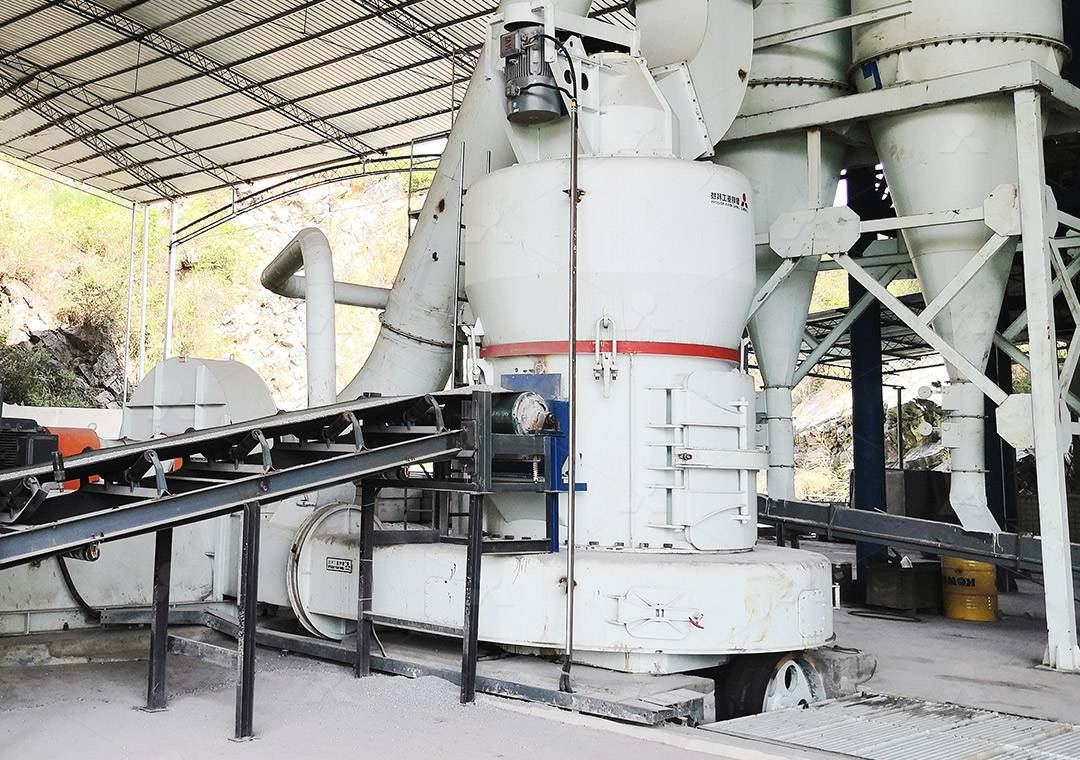
Optimizing Limestone Grinding: Strategies for Improved Mill Efficiency and Output
We provide a wide range of mills — including Raymond mill, trapezoidal mill, vertical mill, ultrafine mill, and ball mill, obtained ISO9001 international quality certification, EU CE certification, and Customs Union CU-TR certification. Suitable for processing minerals such as limestone, phosphate, quicklime, kaolin, talc, barite, bentonite, calcium carbonate, dolomite, coal, gypsum, clay, carbon black, slag, cement raw materials, cement clinker, and more.
The discharge range of these mills can be adjusted to meet specific processing needs, typically from 80-400 mesh, 600-3250 mesh, and can achieve the finest particle size of up to 6000 mesh(D50).
If you are looking for a reliable grinding solution to turn stone or minerals into fine powder, please feel free to contact our online customer service.
Optimizing Limestone Grinding: Strategies for Improved Mill Efficiency and Output
In the world of industrial mineral processing, limestone grinding stands as a fundamental yet complex operation. Achieving optimal efficiency and output isn’t just about running a mill; it’s about a holistic strategy that encompases equipment selection, operational parameters, and system integration. For operations managers and plant engineers, the constant pressure to reduce energy consumption while boosting tonnage and maintaining product quality is a significant challenge.
The Core Challenges in Limestone Comminution
Limestone’s abrasiveness and varying moisture content can wreak havoc on traditional grinding systems. Common pain points include premature wear of grinding elements, inconsistent product fineness, and skyrocketing energy bills. Many facilities still rely on outdated ball mills, which, while robust, are notoriously inefficient, converting a large portion of input energy into heat and noise rather than productive grinding action. The key to unlocking superior performance lies in moving beyond these conventional systems.
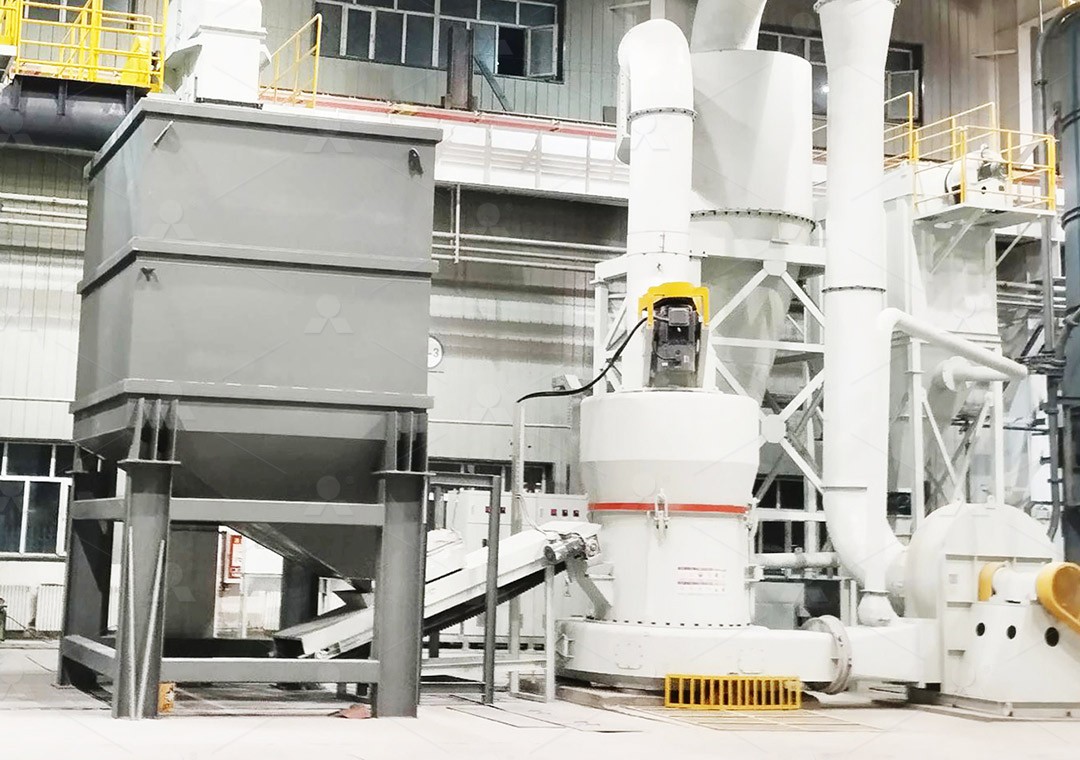
A Paradigm Shift: Advanced Mill Technology
The evolution of grinding technology has introduced mills designed specifically to adress these inefficiencies. Modern mills focus on mechanisms that maximize the energy directed towards particle-size reduction while minimizing losses. This involves sophisticated designs that optimize grinding pressure, airflow, and material residence time. When evaluating new equipment, key considerations should be the specific energy consumption (kWh/t), the flexibility to produce a range of fineness, and the overall total cost of ownership, which includes maintenance downtime and spare parts.
Spotlight on a Superior Solution: The MW Ultrafine Grinding Mill
For operations targeting ultra-fine powders (325-2500 meshes), the MW Ultrafine Grinding Mill presents a compelling solution. This isn’t just another mill; it’s a system engineered for peak performance in demanding applications. Let’s break down why it’s a game-changer:
- Higher Yielding, Lower Energy Consumption: Its newly designed grinding curves enhance efficiency dramatically. With the same fineness and power, its production capacity is 40% higher than jet mills and double that of ball mills, while system energy consumption is a mere 30% of a jet mill’s. This directly adresses the core need to do more with less energy.
- Precision Fineness Control: The German-technology cage-type powder selector allows for precise adjustment of product fineness between 325-2500 meshes, achieving a superb d97≤5μm in a single pass. This ensures consistent product quality that meets strict specifications.
- Unmatched Reliability: A critical design innovation is the absence of rolling bearings and screws inside the grinding chamber. This eliminates the most common failure points—bearing seizures and loose screws—that cause unplanned shutdowns in other mills. External lubrication allows for maintenance without stopping production, supporting true 24/7 operation.
- Eco-Friendly Operation: Integrated with an efficient pulse dust collector and muffler, the MW Mill operates cleanly and quietly, ensuring compliance with stringent environmental standards and creating a safer, healthier workplace.
With an input size of 0-20 mm and a capacity range of 0.5-25 tph, the MW Mill is versatile enough to handle various production scales, making it an ideal choice for producers aiming to upgrade their limestone grinding circuit for the better.
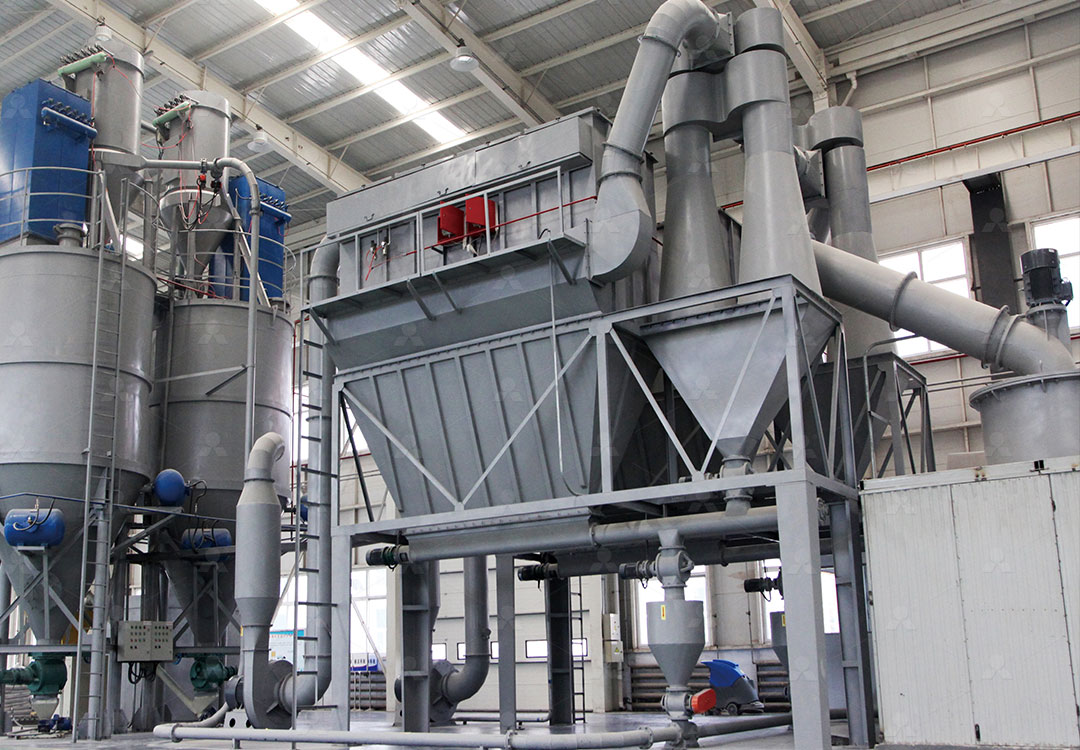
Integrating for Success: Beyond the Mill Itself
Optimization doesn’t stop at the mill door. Maximizing the efficiency of a system like the MW Mill involves synergistic integration with feeders, classifiers, and dust collection systems. Properly sizing the feed material with a pre-crusher ensures the mill receives a consistent, optimal feed. Implementing automated control systems to monitor power draw, pressure, and temperature can fine-tune the process in real-time, pushing efficiency even further. Regular maintenance, though minimized by the MW’s robust design, remains crucial for sustained peak performance.
Conclusion: Grinding Smarter, Not Harder
The path to optimized limestone grinding is clear: embrace technology that is designed for efficiency, reliability, and quality. Moving away from energy-intensive, high-maintenance legacy equipment towards advanced solutions like the MW Ultrafine Grinding Mill is not merely an upgrade—it’s a strategic investment. It’s an investment that pays dividends through slashed operational costs, increased production output, superior product quality, and a significantly reduced environmental footprint. In today’s competitive market, that’s not just an improvement; it’s a necessity.