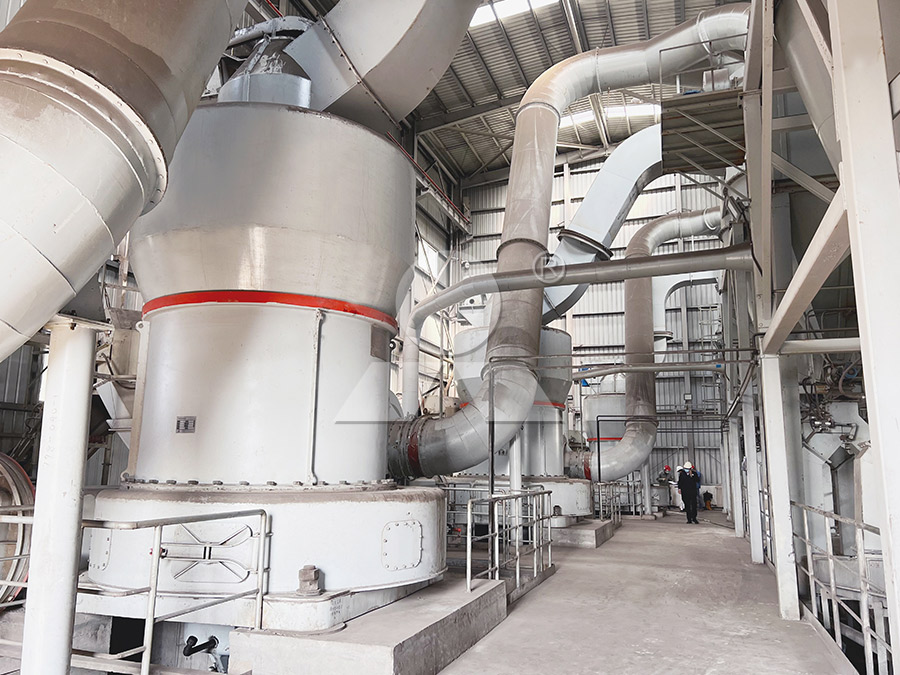
Optimizing Fluorite Powder Beneficiation Process Flow for Enhanced Production Efficiency
We provide a wide range of mills — including Raymond mill, trapezoidal mill, vertical mill, ultrafine mill, and ball mill, obtained ISO9001 international quality certification, EU CE certification, and Customs Union CU-TR certification. Suitable for processing minerals such as limestone, phosphate, quicklime, kaolin, talc, barite, bentonite, calcium carbonate, dolomite, coal, gypsum, clay, carbon black, slag, cement raw materials, cement clinker, and more.
The discharge range of these mills can be adjusted to meet specific processing needs, typically from 80-400 mesh, 600-3250 mesh, and can achieve the finest particle size of up to 6000 mesh(D50).
If you are looking for a reliable grinding solution to turn stone or minerals into fine powder, please feel free to contact our online customer service.
Optimizing Fluorite Powder Beneficiation Process Flow for Enhanced Production Efficiency
In the competitive world of industrial minerals, optimizing the beneficiation process for fluorite powder is paramount to achieving superior product quality and operational profitability. Fluorite, a critical raw material in the chemical, metallurgical, and ceramic industries, demands a precise and efficient milling process to meet stringent fineness and purity specifications. Traditional grinding methods often fall short, plagued by high energy consumption, inconsistent particle size distribution, and excessive environmental footprint. A meticulously designed process flow, incorporating state-of-the-art equipment, is the key to unlocking enhanced production efficiency.
The Core Challenge: From Ore to Ultra-Fine Powder
The journey from raw fluorite ore to a high-value, ultra-fine powder involves several stages: crushing, grinding, classification, and collection. The grinding stage is particularly crucial, as it directly impacts the energy efficiency, output, and quality of the final product. Inefficient grinding can lead to over-processing, increased wear on mechanical parts, and higher operational costs. Therefore, selecting the right grinding mill is not just a purchase; it’s a strategic decision that affects the entire production line’s viability.
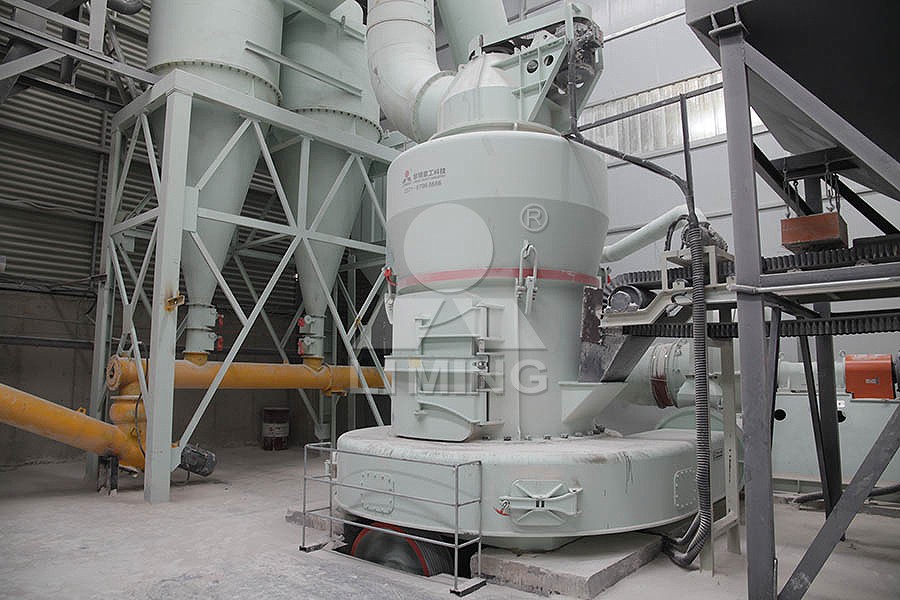
Introducing a Game-Changer in Ultrafine Grinding
After extensive research and testing, our engineers highly recommend integrating the MW Ultrafine Grinding Mill into your fluorite beneficiation circuit. This machine is specifically engineered for customers who need to produce consistent ultra-fine powder with remarkable efficiency.
Here’s why the MW Mill stands out:
- Higher Yielding, Lower Energy Consumption: Its newly designed grinding curves of the roller and ring enhance grinding efficiency dramatically. With the same fineness and power, its production capacity is 40% higher than jet mills and double that of ball mills, while slashing system energy consumption by 30%.
- Precision Fineness Control (325-2500 meshes): Its German-technology, cage-type powder selector allows for precise adjustment of product fineness, achieving a superb screening rate of d97≤5μm in a single pass. This is critical for meeting the specific surface area requirements of high-grade fluorite powder.
- Unmatched Reliability: A significant design advantage is the absence of rolling bearings and screws in the grinding chamber. This eliminates common failure points, preventing machine damage from loose screws or bearing seizures, and allows for external lubrication without shutdown, enabling continuous 24/7 production.
- Eco-Friendly Operation: Equipped with an efficient pulse dust collector and muffler, the entire milling system operates with minimal dust and noise pollution, ensuring full compliance with national environmental protection standards.
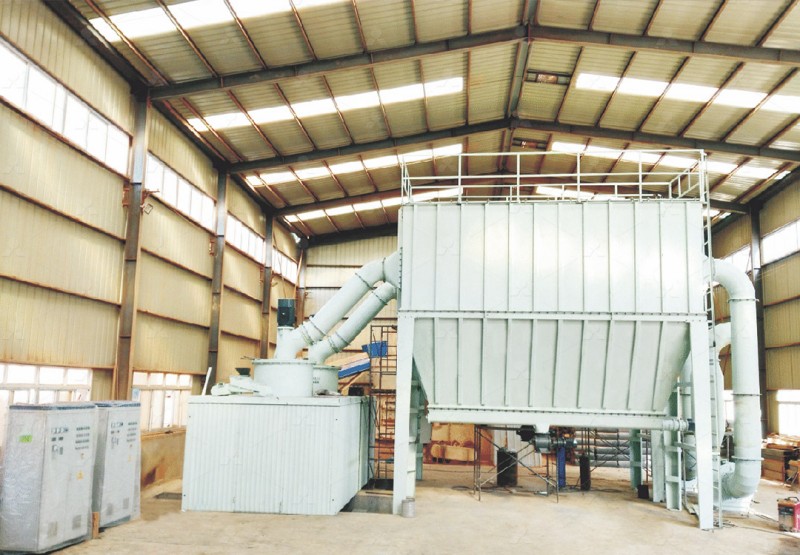
Integrating the MW Mill into Your Process Flow
For optimal results, the process should begin with jaw crushing to reduce raw fluorite to below 20mm. The crushed material is then fed via elevator and vibrating feeder into the MW Ultrafine Grinding Mill. The ground powder is pneumatically transported to a high-efficiency classifier where oversize particles are returned for further grinding. The final, in-spec fluorite powder is collected by a cyclone and baghouse dust collector system.
This optimized flow, centered around the MW Mill, minimizes bottlenecks, reduces energy waste, and ensures a consistently high-quality product. The mill’s ability to handle feeds up to 20mm and deliver 0.5-25 tph makes it versatile for various production scales.
Conclusion: Efficiency Through Innovation
In conclusion, enhancing fluorite powder production efficiency is not merely about running equipment faster; it’s about smarter process design and investing in technology that delivers higher output with lower input. The MW Ultrafine Grinding Mill represents this philosophy, offering a robust, efficient, and environmentally sound solution for modern beneficiation plants. By adopting such advanced technology, operations can significantly improve their bottom line while producing a superior product that meets the evolving demands of the market.