
Operating Ball Mills in CIL Plants: A Visual Guide to Circuit Layouts & Process Control
We provide a wide range of mills — including Raymond mill, trapezoidal mill, vertical mill, ultrafine mill, and ball mill, obtained ISO9001 international quality certification, EU CE certification, and Customs Union CU-TR certification. Suitable for processing minerals such as limestone, phosphate, quicklime, kaolin, talc, barite, bentonite, calcium carbonate, dolomite, coal, gypsum, clay, carbon black, slag, cement raw materials, cement clinker, and more.
The discharge range of these mills can be adjusted to meet specific processing needs, typically from 80-400 mesh, 600-3250 mesh, and can achieve the finest particle size of up to 6000 mesh(D50).
If you are looking for a reliable grinding solution to turn stone or minerals into fine powder, please feel free to contact our online customer service.
Operating Ball Mills in CIL Plants: A Visual Guide to Circuit Layouts & Process Control
For any metallurgist or plant operator in a Carbon-in-Leach (CIL) facility, the grinding circuit is the heart of the operation. It’s where the gold-bearing ore is reduced to a fine slurry, liberating the precious metal for subsequent cyanidation and recovery. Getting this step wrong means poor recovery rates and lost revenue. This visual guide walks you through the key layouts and the critical process control points you need to master for optimal ball mill performance.
The Role of the Ball Mill in the CIL Circuit
The primary function of the ball mill is particle size reduction. In a CIL plant, the target grind size (often around 80% passing 75 microns) is crucial. Too coarse, and gold remains locked inside the gangue minerals, unable to be leached. Too fine, and you’re wasting energy, increasing reagent consumption, and potentially causing downstream solid-liquid separation issues. The ball mill, typically in closed circuit with a hydrocyclone cluster, is responsible for hitting this target consistently.
Common Circuit Layouts: Open vs. Closed
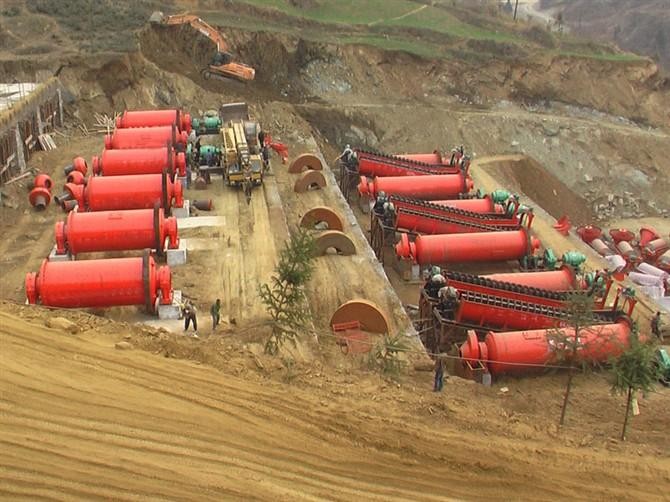
While open circuit milling (feed enters one end, product discharges from the other) is simple, it’s incredibly inefficient for CIL applications due to a lack of size control. Closed-circuit milling is the industry standard. Here’s how it works:
- Ore slurry is fed into the ball mill.
- The mill discharges to a sump, where it is pumped to a bank of hydrocyclones.
- The hydrocyclones classify the slurry: the coarse, underflow fraction is recirculated back to the mill feed for further grinding (this is called the circulating load, typically 150-350%).
- The fine, overflow fraction reports to the leach tanks as final product.
This setup ensures that only particles that have achieved the target size leave the circuit. The efficiency of this classification is paramount.
Key Process Control Parameters
Running a ball mill isn’t about “.set it and forget it.” It requires constant monitoring and adjustment. Focus on these variables:
- Mill Feed Rate: Must be steady. Fluctuations cause surging and poor grind.
- Mill Sound: A drop in the mill’s rumble often means the charge level is low (underloaded). A high-pitched sound means too much feed (overloaded).
- Cyclone Feed Density & Pressure: This controls classification. Higher density often leads to a coarser cyclone overflow. Pressure affects cut point.
- Circulating Load: A key indicator of circuit health. A sudden change often signals a cyclone issue or a change in ore hardness.
Beyond Traditional Ball Milling: The Ultrafine Advantage
Some complex ores, particularly those with refractory gold, require a much finer grind to achieve acceptable liberation. Pushing a standard ball mill beyond its economic limit for ultra-fine grinding (<20 microns) is often not feasible due to exponentially high energy costs and media consumption.
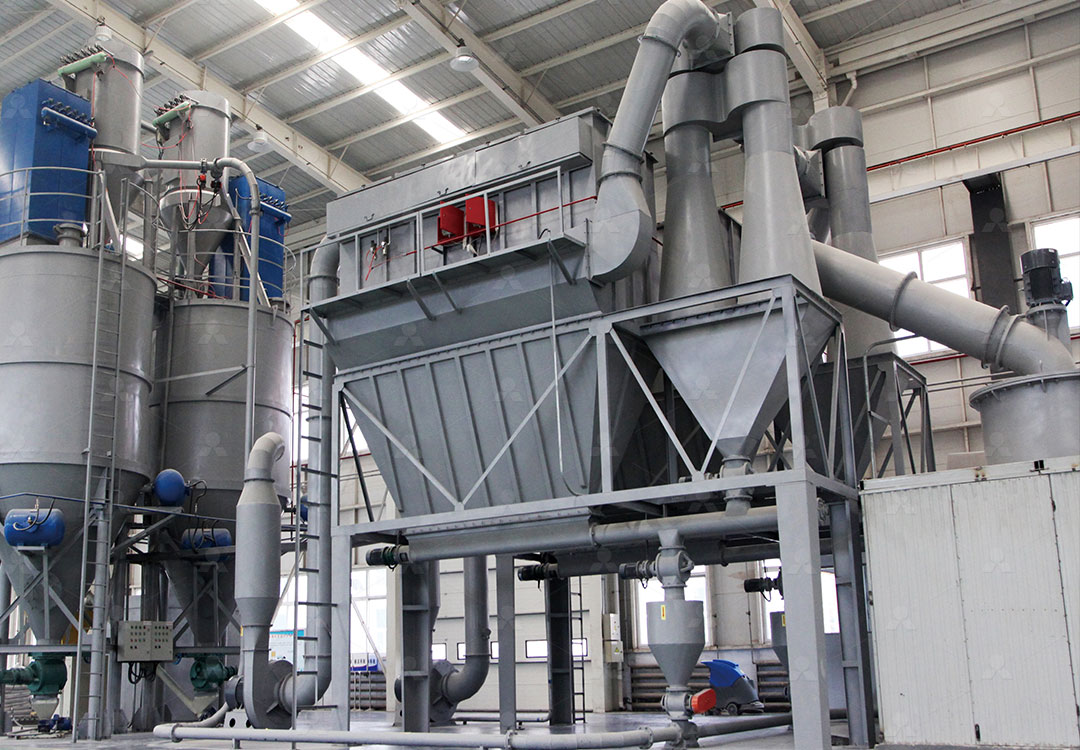
For these demanding applications, a dedicated ultra-fine grinding (UFG) solution is required. This is where our MW Ultrafine Grinding Mill excels. Designed for customers who need to make ultra-fine powder, this machine is a game-changer. It can achieve a adjustable fineness between 325-2500 meshes (that’s down to d97≤5μm!) with higher yielding and lower energy consumption—the system energy consumption is only 30% of a jet mill. Its unique design with no rolling bearings or screws in the grinding chamber eliminates common failure points, making it incredibly reliable for 24/7 CIL operations. Plus, its efficient pulse dust collector makes the entire milling process eco-friendly, a critical consideration in modern mining.
Troubleshooting Common Issues
Even the best-run circuits have problems. Here’s a quick guide:
- Coarse Product: Check cyclone feed pressure (may be low), apexes (may be worn too large), or feed density (may be too high).
- High Cyclone Overflow Density: Often caused by too much water in the circuit or a change in ore rheology.
- High Mill Return Density: Indicates a lack of dilution water in the mill discharge sump.
- Low Mill Motor Amps: You’re likely underloaded. Increase feed rate or check for a lack of grinding media.
Mastering your ball mill operation is a blend of understanding the machinery, vigilant process control, and knowing when to leverage advanced technology like ultrafine grinding. Keeping a steady feed, monitoring your cyclone performance, and listening to your mill will put you on the path to maximum gold recovery.