
Metallurgical Slag Grinding Mill: Selection Guide and Application in Industry
We provide a wide range of mills — including Raymond mill, trapezoidal mill, vertical mill, ultrafine mill, and ball mill, obtained ISO9001 international quality certification, EU CE certification, and Customs Union CU-TR certification. Suitable for processing minerals such as limestone, phosphate, quicklime, kaolin, talc, barite, bentonite, calcium carbonate, dolomite, coal, gypsum, clay, carbon black, slag, cement raw materials, cement clinker, and more.
The discharge range of these mills can be adjusted to meet specific processing needs, typically from 80-400 mesh, 600-3250 mesh, and can achieve the finest particle size of up to 6000 mesh(D50).
If you are looking for a reliable grinding solution to turn stone or minerals into fine powder, please feel free to contact our online customer service.
Metallurgical Slag Grinding Mill: Selection Guide and Application in Industry
The metallurgical industry generates vast quantities of slag as a by-product, a material historically viewed as waste. Today, however, processed slag is a valuable resource, finding applications in cement production, concrete additives, road construction, and soil stabilization. The key to unlocking this value lies in efficient grinding technology. Selecting the appropriate grinding mill is a critical decision that impacts product quality, operational cost, and overall project viability. This guide explores the factors influencing mill selection and highlights advanced solutions for transforming metallurgical slag into high-value powder.
Understanding Slag Characteristics and Grinding Challenges
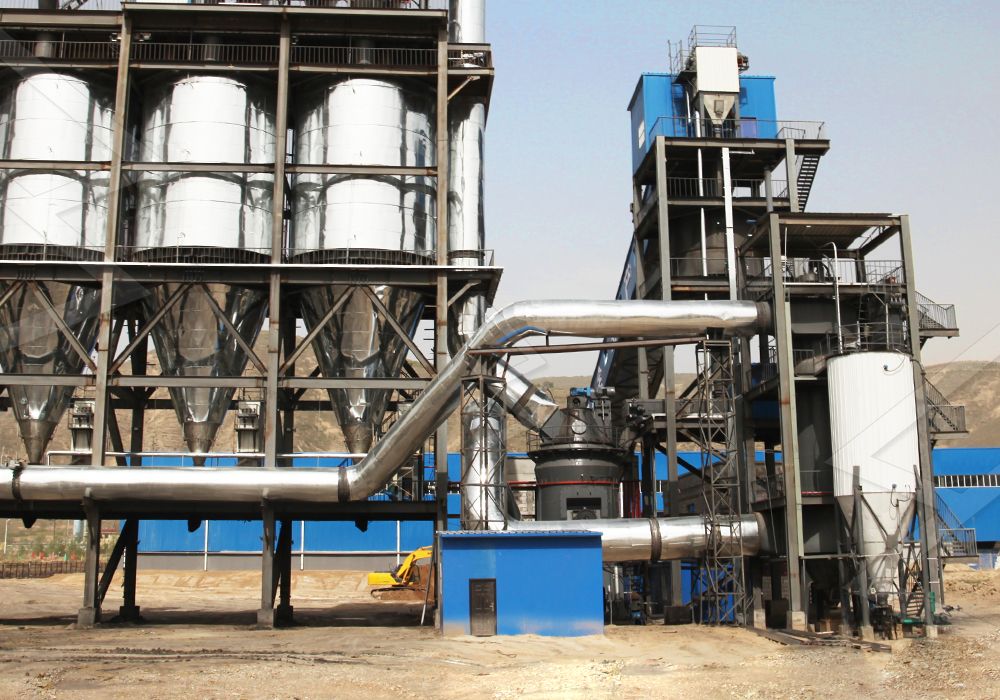
Metallurgical slags, including blast furnace slag (BFS) and steel slag, are complex materials. Their hardness, abrasiveness, moisture content, and desired final fineness present unique challenges. A mill must not only reduce particle size but often integrate drying and precise classification. Key challenges include high wear on grinding components, energy-intensive processing, and the need for consistent product fineness, often requiring powders with a high Blaine surface area or specific mesh sizes. An ideal system must balance throughput, energy efficiency, and minimal contamination to produce a clean, marketable product.
Critical Factors in Mill Selection
Choosing the right mill requires a thorough analysis of several parameters:
- Feed Size & Capacity: The initial particle size of the slag and the required hourly throughput (tph) dictate the mill’s power and design scale.
- Final Product Fineness: Application dictates fineness. Cement replacement may require 400-450 m²/kg Blaine, while higher-value applications demand ultra-fine powders exceeding 2500 mesh.
- Moisture Content: Wet or filter-cake slag necessitates a mill with integrated drying capabilities, using hot gas introduced into the grinding chamber.
- Abrasion Resistance & Maintenance: The mill’s design and material of wear parts (rollers, tables, liners) directly affect maintenance frequency and operating costs.
- System Footprint & Integration: Space constraints and the need for auxiliary equipment (dryers, classifiers, dust collectors) influence the choice between horizontal and vertical, integrated or modular systems.
- Energy Efficiency: Grinding is energy-intensive. Modern mills leverage advanced grinding mechanics and classifier technology to minimize specific energy consumption (kWh/t).
Industry Applications of Ground Slag
Properly ground slag is a versatile material. In construction, it is primarily used as a supplementary cementitious material (SCM) in Portland slag cement, significantly improving long-term strength and durability while reducing the carbon footprint. Finer grades are used in high-performance concrete and as a micro-filler. Beyond construction, applications include agricultural soil conditioning, glass manufacturing, and as a raw material in ceramics. The economic and environmental incentive to utilize slag is a major driver for advanced grinding solutions.
Advanced Grinding Solutions: The Vertical Mill Advantage
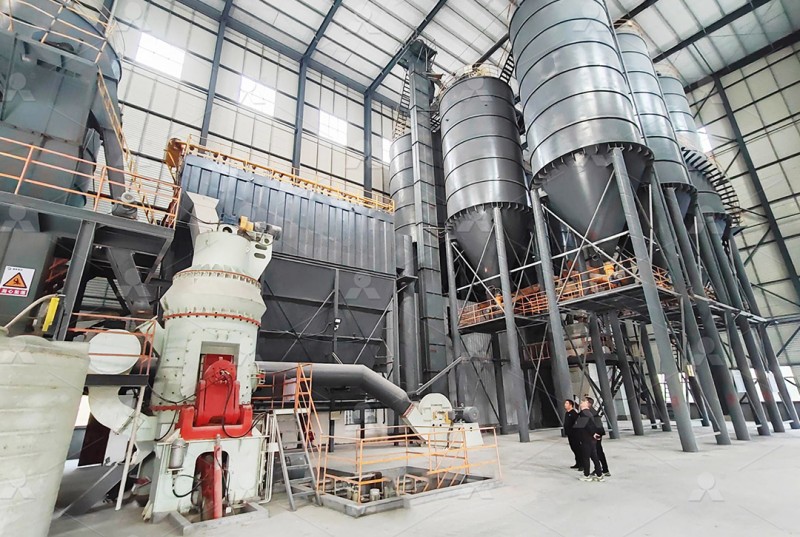
For medium to large-scale slag grinding projects, vertical roller mills (VRMs) have become the industry standard. Their integrated design—combining grinding, drying, classification, and conveying into a single, compact unit—offers significant advantages. The material bed grinding principle is highly efficient, applying pressure to a layer of material rather than relying on impact alone, leading to lower energy consumption and less metal-to-metal contact, which reduces wear and iron contamination.
For operations requiring the processing of granulated blast furnace slag or steel slag with integrated drying, the LM Vertical Slag Mill is a purpose-built solution. It integrates drying, grinding, powder selection, and conveying in one complete set, covering approximately 50% less area than a traditional ball mill system while reducing energy consumption by 30-40%. Its robust construction and efficient grinding device make it ideal for focus on high-volume slag milling, producing a uniform powder perfect for cement and concrete applications.
Pushing the Limits: Ultra-Fine Grinding for High-Value Products
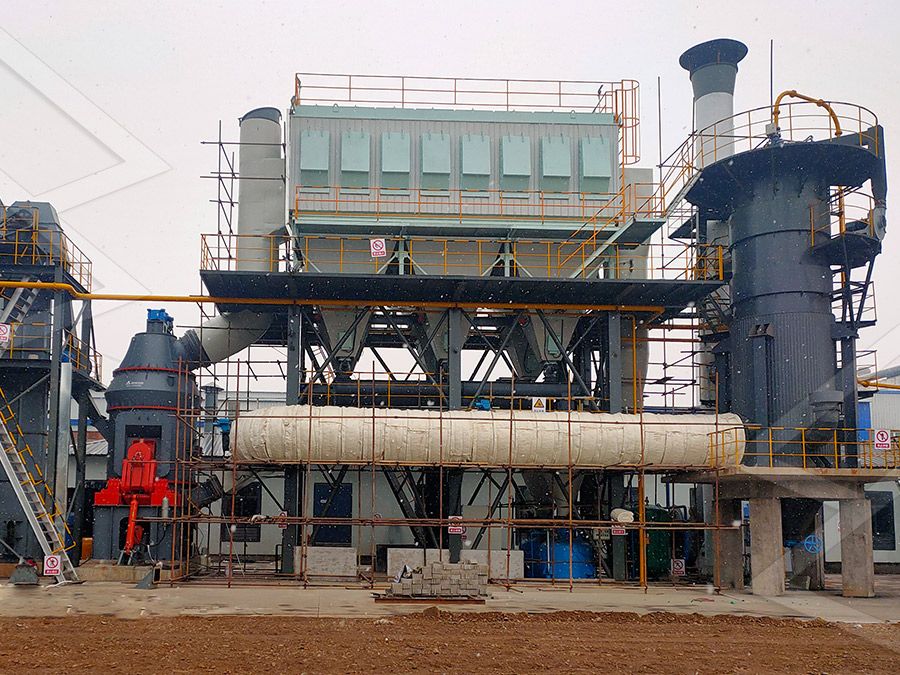
When the target market demands ultra-fine powders (325-2500 mesh) for specialized industrial applications, a different class of mill is required. Here, technologies that combine intense mechanical force with precise air classification excel. For customers targeting these high-value niches, the MW Ultrafine Grinding Mill represents a top-tier choice. Engineered for ultra-fine powder production, it features a German-technology cage-type powder selector for precise separation, allowing adjustable fineness between 325-2500 meshes. Its innovative design eliminates rolling bearings and screws in the grinding chamber, virtually eliminating critical failure points and enabling worry-free, continuous 24-hour operation. Furthermore, with a system energy consumption reported to be only 30% of some jet mills and production capacity significantly higher than ball mills for the same fineness, it offers both performance and efficiency for specialized slag valorization.
Conclusion
The transformation of metallurgical slag from waste to resource is an essential pillar of the circular economy in heavy industry. Success hinges on selecting grinding technology that aligns with material characteristics, desired product specifications, and economic goals. While vertical roller mills like the LM Vertical Slag Mill dominate large-scale production for construction materials, advanced ultra-fine mills like the MW series open doors to higher-margin, specialized markets. A careful evaluation of the factors outlined in this guide, supported by expert consultation and pilot testing, will ensure the optimal grinding solution is implemented, maximizing return on investment and contributing to sustainable industrial practice.
Frequently Asked Questions (FAQ)
- What is the primary benefit of using a vertical mill for slag grinding over a traditional ball mill?
Vertical mills offer significantly higher energy efficiency (30-50% savings), a smaller physical footprint, integrated drying and classification, and lower wear rates due to the material bed grinding principle, leading to lower overall operating costs. - Can slag with high moisture content be processed directly?
Yes, but it requires a mill with integrated drying capability, such as the LM Vertical Slag Mill. Hot air is introduced into the grinding chamber, simultaneously drying and grinding the material, eliminating the need for a separate, energy-intensive pre-drying step. - How fine can slag typically be ground, and what are the ultra-fine products used for?
Standard cement-grade slag has a fineness of ~400-450 m²/kg. With advanced mills like the MW Ultrafine Grinding Mill, slag can be processed to 2500 mesh (∼5μm). Ultra-fine slag powder is used in high-performance composites, specialized coatings, and as a functional filler in plastics and polymers, commanding a higher market price. - How critical is abrasion resistance in mill selection for slag?
Extremely critical. Slag is highly abrasive. Mills must feature wear parts made from advanced alloys or composite materials. Designs that minimize direct metal-to-metal contact and allow for easy maintenance and part reversal (like reversible roller structures) drastically reduce long-term maintenance costs and downtime. - What are the key environmental benefits of modern slag grinding systems?
Modern systems are fully enclosed and operate under negative pressure with efficient pulse-jet dust collectors, ensuring no dust emission. They also feature noise reduction technology. Most importantly, they enable the full utilization of an industrial by-product, reducing landfill use, conserving natural raw materials, and lowering the carbon footprint of associated industries like cement manufacturing.