
LUM Series Ultra-fine Vertical Roller Mill: High-efficiency Grinding Solution for Fine Powder Production
We provide a wide range of mills — including Raymond mill, trapezoidal mill, vertical mill, ultrafine mill, and ball mill, obtained ISO9001 international quality certification, EU CE certification, and Customs Union CU-TR certification. Suitable for processing minerals such as limestone, phosphate, quicklime, kaolin, talc, barite, bentonite, calcium carbonate, dolomite, coal, gypsum, clay, carbon black, slag, cement raw materials, cement clinker, and more.
The discharge range of these mills can be adjusted to meet specific processing needs, typically from 80-400 mesh, 600-3250 mesh, and can achieve the finest particle size of up to 6000 mesh(D50).
If you are looking for a reliable grinding solution to turn stone or minerals into fine powder, please feel free to contact our online customer service.
LUM Series Ultra-fine Vertical Roller Mill: High-efficiency Grinding Solution for Fine Powder Production
In the demanding world of industrial mineral processing and fine powder production, achieving consistent quality, high throughput, and operational efficiency is paramount. Traditional grinding methods often fall short, plagued by issues like high energy consumption, excessive wear, and limited control over particle size distribution. The industry has long sought a solution that combines precision engineering with robust performance. Enter the LUM Series Ultra-fine Vertical Roller Mill, a technological leap forward designed to meet these exacting challenges head-on.
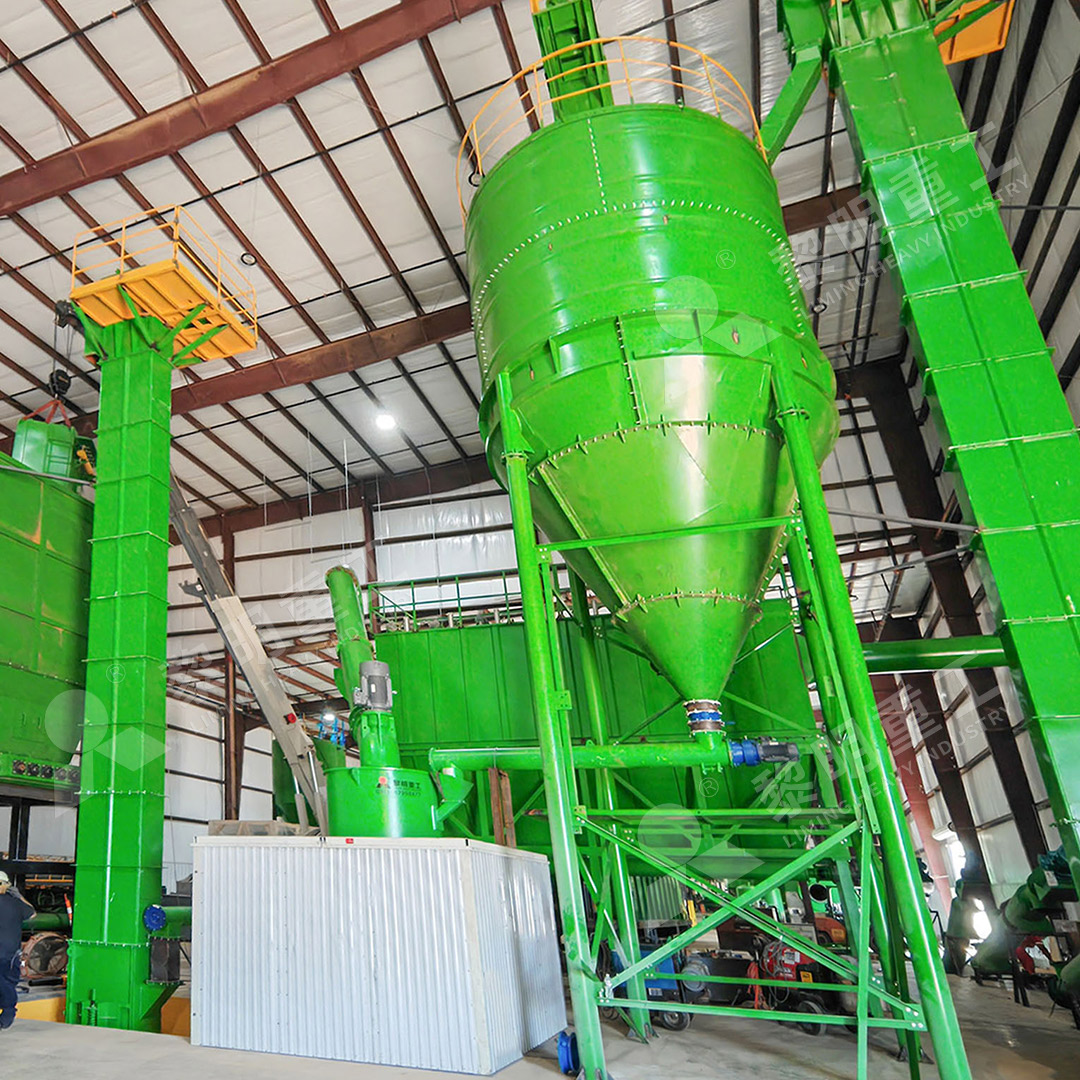
Engineered based on decades of grinding mill expertise, the LUM Series represents a synthesis of advanced international technologies. It incorporates the latest grinding roller innovations from Taiwan and sophisticated German powder separating technology. This integration results in a system that excels in producing superfine powders with remarkable consistency. The mill’s design philosophy centers on creating a streamlined process where ultrafine powder grinding, precise grading, and efficient material transport are seamlessly combined into a single, cohesive unit. This holistic approach eliminates bottlenecks and enhances overall system reliability.
Core Advantages and Technological Innovations
The LUM mill distinguishes itself through several key features that directly address the pain points of fine powder production. A primary concern in traditional grinding is the prolonged retention time of material within the mill, leading to over-grinding, increased iron contamination, and reduced product whiteness. The LUM Series tackles this with a uniquely designed roller shell and lining plate grinding curve. This proprietary geometry facilitates the rapid formation of a stable material bed, enabling a high rate of finished product yield in a single pass. The result is not only enhanced efficiency but also significantly improved product whiteness and purity—a critical factor for industries like paints, cosmetics, and high-grade fillers.
Energy efficiency is another cornerstone of the LUM design. By employing a PLC-controlled multi-head powder separating system, the mill solves the dual challenges of achieving high-precision particle size cuts and swiftly adapting to different production requirements. Operators gain precise digital control over grinding pressure, rotational speed, and other critical parameters. Compared to conventional grinding mills, this intelligent system can reduce energy consumption by an impressive 30% to 50%, offering substantial long-term operational savings.
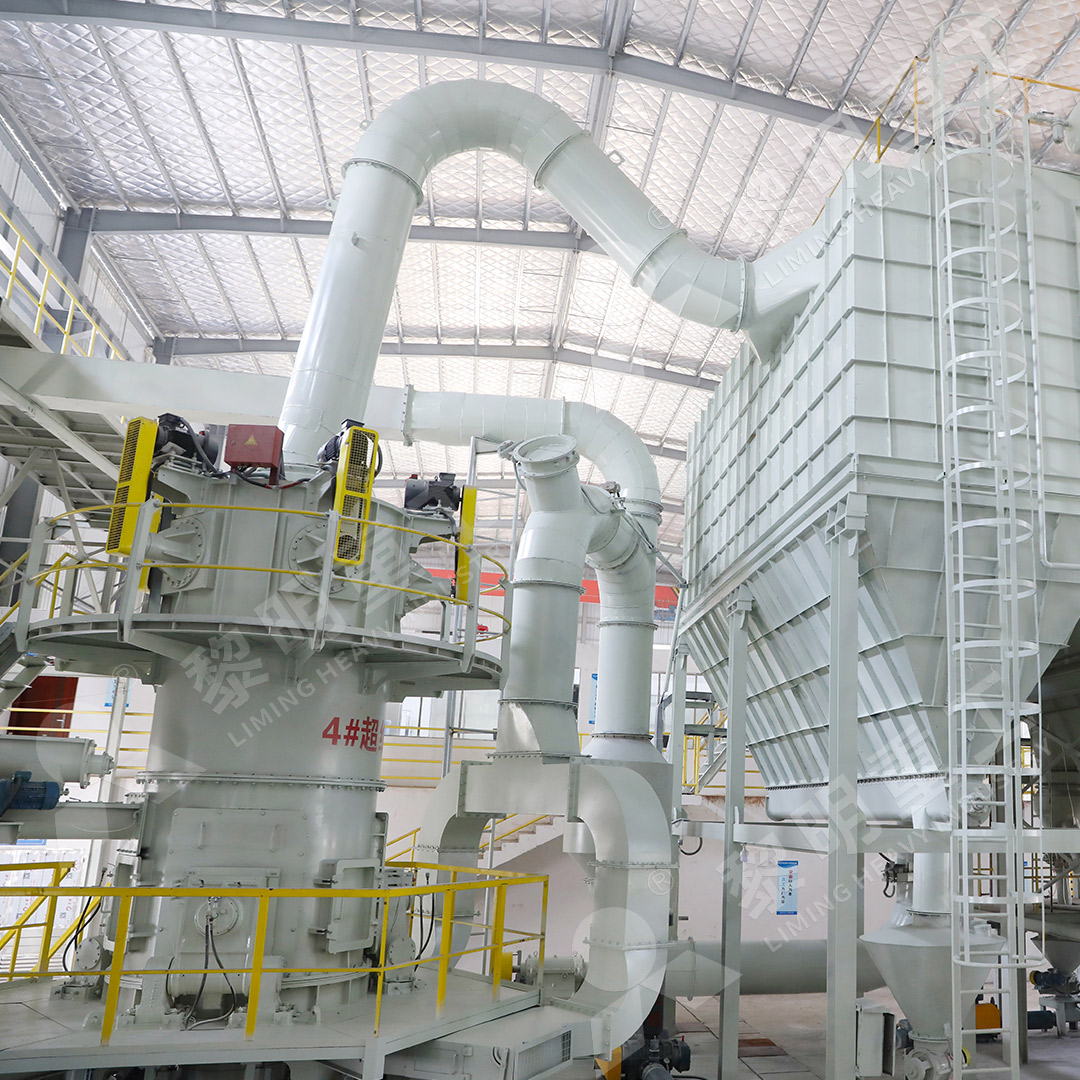
Operational stability is ensured through a double position-limiting technology. The contact point between the roller shell and the millstone liner is protected by both electronic limiting and mechanical limiting systems. This dual safeguard prevents destructive impacts—such as the grinding roller directly striking the millstone—that can be caused by external vibrations or feed fluctuations, thereby guaranteeing smooth, uninterrupted operation and protecting the mill’s core components.
Engineered for Ease and Reliability
Maintenance accessibility was a critical factor in the LUM’s design. Recognizing that grinding rollers are heavy components, engineers developed a reversible structure. Coupled with a hydraulic adjustment system, this allows operators to easily and safely move the grinding roller out of the mill body for inspection, replacement of wear parts like the roller shell and liner plate, and other maintenance tasks. This feature dramatically reduces downtime and associated losses, maximizing plant availability.
For operations requiring a different balance of capacity and fineness, or for processing slightly larger feed sizes, the MW Ultrafine Grinding Mill presents an excellent alternative. With an input size of 0-20 mm and a capacity range of 0.5-25 tph, the MW Mill is designed for customers dedicated to ultra-fine powder production. Its standout feature is a cage-type powder selector utilizing German technology, allowing precise fineness adjustment between 325 and 2500 meshes, with a screening rate capable of achieving d97≤5μm in a single pass. Furthermore, its grinding chamber is ingeniously designed without rolling bearings or screws, eliminating common failure points and concerns about bearing seal damage or loose fasteners causing machine failure.
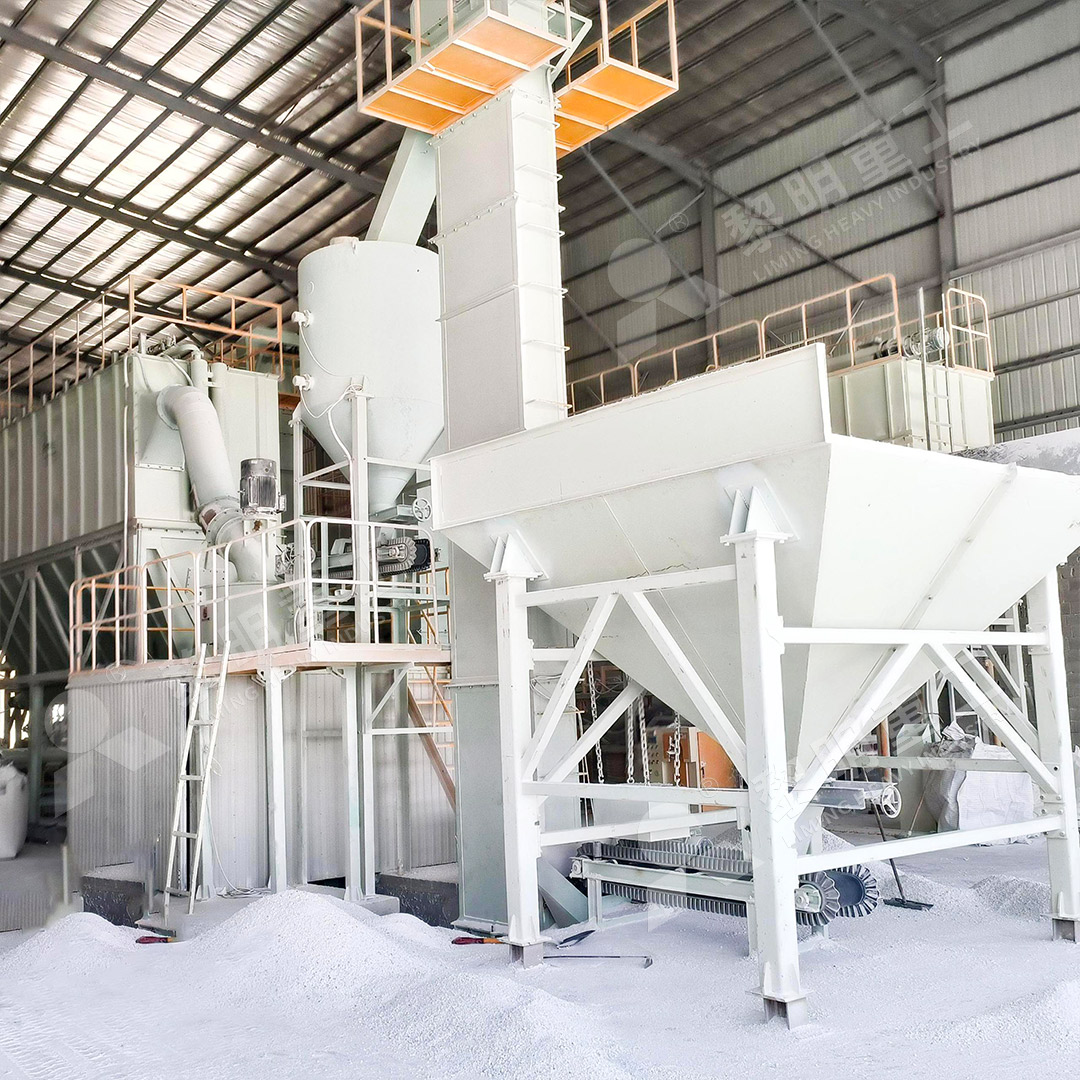
Both the LUM and MW series share a commitment to environmental stewardship and precision manufacturing. They are equipped with high-efficiency pulse dust collectors and silencers, ensuring the entire milling system operates with minimal dust and noise pollution, fully complying with national environmental standards. Their construction leverages digitalized processing, with core components manufactured on numerically controlled machine tools to ensure exceptional precision and durability.
Conclusion
The LUM Series Ultra-fine Vertical Roller Mill is more than just a piece of grinding equipment; it is a comprehensive, high-efficiency solution engineered for the future of fine powder production. By prioritizing energy savings, product quality, operational stability, and ease of maintenance, it delivers tangible value across its lifecycle. For processors of limestone, calcite, dolomite, barite, talc, and other non-metallic minerals seeking to optimize their operations, the LUM Series offers a proven path to higher productivity and superior product quality.
Frequently Asked Questions (FAQ)
- What is the typical fineness range achievable with the LUM Ultrafine Vertical Mill?
The LUM mill is capable of producing powders with a wide range of fineness, typically suitable for producing superfine dry powders. The exact range can be configured based on the multi-head powder separator settings to meet specific customer requirements for particle size distribution. - How does the LUM mill’s energy consumption compare to a traditional ball mill or Raymond mill?
The LUM mill integrates several energy-saving technologies, including an optimized grinding curve and an efficient multi-head separator. As a result, it can reduce energy consumption by 30% to 50% compared to common grinding mills like traditional ball mills, offering significant operational cost savings. - What materials are most suitable for processing with the LUM Series mill?
It is ideally suited for grinding non-metallic minerals such as limestone, calcite, dolomite, petroleum coke, gypsum, barite, marble, talc, and coal powder into superfine powders used in chemicals, paints, cosmetics, and other advanced industries. - What makes maintenance easier on the LUM mill compared to other vertical mills?
The mill features a reversible structure combined with a hydraulic system. This allows the heavy grinding rollers to be easily rolled out of the mill body for inspection and maintenance, significantly reducing the time and labor required for servicing wear parts. - Does the mill system include dust collection and noise reduction features?
Yes. The LUM grinding mill system is designed as an environmentally friendly solution. It comes equipped with an efficient pulse dust collector to prevent dust pollution and incorporates silencers and noise reduction measures to minimize operational noise, ensuring compliance with environmental standards. - What is the key advantage of the MW Ultrafine Grinding Mill’s internal design?
A major reliability feature of the MW Mill is that its grinding chamber contains no rolling bearings or screws. This design eliminates potential failures related to bearing seals and prevents machine damage from loose screws, ensuring more stable, worry-free operation. - Can the fineness of the final product be adjusted during operation?
Yes. Both the LUM and MW mills utilize advanced powder separating technologies (multi-head separator and cage-type selector, respectively) that allow for the precise adjustment of product fineness to meet different production demands without requiring a shutdown.