
Limestone Medium Speed Grinding Mill Equipment Selection Guide
We provide a wide range of mills — including Raymond mill, trapezoidal mill, vertical mill, ultrafine mill, and ball mill, obtained ISO9001 international quality certification, EU CE certification, and Customs Union CU-TR certification. Suitable for processing minerals such as limestone, phosphate, quicklime, kaolin, talc, barite, bentonite, calcium carbonate, dolomite, coal, gypsum, clay, carbon black, slag, cement raw materials, cement clinker, and more.
The discharge range of these mills can be adjusted to meet specific processing needs, typically from 80-400 mesh, 600-3250 mesh, and can achieve the finest particle size of up to 6000 mesh(D50).
If you are looking for a reliable grinding solution to turn stone or minerals into fine powder, please feel free to contact our online customer service.
Navigating the Maze: A Practical Guide to Selecting Your Limestone Grinding Mill
Selecting the right grinding equipment for limestone processing is a critical decision that impacts your operation’s productivity, product quality, and bottom line. With a plethora of technologies available—from traditional Raymond mills and ball mills to advanced vertical roller mills and ultrafine systems—the choice can seem overwhelming. This guide cuts through the complexity, focusing on medium-speed grinding solutions that offer the ideal balance of efficiency, fineness control, and operational cost for a wide range of limestone applications.
Understanding Your Limestone Grinding Requirements
The first step is a thorough analysis of your specific needs. Key factors include:
- Feed Size: What is the maximum particle size of your raw limestone (0-10mm, 0-50mm, or larger)?
- Required Capacity: What is your target throughput in tons per hour (tph)?
- Product Fineness: What is the target particle size distribution (e.g., 325 mesh, 800 mesh, or even sub-10μm)?
- Application End-Use: Is the ground limestone for construction materials, industrial fillers, agricultural lime, or as a feedstock for high-value chemicals?
These parameters directly dictate the type of mill technology that will be most effective. For instance, producing coarse fillers for asphalt requires a different machine than manufacturing ultra-pure fillers for plastics or pharmaceuticals.

Technology Spotlight: Vertical Roller Mills vs. Traditional Systems
For medium to high-capacity limestone grinding, Vertical Roller Mills (VRMs) have become the industry benchmark, largely displacing older ball mill systems. The advantages are compelling:
- Integrated Processing: VRMs combine drying, grinding, classification, and conveying in a single, compact unit, slashing footprint and auxiliary equipment costs.
- Superior Energy Efficiency: By utilizing a bed-compaction grinding principle rather than impact/attrition, VRMs typically consume 30-50% less energy than ball mills for the same output.
- Precise Particle Control: Advanced internal classifiers allow for tight control over product fineness and a steeper particle size distribution.
- Lower Operating Noise & Dust: Enclosed, negative-pressure systems ensure cleaner, quieter operation, aligning with stringent environmental standards.
However, for specific ultra-fine or specialized applications, other technologies remain relevant. This is where a nuanced selection is key.
Tailored Solutions: Matching Mill to Mission
Based on common production scenarios, here are targeted recommendations:
Scenario 1: High-Capacity Production of Coarse to Medium-Fine Powder (e.g., for cement, concrete, or soil stabilization)
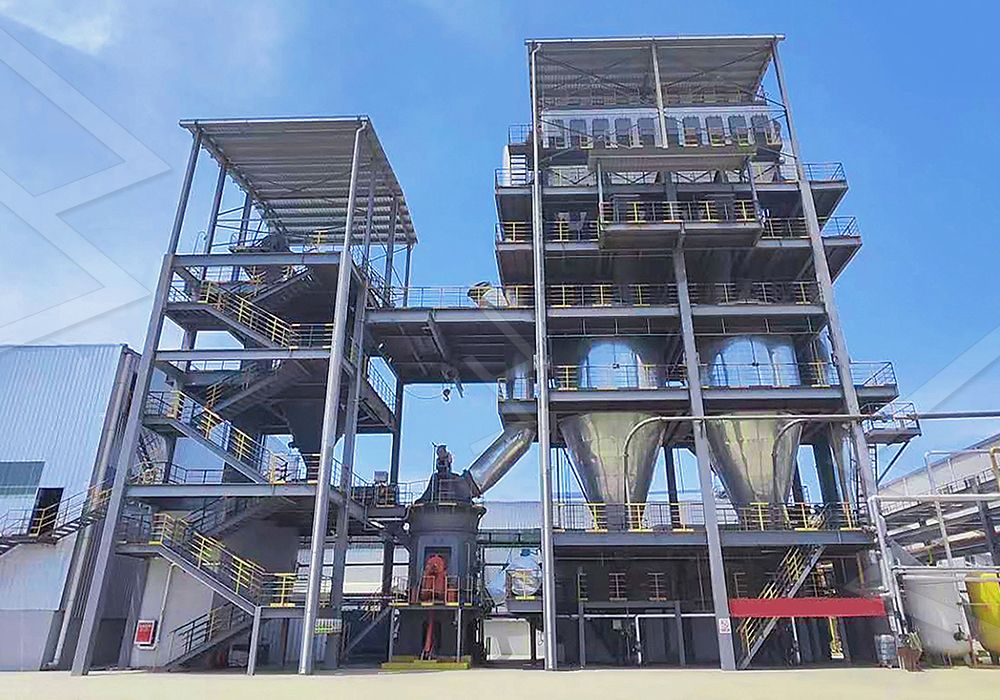
For feed sizes up to 70mm and capacities exceeding 50 tph, the LM Vertical Grinding Mill is a powerhouse. Its robust design, exceptional drying capability (when processing limestone with residual moisture), and remarkably low specific energy consumption make it the go-to choice for large-scale industrial mineral processing. The fact that it can be installed outdoors further reduces civil engineering costs.
Scenario 2: Production of High-Quality, Consistent Fine Powder (e.g., for paints, plastics, or paper coating)
When product whiteness, purity, and consistent fineness between 325 and 2500 meshes are paramount, a different approach is needed. For these demanding applications, we highly recommend our MW Ultrafine Grinding Mill. This mill is engineered for precision. Its cage-type powder selector, based on German technology, ensures exceptional classification accuracy, achieving a d97 ≤5μm in a single pass. A standout feature is the elimination of rolling bearings and screws within the grinding chamber, virtually eliminating failures caused by bearing seal damage or loose fasteners. Coupled with an efficient pulse dust collector, it delivers ultra-fine powder in an environmentally clean manner, making it ideal for high-value limestone derivatives.
Scenario 3: Versatile, Mid-Range Grinding with High Reliability
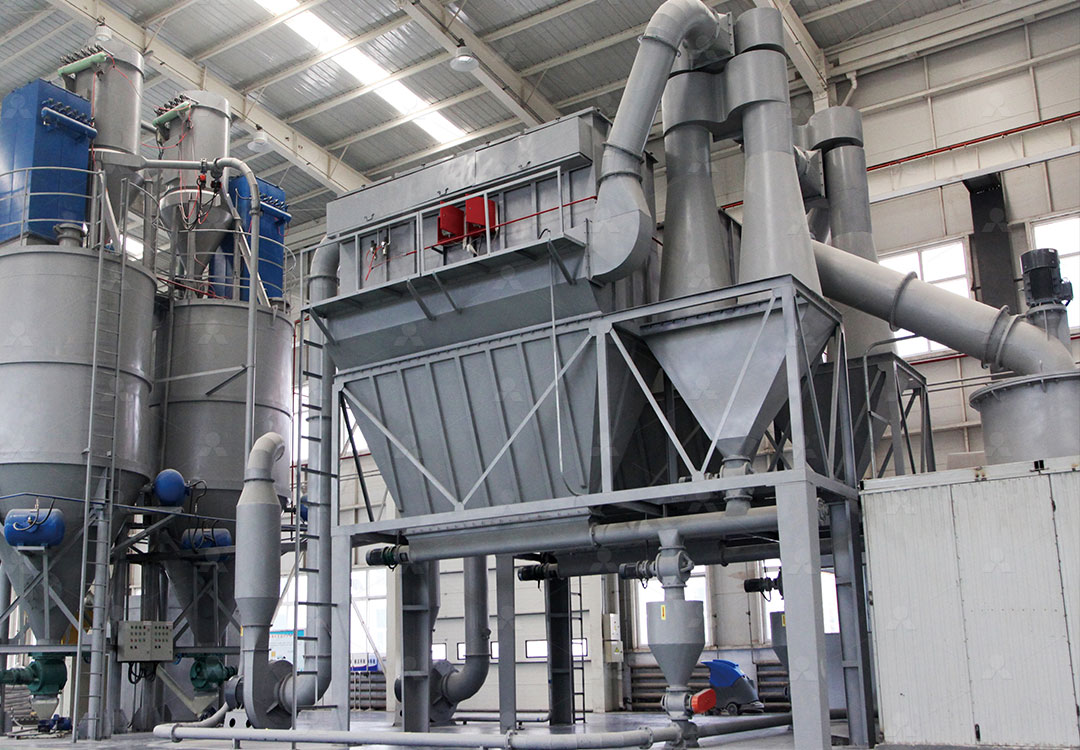
For plants requiring flexibility to process various non-metallic minerals besides limestone, or with capacities in the 3-55 tph range, the MTW European Trapezium Grinding Mill series offers an excellent balance. Its bevel gear integral transmission is compact and reliable, while features like the curved air duct reduce system resistance and energy use. The use of split-type, wear-resistant alloy grinding rollers and rings extends service life significantly, lowering long-term operating costs.
Beyond the Machine: Ensuring Long-Term Success
The best equipment selection extends beyond catalog specifications. Consider the manufacturer’s support ecosystem. A supplier that handles both production and sales, like our company, LIMING, takes direct responsibility for the entire machine lifecycle. This translates to guaranteed access to original spare parts, expert technical service, and process support, ensuring your grinding mill operates worry-free for years to come. Furthermore, a commitment to digitalized CNC manufacturing ensures the high precision of core components, which is the foundation of mill durability and performance consistency.
Conclusion
There is no universal “best” mill for limestone, only the best mill for your specific operational goals and constraints. By clearly defining your feed material, capacity, and product specifications, you can effectively narrow the field. For most modern applications, medium-speed vertical roller mills and advanced trapezium mills provide the optimal blend of efficiency, control, and cost-effectiveness. For ultra-fine, high-purity requirements, specialized mills like the MW Ultrafine Grinding Mill are indispensable. Partnering with an experienced manufacturer who provides comprehensive support is the final, crucial step in securing a grinding solution that drives profitability and growth.
Frequently Asked Questions (FAQs)
- Q: What is the main advantage of a vertical roller mill over a traditional ball mill for limestone grinding?
A: The primary advantage is significantly higher energy efficiency, typically 30-50% lower power consumption. VRMs also integrate multiple processes (drying, grinding, classifying), have a smaller footprint, and offer better control over product fineness and lower operating noise. - Q: Can your mills handle moist limestone feedstock?
A: Yes, several of our mills are designed with integrated drying capabilities. The LM Vertical Grinding Mill and LUM Ultrafine Vertical Mill, for example, can accept hot air into the grinding chamber simultaneously to dry and grind materials with a certain moisture content, eliminating the need for a separate dryer. - Q: How fine can your mills grind limestone?
A: It depends on the model. While our LM and MTW series are excellent for fine grinding, our dedicated MW Ultrafine Grinding Mill is specifically designed to produce powders in the range of 325 to 2500 meshes, with the ability to achieve a top cut of d97 ≤5μm consistently. - Q: How do you ensure the whiteness of the limestone powder is not contaminated by the mill itself?
A> Our mills are designed with this in mind. The grinding rollers and tables/sleeves do not make metal-to-metal contact, minimizing mechanical wear. Furthermore, key components in contact with material are made from specialized alloys. In mills like the MW series, the absence of internal bearings and screws in the chamber completely removes a major potential source of iron contamination. - Q: What kind of after-sales support can we expect?
A> We provide full lifecycle support. This includes installation guidance, operator training, a guaranteed supply of original spare parts, and remote or on-site technical service to ensure maximum uptime and optimal performance of your grinding equipment.