
Limestone Grinding Mill Production Line Layout and Design Considerations
We provide a wide range of mills — including Raymond mill, trapezoidal mill, vertical mill, ultrafine mill, and ball mill, obtained ISO9001 international quality certification, EU CE certification, and Customs Union CU-TR certification. Suitable for processing minerals such as limestone, phosphate, quicklime, kaolin, talc, barite, bentonite, calcium carbonate, dolomite, coal, gypsum, clay, carbon black, slag, cement raw materials, cement clinker, and more.
The discharge range of these mills can be adjusted to meet specific processing needs, typically from 80-400 mesh, 600-3250 mesh, and can achieve the finest particle size of up to 6000 mesh(D50).
If you are looking for a reliable grinding solution to turn stone or minerals into fine powder, please feel free to contact our online customer service.
Limestone Grinding Mill Production Line Layout and Design Considerations
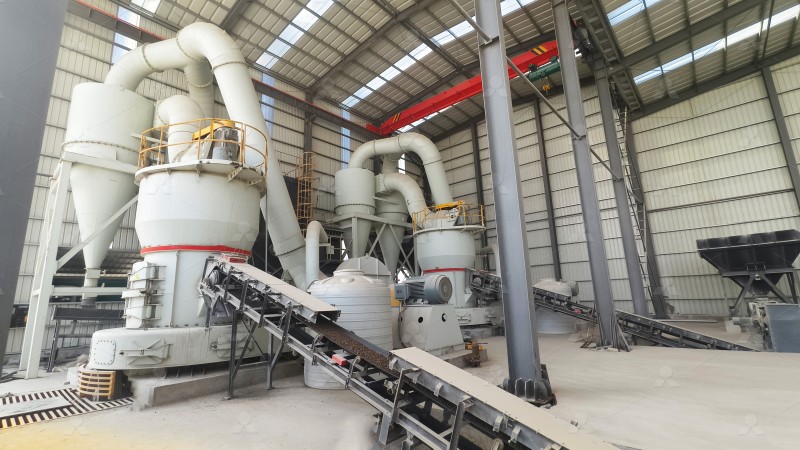
Designing an efficient limestone grinding production line requires careful consideration of multiple factors, from raw material characteristics to final product specifications. A well-planned layout is crucial for maximizing productivity, minimizing operational costs, and ensuring long-term reliability. The key components typically include crushers, feeders, grinding mills, classifiers, dust collectors, and material handling systems.
When planning the layout, engineers must consider material flow efficiency, equipment accessibility for maintenance, energy consumption optimization, and environmental compliance. The arrangement should facilitate smooth material transfer between different stages while minimizing cross-contamination and dust emission points.
Key Design Considerations
Raw Material Characteristics: The hardness, moisture content, and feed size of limestone significantly impact equipment selection. For harder limestone formations, primary crushing might be necessary before the grinding stage. Moisture content affects drying requirements and may necessitate pre-drying equipment.
Capacity Requirements: Production targets determine the scale of equipment needed. For high-capacity requirements exceeding 25 tph, multiple milling units might be more efficient than a single large mill, providing operational flexibility and redundancy.
Product Fineness: The required particle size distribution dictates the type of grinding mill and classifier system. Applications requiring ultra-fine powders (325-2500 meshes) need advanced grinding technology with precise classification capabilities.
Space Constraints: The available footprint influences equipment selection. Vertical mills typically occupy less space compared to traditional ball mill systems, making them suitable for facilities with limited area.
Environmental Regulations: Modern grinding plants must incorporate effective dust collection and noise reduction systems to meet environmental standards. Closed-circuit systems with efficient filters are essential for minimizing particulate emissions.
Recommended Equipment for Limestone Grinding
For operations requiring ultra-fine limestone powder, we highly recommend our MW Ultrafine Grinding Mill. This advanced mill is specifically designed for customers who need to produce high-quality ultra-fine powder with precision control. With an input size capacity of 0-20 mm and production rates ranging from 0.5-25 tph, it offers exceptional flexibility for various production requirements.
The MW series stands out with its innovative design that eliminates rolling bearings and screws in the grinding chamber, significantly reducing maintenance concerns and potential failure points. Its cage-type powder selector, incorporating German technology, allows precise fineness adjustment between 325-2500 meshes, achieving remarkable screening rates of d97≤5μm in a single pass. The integrated efficient pulse dust collector and muffler system ensures environmentally friendly operation with minimal dust and noise pollution.
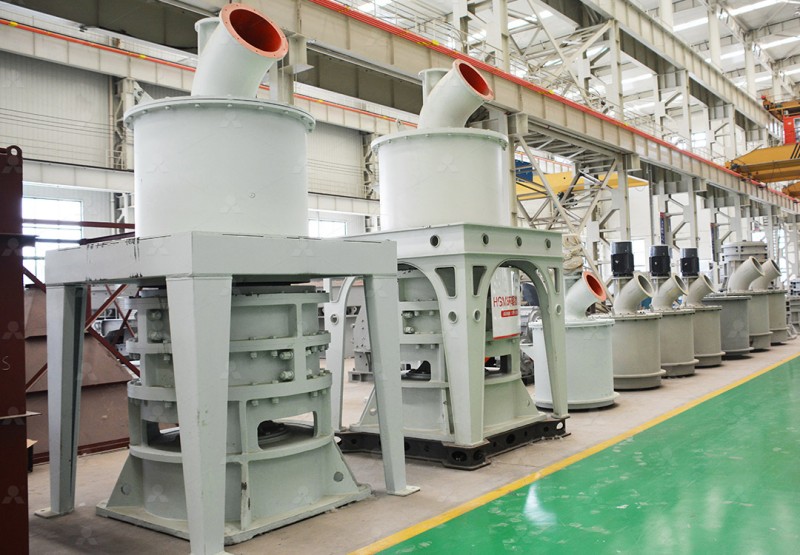
For operations requiring even higher precision and advanced technology, our LUM Ultrafine Vertical Grinding Mill presents an excellent alternative. Independently developed by our engineering team, it incorporates the latest Taiwanese grinding roller technology and German powder separating technology. With an input size of 0-10 mm and capacity of 5-18 tph, it integrates ultrafine powder grinding, grading, and transporting in a single compact unit.
The LUM series features unique double position-limiting technology that prevents destructive impacts during operation, ensuring exceptional stability. Its reversible structure design simplifies maintenance procedures, allowing operators to easily move grinding rollers out of the body for inspection and part replacement. The multi-head powder separating technology combined with PLC control system enables precise control over grinding parameters, reducing energy consumption by 30%-50% compared to conventional mills.
System Integration and Automation
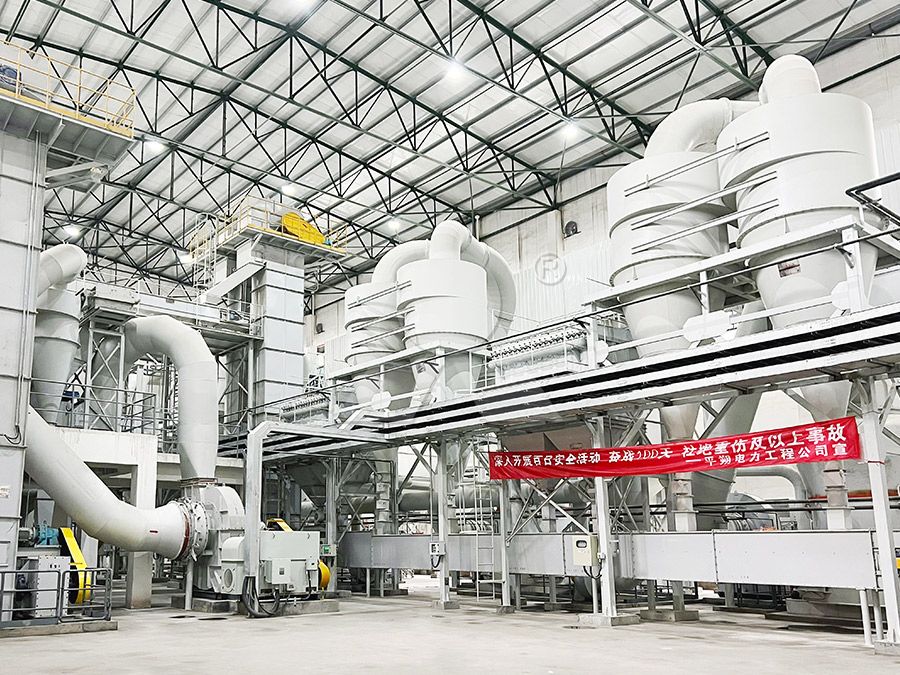
Modern grinding lines increasingly incorporate advanced automation systems for optimal operation. Programmable Logic Controllers (PLCs) can monitor and adjust critical parameters including feed rate, grinding pressure, classifier speed, and temperature. This automation ensures consistent product quality while reducing operator intervention and energy consumption.
Proper integration of material handling equipment—such as belt conveyors, bucket elevators, and screw conveyors—is essential for creating a seamless production flow. The design should include adequate storage capacity (both for raw materials and finished products) to buffer against upstream or downstream disruptions.
Maintenance and Operational Considerations
When designing the layout, adequate space must be allocated around equipment for maintenance access. This includes clearance for removing grinding rollers, replacing wear parts, and servicing motors and drives. The arrangement should facilitate easy access to lubrication points and inspection ports.
For limestone grinding operations, wear protection is a critical consideration. The abrasive nature of limestone necessitates robust wear protection in grinding elements, classifier components, and conveying systems. Our grinding mills feature wear-resistant alloys developed through extensive research, offering service life 1.7-2.5 times longer than conventional materials.
By carefully considering these factors and selecting appropriate equipment like our MW Ultrafine Grinding Mill or LUM Ultrafine Vertical Grinding Mill, operators can establish efficient, reliable, and profitable limestone grinding operations that meet both production targets and environmental standards.