
Limestone Grinding Mill: Meeting the Growing Market Demand for Fine Powder
We provide a wide range of mills — including Raymond mill, trapezoidal mill, vertical mill, ultrafine mill, and ball mill, obtained ISO9001 international quality certification, EU CE certification, and Customs Union CU-TR certification. Suitable for processing minerals such as limestone, phosphate, quicklime, kaolin, talc, barite, bentonite, calcium carbonate, dolomite, coal, gypsum, clay, carbon black, slag, cement raw materials, cement clinker, and more.
The discharge range of these mills can be adjusted to meet specific processing needs, typically from 80-400 mesh, 600-3250 mesh, and can achieve the finest particle size of up to 6000 mesh(D50).
If you are looking for a reliable grinding solution to turn stone or minerals into fine powder, please feel free to contact our online customer service.
Limestone Grinding Mill: Meeting the Growing Market Demand for Fine Powder
The global demand for finely ground limestone powder continues to surge, driven by its extensive applications across industries such as construction, plastics, paints, pharmaceuticals, and agriculture. This versatile mineral, when processed to precise fineness, enhances product quality and performance in countless manufacturing processes. As market specifications become increasingly stringent, selecting the right grinding technology is paramount for producers seeking to maintain competitiveness and operational efficiency.
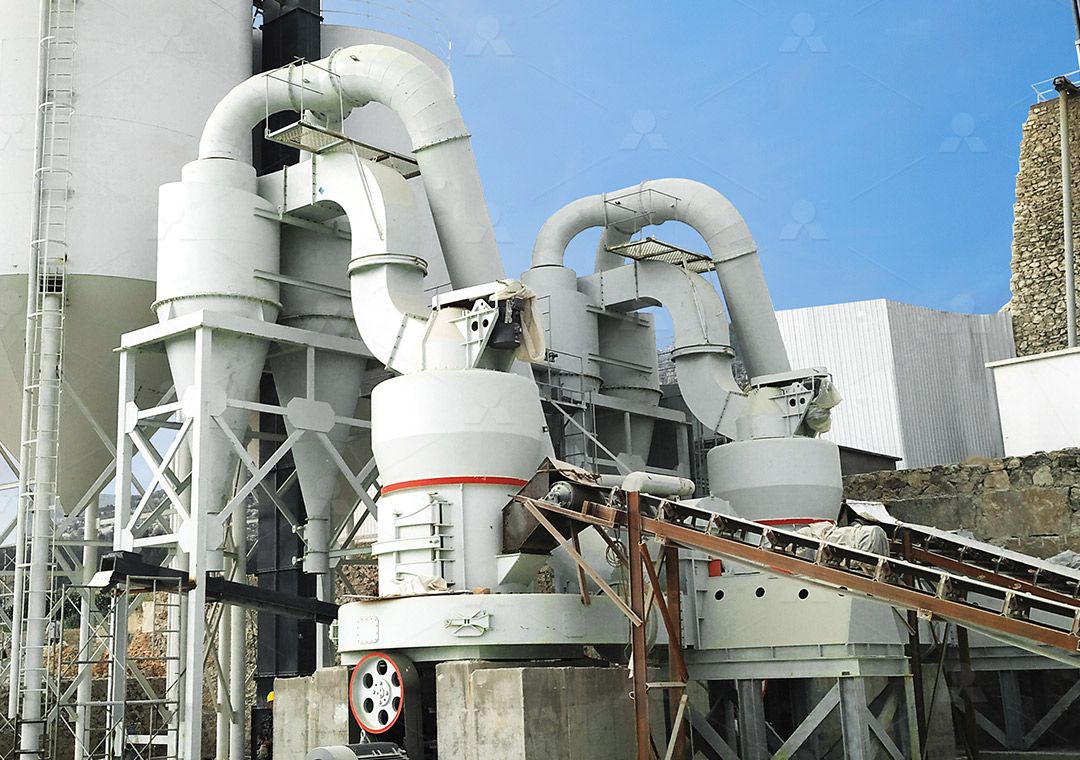
Traditional grinding methods often fall short in meeting modern requirements for ultra-fine powders with consistent particle size distribution. The limitations of conventional ball mills—including high energy consumption, excessive heat generation, and limited fineness control—have prompted the industry to seek more advanced solutions. This technological evolution has led to the development of specialized mills capable of producing powders ranging from coarse aggregates to sub-micron particles with remarkable precision.
Advanced Grinding Solutions for Modern Applications
Among the most significant advancements in mineral processing technology is the development of ultrafine grinding mills. These systems are engineered to overcome the inefficiencies of earlier generations of equipment, offering superior control over particle size, reduced energy consumption, and enhanced environmental performance. For operations requiring powders between 325 and 2500 meshes, specialized equipment becomes essential.
One standout solution for these demanding applications is our MW Ultrafine Grinding Mill. This machine represents a significant leap forward in grinding technology, specifically designed for customers who need to produce ultra-fine powder with exceptional consistency. With an input size of 0-20 mm and capacity ranging from 0.5 to 25 tph, the MW series offers remarkable flexibility for various production scales. The integration of an efficient pulse dust collector and muffler ensures minimal environmental impact, addressing growing concerns about industrial sustainability.

Technical Superiority in Fine Powder Production
The MW Ultrafine Grinding Mill incorporates several innovative features that set it apart from conventional grinding systems. Its newly designed grinding curves for the roller and ring assembly significantly enhance grinding efficiency, achieving production capacity 40% higher than jet mills and stirred grinding mills under equivalent fineness and power conditions. Perhaps most impressively, the system energy consumption is only 30% of comparable jet grinding mills, representing substantial operational savings.
The mill’s cage-type powder selector, incorporating German technology, ensures exceptional precision in particle separation. This system can be configured with multi-head selectors tailored to specific requirements for yield, fineness, and sieving rate. The ability to adjust product fineness between 325-2500 meshes, with screening rates achieving d97≤5μm in a single pass, makes this equipment uniquely capable of meeting diverse market demands.
Operational Reliability and Environmental Compliance
Beyond its technical capabilities, the MW Ultrafine Grinding Mill addresses critical operational concerns through thoughtful engineering. The elimination of rolling bearings and screws within the grinding chamber eliminates common failure points, ensuring continuous operation without concerns about bearing damage or loose fasteners causing mechanical failure. The external lubrication system allows for maintenance without shutdowns, supporting 24-hour production cycles essential for modern manufacturing operations.
Environmental considerations are thoroughly integrated into the design. The pulse dust collector effectively contains particulate matter throughout the milling process, while silencers and noise elimination rooms minimize acoustic impact. This comprehensive approach to environmental management ensures full compliance with national environmental protection standards, a increasingly important consideration for industrial operations worldwide.
For operations requiring different specifications, our LUM Ultrafine Vertical Grinding Mill presents another excellent option. With an input size of 0-10 mm and capacity of 5-18 tph, this mill incorporates the latest Taiwanese grinding roller technology and German powder separating technology. Its unique roller shell and lining plate grinding curve design prevents common issues like material lingering and iron contamination, resulting in superior product whiteness and cleanliness.

Meeting Diverse Industry Requirements
The applications for finely ground limestone powder continue to expand across multiple sectors. In construction, it serves as a crucial component in concrete, asphalt, and building materials. The plastics industry relies on consistent limestone powders as fillers to enhance material properties. Paint manufacturers require precisely controlled particle sizes for optimal coverage and finish, while agricultural applications depend on fine limestone for soil conditioning and animal feed supplements.
This diversity of applications necessitates grinding equipment capable of adapting to varying requirements without compromising efficiency or product quality. Advanced grinding mills address this need through customizable configurations and precise control systems that allow operators to fine-tune production parameters for specific customer specifications.
Frequently Asked Questions
What is the typical energy consumption of modern limestone grinding mills?
Advanced mills like the MW Ultrafine Grinding Mill consume approximately 30% less energy than traditional jet mills while achieving higher production rates. The specific energy consumption varies based on the desired fineness, with finer powders requiring slightly more energy per ton.
How does particle size distribution affect end-use applications?
Particle size distribution critically influences material properties in final products. Narrow distributions ensure consistent performance in applications like plastics compounding, while specific top-size limitations are essential for products like paints and coatings where surface finish is paramount.
What maintenance requirements should operators anticipate?
Modern grinding mills are designed for minimal maintenance. The MW series, for example, features an external lubrication system that allows servicing without shutdowns. Typical maintenance involves regular inspection of grinding elements and periodic replacement of wear parts based on operational hours and material abrasiveness.
Can the same mill process materials other than limestone?
Yes, advanced grinding mills are versatile enough to process various non-metallic minerals including calcite, dolomite, barite, and talc. However, optimal performance may require adjustments to operating parameters and possibly different wear protection depending on material characteristics.
What environmental controls are integrated into modern grinding systems?
Contemporary mills incorporate comprehensive environmental protection features including pulse-jet dust collectors that achieve filtration efficiencies exceeding 99.9%, sound-dampening enclosures that reduce noise levels below 85 dB, and fully enclosed systems that prevent material leakage throughout the process.